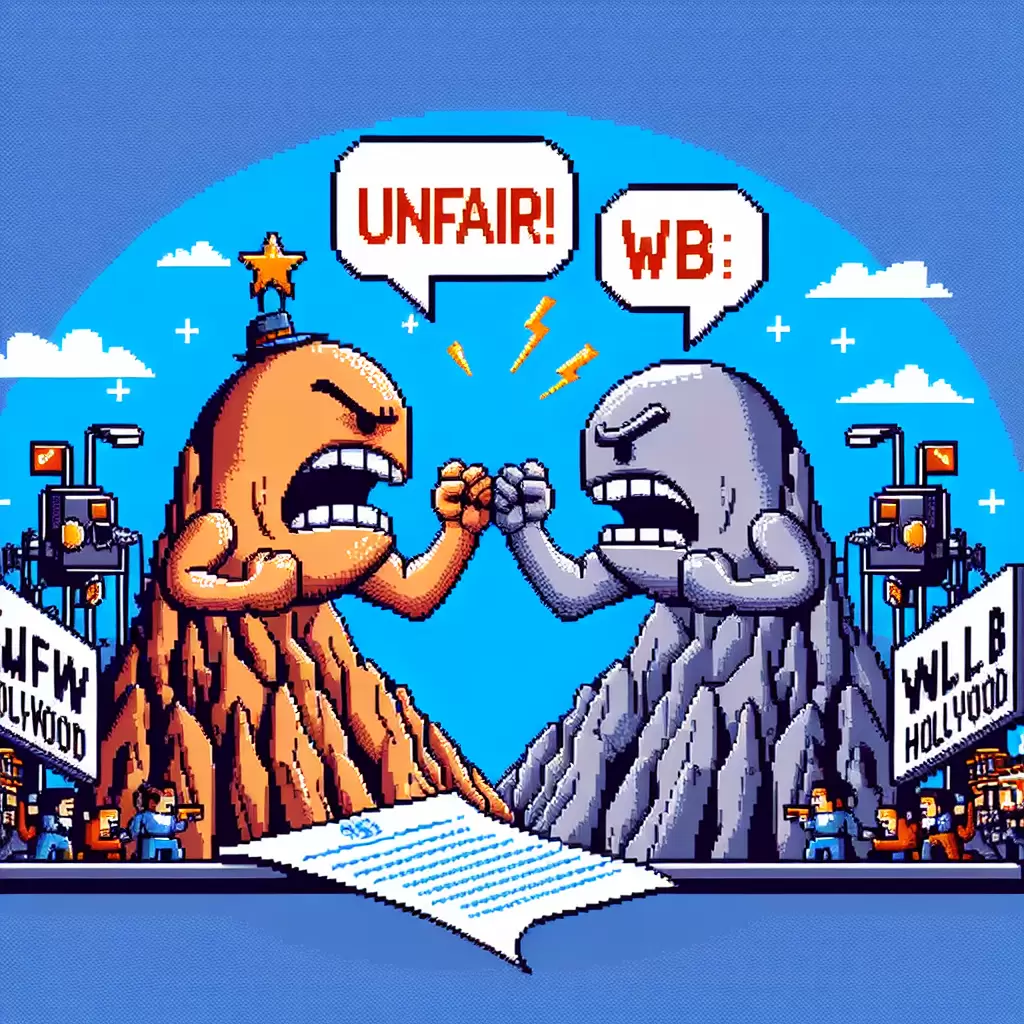
A president’s bond buy that raises eyebrows: Trump, Netflix and Warner Bros.
Just days after publicly saying he’d be “involved” in the regulatory review of Netflix’s proposed $82–83 billion deal for Warner Bros. assets, President Donald Trump’s financial disclosure shows he bought between $1 million and $2 million of corporate bonds tied to the companies. That timing — and the optics — is the story: not a blockbuster insider-trading allegation, but a neat example of how money, policy and power can look messy in the same frame.
Why this matters now
- The bond purchases were disclosed in a January 2026 filing covering transactions from November 14 to December 19, 2025.
- Trump publicly commented on the Netflix–Warner Bros. deal on December 7, 2025, saying he would be “involved” in the decision about whether it should be allowed to proceed.
- Within days (Dec. 12 and Dec. 16, 2025), the filings show purchases of Netflix and Discovery/WBD debt in tranches (each listed in the $250,001–$500,000 range), totaling at least $1 million across the two companies.
- The administration says Trump’s portfolio is managed independently by third-party institutions and that he and his family do not direct those investments.
Those facts are small in absolute dollars against the size of the merger, but politically and ethically they resonate: a president publicly weighing in on a transaction while he holds securities tied to the parties involved is a classic conflict-of-interest concern, even if the investments are bond holdings managed by others.
A quick snapshot of the timeline
- December 7, 2025: Trump makes public remarks indicating he would be involved in reviewing the Netflix–Warner Bros. deal.
- December 12 & 16, 2025: Financial-disclosure entries show purchases of Netflix and Discovery/WBD bonds.
- January 14–16, 2026: Disclosure forms are posted and reported by major outlets, prompting renewed scrutiny.
What corporate bonds mean here
- Bonds are debt instruments; bondholders get fixed-interest payments and the return of principal at maturity. They’re different from stocks — bondholders don’t get voting rights or upside from equity gains.
- Still, bond prices and yields can move based on a company’s perceived creditworthiness, strategic moves (like a merger), and the broader market reaction. A big acquisition announcement can shift both corporate credit profiles and market sentiment, sometimes quickly.
- So purchases of bonds shortly after a merger announcement could profit or lose depending on market reaction or changes in perceived risk — and they still link an investor financially to an outcome.
The investor dilemma (politics × perception)
- Real conflicts require control or influence over a decision and financial benefit from it. The White House’s response — that external managers handle the portfolio — is a standard defense.
- But ethics isn’t only about legal liability; it’s also about public trust. Even without direct influence, the president’s public role in enforcement and antitrust review creates an appearance problem when financial exposure aligns with active policy involvement.
- That appearance can erode confidence in the neutrality of regulatory reviews and feed narratives of favoritism or self-dealing — which political opponents and watchdogs will marshal rapidly.
The broader context
- The proposed Netflix–Warner Bros. transaction is one of the largest media deals in recent memory and has drawn attention from regulators, competitors (including rival bids), creators’ guilds, and politicians worried about concentration in media and streaming.
- Corporate disclosures show this bond buying was part of a larger roughly $100 million slate of municipal and corporate debt purchases by Trump across mid-November to late December 2025. That breadth makes it less likely the Netflix/WBD trades were singularly targeted — but timing still matters.
- The story fits into a bigger, long-running political debate about presidents, business holdings and blind trusts (or their alternatives). The U.S. has norms and rules around recusal and asset management, but the gap between legal compliance and public perception remains wide.
What to watch next
- Will ethics watchdogs, the Office of Government Ethics, or Congress seek further details about who placed the trades and whether the president had any input?
- Will regulators review whether the president recused himself from decisions directly tied to parties in which he has holdings — or whether any special procedures were used?
- How will this episode shape the political narrative around the merger review (and other high-profile antitrust decisions) going forward?
Key takeaways
- Timing is everything: bond purchases on Dec. 12 and Dec. 16 came days after the president said he’d be “involved” in reviewing the Netflix–Warner Bros. merger.
- Bonds aren’t stocks, but they still create financial ties and optics that matter when the holder is the sitting president.
- The White House says investments are managed independently, which may reduce legal exposure but doesn’t erase appearance-of-conflict concerns.
- This episode highlights the persistent tension between private wealth and public duty in modern presidencies.
My take
This isn’t a dramatic legal smoking gun — the purchases are modest in scope, and bonds behave differently than equity. But democracy relies on public confidence as much as on written rules. Even routine investment activity can become a headline when the investor is also the nation’s chief enforcer of antitrust and regulatory policy. Tightening the routines around disclosures, timing, and recusal — or moving to clearer independent management structures — would reduce these recurring optics problems and help restore a baseline of trust.
Sources
- Trump bought $1M in Netflix, Warner Bros. bonds after merger announcement — The Washington Post. https://www.washingtonpost.com/business/2026/01/16/trump-bought-1m-netflix-warner-bros-bonds-after-merger-announcement/
- Netflix, Warner Bros bonds among $100 million purchased by Trump — Reuters. https://www.reuters.com/article/us-usa-trump-bonds-idUSKBN2ZP2X1
- Trump buys Netflix, WBD bonds days after saying he'll 'be involved' — The Guardian. https://www.theguardian.com/us-news/2026/jan/17/trump-netflix-warner-bros-discovery
(Note: dates above reference the December 2025 trades and January 2026 disclosures reported by these outlets.)
Related update: We recently published an article that expands on this topic: read the latest post.
Related update: We recently published an article that expands on this topic: read the latest post.