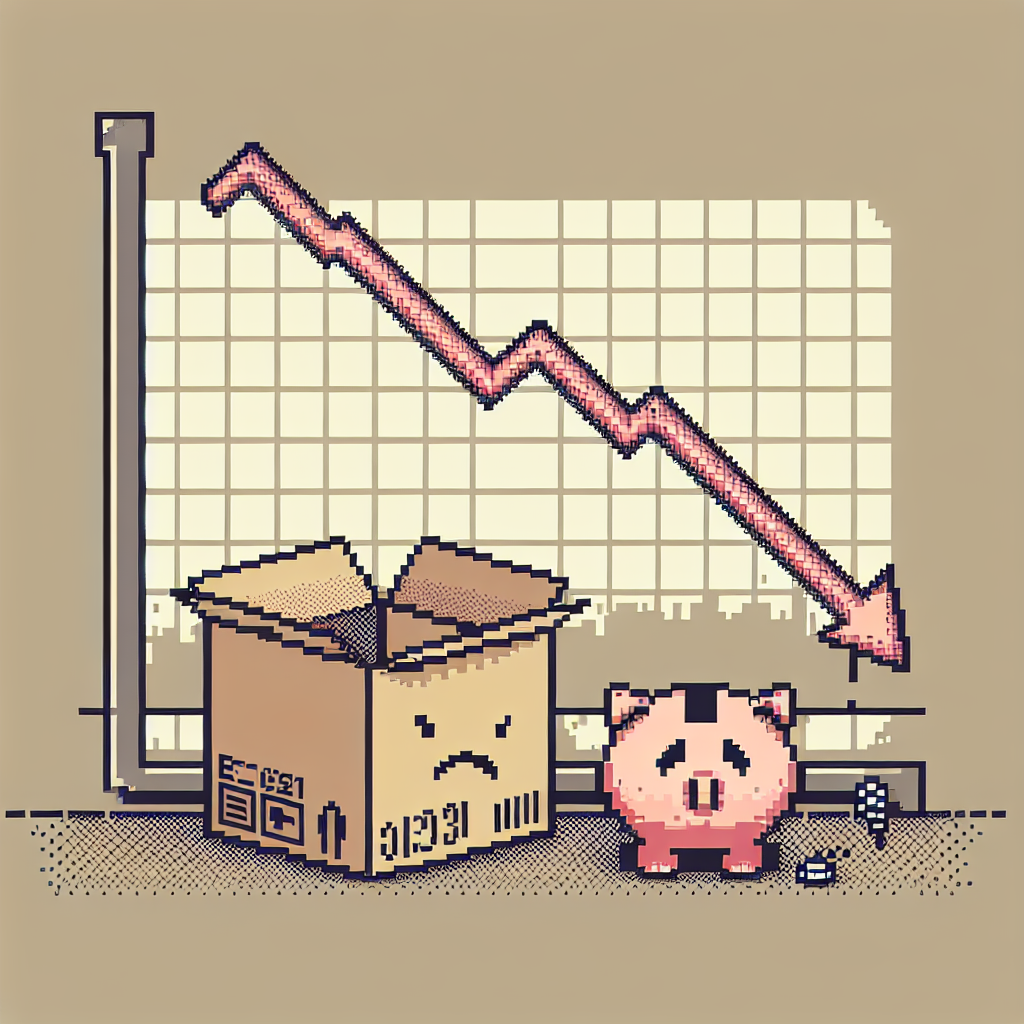
The Slump in Cardboard-Box Demand: What It Means for Our Economy
In a world where e-commerce continues to dominate and sustainability becomes a growing concern, you might think that the demand for cardboard boxes would be booming. However, recent data suggests otherwise. The Wall Street Journal recently reported that the demand for cardboard boxes is slumping at an alarming rate, leading to the closure of several mills that produce corrugated packaging materials. This decline is not just a blip on the radar; it could have significant implications for the economy at large.
Understanding the Context
Cardboard boxes have long been the backbone of the shipping and packaging industries. They serve as a crucial link between manufacturers and consumers, providing a sturdy, cost-effective solution for transporting goods. However, the landscape of consumer behavior and market dynamics is shifting. After the pandemic-induced surge in online shopping, which drove up demand for packaging, the market is now experiencing a correction.
Several factors are contributing to this downturn:
1. E-commerce Stabilization: The exponential growth seen during the pandemic has begun to plateau. As consumers return to shopping in physical stores, the frenzy of online purchases is easing, leading to decreased demand for shipping materials.
2. Inflation and Economic Uncertainty: Rising costs and economic instability have forced many consumers to cut back on spending. When people tighten their wallets, the ripple effect impacts manufacturers and retailers, ultimately leading to less need for packaging.
3. Sustainability Trends: There is a growing push for sustainability, with many companies looking to reduce packaging waste. This shift could mean a transition to alternative packaging solutions, further reducing the demand for cardboard boxes.
4. Technological Innovations: Advancements in packaging technology might lead companies to explore options beyond traditional cardboard, which could further contribute to the decline.
As a result, mills that produce corrugated cardboard are closing at an unprecedented pace this year, raising concerns about job losses and economic repercussions.
Key Takeaways
– Declining Demand: The demand for cardboard boxes is decreasing, leading to the closure of multiple mills that produce these essential materials. – Economic Ripple Effects: The slump in cardboard demand signifies broader economic challenges, such as inflation and reduced consumer spending. – Shifting Consumer Behavior: The stabilization of e-commerce growth post-pandemic plays a critical role in the reduced need for packaging materials. – Sustainability and Technology: A move towards sustainable packaging and advancements in technology may further diminish the reliance on traditional cardboard boxes.
Final Thoughts
The decline in cardboard-box demand is more than just a manufacturing issue; it serves as an indicator of larger economic trends. As we navigate this complex landscape, it’s crucial for businesses and consumers alike to adapt to changing market dynamics. The closure of mills may be a sign of necessary transformation in the packaging industry, but it also highlights the interconnectedness of consumer habits, economic conditions, and sustainability efforts. As we look ahead, it will be interesting to see how these shifts will shape the future of packaging and, by extension, the broader economy.
Sources
– “Cardboard-Box Demand Is Slumping. Why That’s Bad News for the Economy.” The Wall Street Journal. [Link](https://www.wsj.com/articles/cardboard-box-demand-is-slumping-why-thats-bad-news-for-the-economy-11694749801) (Note: This link may lead to a paywalled article.)
—
Feel free to share your thoughts on the cardboard box industry’s future in the comments below!
Related update: We recently published an article that expands on this topic: read the latest post.