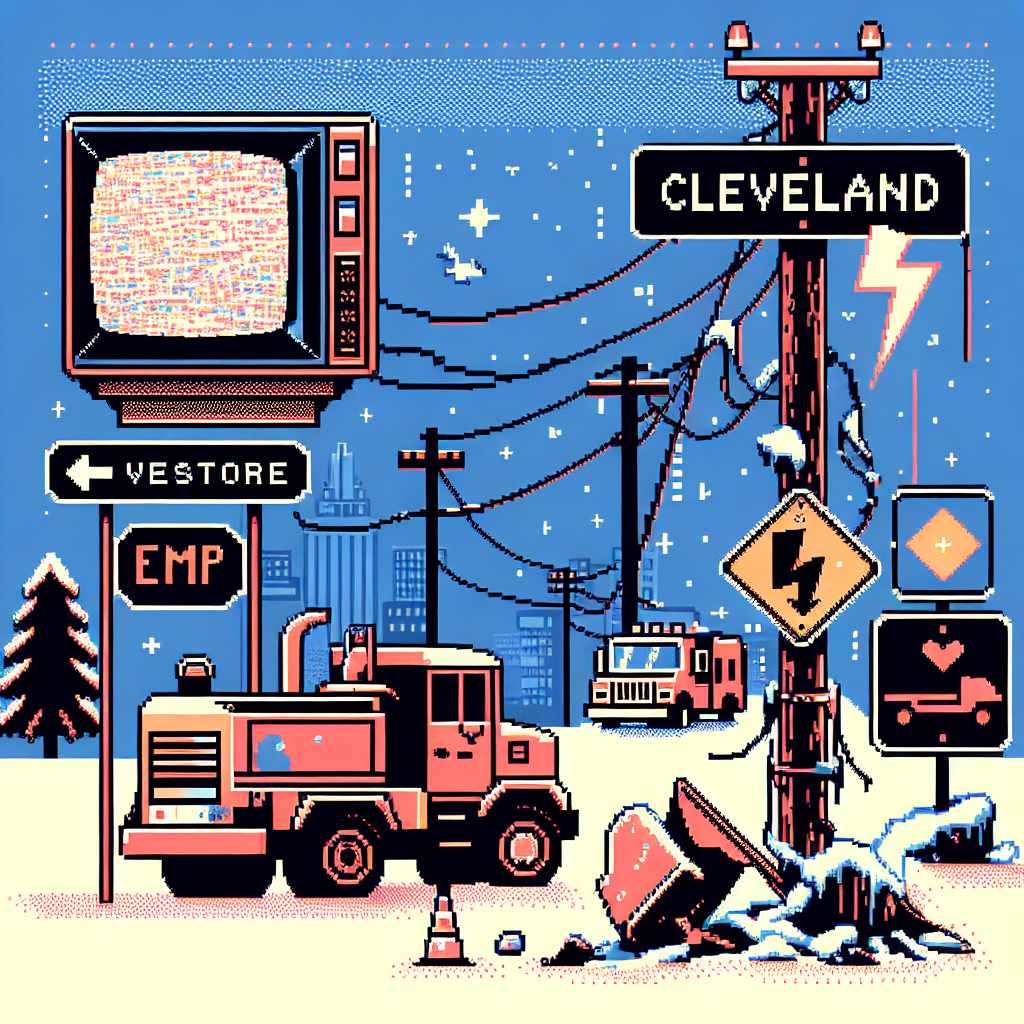
A plow truck, a snapped pole, and a neighborhood offline: what happened in Cleveland Heights
It was one of those small, aggravating disruptions that suddenly remind you how much of modern life runs on invisible lines. On January 2, 2026, a plow or salt truck struck a utility pole in Cleveland Heights and damaged fiber lines that carry internet and phone service for Spectrum customers. The result: pockets of northeast Ohio left without connectivity during a winter afternoon — a sharp inconvenience for remote workers, students, local businesses, and anyone trying to get basic information or call for help.
Why this matters more than a simple “outage” headline
- Internet and phone outages aren’t just about lost streaming or annoyance. They can interrupt work meetings or deadlines, halt online classes, prevent contact with emergency services, and disrupt businesses that depend on card payments or inventory systems.
- Fiber lines are often routed on the same poles that carry electricity and other utilities. Physical damage to a pole can therefore cascade into multiple systems going dark.
- Winter weather makes repairs slower and more dangerous. Crews need safe access, proper equipment, and sometimes coordination with power companies to de-energize lines before they can work.
What we know (the quick facts)
- Date of incident: January 2, 2026.
- Location: Cleveland Heights, northeast Ohio.
- Cause: A plow or salt truck hit a utility pole and damaged fiber lines.
- Company affected: Spectrum (service disruption to Cleveland-area customers).
- Response: Spectrum said crews responded immediately and were working to make repairs. Local news reported the developing situation and advised customers to check for updates. (cleveland19.com)
A closer look at the chain reaction
- A vehicle strikes a pole → pole shifts or breaks → attached fiber and copper lines are pulled or severed → signal loss for downstream customers.
- Even if the physical fiber is only partially damaged, signal quality can drop or intermittent outages can occur until full repairs are completed.
- Utilities and ISPs often must coordinate: electrical crews may need to ensure a safe work environment before telecom technicians can access damaged lines.
How outages hit different people
- Remote workers: missed calls, lost VPN access, inability to join video meetings.
- Students: interrupted online classes, lost assignments or test access during timed exams.
- Small businesses: card machines and POS systems may fail, causing revenue loss.
- Vulnerable households: medical devices that rely on internet/phone service or inability to reach caregivers/emergency responders.
- Community hubs: libraries and warming centers often provide connectivity — when they’re affected, residents lose fallback options.
Practical steps for residents (short, useful checklist)
- Check official outage pages and local news for updates. Spectrum posted that crews were working to restore services; official channels are the best source for timelines. (cleveland19.com)
- Use cellular data as a temporary fallback; if your mobile plan allows, create a hotspot for critical tasks.
- If power is out, conserve mobile battery: lower screen brightness, close unused apps, use low-power mode.
- For prolonged outages, seek local warming centers, libraries, or businesses that still have power and connectivity.
- Report your outage to your provider so they have accurate counts and locations — aggregated customer reports help prioritize repairs.
What this says about infrastructure resilience
This incident is a reminder that our communications infrastructure is vulnerable to everyday accidents — not just cyberattacks or massive storms. As communities and utilities upgrade networks, there’s growing emphasis on:
- Hardening critical poles and rerouting fiber underground where feasible (costly but reduces weather and accident risk).
- Better coordination and mutual-aid agreements between utilities and ISPs to speed safe access for repairs.
- Local contingency planning so residents without backups aren’t left stranded during transient events.
Spectrum and other providers often open public Wi‑Fi access points and issue advisories during wide outages; those measures help, but they’re stopgaps until physical repairs are finished. (spectrumlocalnews.com)
Neighborhood voices
On community forums and local social feeds, residents reported varying outage durations: some saw service restored within hours, others were offline longer. Those firsthand accounts show two things: (1) outage boundaries are often patchy and unpredictable, and (2) people rely on neighborhood networks — checking with neighbors, sharing battery packs, or pooling resources when needed. (reddit.com)
My take
Small incidents like a plow hitting a pole make for big-picture questions. How quickly can essential services be restored when the unexpected happens? Are there better ways to shield critical communications from routine roadway accidents? And how can communities plan so outages don’t become emergencies for vulnerable residents?
Practical investments — from targeted undergrounding in critical corridors to faster inter-agency coordination and community-level backup plans — won’t eliminate risk, but they make neighborhoods more resilient. In the meantime, keep a simple preparedness kit: phone charger, portable battery, and a plan for where to go if connectivity or power goes out.
Sources
-
Cleveland Spectrum customers experiencing outages after plow truck hits utility pole — Cleveland 19 News (WOIO).
https://www.cleveland19.com/2026/01/02/cleveland-spectrum-customers-experiencing-outages-after-plow-truck-hits-utility-pole/ (cleveland19.com) -
Spectrum is assessing outages in northern Ohio because of the winter storm — Spectrum News.
https://spectrumlocalnews.com/product-pages/nyc/news/2025/12/29/spectrum-outage-winter-storm-ohio (spectrumlocalnews.com) -
Community discussion thread about Spectrum outage in Cleveland — Reddit (r/Cleveland).
https://www.reddit.com/r/Cleveland/comments/1q26ifn/anyone_with_spectrum_not_have_internet/ (reddit.com)
Related update: We recently published an article that expands on this topic: read the latest post.
