Grasso’s Tough Stance Shapes Michigan | Analysis by Brian Moineau

A moment of truth in Ann Arbor: Grasso’s message and what comes next for Michigan athletics

The video dropped on a quiet Wednesday night, but its ripples are anything but quiet. Interim University of Michigan president Domenico Grasso spoke directly to the community about the investigation into the athletic department and the search for a new football coach after the abrupt firing of Sherrone Moore. The tone was firm, the message blunt: the university will “leave no stone unturned,” and the next coach must embody the “highest moral character.”

Below I walk through what Grasso said, why the expanded Jenner & Block probe matters, how the coaching search is being framed now, and the larger cultural questions Michigan faces.

Quick snapshot

  • Who spoke: Interim President Domenico Grasso.
  • What happened: Grasso posted a video update expanding an existing investigation into former coach Sherrone Moore to a broader review of the athletics department’s culture, conduct, and procedures.
  • Who’s investigating: Chicago law firm Jenner & Block, already involved in related reviews.
  • Coaching search stance: Michigan is prioritizing moral character and leadership in its next head coach.

Why the video mattered — the human angle

Hook: Colleges are built on reputations that take generations to earn and seconds to erode. Grasso’s message landed as an attempt to stop the erosion.

Grasso’s address was not just PR; it was an attempt to re-center the conversation on values and accountability. For students, staff, alumni and donors who felt blindsided and betrayed by the Moore episode, the video did three things simultaneously:

  • Acknowledged hurt and disillusionment without downplaying it.
  • Announced concrete next steps (expanded independent review, a contact line for tipsters).
  • Signaled that personnel decisions — including further terminations if warranted — are possible based on the probe’s findings.

That combination matters. When an institution signals both empathy and action, it reduces the vacuum where rumor and distrust grow.

The investigation: why expanding to the whole athletics department matters

Grasso expanded an already ongoing Jenner & Block review into a broader look at the department’s culture and procedures. That’s notable for several reasons:

  • It moves the response beyond a single “bad actor” narrative to a systemic inquiry.
  • It shifts focus from only disciplinary outcomes to process and prevention — how the department handles reports, training, supervision, and compliance.
  • Using outside counsel with prior experience at Michigan (Jenner & Block) provides legal thoroughness, but also raises questions about institutional self-reflection versus external accountability. Independent reviews can be rigorous, but their credibility hinges on transparency about methodology and follow-through on recommendations.

In short, it’s the difference between fire-fighting and re-building a safer structure.

The coaching search: character first

Grasso was emphatic that Michigan will hire someone “of the highest moral character” who will be a role model and “with dignity and integrity be a fierce competitor.” That language does two jobs:

  • It narrows the public field of acceptable candidates to those without serious prior controversy.
  • It signals to recruits, parents, and donors that the university intends leadership who reflect institutional values — not only on-field success.

Practically, that will complicate a search if the market of high-profile, proven coaches includes names with baggage. But in a post-scandal moment, optics and message matter almost as much as playbooks.

What to watch next

  • The Jenner & Block timeline and level of disclosure. Will the university publicly release findings or only act on specific recommendations?
  • Whether the athletics compliance and ethics office receives sustained structural investment (staffing, reporting lines, independence).
  • How the Regents and athletic director Warde Manuel participate in the search and the response; leadership alignment will be crucial.
  • The selection criteria and vetting process used for the next head coach — especially how background checks and cultural fit evaluations are handled.

Broader context

This moment at Michigan is part of a larger pattern across college athletics — from misconduct revelations to debates over governance and athlete welfare. Universities are under intense pressure to reconcile competitive ambition with ethical stewardship. Grasso’s remarks reflect that balancing act: a commitment to on-field excellence, paired with an insistence that athletics must live up to the university’s broader mission.

What doesn’t solve the problem overnight

  • A single firing, even if necessary, won’t fix systemic problems.
  • A PR-forward video won’t replace transparent processes that build trust over time.
  • Hiring a high-profile coach without structural changes risks repeating the same vulnerabilities.

My take

Grasso’s statement felt necessary and measured — a leader trying to steady a shaken community while promising rigorous scrutiny. The test, though, is not in the words but the deeds that follow: open, credible investigations; real investments in compliance and culture; and a search for a coach that privileges character as highly as wins. If Michigan matches the force of its rhetoric with transparent action, this moment could become a turning point rather than a stain.

Sources


Related update: We recently published an article that expands on this topic: read the latest post.

Related update: We recently published an article that expands on this topic: read the latest post.

Shutdown Shock: Airspace Cuts Hit Economy | Analysis by Brian Moineau

The day airspace shrank and sentiment soured: what the shutdown means now

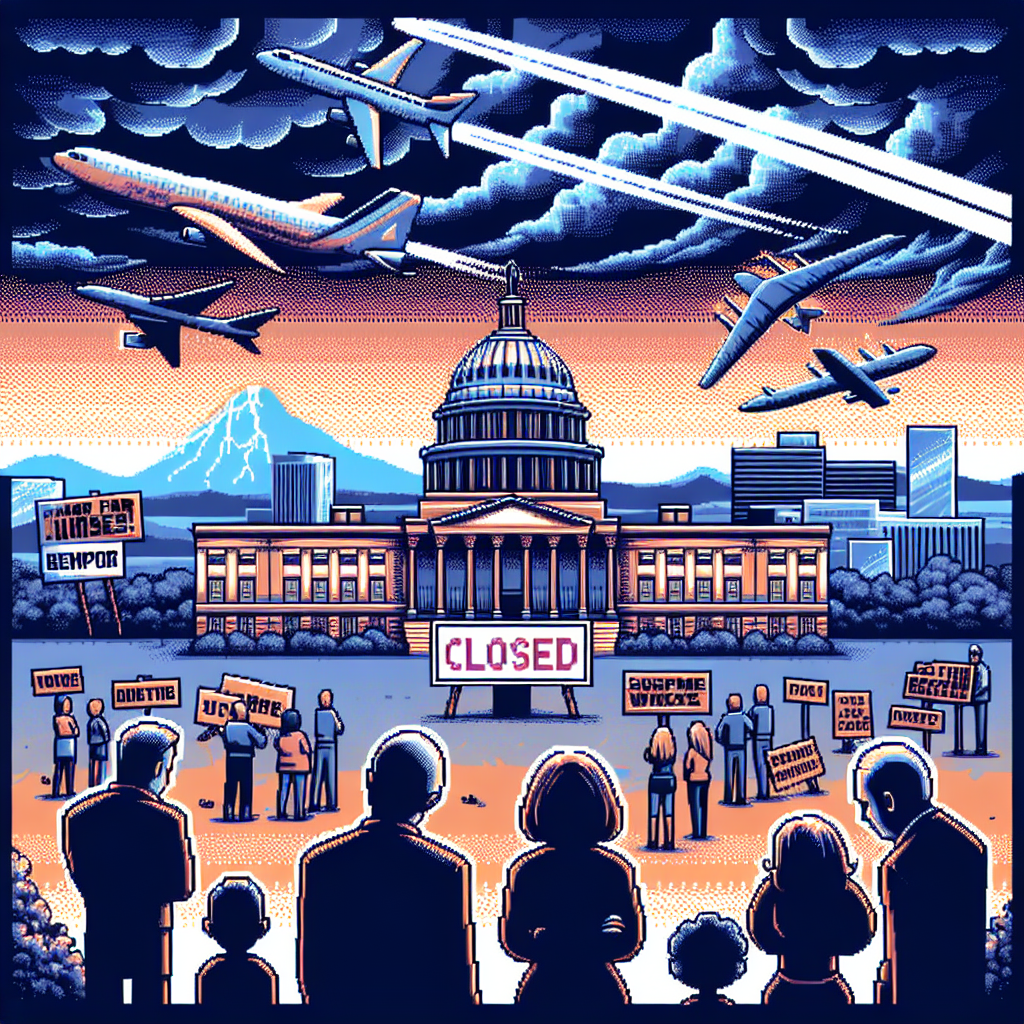
The headlines this week felt like they were written for a thriller: parts of U.S. airspace being intentionally reduced, major carriers trimming flights, and consumer mood slipping to multi-year lows. But this isn’t fiction — it’s the real-world fallout of a prolonged federal government shutdown that began on October 1, 2025 and stretched into November. The question for travelers, investors and everyday Americans is simple: how bad could this get before it gets fixed?

What just happened

  • On November 7, 2025 the Federal Aviation Administration began cutting scheduled flights at about 40 major U.S. airports to reduce controller workload and preserve safety as staffing gaps worsened. Initial cuts were modest (around 4% on the first day) with plans to scale to roughly 10% across the busiest markets and the possibility of larger reductions if conditions deteriorate. (apnews.com)
  • The shutdown — which started October 1, 2025 — has left hundreds of thousands of federal workers furloughed or working without pay and pushed the federal workforce and certain benefits into operational limbo. That disruption is rippling through travel, construction and other sectors. (en.wikipedia.org)
  • Consumer sentiment slid sharply in November, hitting its weakest point in about three years in University of Michigan polling, with many households growing more pessimistic about jobs and prices. Economists warn that the longer the stalemate lasts, the more likely temporary strains become persistent damage. (home.saxo)

Why reducing flights is more than an inconvenience

Cutting flights isn’t just about fewer seats for travelers. It’s a safety-management lever.

  • Air traffic controllers have been stretched thin: many are working unpaid, others have taken leave, and fatigue and absences increase operational risk. Reducing traffic in high-volume centers buys time and reduces stress on the system. (apnews.com)
  • Airlines respond quickly by cutting schedules — that produces cancellations, rebookings and lost revenue for carriers, airports, hotels and the broader travel ecosystem (rental cars, restaurants, even local retail). A string of canceled legs can ripple into lost bookings weeks out. (entrepreneur.com)
  • If cuts escalate to the scale government officials have warned about (up to 20% in the worst-case messaging), we could see cascading disruptions that push the travel sector into a short-term downturn. White House advisers have said the economic impact is “far worse than expected” already. (reuters.com)

The economic picture in plain terms

  • Consumer mood is a leading short-term indicator. When households are pessimistic about jobs or expect higher unemployment, they cut discretionary spending (dining out, travel, home projects) — which cools growth. University of Michigan sentiment data moved notably lower in early November. (home.saxo)
  • The Congressional Budget Office and other forecasters have warned that output lost during a shutdown is often unrecoverable in the short term; construction delays, paused federal contracts, and disrupted benefits aren’t simply “made up” later. Several analysts estimate meaningful hits to Q4 growth if the standoff persists. (entrepreneur.com)
  • Financial markets can look past short-term shocks, but prolonged uncertainty raises volatility. Stocks may temporarily rally on hopes of a legislative solution, while the real economy — payrolls, small business receipts, travel spending — reflects the lived pain.

Who’s feeling it most

  • Travel and leisure: airlines, airports, hotels and ancillary services face immediate demand shocks. Cancellations and rebookings create operational costs and lost revenue. (apnews.com)
  • Lower- and middle-income households: delayed benefits and furloughs hit these groups first and hardest, worsening the consumer split between higher-income households who still benefit from asset gains and everyone else. (entrepreneur.com)
  • State and local governments and contractors: delayed federal payments and paused permits slow construction and local projects, which can feed into job losses in affected sectors. (reuters.com)

The political and practical constraints

  • Fixing a shutdown requires Congress and the White House to agree on funding. Political incentives make compromises difficult, and each day of delay increases the economic bill and the human costs (missed paychecks, delayed benefits).
  • Operationally, some agencies can’t simply “turn back on” overnight. Even if appropriations pass tomorrow, it may take time to restore normal staffing, release backlogged payments, and normalize schedules in complex systems like aviation. (apnews.com)

Signals markets and travelers should watch

  • FAA notices and airline schedule reductions (daily): increasing planned cut percentages and cancellations signal growing systemic stress. (apnews.com)
  • Consumer confidence and survey data (University of Michigan, Conference Board): sharp declines presage weaker consumer spending. (home.saxo)
  • Official economic releases that are delayed or resumed: gaps in data flow complicate policymaking and investor assessments. (en.wikipedia.org)

What this means for you (practical tips)

  • If you have upcoming travel, expect more last-minute changes and factor buffer time; consider refundable or flexible tickets and double-check carrier communications.
  • If you’re a small business or contractor that depends on federal contracts or permits, document impacts carefully — that helps with recovery and any appeals for relief.
  • For investors: consider the difference between short-term headline-driven volatility and long-term fundamentals. Prolonged shutdowns raise real risks to growth, but markets often look forward to resolution.

Main takeaways

  • Flight reductions that started November 7, 2025 are a direct safety response to staffing shortages caused by the shutdown and risk becoming more severe if the stalemate continues. (apnews.com)
  • Consumer sentiment has tumbled to a multi-year low, signaling weaker spending ahead and amplifying the economic cost beyond the immediate federal payroll disruptions. (home.saxo)
  • The shutdown’s economic effects are already being described by administration advisers as “far worse than expected”; prolonged disruption could push travel and local economies into near-term downturns. (reuters.com)

My take

This shutdown feels different because a real-time safety system — the national airspace — is being throttled to prevent an accident born of understaffing and fatigue. That’s a stark, visceral sign that budget fights aren’t abstract political theater; they can change whether you get home for Thanksgiving or whether a paycheck arrives on time. The economic math is straightforward: the longer the pause, the harder recovery becomes. Fixing this means not just passing funding but stabilizing operations that have been frayed day by day.

Sources

(Note: URLs above point to non-paywalled reporting used to synthesize this post.)


Related update: We recently published an article that expands on this topic: read the latest post.


Related update: We recently published an article that expands on this topic: read the latest post.


Related update: We recently published an article that expands on this topic: read the latest post.


Related update: We recently published an article that expands on this topic: read the latest post.


Related update: We recently published an article that expands on this topic: read the latest post.