Porsche Penske’s Nasr Completes Threepeat | Analysis by Brian Moineau

Sunrise, fog and a three-peat: Daytona’s 64th Rolex 24 delivered everything

If you were up through the night or woke to a flood of dramatic finish-line photos and confetti, you weren’t the only one. The 64th Rolex 24 at Daytona served up a textbook endurance thriller — long caution periods, strategic chess matches in the pits, a late-race duel that had the crowd on its feet, and a historic result that will be remembered in IMSA lore.

How the story ended (the short version)

  • The No. 7 Porsche 963 from Porsche Penske Motorsport — piloted by Felipe Nasr, Julien Andlauer and Laurin Heinrich — took the overall victory after 24 hours and 705 laps. (imsa.com)
  • Nasr’s win completed a personal and team “three-peat”: three straight Rolex 24 overall wins for Nasr and for Porsche Penske. (imsa.com)
  • The finish was tight — Nasr beat Jack Aitken’s Cadillac by 1.569 seconds after a stirring final-20-minute battle. (imsa.com)

What made this running of the Rolex 24 feel different

  • A record crowd brought the energy. Daytona confirmed the largest attendance in the event’s history, which turned the grandstands and infield into a proper festival for endurance racing. (nbcsports.com)
  • Nature played a role: a record-long six-and-a-half-hour full-course yellow for dense fog shuffled strategy and compressed the drama into the closing hours. (racing.porsche.com)
  • Porsche Penske’s dominance was both tactical and resilient — leading a majority of laps but still having to defend fiercely at the end, a reminder that endurance wins are never automatic. (imsa.com)

The race as a narrative — hour by hour highlights

  • Greed and patience in the opening laps: an early multi-car LMP2 incident and a few spins scattered the field, but the race settled into alternating waves of pace and caution. Porsche Penske’s 963s capitalized on consistency early and often. (nbcsports.com)
  • Night into morning: when Daytona goes dark, the race becomes a test of concentration. Hybrid prototypes filled the top-10 early on, and Porsche and Acura traded speed while teams managed traffic, tires and fuel. (nbcsports.com)
  • Fog and the long yellow: the unusually long full-course yellow limited on-track opportunities for many hours, turning pit stops and tire strategy into the prime battlegrounds. That long pause reintroduced tension when the race resumed and compressed the final strategic window. (racing.porsche.com)
  • The last hour: with the race back to green and strategy still unfolding, Felipe Nasr held off a charging Jack Aitken, weaving through GT traffic and defending a gap that swung down to inches — pure, wheel-to-wheel endurance drama. (nbcsports.com)

Cars and classes that mattered

  • GTP (overall): Porsche Penske Motorsport’s No. 7 (winner) and strong showings from hybrid prototypes (BMW M Hybrid V8, Cadillac V-Series.R, Acura ARX-06) made the top of the order a four-manufacturer tussle. (nbcsports.com)
  • LMP2: CrowdStrike Racing by APR’s No. 04 took the class win, a neat counterpoint to the GTP storylines. (nbcsports.com)
  • GTD Pro and GTD: Paul Miller Racing’s BMW M4 GT3 EVO won GTD Pro, while Winward Racing’s Mercedes took GTD — class battles were close and delivered plenty of late-race spice. (nbcsports.com)

Why the three-peat matters

  • Historical weight: three consecutive overall wins at Daytona are rare and put Nasr and Porsche Penske alongside names like Helio Castroneves and Peter Gregg in the record books. That kind of sustained success at a marquee endurance event cements a legacy beyond a single season. (imsa.com)
  • Team depth and execution: endurance racing is a whole-organization sport. The result reflects driver talent, pit crew discipline, engineering choices, and the ability to manage mechanical sympathy over 2,500+ miles. Porsche Penske showed all of those elements. (imsa.com)

Lessons for teams and fans

  • Durability beats raw pace: when fog or long yellows neutralize on-track passes, reliability and smart strategy pay huge dividends.
  • Never count out traffic as a deciding factor: multi-class racing makes lapping slower cars a recurring risk/reward moment late in the race.
  • Crowd and spectacle matter: strong attendance shows endurance racing’s continued appeal and helps make the finish-line moments even more meaningful.

What I noticed that numbers don’t show

Watching the final stint, you could feel the human element — drivers nursing tired bodies, spotters and engineers reading split seconds and making split-second calls, and crews working like a single organism during pit windows. That intimacy between machine and team is why Daytona still fascinates after 64 editions: it’s mechanical ballet under stress, scored to the clock.

My take

This Rolex 24 felt like both a milestone and a statement. Porsche Penske’s three-peat sends a clear message about program stability and execution in GTP, but the spice around the edges — Cadillac’s late charge, BMW’s newcomer performance, the long fog pause — shows the field is hungry and capable of producing shocks. If anything, Daytona 2026 reminded us that endurance racing’s greatest strength is uncertainty: no matter how tidy the statistics look, 24 hours always gives you a fresh story.

Sources


Related update: We recently published an article that expands on this topic: read the latest post.

Related update: We recently published an article that expands on this topic: read the latest post.
Verstappen Reveals Secret 2026 Mustang | Analysis by Brian Moineau

When Max Verstappen Unveiled a Mustang No One Expected to See

Tucked into a glossy Red Bull YouTube special celebrating 100 years of Ford racing, there was a moment that felt equal parts movie trailer and automotive mic drop. Around the halfway mark, Max Verstappen—helmet off, in full race kit—climbs into a car labeled the "2026 Ford Mustang Dark Horse SC" and proceeds to lay down lap after lap, the car’s supercharger whine threading through the soundtrack. It wasn’t just a cameo; it was a public reveal of a Mustang variant that Ford hadn’t formally introduced yet. For lovers of loud V‑8s, racing theatre, and automotive Easter eggs, that 12‑minute reveal was delicious.

Why this moment matters

  • Red Bull and Ford are partners in a high‑visibility motorsport era (Ford joins Red Bull as an F1 power unit partner in 2026), so this cameo reads as more than a stunt—it’s cross‑promotion at scale.
  • The Dark Horse name has been Ford’s newer performance halo, and the SC suffix (strongly implied to mean “supercharged”) hints at a top‑tier, track‑focused Mustang that could replace or succeed the spirit of the old Shelby GT500 without using the Shelby badge.
  • Using Max Verstappen—arguably the most watched driver in modern motorsport—to debut the car instantly links Ford’s street performance story to the world’s highest level of racing.

The scene: what the video actually showed

  • Red Bull posted a roughly 24‑minute video chronicling Ford Racing’s history. At about the 12‑minute mark, Verstappen is shown driving the dark, aggressive Mustang identified on screen as the 2026 Ford Mustang Dark Horse SC. (roadandtrack.com)
  • Visual cues: large vented hood, prominent rear wing, widened fenders, low stance and race‑oriented aero—more aggressive than the standard Dark Horse. Audio cues: an unmistakable supercharger whine on acceleration. (carscoops.com)
  • Ford’s on‑brand copy in teasers described it as “the most advanced, powerful, and track‑capable Dark Horse ever,” but detailed specs, pricing, and full official reveal timing were still to come when the video surfaced. (roadandtrack.com)

Putting the Dark Horse SC in context

  • The Dark Horse family: Ford expanded Mustang options in recent years with the Dark Horse as a performance line distinct from traditional Shelby fare. The automaker appears to be building Dark Horse into a broader performance sub‑brand that emphasizes racing DNA while keeping Shelby separate for now. (roadandtrack.com)
  • Powertrain expectations: the SC is widely believed to use a supercharged V‑8—possibly a 5.2‑liter Predator variant or a supercharged 5.0 with heavy rework—placing it between the regular Dark Horse and the limited, GTD‑level supercar aspirants. Rumors and audio evidence point toward north‑of‑700 horsepower territory for this model. (caranddriver.com)
  • Market positioning: If the SC truly sits between the base Dark Horse and the GTD, Ford gains a performance halo that can attract track enthusiasts who want a near‑supercar experience without boutique pricing. It also preserves Shelby heritage while creating a new, modernized performance identity.

Why Red Bull’s platform was a smart play

  • Reach and spectacle: Red Bull’s YouTube audience is massive and skewed toward motorsport fans; unveiling a new Mustang variant there amplifies buzz faster than a traditional press release.
  • Crossovers sell: Verstappen driving a street‑legal (but track‑focused) Mustang creates an aspirational bridge—viewers feel the connection between F1 performance and road cars. That narrative benefits both Ford (brand excitement) and Red Bull (cultural relevance outside F1). (roadandtrack.com)
  • Teasing instead of telling: Dropping the car into a heritage reel invites speculation, social media dissection, and earned coverage—exactly what happened across automotive press the next day.

What to watch for next

  • Official Ford reveal: teasers suggest a formal unveiling and more concrete specs will follow (Ford had scheduled Season Launch events tied to its Ford Racing program). Keep an eye on Ford’s January 2026 rollout for confirmation of power, weight, and production plans. (fordmuscle.com)
  • Production run and variants: will the SC be a regular production model, a limited special, or spawn Track Pack editions? Early reporting hints at Track Pack options and special editions for enthusiasts. (roadandtrack.com)
  • Pricing and competition: if the Dark Horse SC lands where many expect (supercharged V‑8, high 600s–800s hp potential), it will be pitched against extreme pony‑car rivals and even some European sport coupes—an interesting value proposition if priced smartly.

Takeaways for gearheads and casual readers

  • The Red Bull video was a clever, theatrical reveal: using Verstappen gave the Mustang SC instant headline value and a performance pedigree by association. (roadandtrack.com)
  • The Dark Horse SC appears to be Ford’s answer to the need for a modern, track‑focused Mustang with supercharged power—positioned between the standard Dark Horse and the GTD halo models. (caranddriver.com)
  • Expect official numbers and more detailed materials from Ford soon—this was an appetizing teaser, not the full meal.

My take

Car reveals used to happen on static stages or at motor shows. Dropping a near‑production, race‑bred Mustang into a Red Bull video with Max Verstappen is the exact opposite: kinetic, viral, and delightfully irreverent. It signals how legacy automakers are leaning on cultural moments and motorsport cachet to make big product statements. If Ford backs the Dark Horse SC with the expected engineering, it could be a brilliantly positioned halo car that sounds as good as it looks—and that, these days, matters almost as much as raw horsepower.

Sources


Related update: We recently published an article that expands on this topic: read the latest post.
GMs HQ Marries Detroit Past and Future | Analysis by Brian Moineau

A new kind of HQ: GM stitches Detroit history into a modern workplace

Step inside GM’s new world headquarters in downtown Detroit and you don’t just see offices — you walk through a curated narrative. Vintage artifacts sit beside prototypes, midcentury design cues mingle with cutting‑edge workplace features, and little “Easter eggs” wink at the company’s long, complicated story. It’s an HQ meant to be both museum and living room: a place that honors the past while trying to shape how a global automaker works in the future.

Why this matters now

  • GM’s move from the sprawling Renaissance Center to a smaller footprint in Hudson’s Detroit signals a shift in corporate culture and real estate strategy.
  • The design choices — art, artifacts, and built-in references to GM history — are intended to do more than decorate: they’re meant to anchor identity, inspire designers and engineers, and attract employees back to a post‑pandemic office rhythm.
  • For Detroit, the project is another chapter in the city’s rebirth narrative: global auto icon reconnects physically and symbolically to the Motor City.

What the space says (without saying it)

GM occupies roughly four floors in the Hudson’s Detroit building, and the interior is deliberately layered with meaning:

  • Design lineage: The lobby and executive areas borrow stylistic elements from Eero Saarinen’s GM Global Technical Center — warm wood, golden metallic finishes, clean lines with soft curves — signaling continuity with a storied design tradition.
  • Visible history: From a 1963 Chevrolet truck temporarily displayed to a new Silverado EV, to blueprints of the design dome and a McCormick speed‑form wind‑tunnel model, the artifacts map GM’s evolution from internal combustion icon to electric future.
  • Playful touches: A wall of cassette tape cases — some referencing songs that mention GM vehicles and others cheekily customized for executives — and “Easter eggs” tied to Detroit streets or corporate personalities keep the tone human and local.
  • Salvaged midcentury art: The return and installation of a once‑lost Harry Bertoia sculpture adds cultural heft; it’s a tangible link to Detroit’s midcentury modernist moment and GM’s history of commissioning public art. (archive.ph)

Design meets workplace strategy

This HQ isn’t just about looks. It embodies how modern corporations think about office space:

  • Smaller footprint, higher intention: Moving from the RenCen’s multi‑million square feet to about 200,000 square feet across four floors reflects a pivot away from the “city within a city” headquarters model toward integration with urban life.
  • Hybrid reality: GM’s in‑office policy (employees scheduled Tuesday–Thursday, but with flexibility) and the layout’s emphasis on collaboration spaces aim to make coming in meaningful rather than mandatory.
  • Symbolic headquarters: Executives largely use shared or unassigned offices, with only a handful permanently reserved — a design choice and cultural signal intended to flatten hierarchies and encourage mobility. (archive.ph)

The storytelling details that stick

Small design decisions often speak the loudest:

  • Patent wallpaper: Graphics highlighting roughly 300 patents (from a portfolio of tens of thousands) remind visitors that GM’s identity is technical as well as cultural.
  • Sound‑wave sculptures: Engine and EV tones turned into three‑dimensional art translate engineering into visceral, even poetic, forms.
  • Local roots: References to Detroit streets, framed maps of testing grounds and pieces of design history visually tether the company to its place of origin.
  • Public conversation: By showcasing artifacts and artworks, the HQ becomes a civic touchpoint — a physical message that GM still belongs in and to Detroit. (archive.ph)

What this suggests about GM’s future

  • Identity as strategy: By interweaving heritage and innovation, GM is using corporate identity as a strategic tool — to recruit, to retain, and to build public goodwill.
  • Design-led messaging: The HQ reinforces that design (material, visual, acoustic) is central to how GM wants to be perceived: modern, creative, and respectful of legacy.
  • Urban engagement: Choosing a prominent downtown site and installing public‑facing art signals a willingness to be part of Detroit’s cultural and economic ecosystem again. (archive.ph)

Highlights to remember

  • GM moved from the Renaissance Center to a smaller, more intentional HQ at Hudson’s Detroit, focused on collaboration and flexibility. (archive.ph)
  • The space blends midcentury modern influences with contemporary design, and includes artifacts and “Easter eggs” that celebrate GM’s history and culture. (archive.ph)
  • A rediscovered Harry Bertoia sculpture was restored and installed, tying the new HQ to Detroit’s artistic and design heritage. (news.gm.com)

My take

GM’s HQ feels like a careful balancing act: a company deeply aware of its past using that past to make the present more resonant. There’s a risk of nostalgia performing as a substitute for substantive change, but the blend of artifacts, intentional workplace design, and public art suggests GM is trying to do something subtler — use physical space to influence culture. If the offices help cross‑pollinate teams, spur design conversations, and strengthen ties with Detroit, the building will have earned more than its aesthetic wins.

Sources


Related update: We recently published an article that expands on this topic: read the latest post.


Related update: We recently published an article that expands on this topic: read the latest post.

BYD Overtakes Tesla as EV Leader | Analysis by Brian Moineau

When the Crown Slips: BYD Tops Tesla in the Global EV Race

A short, sharp image comes to mind: the electric vehicle throne — long assumed to be Elon Musk’s exclusive domain — quietly shifting eastward. In 2025, China’s BYD sold more fully electric cars than Tesla, marking the first time Tesla has been definitively overtaken on annual BEV (battery-electric vehicle) deliveries. That moment deserves a second look: it’s not just a change in ledger lines, it’s a sign of how fast the EV playing field is changing.

What happened

  • Tesla’s full-year deliveries fell in 2025 to roughly the mid-to-high 1.6 million range, down from about 1.79 million in 2024. Reuters and other outlets reported an annual decline driven by softer demand and the end of a key U.S. federal EV tax credit. (reuters.com)
  • BYD’s fully electric (BEV) sales jumped about 28% year-on-year, reaching a figure above 2.2 million BEVs in 2025 — while the company’s total passenger-vehicle deliveries (including plug-in hybrids) were much larger still. That helped BYD claim the top spot for BEV deliveries worldwide. (nasdaq.com)

Why this matters

  • Market leadership signals matter beyond ego: they shape investor narratives, supplier leverage, dealer and service footprints, and the direction of R&D budgets.
  • BYD’s win highlights a structural reality: scale in China + aggressive product mix (including lower-priced models) + rapid export growth = a powerful engine for volume.
  • Tesla’s setback suggests the company faces cyclical and structural headwinds: tougher competition in China and Europe, pricing pressures, and policy shifts (notably U.S. tax credit changes) that can swing consumer demand.

Quick takeaways for busy readers

  • BYD surpassed Tesla on annual BEV deliveries in 2025, driven by strong growth at home and surging exports. (forbes.com)
  • Tesla’s deliveries fell versus 2024; a key factor was the expiration of a U.S. federal tax credit that had boosted EV purchases. (reuters.com)
  • The gap reflects two different strategies: BYD’s high-volume, vertically integrated approach across price segments vs. Tesla’s higher ASP (average selling price) and continued focus on premiuming technology and margins. (statista.com)

The broader context

  • China is both the world’s largest EV market and a global manufacturing powerhouse. Domestic scale allows Chinese OEMs to iterate quickly on cost, battery chemistry, and model range — then export those efficiencies abroad.
  • BYD’s mix includes a significant volume of plug-in hybrids (PHEVs) alongside BEVs; while the global “BEV crown” is the headline, BYD’s overall passenger-vehicle scale (BEVs + PHEVs) gives it production flexibility and revenue diversification. (nasdaq.com)
  • Tesla still holds advantages: brand cachet, software and energy-integration narratives, an established Supercharger network in many markets, and high-margin software/Autopilot services. But those advantages are being contested on price, product breadth, and local partnerships in key markets.

What this could mean going forward

  • Competition will intensify on price and features. Expect more affordable models from legacy and new EV players, plus broader rollouts of mid-market tech (e.g., fast charging at lower cost). (autoini.com)
  • Global market share could fragment. Tesla may focus on differentiation (software, autonomy, energy) while BYD leverages scale and cost to win mainstream buyers and expand exports.
  • Regulation and incentives will remain swing factors. Policy changes (subsidies, tax credits, import rules) can rapidly change demand dynamics across regions.

My take

This shift is important, but not catastrophic for Tesla. It’s a signal that the EV market is maturing: leadership is contestable, and product, price and distribution matter as much as hype. BYD’s ascent is a reminder that manufacturing scale, vertical integration (including battery production) and a broad product ladder can win volume — especially when a domestic market as large as China’s acts as a testing ground and springboard.

For Tesla, the choice is tactical and strategic: defend volume with pricing and localized models where needed, and double down on the unique strengths that keep margins and future optionality intact (software, energy, and autonomy). For BYD, the opportunity is to convert volume into durable share in markets outside China while protecting profitability as it scales globally.

Final thoughts

The EV crown’s relocation tells us less about a single company’s destiny and more about an industry in transition. Expect more headline moments like this: the winners of the next decade will be those who combine scale, speed, and adaptability — and who can turn manufacturing muscle into global, trusted customer experiences.

Sources


Related update: We recently published an article that expands on this topic: read the latest post.

Related update: We recently published an article that expands on this topic: read the latest post.

Related update: We recently published an article that expands on this topic: read the latest post.


Related update: We recently published an article that expands on this topic: read the latest post.

Will Your Car Get CarPlay Ultra? | Analysis by Brian Moineau

Will your car get CarPlay Ultra? What the rollout really looks like

Hook: Imagine your iPhone not just projecting a map on your car’s center screen, but redesigning the entire cockpit—speedometer, HVAC toggles, media, and more—so the car feels like an extension of your phone. That’s the promise of CarPlay Ultra, Apple’s long‑teased next generation of CarPlay. But will your next (or current) car actually get it? The short answer: maybe—but the reality is more complicated.

Why CarPlay Ultra matters

  • CarPlay Ultra is a major rethink of smartphone projection. Instead of one app on one screen, it aims to deeply integrate iPhone-driven UI across every digital display in the vehicle: infotainment, instrument cluster, passenger screens, and even some vehicle controls.
  • For drivers, that can mean familiar Apple apps and UI layered into vehicle-critical readouts (speed, RPM, fuel/electric metrics) and direct toggles for climate or ADAS features, provided the automaker allows those hooks.
  • For automakers, it’s a trade-off: hand over more in-cockpit control to Apple and offer a seamless iPhone experience, or keep proprietary interfaces and differentiate on software.

The rollout so far

  • Apple officially launched CarPlay Ultra in May 2025 and positioned Aston Martin as the first production partner. Aston Martin began offering CarPlay Ultra on new orders in the U.S. and Canada, with software updates promised for recent existing models. (apple.com)
  • Beyond Aston Martin, Apple originally listed many automakers as committed partners (a list first shown at WWDC 2022), but several major brands have since walked back plans. Reports in mid‑2025 showed Audi, Mercedes‑Benz, Polestar, Renault, and Volvo stepping away from CarPlay Ultra. Others like BMW, Ford, and Rivian have been noncommittal or shifted strategies. (macrumors.com)
  • As of late 2025, automakers that appear committed or likely to offer CarPlay Ultra include Hyundai, Kia, Genesis, Porsche, and a handful of others—while many conservative or in‑house‑first makers (e.g., GM brands, Tesla) are avoiding it altogether. (macrumors.com)

Why many automakers are hesitating

  • Control and differentiation: Car manufacturers view the cockpit UI as a brand touchpoint. Giving Apple control over instrument clusters and core displays risks making many cars feel the same—or handing the best UX to Apple rather than the automaker. Several premium brands explicitly cited a desire to keep a “customized and seamless digital experience” under their control. (macrumors.com)
  • Technical complexity and safety: Deep integration requires intimate access to vehicle sensors, controls, and diagnostics. That creates safety, certification, and liability questions—plus more engineering work to map vehicle data and controls into Apple’s framework.
  • Business model and data: Automakers are building proprietary platforms, app ecosystems, and even voice assistants. Some want to monetize software themselves and retain the data and feature roadmap.
  • Cost and timing: Rolling out next‑gen infotainment hardware or performing OTA updates across large model ranges is expensive and takes coordination. Not every refresh cycle lines up with Apple’s timelines.

What this means for you (the driver/buyer)

  • If you own or plan to buy an Aston Martin (2025+), you can already experience CarPlay Ultra or expect a dealer update soon. For most buyers, however, availability will depend on brand and model year—don’t assume CarPlay Ultra is coming just because a car has standard CarPlay today. (9to5mac.com)
  • If you care deeply about phone‑centric UX and seamless iPhone integration, prioritize brands that have publicly committed to CarPlay Ultra (e.g., Hyundai/Kia/Genesis announcements and Porsche’s stated plans). If you prefer an automaker’s unique digital identity, choose brands that are keeping cockpit control in‑house. (macrumors.com)
  • Watch model‑specific announcements and software update policies. Some manufacturers will add CarPlay Ultra to existing cars via dealer updates or OTA, while others will limit it to new hardware platforms.

Roadmap and timing to watch

  • Apple initially suggested a broader roll‑out within roughly 12 months after Aston Martin’s launch window (May 2025 → through 2026), but many commitments have slowed or reversed. Expect a staggered, brand‑by‑brand timeline rather than a single universal switch. (9to5mac.com)
  • Key indicators to follow:
    • OEM press releases confirming specific models and model years that will ship with—or receive updates to—CarPlay Ultra.
    • Software update mechanisms: OTA capable platforms are more likely to get retrofits.
    • Regulatory or safety certifications that outline how CarPlay Ultra interfaces with driver information systems.

The broader industry tension

  • The CarPlay Ultra saga highlights a broader clash between platform companies (Apple/Google) and carmakers: who builds the future car operating system? Google has pushed Android Auto / Android Automotive and AI-powered experiences; Apple wants iPhone continuity in the vehicle. Meanwhile, automakers—especially those building EVs with modern software stacks—are trying to keep users in their own ecosystems.
  • Some companies (notably GM) have fully shifted away from smartphone projection in favor of proprietary platforms and voice assistants, showing that the industry is splitting into multiple models for cockpit software. (theverge.com)

A buyer’s checklist

  • Before you buy, ask the dealer:
    • Will this model support CarPlay Ultra? If yes, when and by what method (factory option, OTA, dealer update)?
    • Does the car have the necessary next‑gen infotainment hardware, or will only future model years support Ultra?
    • If you already own the model, what are the costs and timing for enabling CarPlay Ultra?
  • If you want Apple’s in‑car experience, prioritize brands that have made clear commitments and offered timelines (Hyundai/Kia/Genesis/Porsche are examples to monitor). If you value proprietary experiences, look to brands explicitly keeping in‑house systems.

My take

CarPlay Ultra is an exciting vision—a unified, phone-driven cockpit could make in‑car tech feel simpler and more consistent for iPhone users. But that vision runs headlong into manufacturers’ desire for control, differing product roadmaps, and safety/regulatory complexities. For now, CarPlay Ultra is real but narrow in scope: an elegant, Apple‑led experience available first in a boutique set of vehicles and promising broader availability only if Apple and automakers find a workable balance. Don’t expect a fast, universal switch; expect a patchwork rollout shaped by brand strategy, hardware cycles, and customer demand.

Sources


Related update: We recently published an article that expands on this topic: read the latest post.

Related update: We recently published an article that expands on this topic: read the latest post.

2026 Nissan Pathfinder: Smarter Family SUV | Analysis by Brian Moineau

A friendlier, smarter Pathfinder: the 2026 Nissan gets a thoughtful refresh and a clearer purpose

There’s a quiet art to updating a popular SUV: keep what works, sharpen what doesn’t, and add enough new tech to make shoppers sit up without alienating the families who already trust the name. Nissan’s 2026 Pathfinder refresh mostly hits that balance — a cleaner face, more cabin tech, and more tuned options for weekend adventures with the Rock Creek grade — all while nudging price tags a touch higher.

What to know at a glance

  • The 2026 Pathfinder gets exterior and interior tweaks, a standard 12.3‑inch infotainment screen with wireless Apple CarPlay/Android Auto, and upgraded camera systems on higher trims.
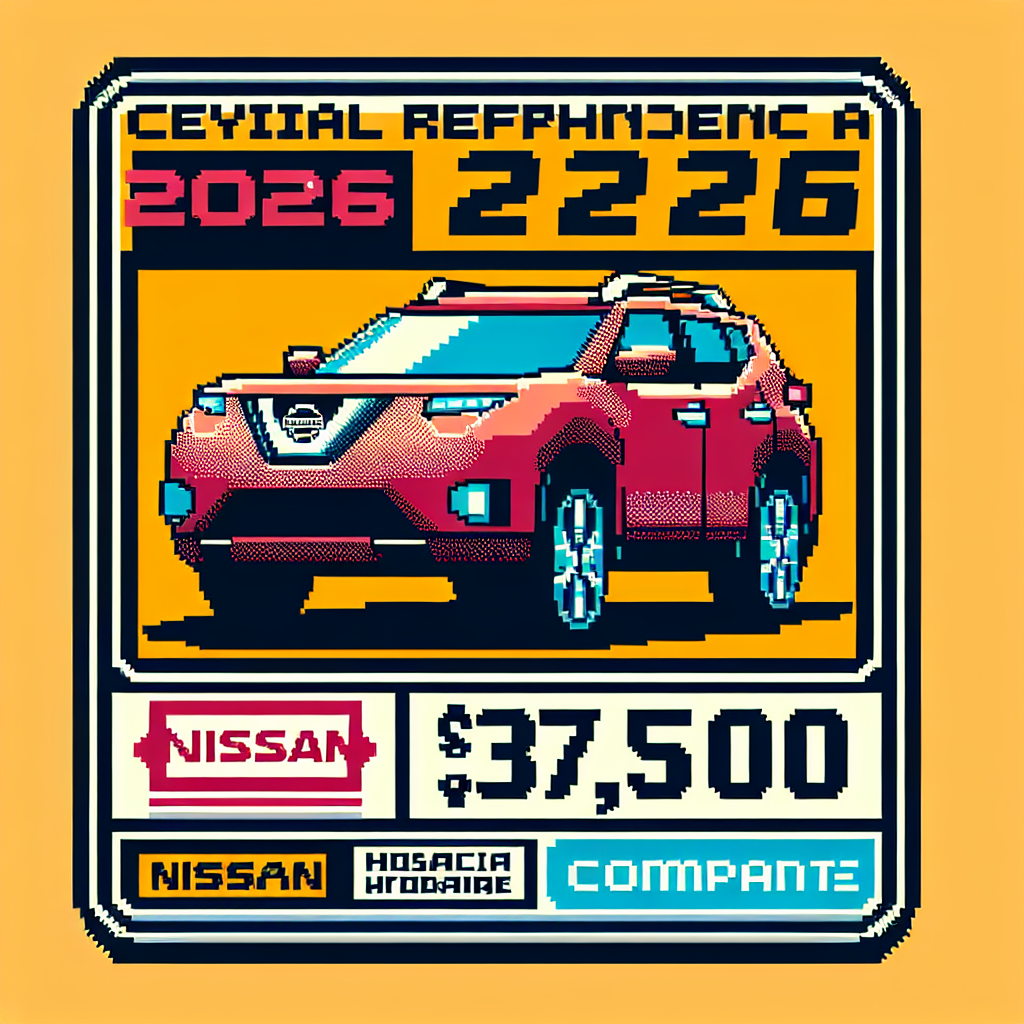
  • Nissan lists a starting MSRP of $37,500 for the base 2WD S (destination/handling adds $1,495).
  • The Rock Creek off‑road–oriented grade remains focused on light off‑road capability and gains a new Premium package and added convenience features.
  • Powertrain stays familiar: the proven 3.5L V6 with a nine‑speed automatic; towing and drivetrain options carry over with AWD standard on Rock Creek.

Why this refresh matters

Pathfinder is one of those mainstream three‑row SUVs that families buy and live with — not an attention‑seeking halo vehicle. For 2026, Nissan didn’t try to reinvent the model. Instead the changes are pragmatic and customer‑focused:

  • A larger, standard 12.3‑inch touchscreen and wireless smartphone integration bring the cabin into 2026 expectations without forcing buyers into an expensive option pack.
  • Camera and visibility upgrades (Front Wide View and an “Invisible Hood” view) improve low‑speed confidence when maneuvering with kids, trailers or campsite obstacles nearby.
  • Rock Creek’s continued availability — now with more feature availability and a Premium package — keeps Pathfinder relevant to buyers who want weekend‑off‑pavement capability without moving up to a body‑on‑frame truck/SUV.

Those are the sorts of changes that improve daily life and occasional adventure — the exact reasons many buyers choose a Pathfinder over rivals.

What’s new, trim by trim (high level)

  • Exterior: refreshed front/rear fascias, satin exterior badging, new color choices (including Baltic Teal), and new wheel designs on upper trims.
  • Interior/tech: standard 12.3‑inch infotainment screen, wireless Apple CarPlay and Android Auto, improved Qi2 wireless charging, and a revised dash with “PATHFINDER” embossing.
  • Cameras: SL, Platinum and Rock Creek gain Front Wide View (180°) and Invisible Hood View (virtual view under the hood).
  • Rock Creek: off‑road‑tuned suspension, all‑terrain tires, unique grille and bumper treatments, tubular roof rack, leatherette seats with Lava Red stitching, and a new Premium package that adds items like a panoramic moonroof, heated steering wheel and cargo power outlet (package availability depends on seating configuration).
  • Powertrain: same 3.5L V6 with nine‑speed automatic; Rock Creek gets a slightly higher horsepower tune on some reports. AWD remains optional on most trims and standard on Rock Creek.

Pricing and value perspective

Nissan’s release lists the base Pathfinder S 2WD MSRP at $37,500 (plus a $1,495 destination fee). The refreshed lineup spans modestly higher prices in many trims compared with the outgoing model, reflecting the added tech and features.

  • Pricing highlights from Nissan’s materials:
    • Pathfinder S 2WD — $37,500
    • Pathfinder Rock Creek 4WD — $45,000
    • Destination and handling — $1,495

Competitor coverage and media reporting show slightly different advertised starting figures in places (some outlets report the base S at around $38,995), so actual on‑dealer pricing may vary by market and dealer adjustments. Still, the Pathfinder continues to sit in the three‑row value band — appealing for buyers who want space and capability without premium pricing.

Who should consider the 2026 Pathfinder?

  • Families who need true three‑row seating and want modern infotainment without expensive add‑ons.
  • Buyers who want occasional off‑pavement capability — the Rock Creek fills this role well for trails, dirt roads and roof‑rack gear hauls.
  • Owners who value proven, naturally aspirated V6 reliability and towing flexibility over the latest hybrid or turbo architectures.

If you expect serious overlanding or extensive rock crawling, a more dedicated off‑road vehicle may be a better fit. But for weekend camping, sports gear, and highway towing, the refreshed Pathfinder remains a practical and comfortable choice.

My take

This refresh is smartly calibrated. Nissan didn’t chase gimmicks or overhaul the platform; it upgraded the items that most families notice every day — screens, charging, visibility and trim‑specific personality. Rock Creek’s improved availability and options make the Pathfinder feel more versatile without forcing buyers into expensive trim levels. The price increases are understandable given the tech gains, but whether they matter will depend on how dealers price each trim locally.

If you own a previous‑generation Pathfinder and it still does the job, you may not feel compelled to switch. But for new buyers shopping three‑row crossovers, the 2026 Pathfinder now presents a cleaner, more tech‑forward value proposition that keeps it competitive in a crowded segment.

Sources


Related update: We recently published an article that expands on this topic: read the latest post.

Ford recalls 272K EVs over rollaway risk | Analysis by Brian Moineau

A familiar wobble in the EV transition: Ford recalls more than 270,000 vehicles over roll-away risk

You’re halfway through your day, you click the car into Park, and—nothing obvious seems wrong. But a nagging software glitch could mean “Park” didn’t actually secure the drivetrain. That’s the blunt problem behind Ford’s latest recall: a software issue in the integrated park module that can let certain electric and hybrid vehicles roll away.

This recall landed December 19, 2025, and it’s one more reminder that the shift to electrified powertrains is as much about software reliability as it is about batteries and motors. (abcnews.go.com)

Highlights you can skim

  • Ford is recalling roughly 272,645 vehicles in the U.S. over an integrated park module that may fail to engage Park. (reuters.com)
  • Affected models include select 2022–2026 F-150 Lightning BEVs, 2024–2026 Mustang Mach‑E crossovers, and 2025–2026 Maverick pickups. (fordauthority.com)
  • Ford will provide a free software update delivered over-the-air (OTA) or at dealers; owner notices are expected beginning February 2, 2026. (fordauthority.com)

Why this matters beyond a sticker headline

Automakers have long had mechanical fail-safes (parking pawls, physical linkages and mechanical brakes). With electrified drivetrains and more functions controlled by software, the safety envelope depends increasingly on code. That introduces a few realities:

  • Software can be patched remotely, which is faster than a traditional parts campaign — but OTA updates rely on a secure, reliable update process and that owners allow or receive them. (fordauthority.com)
  • Recalls affecting high-profile EV and hybrid models intensify scrutiny of testing and validation practices across the industry. Consumers expect EVs to be modern in both hardware and software; lapses undercut trust. (reuters.com)
  • Even when nobody has reported accidents or injuries, a potential rollaway is serious: vehicles that move unexpectedly can injure pedestrians, damage property, or start chain-reaction crashes. Regulators classify that as a meaningful safety risk. (reuters.com)

What Ford owners should know and do

  • Affected count and models: about 272,645 U.S. vehicles — certain F-150 Lightning (2022–2026), Mustang Mach‑E (2024–2026), and Maverick (2025–2026). (reuters.com)
  • Remedy: Ford will issue a free park-module software update, via OTA or at dealers. Owner notifications are scheduled to begin February 2, 2026. The recall is logged under Ford reference 25C69. (fordauthority.com)
  • Immediate practical steps: until you get the update, use the physical parking brake every time you park, avoid steep inclines when possible, and follow any owner-letter instructions. If you’re unsure whether your VIN is affected, contact Ford customer service at 1-866-436-7332 or check NHTSA. (abcnews.go.com)

Bigger picture: what this says about EVs and risk

This recall is not an indictment of electrification. It’s a snapshot of where we are: cars are now rolling computers on wheels, and that brings powerful benefits (remote fixes, analytics, smoother integration) but also new single points of failure. Regulators like NHTSA are adapting to software-driven recalls, and manufacturers are racing to balance speed-to-market with deeper software validation.

Two structural tensions show up here:

  • Speed vs. robustness: OTA updates let manufacturers fix issues faster than the old parts-and-dealer model, but pushing software updates at scale requires rigorous testing and a secure distribution pipeline. (fordauthority.com)
  • Perception vs. reality: frequent software-related recalls can fuel headlines that EVs are “unreliable,” even when fixes are straightforward and remedial. Communicating transparently and quickly is everything. (reuters.com)

My take

Recalls like this are frustrating but inevitable as vehicles become more software-defined. The good news: the fix is software, which Ford can distribute without waiting for physical parts. The not-so-good news: repeated software-related recalls risk eroding consumer confidence unless manufacturers pair fixes with clearer testing and faster, more proactive communication.

For owners, cautious behavior (using the parking brake until your update arrives) is prudent. For Ford and other automakers, the path forward is plain: invest more in pre-release software validation and make OTA rollouts bulletproof — because patches are only as good as the systems that deliver them.

Sources


Related update: We recently published an article that expands on this topic: read the latest post.

Related update: We recently published an article that expands on this topic: read the latest post.
Rivian Digital Key: Wallet-Based Access | Analysis by Brian Moineau

A key in your pocket: Rivian Digital Key brings Gen 2 cars into your phone wallet

There’s a tiny moment of delight when you walk up to your car, your phone in your hand (or not), and the vehicle simply knows you’re there. Rivian just made that moment more seamless. On December 18, 2025, Rivian began rolling out Rivian Digital Key for Gen 2 R1T and R1S vehicles — a native digital-wallet car key experience for iPhone, Apple Watch, Google Pixel, and Samsung devices that lets owners unlock, share, and start their Rivian without the dedicated fob or the Rivian app’s Bluetooth-only workflow.

This isn’t just another “app feature” patch. It marks a bigger shift toward platform-level convenience, tighter hardware integration (Ultra-Wideband and NFC), and the standardization of car access across ecosystems.

Why this matters now

  • Smartphones have increasingly replaced physical items (boarding passes, credit cards, transit passes). Car keys are the next obvious candidate — but only when the integration is reliable and secure.
  • Rivian’s Gen 2 cars were built with newer connectivity and UWB hardware that make native wallet keys practical in ways first-gen Bluetooth approaches weren’t.
  • By supporting Apple Wallet, Google Wallet, and Samsung Wallet, Rivian avoids locking users into a single OS and taps into the “works-as-you-expect” experience people now expect from modern devices.

What Rivian Digital Key does

  • Native wallet integration: Add your Rivian Gen 2 car key to Apple Wallet (iPhone & Apple Watch), Google Wallet (Pixel), and Samsung Wallet.
  • Multiple unlocking modes: Ultra-Wideband (UWB) for precise hands-free proximity; NFC fallback that can work even when the phone is in power-reserve (Rivian notes up to ~5 hours on supported devices).
  • Key sharing: Send digital keys to family and friends instantly — no physical handoffs.
  • Broader device support: Works across major smartphone ecosystems to maximize owner convenience.
  • Requirements and flow: The feature arrives with Rivian’s 2025.46 OTA and Rivian Mobile App update (3.8.0); some Android implementations require recent OS versions (Android 15 / One UI 7.0 mentions in reporting).

(Technical specifics and exact device compatibility can vary; check your vehicle’s OTA status and the latest Rivian app release notes before expecting the feature on your car.)

How this compares to the old way

  • Old: Rivian’s earlier digital key used the Rivian app and Bluetooth Low Energy. It worked, but could be slower, less precise, and was app-dependent.
  • New: Keys live at the OS level (Wallet apps), enabling Express/Power Reserve, tighter proximity detection through UWB, native watch support, and a fallback NFC path if the battery is depleted. In short: faster, more reliable, and more integrated.

The broader context

  • Rivian is part of a broader industry trend: automakers are adopting the Car Connectivity Consortium (CCC) standards and integrating with phone wallet ecosystems. Apple Car Key and similar Android standards have been rolling out across several manufacturers in recent years.
  • This update arrives alongside other notable 2025.46 features (Universal Hands-Free driving modes and other Gen 2 improvements), signaling Rivian’s push to refine both autonomy and convenience features in tandem.
  • The move also reflects product lifecycle strategy: many automakers concentrate new platform-level integrations on newer vehicle generations, which can leave earlier owners waiting or requiring hardware retrofits.

Opportunities and caveats

  • Opportunities:

    • Simpler sharing: temporary or permanent digital keys can replace lending physical fobs.
    • Reduced lockout worry: Express/Power Reserve offers peace-of-mind if your phone dies.
    • Cross-platform parity: support for iOS and major Android ecosystems lowers friction for households with mixed devices.
  • Caveats:

    • Compatibility: older phones or Gen 1 vehicles may not gain the same functionality.
    • Security and privacy: while wallet-based keys typically have strong device-level protections, owners should follow best practices (device passcodes, biometric locks, OS updates).
    • Reliance on hardware: UWB and NFC behaviors depend on device and vehicle hardware; real-world performance can vary by device model and environmental conditions.

What this means for owners and would-be buyers

  • Gen 2 Rivian owners should look for the 2025.46 OTA and update the Rivian app (3.8.0+), then follow the wallet setup flow to add the car key.
  • If you’re evaluating Rivian vs. other EVs, consider how important native wallet integration is to your daily routine. For many buyers, the convenience of wallet-based keys will be a useful tie-breaker.
  • If you own a Gen 1 R1 and hoped for parity, note that many of these features rely on Gen 2 hardware and may not be fully transferable without retrofits.

A few practical tips for setup

  • Update the Rivian mobile app to the version that mentions wallet support (3.8.0 or later) and ensure your vehicle has received the 2025.46 OTA.
  • For iPhone owners: confirm iOS 17.4.1+ and Wallet readiness; for Apple Watch, make sure NFC works and watchOS is up to date.
  • For Android owners: check Google Wallet or Samsung Wallet compatibility and any OS version requirements (reporting has referenced Android 15 / One UI 7.0 for some features).
  • Keep your device OS updated and enable device-level protections (Face ID/Touch ID, PIN/passcode) for security.

My take

Rivian Digital Key is one of those “small” features that changes daily life more than you’d expect — especially once you get used to your phone being the primary interface for everything. By moving car access into native wallets and leveraging UWB/NFC, Rivian has reduced friction and added resilience (power reserve) against common real-world annoyances. It’s also a vote of confidence in cross-platform standards: owners shouldn’t need to swap ecosystems to get convenience parity.

That said, manufacturers must balance excitement with clarity: clear communication about device and vehicle compatibility will be crucial to avoid confusion, particularly between Gen 1 and Gen 2 owners. If Rivian keeps this momentum — and continues to make ownership feel like a continuous software upgrade — these moments of polish could become a meaningful competitive advantage.

Final thoughts

Digital keys are a practical example of how cars are becoming platforms rather than standalone devices. When automakers, OS vendors, and standards groups converge on simple, secure experiences like this, the payoff is everyday delight: fewer fumbling moments at the door, easier sharing with family, and one less physical item to misplace. Rivian’s rollout for Gen 2 is a smart step in that direction — now it’s about execution, clarity, and getting the experience right for every owner and device.

Sources


Related update: We recently published an article that expands on this topic: read the latest post.

Related update: We recently published an article that expands on this topic: read the latest post.


Related update: We recently published an article that expands on this topic: read the latest post.

Megazilla vs Godzilla: Ford V8 Showdown | Analysis by Brian Moineau

When Ford turned Godzilla into Megazilla: a friendly explainer

You know that feeling when a factory truck engine moonlights as a hot-rod hero? Ford did exactly that. The Godzilla V8 started life as a burly, no-nonsense 7.3‑liter powerplant for Super Duty trucks — built for durability and torque — and Ford Performance then took that same basic architecture and forged it into Megazilla: a high-performance crate engine aimed at builders who want big displacement with even bigger attitude.

Below I break down what’s actually different between the two, why those differences matter, and whether the price jump is justifiable for different kinds of projects.

Quick highlights

  • Godzilla = the stock 7.3L truck engine: reliable, simple, tuned for longevity and towing.
  • Megazilla = a factory-built high-performance version of the same 7.3L platform with upgraded internals, heads, and a larger throttle body — roughly +180–185 hp and a huge torque bump.
  • Megazilla is sold as a crate engine and carries a much higher price and competition-use positioning compared with the more utilitarian Godzilla.

Why people care: the setup and the story

When Ford introduced the Godzilla 7.3L (around 2020), it wasn’t trying to win a horsepower war. It was offering a big-displacement pushrod V8 for heavy-duty trucks that favors durability, serviceability, and broad torque. That engine’s cast‑iron block, simple cam‑in‑block pushrod layout, and conservative internals made it ideal for work trucks.

Enter Megazilla: Ford Performance saw a platform with tons of potential and built a crate engine that keeps the block and displacement but swaps in stronger internals and performance cylinder heads to make a thoroughly different animal — one aimed at hot rods, track cars, desert rigs, and high‑power builds.

Key technical differences

  • Displacement and block
    • Both are 7.3 liters with the same cast‑iron block — the shared foundation is part of what makes this transition possible.
  • Internals
    • Godzilla: production truck internals (hypereutectic pistons or similar factory pieces, powdered‑metal connecting rods in the standard form).
    • Megazilla: forged Mahle pistons, forged Callies H‑beam connecting rods, and other beefed‑up hardware to handle much higher rpm and power.
  • Cylinder heads and breathing
    • Megazilla gets CNC‑ported, higher‑flow heads and a larger throttle body (reported ~92 mm vs the Godzilla’s ~80 mm) plus a low‑profile intake to improve airflow.
  • Cam and valve train
    • The Megazilla’s cam and valve gear are tuned for more aggressive timing and higher powerband compared with the truck tune.
  • Power and torque (real-world, factory figures)
    • Godzilla (stock truck tune): ~430 hp and about 475 lb‑ft (varies slightly by model year/tune).
    • Megazilla (naturally aspirated crate engine): ~615 hp and roughly 638 lb‑ft of torque (peak and usable torque is much broader).
  • Forced‑induction option
    • Ford and aftermarket builders have pushed the platform even further — Ford Performance later offered a supercharged “Megazilla 2.0” that can exceed 1,000 hp for competition use.
  • Legality and intended use
    • Godzilla is a production, emissions‑compliant engine used in Super Duty trucks.
    • Megazilla crate engines are positioned for builds; higher‑output or supercharged variants are often flagged for competition or off‑road use (non‑street legal in some configurations).

The numbers that catch attention

  • Horsepower delta: Megazilla ≈ 615 hp vs Godzilla ≈ 430 hp — roughly +180–185 hp.
  • Torque delta: Megazilla peaks around the mid‑600s lb‑ft vs Godzilla’s mid‑400s — a dramatic increase and much more usable across the rev range.
  • Price delta: Godzilla crate engines or production installations are available for much less (Godzilla crate pricing has been listed in the low‑$9k range historically), whereas Ford listed the Megazilla crate engine at around $22,995 when it went on sale — a sizable premium for the performance hardware and turn‑key nature.

So, is the Megazilla “worth it”?

  • For hot‑rod builders, race teams, desert racers, or anyone who wants a straight, factory‑supported path to big, reliable NA V8 power — yes, Megazilla is compelling. It removes much of the guesswork and fabrication required to push a truck engine to these numbers.
  • For truck owners who prioritize towing, longevity, and emissions compliance, the stock Godzilla is the practical choice. It’s lighter on wallet, proven in work use, and fully road‑legal in production trucks.
  • For budget-minded tuners, some may prefer buying a Godzilla crate engine and upgrading specific components themselves; that can be cheaper but takes time, expertise, and risk.

My take

There’s something deliciously irreverent about Ford turning a cast‑iron truck V8 into a crate engine with supercar‑level horsepower. Megazilla isn’t just “more Godzilla”; it’s a factory‑built answer to a specific demand: builders wanting a big‑bore, durable V8 that’s already optimized for high power. The price is steep, but for many it’s the convenience, reliability, and Ford Performance backing that seal the deal.

If you’re building a trophy truck, a track monster, or a high‑power restomod and your budget isn’t shy, Megazilla is a turnkey shortcut to headline numbers. If you’re after a straightforward, workaday V8 that won’t get you arrested or exceed emissions limits, Godzilla remains an elegant and sensible choice.

Sources


Related update: We recently published an article that expands on this topic: read the latest post.


Related update: We recently published an article that expands on this topic: read the latest post.


Related update: We recently published an article that expands on this topic: read the latest post.

Google Maps Auto-Saves Your Parked Car | Analysis by Brian Moineau

A small update that will save millions of minutes: Google Maps now saves where you parked — on iPhone first

You know that tiny moment of panic after a concert or grocery run: you step out of the car, the lot looks the same from every angle, and your brain suddenly forgets which row, level, or light pole you claimed. Google just smoothed that friction — quietly, neatly, and in a way that will actually matter to everyday drivers.

Google Maps on iPhone can now automatically detect when your drive ends and drop a parked-car pin for you. No manual saving, no photo-taking, no mental note needed. The pin expires or disappears when you start driving again. For people who spend any part of their life hunting for a parked car, that’s a tiny UX miracle. (tomsguide.com)

Why this feels bigger than it sounds

  • It replaces a repetitive microtask (save parking spot) with an invisible one. People hate extra steps. Removing them increases satisfaction and adoption.
  • The feature works when your phone connects to the car (USB, Bluetooth or CarPlay), so it fits with how most of us already use phones in cars. (tomsguide.com)
  • Google preserves privacy-friendly behavior: the pin goes away when you drive again and auto-removal limits clutter (the saved spot lasts up to 48 hours in initial reports). (the-sun.com)

This kind of seamless assistance is exactly the sort of small automation that moves a feature from “nice to have” to “I use it every time.”

A little context: parking features on phones aren’t new — but automation is

Both Apple Maps and Google Maps have supported manually saved parking locations for years. Apple’s iPhone has also long offered a parked-car marker when you disconnect from CarPlay or a car’s Bluetooth, provided certain privacy/location settings are enabled. What’s new here is that Google’s parking save is automatic and, crucially, it’s rolling out first to iPhone users rather than Android. (support.apple.com)

That reversal — a Google feature debuting on iOS first — is notable in itself. It highlights how cross-platform product strategies and device ecosystems have evolved: developers target where the feature will have immediate impact and reach. For end users, that just means the convenience is arriving where they are, sooner. (tomsguide.com)

What drivers should know

  • How it triggers: your phone must be connected to the car via USB, Bluetooth, or Apple CarPlay while you drive. When you stop and disconnect, Maps will show a parking pin next time you open it. (tomsguide.com)
  • How long it stays: early reports suggest the pin persists up to 48 hours unless you start driving again. (the-sun.com)
  • Appearance: Google now supports custom car icons for parking, so instead of a default “P” you might see a colored car icon you previously selected. (tomsguide.com)
  • Android parity: Android already has parking reminders but requires manual removal of the icon in many cases; Google hasn’t committed to an Android timeline for automatic pin removal. (tomsguide.com)

Who benefits most

  • City drivers juggling street parking and multi-level garages.
  • Shoppers, concertgoers, and travelers who park in unfamiliar or large lots.
  • People who share cars or switch vehicles — automatic detection reduces human error.
  • Fleet drivers and gig workers who frequently stop and restart drives (though corporate device policies may affect behavior).

In short: anyone who’s ever spent extra minutes circling a lot will appreciate the time savings and stress reduction.

Potential privacy and edge-case considerations

  • Location settings and permissions still matter. If you’ve tightened up Location Services or “Significant Locations” settings on iPhone, the parked-car marker might not appear reliably. Apple’s Maps similarly depends on those system settings, which illustrates how platform privacy controls shape functionality. (support.apple.com)
  • Repeated parking at the same location (home/work) may not trigger a pin, by design, to avoid clutter and false positives. (support.apple.com)
  • Shared cars or phones could produce confusing markers if multiple users connect to the same vehicle. Expect a few kinks as the feature hits more users.

My take

This is the kind of product improvement that wins quietly: it doesn’t need a splashy headline, but it measurably improves daily life. Saving a few minutes and removing mild stress across millions of trips compounds into real user delight. Google shipped sensible defaults (auto-removal, limited lifetime) and leaned into existing behaviors (phone–car connections), which makes the feature more likely to “just work.”

I’d like to see Google confirm an Android rollout plan — especially because Android users often park across more device types and car setups — but as a practical matter, iPhone users will enjoy the convenience right away. (macrumors.com)

Quick practical tips

  • Check your phone’s location and Maps settings so the feature can run:
    • On iPhone: Settings > Privacy & Security > Location Services and System Services (Significant Locations). Also check Settings > Maps > Show Parked Location. (support.apple.com)
  • If you prefer not to have parked pins shown, disable the Maps parked-location option.
  • If you customize your “car icon” in Google Maps, watch for that icon to appear at your parking spot — small personalizations like that make the feature feel tailored to you. (tomsguide.com)

Final thoughts

Technology's biggest wins often come from reducing tiny frictions. A saved parking pin is not a paradigm shift, but it’s a thoughtful quality-of-life tweak that will quietly save time and frustration for a huge number of people. If you drive and carry a phone, expect fewer confused walks around parking lots and more time enjoying where you actually meant to be.

Sources


Related update: We recently published an article that expands on this topic: read the latest post.


Related update: We recently published an article that expands on this topic: read the latest post.


Related update: We recently published an article that expands on this topic: read the latest post.


Related update: We recently published an article that expands on this topic: read the latest post.

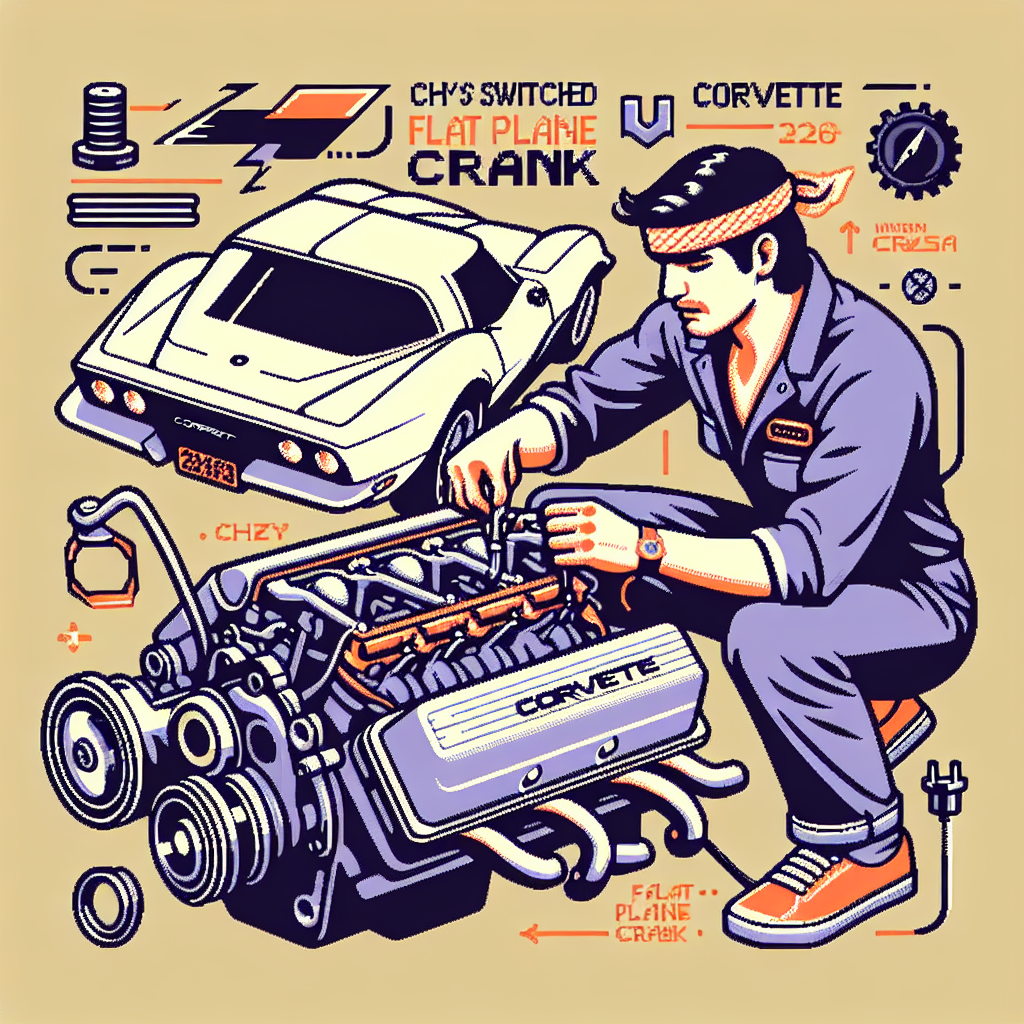
Why Chevy’s Corvette Went Flat‑Plane | Analysis by Brian Moineau

Why Chevy Went Flat‑Plane: The Corvette’s V8 That Screams Like an Exotic

There’s a moment you can’t forget the first time you hear a flat‑plane V8 alive at full song: a high, urgent wail that feels less “American V8” and more “race car from Italy.” That’s exactly what Chevrolet chased with the LT6 in the C8 Z06 — a 5.5‑liter V8 built to rev, breathe, and sound like nothing else in the Corvette family. But the change wasn’t just about noise and showmanship. It was a careful engineering choice that traded old-school torque curves and a burbly soundtrack for low rotating mass, cleaner breathing, higher revs, and — yes — a distinctive personality.

The moment that mattered

  • The LT6 is a purpose‑built, naturally aspirated 5.5L V8 with a flat‑plane crank, dual overhead cams, titanium rods, and a racing‑level dry sump system.
  • Chevrolet’s aim: make a production, naturally aspirated V8 that can reliably rev into the 8,000s and deliver peak power at very high rpm — something cross‑plane street V8s struggle to do without heavy compromise.
  • The result: 670 hp at around 8,400 rpm and a redline in the neighborhood of 8,600 rpm (GM figures), and an exhaust that sounds more exotic than its lineage.

What a flat‑plane crank actually does

  • Different journal layout: a flat‑plane crank spaces its rod journals 180° apart in one plane (think two 4‑cylinder engines sharing a crank), versus the 90° stagger of a traditional cross‑plane V8.
  • Alternating firing order: the firing alternates bank to bank, which evens out intake/exhaust pulses and helps the engine “breathe” with less internal interference.
  • Lower rotational inertia: flat‑plane cranks can be made lighter and require smaller counterweights, which helps the engine accelerate in rpm faster and sustain higher revs.
  • Distinctive sound: the alternating banks and equal‑length header pulses create a higher‑pitched, exotic‑style wail that’s immediately recognizable.

The tradeoffs Chevrolet accepted — and fixed

  • More vibration: flat‑plane V8s are inherently less naturally balanced than cross‑plane V8s, producing stronger secondary vibrations and lateral shaking.
  • How Chevy mitigated it:
    • Radical weight reduction in reciprocating parts: forged aluminum pistons, forged titanium connecting rods, and a lightweight harmonic balancer.
    • Short stroke and oversquare bore (large bore, short stroke) to reduce piston speeds and secondary vibration at high rpm.
    • Sophisticated engine mounts, NVH tuning, and chassis-level solutions borrowed from racing development to keep the car civilized in everyday driving.
    • An advanced oiling system (multiple scavenge stages/dry sump) and a race‑derived valvetrain for reliability at sustained high rpm.

Why it mattered for performance

  • Rev capability: lower rotating mass and optimized breathing let the LT6 stay healthy at very high engine speeds, where horsepower is won.
  • Better volumetric efficiency: alternating bank pulses allow cleaner intake and exhaust flow strategies (including variable intake tuning) so the engine can develop torque farther up the rev range.
  • Race development benefits: the LT6 architecture was honed in the C8.R race program, accelerating learning for durability and packaging for a production car.
  • Packaging and weight penalty balance: while the flat‑plane design posed new NVH and packaging challenges, the payoff in peak power and engine character was judged worth it for a track‑focused Z‑model.

Notes on the exhaust and sonic design

  • Engineering the exhaust for a flat‑plane V8 is more than bolting on pipes. The LT6 uses equal‑length headers and a purposely tuned mid‑mounted/center exit exhaust layout to shape the sound and manage pulse interactions.
  • Chevy’s approach avoided X‑pipes that would damp the exotic note; instead they tuned the routing and mufflers so the sound is dramatic yet controllable, projecting into the cabin in a satisfying way.

What this means for Corvette buyers and enthusiasts

  • If you want raw, high‑revving, naturally aspirated V8 character with race‑car breathing and exotic sound, the LT6 Z06 delivers it.
  • If you prefer low‑down torque and the traditional burble of the classic American cross‑plane V8, the standard Stingray and its LT2 will feel more familiar.
  • The LT6 represents a deliberate pivot: use advanced materials and race‑derived engineering to get the best out of a flat‑plane design while minimizing the compromises that once confined those cranks to small‑production exotics.

Highlights to remember

  • The LT6’s flat‑plane crank reduces rotating mass and allows very high revs.
  • Alternating bank firing improves breathing and helps extract power at high rpm.
  • Engineering countermeasures (light internals, short stroke, race oiling, mounts, NVH tuning) tame vibration and make the concept viable for production.

My take

Chevy’s decision to fit the Z06 with a flat‑plane crank wasn’t a fashion statement — it was a performance-first engineering gambit. By leaning into lightweight components, race‑proven oiling and valvetrain tech, and carefully tuned exhaust and mounts, Chevrolet turned a historically exotic idea into a viable production solution. The LT6 is thrilling because it’s uncompromising where it counts: it revs hard, breathes freely, and sounds alive. For the enthusiast who wants a naturally aspirated V8 that behaves like a race engine on the street, that tradeoff — more NVH complexity for raw, rev‑happy performance — is exactly the point.

A few final thoughts

The shift to a flat‑plane crank in the Corvette Z06 is a reminder that automotive progress isn’t always about downsizing or electrification. Sometimes it’s about revisiting old ideas with new materials and systems and extracting performance in a visceral, memorable way. The LT6 showcases how race tech can be adapted to production with dramatic results — and gives the Corvette a voice that turns heads in a different register.

Sources


Related update: We recently published an article that expands on this topic: read the latest post.


Related update: We recently published an article that expands on this topic: read the latest post.


Related update: We recently published an article that expands on this topic: read the latest post.

Teslas Robotaxi Claims: Reality Check Time | Analysis by Brian Moineau

Tesla’s Robotaxi Claims: A Closer Look at Reality vs. Hype

Tesla has always been a company that thrives on innovation and bold claims. From electric vehicles that redefine what it means to drive, to promises of autonomous driving that seem to leap straight out of a sci-fi movie, the company has consistently pushed the envelope. But recent reports suggest that Tesla’s latest claim—launching a ride-hailing service in San Francisco using Robotaxi technology—might be more smoke and mirrors than actual reality. Let’s dive into what’s really going on.

Context: The Rise and Hype of Autonomous Driving

The concept of autonomous vehicles has captured the imagination of consumers and investors alike for years now. Companies like Tesla, Waymo, and Uber have been racing to develop self-driving technology, each claiming to be on the verge of a breakthrough. Tesla, led by the charismatic Elon Musk, has often touted its Full Self-Driving (FSD) capabilities, claiming that its cars are just a software update away from full autonomy.

However, the reality is far less clear-cut. While Tesla has made strides in developing its FSD technology, it is still classified as a Level 2 driver-assistance system. This means that, despite its impressive capabilities, human intervention is still necessary. The recent claim about launching a Robotaxi service in San Francisco has raised eyebrows, as many experts point out that Tesla has yet to roll out fully autonomous taxis anywhere in California.

What’s the Real Story Behind Tesla’s Robotaxi Claims?

In a recent article by Electrek, it was reported that Tesla is attempting to create an illusion for investors, suggesting that it has already launched a ride-hailing service powered by its Robotaxi technology. The truth is, there are significant regulatory and technological hurdles that stand in the way of such a service becoming a reality. California has stringent regulations for autonomous vehicles, and Tesla’s current offerings do not meet the requirements for fully autonomous operation.

Furthermore, the competition in the autonomous vehicle space is fierce. Companies like Waymo and Cruise are already testing their self-driving services in limited areas, but they face the same hurdles as Tesla. This makes it imperative for Tesla to clarify its position and capabilities—especially as it seeks further investment and market share.

Key Takeaways

Misleading Claims: Tesla’s announcement about a Robotaxi service may not reflect the current state of its technology and regulatory approval. – Current Technology Level: As of now, Tesla’s Full Self-Driving is classified as Level 2, requiring human oversight. – Regulatory Hurdles: California’s strict regulations on autonomous vehicles make it challenging for companies to launch fully autonomous ride-hailing services. – Investor Caution: Potential investors should approach Tesla’s claims with a discerning eye, as the realities of autonomous technology are still evolving. – Competition is Fierce: Other companies in the autonomous vehicle space, like Waymo and Cruise, are also navigating the complexities of regulations and technology.

Conclusion: A Call for Transparency

As exciting as the prospect of Robotaxis is, it’s essential for companies like Tesla to maintain honesty and transparency in their communications. Misleading claims can erode trust among consumers and investors alike. While the dream of fully autonomous vehicles is still alive, we must ground our expectations in the current realities of technology and regulation. As we navigate this rapidly changing landscape, let’s keep our eyes on the road ahead—both literally and figuratively.

Sources

– “Tesla is trying to deceive investors into thinking it has San Francisco Robotaxis – Electrek.” Electrek. [link](https://electrek.co/2023/10/19/tesla-trying-deceive-investors-sf-robotaxis/) – “The Truth About Tesla’s Full Self-Driving.” MotorTrend. [link](https://www.motortrend.com/news/tesla-full-self-driving-truth/)

By understanding the nuances of Tesla’s claims and the broader context of autonomous vehicle technology, we can appreciate the potential while remaining cautious of the hype.


Related update: We recently published an article that expands on this topic: read the latest post.


Related update: We recently published an article that expands on this topic: read the latest post.


Related update: We recently published an article that expands on this topic: read the latest post.

GM Stock Soars After Strong Q3 Earnings | Analysis by Brian Moineau

Why GM Stock Is Soaring After Reporting Third-Quarter Earnings Despite EV Woes

Have you noticed how the stock market can be like a rollercoaster ride? One minute, everything seems to be in a free fall, and the next, a company releases earnings that send its stock soaring. Such is the case with General Motors (GM) this week, as it reported its third-quarter earnings that left analysts and investors alike buzzing. Despite challenges in the electric vehicle (EV) sector, GM managed to exceed expectations, and its stock is reaping the rewards.

Context: GM’s Q3 Earnings and the EV Landscape

General Motors has faced its fair share of hurdles in the rapidly evolving automotive market, particularly with the shift towards electric vehicles. Competing giants like Tesla and Ford are also vying for dominance in this space, making the stakes incredibly high. However, GM’s recent Q3 earnings report revealed a different story. The company reported earnings that easily beat analysts’ expectations and even raised its guidance for the remainder of the year. This news is significant, especially considering the current landscape where the EV market is still maturing and fraught with challenges.

The automotive industry is undergoing a seismic shift. With consumers increasingly leaning towards sustainable energy options, companies are racing to develop competitive EV models. While Tesla has long been the face of EV innovation, GM is stepping up its game with ambitious plans for its electric lineup. However, the path hasn’t been without its bumps—issues such as supply chain constraints and market competition have posed challenges for many automakers.

Key Takeaways

Earnings Beat Expectations: GM reported Q3 earnings that surpassed analyst forecasts, showcasing robust performance.

Upward Guidance: The company raised its guidance for the rest of the year, indicating a promising outlook.

EV Challenges Persist: Despite the positive earnings report, GM continues to grapple with challenges in the EV sector, underscoring the complexities of this transition.

Market Impact: The performance of GM has implications for the broader automotive market, especially as competitors like Tesla and Ford prepare to report their earnings.

Investors’ Confidence: The earnings report has reignited investor confidence in GM, leading to a surge in its stock price.

Conclusion: A Bright Spot Amidst Challenges

GM’s recent earnings success serves as a reminder that even in turbulent times, companies can find ways to thrive. While the EV market poses unique challenges, GM’s ability to outperform expectations suggests that it is adapting well to changing market dynamics. As we look ahead, it will be interesting to see how other automakers respond and whether GM can maintain this momentum in the increasingly competitive landscape of electric vehicles.

As always, it’s crucial for investors to stay informed and consider both the opportunities and challenges that lie ahead in the automotive sector.

Sources

1. “Why GM Stock Is Soaring After Reporting Third-Quarter Earnings Despite EV Woes – Investor’s Business Daily”
[Investor’s Business Daily](https://www.investors.com/news/technology/gm-stock-soaring-q3-earnings-ev-woes/)

2. “Electric Vehicle Market Trends for 2023” [Business Insider](https://www.businessinsider.com/electric-vehicle-market-trends-2023)

By staying informed and engaged, we can navigate the complexities of the automotive industry and make informed decisions about our investments.


Related update: We recently published an article that expands on this topic: read the latest post.


Related update: We recently published an article that expands on this topic: read the latest post.


Related update: We recently published an article that expands on this topic: read the latest post.


Related update: We recently published an article that expands on this topic: read the latest post.

Affordable EVs: Teslas Game-Changing Shift | Analysis by Brian Moineau

Exploring Tesla’s Affordable EVs: The Shift Towards Accessible Electric Cars

If you’ve been following the electric vehicle (EV) market, you know that Tesla has long been a household name synonymous with innovation and luxury. But recently, the buzz has shifted gears with the launch of their more affordable models—the Model Y and Model 3 Standard. This move comes after years of anticipation and has ignited conversations about the future of electric cars in the United States. Are these new offerings enough to convince the skeptics? Let’s dive into the latest developments and explore what else is available for those seeking budget-friendly electric vehicles.

Context: The Evolving Electric Vehicle Landscape

Tesla has dominated the EV conversation for years, with its cutting-edge technology and sleek designs. However, the price point of many of its vehicles has often been a barrier to entry for the average consumer. Elon Musk has teased the prospect of more affordable models for quite some time, and with the recent launch of the Model Y and 3 Standard, it seems that Tesla is finally delivering on that promise.

As consumers become increasingly aware of climate change and the need for sustainable transportation, the demand for affordable electric vehicles has surged. According to recent reports, the U.S. electric vehicle market is projected to grow significantly in the coming years, making it essential for manufacturers, including Tesla, to cater to a wider audience.

With the introduction of these new models, Tesla aims to capture a larger share of the market and encourage more drivers to make the switch from gas to electric. But what if Tesla’s offerings don’t quite match your budget or needs? Luckily, there are plenty of other affordable electric cars available in the market.

Key Takeaways

Tesla’s New Affordable Models: The launch of the Model Y and Model 3 Standard aims to make electric vehicles more accessible to consumers who previously found Tesla’s pricing prohibitive.

Growing EV Market: The U.S. electric vehicle market is expected to expand rapidly, with increased consumer interest in sustainable transportation options.

Variety of Options: If Tesla’s affordable models aren’t quite what you’re looking for, there are numerous other budget-friendly electric cars available in the U.S. that combine performance with value.

Consumer Awareness: The need for sustainable choices is driving demand for EVs, making it crucial for automakers to innovate and provide affordable solutions.

Future of Mobility: The introduction of more affordable EVs could be a game-changer in the transition toward a more sustainable future, influencing consumer behavior and automotive trends.

Concluding Reflection

Tesla’s recent foray into affordable electric vehicles marks a significant step forward not only for the company but for the entire EV industry. As we witness the landscape of electric mobility evolve, it’s essential to recognize the increasing variety of options available to consumers. Whether you’re drawn to the Tesla brand or exploring other alternatives, the future of electric vehicles is bright and more accessible than ever. This shift could ultimately lead to a greener, more sustainable world, one electric car at a time.

Sources

– Business Insider. “Not sold on Tesla’s affordable EVs? Here are all the cheapest electric cars for sale in the US.” [Business Insider](https://www.businessinsider.com/cheapest-electric-cars-us-tesla-affordable-evs-2023-10)

Now is the perfect time to explore your options and find an electric vehicle that fits your lifestyle and budget. Happy driving!


Related update: We recently published an article that expands on this topic: read the latest post.


Related update: We recently published an article that expands on this topic: read the latest post.


Related update: We recently published an article that expands on this topic: read the latest post.

Revolutionizing EVs: How In-Wheel Motors C | Analysis by Brian Moineau

Revolutionizing the Road: In-Wheel Motors and the Future of Electric Vehicles

The automotive landscape is on the verge of a seismic shift, shifting gears from traditional combustion engines to cutting-edge technology that could redefine how we think about cars. Imagine a vehicle where each wheel is powered independently, delivering up to 300 horsepower per wheel—sounds like something out of a sci-fi movie, right? But this is not just a fantasy; it’s the promise of in-wheel motors, spearheaded by innovators like Protean Electric.

The Rise of In-Wheel Motors

In an era where electric vehicles (EVs) are gaining traction, the introduction of in-wheel motors is set to disrupt the status quo. Traditional vehicles rely on complex mechanical systems, including transmissions, to transfer power from the engine to the wheels. In contrast, in-wheel motors eliminate the need for these bulky components, allowing for a more efficient, compact design. This innovation not only streamlines vehicle architecture but also enhances the overall driving experience.

Protean Electric, a pioneer in this technology, has captured attention with the potential to deliver impressive power, torque, and efficiency—all while minimizing weight and maximizing space. Their in-wheel motors could redefine performance metrics for EVs by 2026, promising a new era of automotive engineering.

Why This Matters

As the world pivots toward sustainability, the automotive sector is under immense pressure to innovate. The push for cleaner energy alternatives has led to a surge in electric vehicle adoption, but traditional designs are often encumbered by outdated mechanics. The integration of in-wheel motors aligns with the global imperative for greener solutions while also enhancing vehicle performance.

In addition to performance enhancements, this technology could significantly reduce manufacturing costs and maintenance challenges associated with conventional vehicles. With electric vehicles set to dominate the market, innovations like in-wheel motors could pave the way for a new generation of smarter, more efficient cars.

Key Takeaways

Power and Performance: In-wheel motors could deliver up to 300 horsepower per wheel, significantly enhancing acceleration and driving dynamics. – Simplicity in Design: By removing the need for traditional transmissions and reducing the number of moving parts, in-wheel motors simplify vehicle architecture. – Sustainability Focus: This technology aligns with the global shift toward electric vehicles, promoting cleaner energy solutions in the automotive industry. – Efficiency Gains: With less weight and a more compact design, in-wheel motors could lead to improved energy efficiency in EVs. – Future Outlook: By 2026, we might see a significant rollout of vehicles equipped with this technology, marking a pivotal moment in automotive history.

A New Era of Driving

As we stand at the crossroads of automotive evolution, in-wheel motors exemplify the innovative spirit that drives the industry forward. While traditional cars have served us well, the future is bright for electric vehicles powered by groundbreaking technologies that promise speed, efficiency, and sustainability.

The road ahead may be filled with challenges, but with advancements like in-wheel motors, the horizon looks promising. Buckle up—this journey is just beginning!

Sources

– “They’re Destroying Traditional Cars”: In-Wheel Motors Eliminate Transmissions While Promising 300 Horsepower Per Wheel By 2026 – Energy Reporters

As we navigate this exciting transformation, it’s essential to stay informed and engaged with the changes shaping the vehicle of tomorrow. What are your thoughts on in-wheel motors? Will they be the key to unlocking the full potential of electric vehicles? Let us know in the comments!


Related update: We recently published an article that expands on this topic: read the latest post.


Related update: We recently published an article that expands on this topic: read the latest post.

Porsche says EV intransigence will lose it $6B. Its solutio…

Porsche says EV intransigence will lose it $6B. Its solutio…

Porsche’s Slow Move into the EV Market: A $6 Billion Gamble As the world races toward electrification, it’s hard to imagine a storied automaker like Porsche ch…

Porsche’s Slow Move into the EV Market: A $6 Billion Gamble

As the world races toward electrification, it’s hard to imagine a storied automaker like Porsche choosing to hit the brakes. Yet, in a recent announcement, Porsche hinted at a strategy that might just do that—potentially costing the company a staggering $6 billion. In a time when competitors, particularly from China, are speeding ahead in the electric vehicle (EV) space, one has to wonder: is Porsche’s decision to take its time a strategic masterstroke or a major misstep?

Understanding the Landscape of the EV Market

To grasp the implications of Porsche’s recent announcement, we need to look at the broader context of the automotive industry. The global shift towards electric vehicles is not just a trend; it’s a revolution. Governments worldwide are setting ambitious targets for phasing out internal combustion engines, and consumers are showing an increasing preference for sustainable options.

As Tesla continues to lead the charge in EV innovation and Chinese manufacturers like BYD and NIO accelerate their market presence, traditional automakers face mounting pressure to adapt or risk obsolescence. Instead of embracing the urgency of this moment, Porsche seems to be opting for a more gradual approach, citing concerns about profitability and market readiness.

The $6 Billion Question: Why Move Slower?

Porsche has publicly stated that its cautious stance could lead to a loss of $6 billion. This figure is not just a number; it represents the potential market share and innovation opportunities that could slip through its fingers as it lags behind quicker competitors. The rationale behind this slower rollout seems to be rooted in an effort to maintain the brand’s luxury status and ensure the quality of its vehicles.

However, this strategy raises eyebrows. With the rapid advancements in battery technology and the increasing availability of charging infrastructure, the argument for taking a slower approach becomes less convincing. As competitors continue to innovate and capture consumer interest with their cutting-edge EV offerings, Porsche risks becoming irrelevant in a market that is evolving faster than ever.

Key Takeaways

Porsche’s Slow Strategy: The automaker is choosing a gradual approach to EV development, potentially sacrificing $6 billion in market opportunities. – Competitors on the Fast Track: Rivals, especially from China, are rapidly innovating and capturing market share, putting Porsche at risk of falling behind. – Luxury vs. Innovation: Porsche is trying to balance its luxury brand image with the need for technological advancement, a challenging tightrope to walk in this fast-paced market. – Market Readiness Concerns: The company cites concerns about profitability and market readiness for EVs, but these fears may not hold water as consumer demand grows. – The Stakes are High: With the automotive industry in a state of flux, slow decisions could have long-term consequences for brand relevance and market position.

Concluding Reflection

In a world where agility often trumps tradition, Porsche’s strategy of moving slowly into the EV market could be seen as a gamble that might not pay off. While there’s something to be said for maintaining quality and brand integrity, the question remains: can a luxury automaker afford to be slow in an industry that’s shifting beneath its feet? Only time will tell if Porsche’s cautious approach will secure its legacy or if it will find itself left in the dust by more nimble competitors.

Sources

– “Porsche says EV intransigence will lose it $6B. Its solution? Move even slower – Electrek” [Electrek](https://electrek.co/2023/10/20/porsche-ev-intransigence-6-billion-solution-move-slower/)

By keeping tabs on the evolving landscape, we can better understand how legacy brands like Porsche adapt—or fail to adapt—to a new world that demands speed, innovation, and sustainability.


Related update: We recently published an article that expands on this topic: read the latest post.


Related update: We recently published an article that expands on this topic: read the latest post.


Related update: We recently published an article that expands on this topic: read the latest post.

Tesla, Rivian, and others see billions in revenue disappear as US officially end emission credits – Electrek | Analysis by Brian Moineau

Tesla, Rivian, and others see billions in revenue disappear as US officially end emission credits – Electrek | Analysis by Brian Moineau

The EV Credit Crunch: A New Chapter for Tesla, Rivian, and Friends

In the world of electric vehicles (EVs), change is the only constant. And just when you thought the road was smooth and predictable, a curveball appears. Recently, the US officially ended emission credits, a move that has caused ripples across the EV industry. Tesla, Rivian, and other electric automakers are now facing the reality of seeing billions in revenue vanish into thin air.

A Quick Spin Through Emission Credits

For the uninitiated, emission credits are part of a regulatory scheme designed to encourage the production of cleaner vehicles. Automakers earn credits for producing electric vehicles and can sell these credits to other manufacturers who need them to offset their less eco-friendly outputs. For years, these credits have been a substantial revenue stream for companies like Tesla, often turning hefty profits by selling excess credits to traditional automakers struggling to meet emissions targets.

The End of an Era

With the cessation of emission credits, Tesla and its compatriots are entering a new phase. While Tesla has been a pioneer in the EV industry, racking up impressive sales figures and market dominance, it also relied significantly on these credits. The loss of this revenue might seem alarming at first glance. However, it is important to remember Tesla’s track record of defying odds and continuously innovating. Elon Musk, Tesla’s enigmatic CEO, has previously faced challenges head-on, from production woes to stock market volatility. If history is any guide, Tesla will pivot and adapt.

Rivian and the New Kids on the Block

Rivian, another key player in this narrative, is in a different position. As a newer competitor, it’s still in the growth phase, capitalizing on the increasing demand for electric trucks and SUVs. While the loss of emission credits is a setback, Rivian’s innovative approach and strategic partnerships, like those with Amazon for delivery vans, offer a cushion. Plus, with the world increasingly leaning towards sustainability, companies like Rivian are well-positioned to ride the green wave.

The Bigger Picture

Globally, the automotive industry is in flux. The shift towards electric vehicles is not just a trend but a necessity, as climate change concerns mount and environmental regulations tighten worldwide. In Europe, for instance, stricter emissions standards are pushing automakers to accelerate their electrification plans. Similarly, in China, the government is heavily investing in EV infrastructure as it aims to dominate the global EV market.

And let’s not forget the consumer side of the equation. With more consumers becoming eco-conscious, demand for EVs continues to rise, driven by technological advancements and the growing realization of the environmental impact of traditional vehicles. This increasing demand will likely mitigate some of the financial impacts of losing emission credits for companies like Tesla and Rivian.

Final Thoughts

While the end of emission credits marks the close of a lucrative chapter for US EV automakers, it isn’t necessarily a doom-and-gloom scenario. Instead, it’s a call to innovate and adapt—something that Tesla, Rivian, and the broader EV industry have shown they can do exceptionally well. As the world moves towards a greener future, these companies have the opportunity to lead the charge, albeit with a few bumps along the way.

So, buckle up, because the ride is far from over. The road ahead may be uncertain, but one thing is clear: the electric vehicle revolution is just getting started, and it’s going to be electrifying.

Read more about AI in Business

Read more about Latest Sports Trends

Read more about Technology Innovations


Related update: We recently published an article that expands on this topic: read the latest post.

She Spent 20 Years Restoring a Rare 1958 Cadillac Convertible – The Wall Street Journal | Analysis by Brian Moineau

She Spent 20 Years Restoring a Rare 1958 Cadillac Convertible – The Wall Street Journal | Analysis by Brian Moineau

Revving Up Memories: The Tale of a 1958 Cadillac Convertible Restoration

In a world often dominated by the latest tech gadgets and futuristic innovations, there’s something uniquely charming about nostalgia—especially when it comes in the form of a classic car. The Wall Street Journal recently told the captivating story of a woman who spent two decades restoring a rare 1958 Cadillac Convertible. This isn’t just a tale of nuts and bolts; it’s a narrative of passion, patience, and the pursuit of preserving history.

For those unfamiliar with the classic car restoration world, the 1958 Cadillac Convertible is akin to finding a unicorn in your backyard. It’s a symbol of an era where American automotive design was all about grandeur and elegance, with fins that could rival a space shuttle and chrome that glistened like the morning sun. Restoring such a vehicle is no small feat, demanding a blend of mechanical expertise, artistic flair, and an ardent love for history.

This story mirrors a broader trend of looking to the past for inspiration. Just as vinyl records have made a triumphant return in the music industry, classic cars have seen a resurgence in popularity. Events like the Pebble Beach Concours d’Elegance and the Goodwood Festival of Speed celebrate these automotive marvels, drawing enthusiasts from around the globe.

The woman behind this restoration project, whose dedication spanned 20 years, is a testament to the power of perseverance. Imagine the countless weekends spent scouring junkyards for parts, the late nights poring over repair manuals, and the joy of finally hearing the purr of a long-dormant engine. Her journey is reminiscent of the spirit seen in other restoration endeavors, like the recent push to rejuvenate historic buildings and landmarks. It’s about breathing new life into old stories, ensuring they aren’t lost to the sands of time.

Beyond the world of cars, this story resonates with current global movements focused on sustainability and preservation. The restoration of classic cars is, in essence, a form of recycling—one that respects craftsmanship and history. It’s about valuing what we have and making the most of it, a philosophy that echoes in today’s environmental consciousness campaigns.

The tale of the 1958 Cadillac Convertible restoration also serves as an inspiring reminder that passion projects are worth the time and effort. Whether you’re restoring a car, writing a novel, or learning a new skill, the journey can be as rewarding as the destination. It’s a narrative that encourages us to embrace patience in a world that often demands immediacy.

As we look towards the future, stories like this remind us of the importance of preserving our past. They encourage us to appreciate the intricate beauty found in history, to learn from it, and to keep its spirit alive for future generations. So, here’s to the woman and her Cadillac—a tribute to the love of the ride, the art of restoration, and the timeless allure of classic elegance.

In the end, whether you’re a car enthusiast, a history buff, or simply someone who appreciates a good story, let this tale be a reminder: sometimes, the road less traveled holds the most rewarding journey. Keep driving forward, but don’t forget to glance in the rearview mirror every so often. You never know what treasures you might rediscover.

Read more about AI in Business

Read more about Latest Sports Trends

Read more about Technology Innovations


Related update: We recently published an article that expands on this topic: read the latest post.

Ferrari’s 2025 breakthrough? Mark Hughes on Silverstone pace – The Race | Analysis by Brian Moineau

Ferrari's 2025 breakthrough? Mark Hughes on Silverstone pace - The Race | Analysis by Brian Moineau

Ferrari’s 2025 Breakthrough? A Silverstone Tease

Ah, Silverstone! The hallowed ground where motorsport legends are born and where the sound of roaring engines is music to the ears. It’s here, amidst the rolling hills and unpredictable British weather, that Ferrari decided to drop a bombshell—or should we say, an updated Austria floor. The result? A fiery pace that’s got the paddock buzzing.

In the world of Formula 1, where milliseconds can make the difference between hero and zero, Ferrari’s recent performance in Silverstone has raised more than a few eyebrows. According to Mark Hughes at The Race, the "Ferrari's 2025 breakthrough" might have begun right here on this iconic circuit. The Prancing Horse was galloping almost as swiftly as McLaren, marking a significant leap forward for the Scuderia. For a team often caught in the crossfire of high expectations and past glories, this surge in performance is not just a technical achievement; it’s a tantalizing promise for the future.

The Floor is Lava (Fast)

The updated Austria floor, the pièce de résistance of Ferrari’s Silverstone setup, is a testament to the relentless innovation that defines Formula 1. While the intricate details of its aerodynamic genius might require a Ph.D. to fully appreciate, the results are plain to see. Faster laps, sharper turns, and that unmistakable sense of, "Did you just see that?" If the floor is indeed the foundation, then Ferrari has laid the groundwork for something spectacular.

The McLaren Benchmark

Let’s not forget the context. McLaren, with its own impressive strides in recent times, has been setting the pace. For Ferrari to be snapping at its heels is no small feat. This is the sort of rivalry that fans live for. It’s reminiscent of the classic Ferrari vs. McLaren battles of the early 2000s, when legends like Schumacher and Häkkinen went wheel-to-wheel, leaving fans breathless and wanting more. Could we be on the brink of a new era of such epic duels? The thought alone is exhilarating.

Echoes Beyond the Track

Interestingly, the timing of Ferrari’s resurgence offers an amusing parallel to other happenings in the world. Consider the tech industry, where the pace of innovation is just as frenetic. Companies like Apple and Samsung are constantly outdoing each other with new gadgets and features, much like Ferrari and McLaren with their latest upgrades. Or look to the world of fashion, where trends shift with the seasons, and yesterday's designs are today’s must-haves. In every sphere, the race to be the best is relentless, echoing the competition seen on the track.

A Rosso Future?

So, what does this mean for Ferrari moving forward? The Silverstone performance is a glimpse into what could be a formidable 2025 season. The team’s engineers and drivers, fueled by this newfound speed, are likely already plotting their next move. For fans of the Scuderia, it’s a moment to dream. Imagine a season where the red cars are not just contenders but champions, where the tifosi can once again flood the circuits with flags and fervor.

In conclusion, while it’s premature to declare a Ferrari renaissance just yet, the signs are promising. The Silverstone pace, with its Austria floor magic, has set the stage for what could be an electrifying journey to 2025. So, as we sip our espressos and indulge in a bit of motorsport daydreaming, let’s keep an eye on the Prancing Horse. After all, in the world of Formula 1, anything can happen—and it usually does.

Read more about AI in Business

Read more about Latest Sports Trends

Read more about Technology Innovations

Man Buys $70,000 Ford After Dealership ‘Played With the Numbers’ for Him. 2 Years Later, He’s Speaking Out – Motor1.com | Analysis by Brian Moineau

Man Buys $70,000 Ford After Dealership 'Played With the Numbers' for Him. 2 Years Later, He's Speaking Out - Motor1.com | Analysis by Brian Moineau

Title: The $70,000 Ford Fiasco: A Modern Tale of Buyer’s Remorse

In the age of viral content, it seems no mistake goes unnoticed. Such is the case with a recent Motor1.com article that tells the story of a man who made a $70,000 blunder and lived to tell the tale. In a video that quickly caught the internet's attention, he details how his purchase of a 2023 Ford Explorer turned into an expensive lesson in financial literacy, with the dealership allegedly “playing with the numbers” to seal the deal. Two years down the road, he’s speaking out about his experience, and it seems his story resonates with many.

A Cautionary Tale

Our protagonist's experience serves as a cautionary tale, highlighting the importance of due diligence when making large purchases. It's easy to get caught up in the excitement of driving away in a shiny new vehicle, but as our Ford Explorer owner discovered, the devil is indeed in the details. Financial literacy is crucial, and this incident underscores the importance of understanding loan terms, interest rates, and the true cost of ownership.

This story is not isolated. According to a 2022 study by the Federal Reserve, nearly 40% of Americans can't cover a $400 emergency expense without borrowing money or selling something. This statistic highlights a broader issue: many people are financially ill-prepared for unexpected costs, let alone the long-term financial commitments that come with hefty car loans.

A Broader Context

When we zoom out, this tale of automotive regret finds itself amidst a backdrop of broader economic lessons. In recent years, we've seen a surge in consumer spending driven by stimulus packages and low interest rates. While initially beneficial, this spending spree has led to inflationary pressures and a rise in interest rates, impacting everything from groceries to car loans.

Consider the parallels with the housing market. Much like the car industry, real estate saw a frenzy of activity with buyers often bidding well over asking prices. Many are now feeling the pinch of rising mortgage rates and are reconsidering the true cost of their investments.

The Role of Social Media

It's interesting to note the role of social media in this narrative. Platforms like TikTok and YouTube have become arenas for sharing personal finance stories and lessons. In our Ford Explorer owner's case, his video serves as both a public service announcement and an outlet for his personal frustrations. It's a reminder of the power of digital communities to educate and inform, turning individual experiences into collective wisdom.

Final Thoughts

In the grand scheme of things, the $70,000 Ford Explorer debacle is a small cog in the vast machinery of consumer finance. Yet, it offers valuable insights into how we approach major purchases and the importance of financial literacy. As our society becomes increasingly interconnected and influenced by digital narratives, stories like these remind us to pause, reflect, and perhaps think twice before signing on the dotted line.

Whether you're in the market for a new car, a home, or any other big-ticket item, the lesson remains the same: do your homework, read the fine print, and, most importantly, know your numbers. It might just save you from becoming the subject of the next viral cautionary tale.

Read more about AI in Business

Read more about Latest Sports Trends

Read more about Technology Innovations