
Lilly Surges as Novo Nordisk Falters | Analysis by Brian Moineau

When two giants diverge: why Eli Lilly raced ahead while Novo Nordisk stumbled

It felt like a tilt-shift moment on the pharma leaderboard: one title-holder sprinting forward and another who’d dominated the same lane suddenly slowing to a stumble. On Wednesday, Eli Lilly’s share price surged after a bullish earnings call and an outsized 2026 revenue outlook, while Novo Nordisk’s stock slid on a gloomy forecast and mounting competitive pressures. The result is a widening gap between the two companies that had been racing in lockstep for the GLP‑1 weight-loss boom. (finance.yahoo.com)

Quick hits: what moved the market

  • Eli Lilly raised expectations for 2026 revenue — targeting roughly $80–$83 billion — and beat Q4 estimates, giving investors confidence in continued growth. (finance.yahoo.com)
  • Novo Nordisk surprised the market with guidance that implied a 5%–13% sales decline for 2026, signaling pressure from competition, pricing changes and regulatory headwinds. (finance.yahoo.com)
  • Broader disruptions — cheaper compounded products, new entrants, and political scrutiny over drug pricing — accelerated the split between the two stocks. (investopedia.com)

How we got here: background and recent events

  • The context is the GLP‑1 revolution. Drugs like Lilly’s tirzepatide (Zepbound/Mounjaro family) and Novo’s semaglutide (Wegovy/Ozempic) redefined treatment for obesity and type 2 diabetes and produced rapid revenue growth for both companies in recent years. That boom set up intense competition and sky‑high expectations. (financialcontent.com)

  • Eli Lilly’s recent performance combined strong quarterly revenue (Q4 revenue above estimates) with a bold 2026 outlook — and investors interpreted that as evidence Lilly’s manufacturing, distribution and product mix are scaling well. The company’s oral GLP‑1 candidate and expanding market share in obesity care add to the narrative. (finance.yahoo.com)

  • Novo Nordisk’s outlook, by contrast, acknowledged a “painful transition” in a market facing price pressure and growing competition. Management signaled slower growth and even a potential sales decline next year — a message that markets punished quickly. Compounding this, cheaper and sometimes legally contested alternatives (and talk of regulatory intervention) have created noise and uncertainty around pricing and volume. (finance.yahoo.com)

Why the stocks diverged — the investor read

  • Forecasts matter: investors rewarded Lilly for projecting aggressive top‑line growth and beating quarterly expectations; they punished Novo for guiding to weaker sales. Forecast direction can change how a company is priced more than current-year results. (finance.yahoo.com)

  • Product positioning and pipeline: Lilly’s expanding GLP‑1 franchise (including oral programs) and its ability to ramp supply were read as durable advantages. Novo still leads in semaglutide brand recognition, but its comments suggest pricing and uptake will be tougher in 2026. (investing.com)

  • Pricing and politics: the U.S. spotlight on drug costs and moves by payers and regulators to curb prices change the math for high‑price specialty drugs. Lower list prices or tougher reimbursement reduce revenue even if patient demand remains large. That dynamic hit Novo’s outlook hard. (financialcontent.com)

  • Competitive noise: cheaper compounded formulations and new entrants (or an oral competitor) compress margins and create headline risk; investors reacted to both actual guidance and the possibility of faster price erosion. (investopedia.com)

What this means for investors and the market

  • Valuation repricing may be real. Stocks that once moved together now reflect differentiated risk profiles: Lilly seen as growth‑accelerating, Novo viewed as facing short‑term revenue headwinds. That opens trading and allocation decisions for investors who prefer growth vs stability. (marketbeat.com)

  • Short‑term volatility will likely persist. Headlines about pricing policies, regulatory rulings on compounded products, trial readouts for oral GLP‑1s, and quarterly guidance will swing sentiment quickly. (investopedia.com)

  • Longer-term winners will be decided by execution, not narrative. Lower prices could expand access and volume, which benefits whichever company controls manufacturing, distribution and payer relationships most effectively. Conversely, sharp margin erosion without offsetting volume gains would hurt profits. (financialcontent.com)

Risks and unanswered questions

  • Will government and payer pressure force materially lower U.S. prices, and if so, can either company offset that with volume gains? (financialcontent.com)
  • Which oral GLP‑1 or alternative delivery platforms will gain market share, and how will side‑effect profiles and adherence affect real‑world outcomes? (investing.com)
  • Can either company defend pricing through patented delivery technologies, programmatic partnerships or by driving superior clinical outcomes? (investing.com)

My take

The split between Eli Lilly and Novo Nordisk isn’t a moral victory for one and a knockout for the other — it’s a re‑rating. Markets are reacting to forward guidance, pipeline signals and a changing regulatory environment. Lilly’s optimistic 2026 outlook and operational momentum bought it a premium; Novo’s candid warning about tougher times cost it investor confidence. Over the long run, scale, patient access and pricing mechanics will determine which company translates the GLP‑1 opportunity into sustainable profits. For now, expect headline‑driven moves and a lot of noise as the industry reshuffles.

Sources


Related update: We recently published an article that expands on this topic: read the latest post.
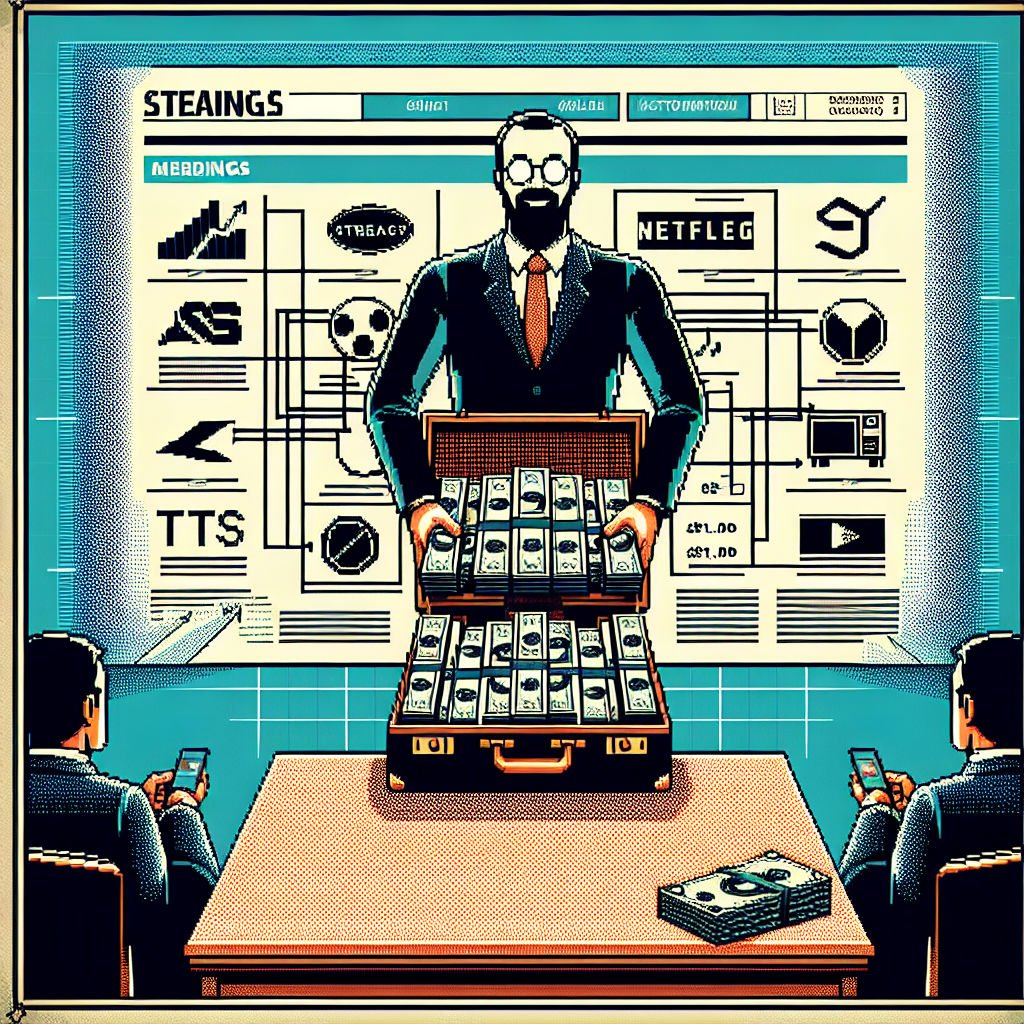

Trump Bond Buy Raises Conflict Questions | Analysis by Brian Moineau

A president’s bond buy that raises eyebrows: Trump, Netflix and Warner Bros.

Just days after publicly saying he’d be “involved” in the regulatory review of Netflix’s proposed $82–83 billion deal for Warner Bros. assets, President Donald Trump’s financial disclosure shows he bought between $1 million and $2 million of corporate bonds tied to the companies. That timing — and the optics — is the story: not a blockbuster insider-trading allegation, but a neat example of how money, policy and power can look messy in the same frame.

Why this matters now

  • The bond purchases were disclosed in a January 2026 filing covering transactions from November 14 to December 19, 2025.
  • Trump publicly commented on the Netflix–Warner Bros. deal on December 7, 2025, saying he would be “involved” in the decision about whether it should be allowed to proceed.
  • Within days (Dec. 12 and Dec. 16, 2025), the filings show purchases of Netflix and Discovery/WBD debt in tranches (each listed in the $250,001–$500,000 range), totaling at least $1 million across the two companies.
  • The administration says Trump’s portfolio is managed independently by third-party institutions and that he and his family do not direct those investments.

Those facts are small in absolute dollars against the size of the merger, but politically and ethically they resonate: a president publicly weighing in on a transaction while he holds securities tied to the parties involved is a classic conflict-of-interest concern, even if the investments are bond holdings managed by others.

A quick snapshot of the timeline

  • December 7, 2025: Trump makes public remarks indicating he would be involved in reviewing the Netflix–Warner Bros. deal.
  • December 12 & 16, 2025: Financial-disclosure entries show purchases of Netflix and Discovery/WBD bonds.
  • January 14–16, 2026: Disclosure forms are posted and reported by major outlets, prompting renewed scrutiny.

What corporate bonds mean here

  • Bonds are debt instruments; bondholders get fixed-interest payments and the return of principal at maturity. They’re different from stocks — bondholders don’t get voting rights or upside from equity gains.
  • Still, bond prices and yields can move based on a company’s perceived creditworthiness, strategic moves (like a merger), and the broader market reaction. A big acquisition announcement can shift both corporate credit profiles and market sentiment, sometimes quickly.
  • So purchases of bonds shortly after a merger announcement could profit or lose depending on market reaction or changes in perceived risk — and they still link an investor financially to an outcome.

The investor dilemma (politics × perception)

  • Real conflicts require control or influence over a decision and financial benefit from it. The White House’s response — that external managers handle the portfolio — is a standard defense.
  • But ethics isn’t only about legal liability; it’s also about public trust. Even without direct influence, the president’s public role in enforcement and antitrust review creates an appearance problem when financial exposure aligns with active policy involvement.
  • That appearance can erode confidence in the neutrality of regulatory reviews and feed narratives of favoritism or self-dealing — which political opponents and watchdogs will marshal rapidly.

The broader context

  • The proposed Netflix–Warner Bros. transaction is one of the largest media deals in recent memory and has drawn attention from regulators, competitors (including rival bids), creators’ guilds, and politicians worried about concentration in media and streaming.
  • Corporate disclosures show this bond buying was part of a larger roughly $100 million slate of municipal and corporate debt purchases by Trump across mid-November to late December 2025. That breadth makes it less likely the Netflix/WBD trades were singularly targeted — but timing still matters.
  • The story fits into a bigger, long-running political debate about presidents, business holdings and blind trusts (or their alternatives). The U.S. has norms and rules around recusal and asset management, but the gap between legal compliance and public perception remains wide.

What to watch next

  • Will ethics watchdogs, the Office of Government Ethics, or Congress seek further details about who placed the trades and whether the president had any input?
  • Will regulators review whether the president recused himself from decisions directly tied to parties in which he has holdings — or whether any special procedures were used?
  • How will this episode shape the political narrative around the merger review (and other high-profile antitrust decisions) going forward?

Key takeaways

  • Timing is everything: bond purchases on Dec. 12 and Dec. 16 came days after the president said he’d be “involved” in reviewing the Netflix–Warner Bros. merger.
  • Bonds aren’t stocks, but they still create financial ties and optics that matter when the holder is the sitting president.
  • The White House says investments are managed independently, which may reduce legal exposure but doesn’t erase appearance-of-conflict concerns.
  • This episode highlights the persistent tension between private wealth and public duty in modern presidencies.

My take

This isn’t a dramatic legal smoking gun — the purchases are modest in scope, and bonds behave differently than equity. But democracy relies on public confidence as much as on written rules. Even routine investment activity can become a headline when the investor is also the nation’s chief enforcer of antitrust and regulatory policy. Tightening the routines around disclosures, timing, and recusal — or moving to clearer independent management structures — would reduce these recurring optics problems and help restore a baseline of trust.

Sources

(Note: dates above reference the December 2025 trades and January 2026 disclosures reported by these outlets.)


Related update: We recently published an article that expands on this topic: read the latest post.


Related update: We recently published an article that expands on this topic: read the latest post.

Campbell’s Ousts Exec After Leaked Rant | Analysis by Brian Moineau

A canned-response crisis: Campbell’s fires executive after leaked racist rant and disparaging comments

There’s something dissonant about an executive trash-talking the very brand that puts food on millions of tables — and then getting caught on tape. That’s exactly what happened at Campbell’s this week, when the company confirmed it had fired a senior IT executive after a former employee’s lawsuit and a leaked audio clip surfaced containing vulgar, racist and disparaging remarks about the company, its customers and coworkers.

What happened (the quick version)

  • A former Campbell’s employee, Robert Garza, filed a wrongful-termination lawsuit that included an audio recording from a November 2024 meeting in which he says the company’s vice president of information security, Martin Bally, made offensive remarks.
  • The recording reportedly includes Bally calling Campbell’s products “food for poor people,” making racist comments about Indian coworkers, questioning the source of the company’s chicken as “3D-printed” or “bioengineered,” and admitting to using marijuana edibles at work.
  • Campbell’s told reporters it reviewed the recording after learning of the lawsuit on November 20, 2025, determined the voice appears to be Bally’s, called the comments “vulgar, offensive and false,” and said Bally is no longer employed as of November 25, 2025. (axios.com)

Why this matters beyond the headline

  • Reputation risk: A senior executive publicly—or in leaked audio—disparaging the company’s products and customers is a fast-track reputational issue. Brands trade on trust; when internal leaders demean customers or imply unsafe or artificial ingredients, consumer confidence can wobble even if the claims are false. (fortune.com)
  • Workplace culture and retaliation claims: The plaintiff alleges he reported the remarks to a manager and was fired shortly after. That’s the core of the lawsuit: retaliation and a hostile work environment. If true, this raises questions about reporting pathways, HR responsiveness, and managerial accountability. (washingtonpost.com)
  • Misinformation and food safety anxiety: The alleged comments about “3D-printed” or “bioengineered” meat tap into modern food fears. Campbell’s quickly issued a fact sheet defending the provenance of its chicken and labeling the claims patently absurd — a necessary step to cut off misinformation. (fortune.com)

Scene-setting and background

  • The recording was allegedly made during a salary discussion in November 2024. Garza says he recorded the conversation because he sensed something was off; Michigan law allows one-party recording, which matters for the legal context. He reported the exchange in January 2025 and was allegedly terminated later that month. The suit names Campbell’s, the executive (Bally), and Garza’s supervisor as defendants. (washingtonpost.com)
  • Campbell’s statement, quoted in multiple outlets, calls the audio’s content unacceptable and not reflective of company values and notes it learned of the audio only after the lawsuit was filed. The company also reaffirmed ingredient sourcing and quality. (axios.com)

Useful angles for readers and stakeholders

  • For customers: Don’t let an executive’s rant become the story of the brand. Check company statements and credible food-safety info before jumping to conclusions about product safety. Campbell’s explicitly denied the “3D-printed” claims and reiterated its sourcing standards. (fortune.com)
  • For employees: This episode highlights the importance of clear, confidential reporting channels and prompt HR action. If companies don’t act on reports, the legal and cultural fallout can be severe. (washingtonpost.com)
  • For investors and partners: Executive conduct is not just PR — it can affect brand value, supplier relations, and regulatory scrutiny. Quick, transparent responses are vital to stem damage. (axios.com)

Lessons for companies (and a checklist)

  • Move fast and transparently: When recordings or allegations surface, swift investigation and clear public communication matter.
  • Protect whistleblowers: Make reporting lines obvious and ensure retaliation is impossible in practice, not just policy.
  • Train leaders on language and impact: Senior leaders’ offhand remarks have outsized consequences; unconscious bias and disrespect can become legal and PR crises.
  • Combat misinformation proactively: If an allegation involves product safety or sourcing, publish clear, evidence-based explanations immediately.

How this could unfold legally

  • The lawsuit alleges wrongful termination and retaliation. If Garza’s timeline (reporting then firing) is supported by documentation and testimony, the company could face exposure beyond just reputational damage. Outcomes can range from settlements to court rulings that prompt changes in policy and practice. (washingtonpost.com)

Final thoughts

This feels like one of those textbook corporate crises where several fragile pieces collide: offensive leadership behavior, questions about how complaints were handled, and a viral recording that forces a company to choose between slow internal remediation or a very public stance. Campbell’s moved to terminate the executive after reviewing the tape and to reassure consumers about product quality — the right moves from a crisis-management standpoint. But the underlying issues — workplace culture, the integrity of reporting channels, and leader accountability — don’t disappear with a firing. Those take sustained work.

Companies that want to avoid headlines like this need to treat everyday conduct as material risk: the words leaders use in private can be the next public relations emergency.

Further reading

  • For a straightforward news summary and timeline: Axios — Campbell’s fires Martin Bally for alleged racist rant. (axios.com)
  • For reporting that includes the company response and legal context: AP News — Campbell’s fires executive who was recorded saying company's products are for 'poor people'. (apnews.com)
  • For analysis of how Campbell’s responded and the product-safety denial: Fortune — Campbell’s fires exec after leaked recording berating ‘poor’ customers and claiming use of bioengineered meat. (fortune.com)

Sources