Lenders said “no” to an AI data center. Why that matters.
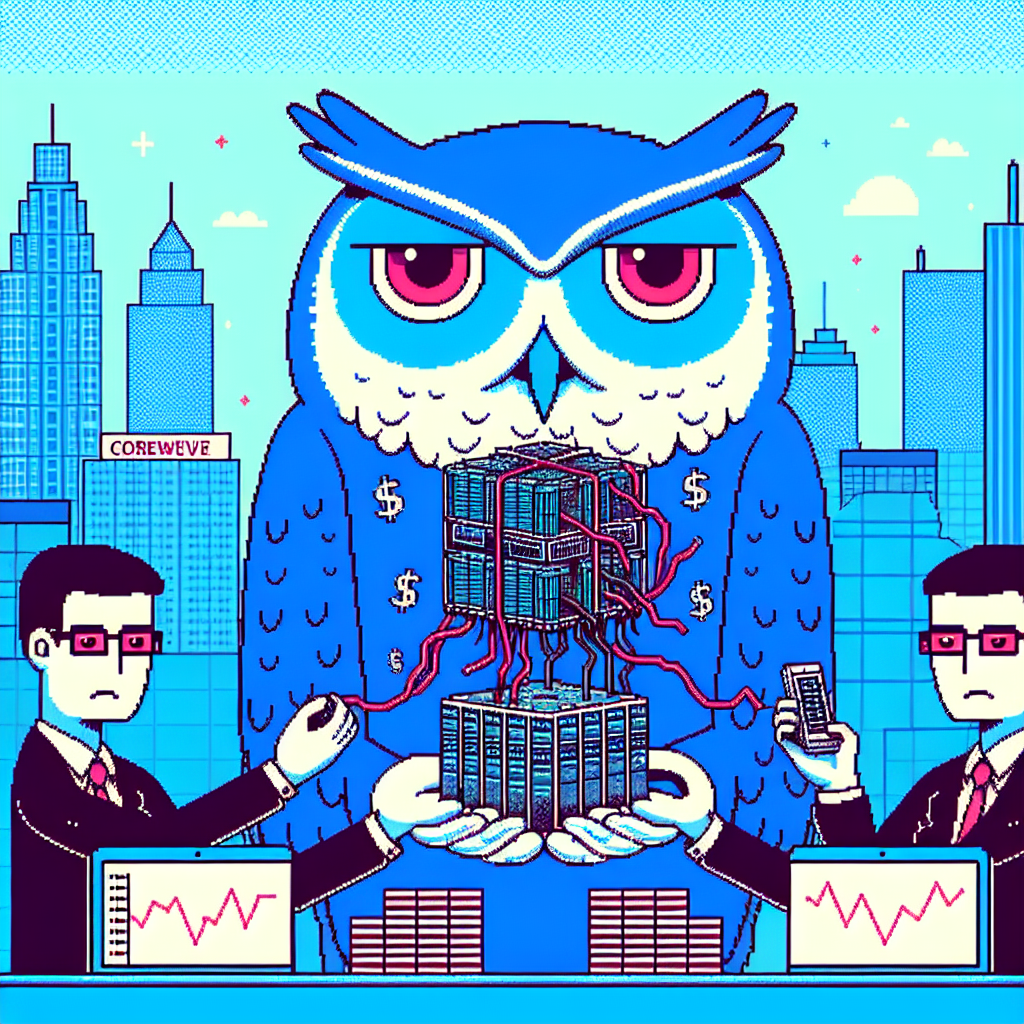
When the financial engine behind a flashy AI project can’t convince banks to chip in, it’s not a small hiccup — it’s a flashing warning light. Last week, Blue Owl Capital’s attempt to line up roughly $4 billion of third‑party debt for a new data center in Lancaster, Pennsylvania — a build CoreWeave would occupy — failed to draw lender interest. The reason cited by at least one prospective lender: CoreWeave’s below‑investment‑grade credit profile and the growing unease around underwriting AI‑linked infrastructure with stretched balance sheets. The story isn’t just about one deal — it’s a snapshot of how credit markets are recalibrating around the AI boom.
Quick takeaways for readers scanning headlines
- Blue Owl shopped approximately $4 billion of debt for a Lancaster, PA data center that CoreWeave is expected to occupy, but lenders largely passed.
- CoreWeave carries a B+ issuer rating from S&P, which many lenders view as a material hurdle for financing large construction loans.
- Blue Owl has provided roughly $500 million of bridge financing that runs through March 2026, but longer‑term debt partners remain elusive.
- The episode highlights a broader tightening in credit appetite for capital‑intensive AI infrastructure that lacks investment‑grade tenant credit or explicit sponsor credit support.
The backstory you need
Over the past 18 months, an explosion of AI compute demand has driven a rush to build specialized data centers loaded with GPUs and networking hardware. Building that capacity is incredibly expensive — and developers have often relied on creative financing structures to spread risk: pre‑leasing to investment‑grade tenants, using big‑tech credit to securitize bonds, or tapping private‑credit syndicates.
Blue Owl made a name for itself by structuring large, bespoke financing deals tied to hyperscale projects — sometimes leaning on the strong credit of marquee partners. In Lancaster, the project was to be occupied by CoreWeave, a fast‑growing AI cloud provider backed commercially by Nvidia and others. But CoreWeave’s S&P issuer rating sits at B+ — below investment grade — and lenders told Business Insider they reviewed the deal and “passed.” Blue Owl says the project is under construction and “fully funded, on time, and on budget,” and disclosed about $500 million of bridge financing through March 2026 to cover near‑term needs. The challenge is finding permanent debt that’s comfortable carrying exposure to a below‑IG tenant and the concentrated, capital‑intensive nature of AI infrastructure.
Why lenders are getting picky
- Credit ratings matter. For big construction debt, investment‑grade tenant credit or sponsor guarantees make it far easier for banks and institutional lenders to underwrite large exposures. A B+ issuer rating is often treated as “junk” territory for many conservative lenders.
- AI is capital‑intensive and lumpy. The economics depend on long‑term take‑or‑pay contracts, utilization of expensive GPUs, and steady demand. Any wobble in customer concentration or equipment supply can compress cash flow quickly.
- Market memory of recent stresses. Earlier struggles — like banks having a hard time placing tranches of other hyperscale financings — have made lenders more circumspect.
- Private‑credit scrutiny. Blue Owl itself has faced pressure in parts of its business (including reports of halted redemptions in a private credit fund), which can color counterparties’ appetite to join its largest balance‑sheet exposures.
What this means for CoreWeave, Blue Owl, and the AI buildout
- For CoreWeave: investor patience will hinge on cash‑flow visibility and an ability to diversify tenant concentration and lower leverage. The stock moved lower after the reporting, reflecting market discomfort.
- For Blue Owl: the firm can still fund projects via sponsor equity or temporary bridge loans, but repeatedly failing to syndicate debt on marquee deals could hurt its reputation as a deal architect and raise questions about balance‑sheet exposure.
- For the sector: expect more selectivity. Deals that once easily found buyers — because of hype around AI demand — will now require cleaner credit profiles, investment‑grade anchors, or explicit wrap/credit support from an investment‑grade counterparty.
The investor dilemma
Investors and lenders face a tradeoff: back high‑growth, strategically important AI infrastructure (and accept structurally higher credit risk), or demand tighter protections and wait for clearer proof that demand and margins are durable. That tradeoff is reshaping deal structures:
- More bridge financing and sponsor equity up front.
- Deals that rely on investment‑grade offtake guarantees (or partial guarantees).
- Larger covenant packages, shorter tenors, and higher pricing for riskier borrowers.
My take
This episode is less a verdict on AI’s long‑term promise and more a reminder that capital markets separate technological excitement from credit tolerance. Building the AI cloud is still necessary and likely lucrative for some players — but lenders increasingly want either investment‑grade counterparties, explicit credit support, or much better margin of safety. That shift will favor well‑capitalized incumbents and force smaller, highly leveraged specialists to refine their capital plans or find partners willing to accept concentrated risk.
If Blue Owl or CoreWeave can secure an investment‑grade sponsor guarantee, diversify demand, or show stronger operating cash flows, the market will follow. Until then, expect increased creativity in financing — and more deals that stall at the lender pitch desk.
Sources
-
Blue Owl Unable to Arrange Financing for a $4 Billion Data Center – Business Insider.
https://www.businessinsider.com/blue-owl-financing-lancaster-data-center-coreweave-2026-2 -
CoreWeave’s B+ rating leads to Blue Owl’s failed $4bn data center financing – Investing.com.
https://www.investing.com/news/stock-market-news/coreweaves-b-rating-leads-to-blue-owls-failed-4bn-data-center-financing-4517459 -
CoreWeave receives ’B+’ issuer credit rating at S&P, $1.5 billion debt rated ’B’ – Investing.com (May 19, 2025).
https://www.investing.com/news/stock-market-news/coreweave-receives-b-issuer-credit-rating-at-sp-15-billion-debt-rated-b-93CH-4053492
Final thoughts
The AI infrastructure race will keep building — but the capital that fuels it is asking tougher questions. Projects once sold on future demand will increasingly need present‑day creditworthiness, sponsor strength, or hybrid financing structures that bridge the gap. The lenders’ “pass” in Lancaster is a practical reset: hype isn’t a covenant, and tomorrow’s compute needs don’t pay today’s interest.
Related update: We recently published an article that expands on this topic: read the latest post.
Related update: We recently published an article that expands on this topic: read the latest post.