First-of-its-kind Stanford study: AI is starting to have a ‘significant and disproportionate impact’ – Fortune | Analysis by Brian Moineau

First-of-its-kind Stanford study: AI is starting to have a 'significant and disproportionate impact' - Fortune | Analysis by Brian Moineau

AI and the Young Workforce: A New Age of Opportunity or Overhaul?

In a world where technology is evolving faster than you can say "artificial intelligence," a groundbreaking Stanford study has made waves by revealing that AI is starting to have a "significant and disproportionate impact" on young workers aged 22 to 25. The article from Fortune highlights that something shifted in late 2022, particularly affecting those in jobs most exposed to AI. But is this development a harbinger of doom for young professionals, or does it signal a new era filled with opportunity?

The Age of AI: A Double-Edged Sword


Picture this: you're fresh out of college, brimming with ideas and ready to make your mark on the world. You've just landed your first job, perhaps in a field like data analysis, marketing, or customer service—industries ripe for AI intervention. Suddenly, you find yourself competing with, or perhaps even collaborating with, algorithms that can process data faster, predict trends more accurately, and, in some cases, even outshine human creativity.

This isn't the plot of a dystopian novel; it's the reality that many young workers are beginning to face. The Stanford study underscores a significant shift that started in late 2022. A combination of AI advancements and increasing adoption of these technologies by businesses has created a landscape where young professionals must quickly adapt or risk obsolescence.

Adapt or Thrive?


The notion that AI could replace jobs isn't new. However, the speed at which these changes are occurring is unprecedented. According to a 2023 report by PwC, up to 30% of jobs could be at risk of automation by the mid-2030s, with younger workers being particularly vulnerable due to their positions in entry-level roles that are more susceptible to automation.

But let's not get ahead of ourselves. History shows us that technological revolutions often create as many opportunities as they destroy. The Industrial Revolution, for instance, led to urbanization and the rise of new industries. Similarly, AI has the potential to open doors to new career paths that we can hardly imagine today. Take, for example, the burgeoning field of AI ethics—a discipline that hardly existed a decade ago but is now critical as we grapple with AI's societal implications.

The Global Perspective


This phenomenon isn't just confined to Silicon Valley or even the United States. Countries around the world are experiencing similar shifts. In China, AI is being integrated into sectors ranging from healthcare to finance, prompting the government to invest heavily in AI education and training. In Europe, the EU is implementing regulations to ensure ethical AI usage, which could create new roles in compliance and governance.

Moreover, the rise of AI coincides with other global trends, such as remote work and digital nomadism. These shifts offer young workers the flexibility to explore a wider range of opportunities, unhampered by geographical constraints. Platforms like LinkedIn report increasing numbers of job postings that highlight remote work options, indicating that adaptability and a willingness to embrace new technologies are becoming key drivers of career success.

A Final Thought


As AI continues to evolve, the onus is on educational institutions, businesses, and governments to prepare young workers for the future. This preparation involves not only technical training but also fostering soft skills like critical thinking, creativity, and emotional intelligence—areas where humans still have the upper hand over machines.

In closing, while the impact of AI on young workers is indeed significant and disproportionate, it doesn't have to be a cause for alarm. Instead, it can be a call to action for a new generation to embrace change, harness new tools, and carve out innovative pathways in an ever-evolving job market. As we stand on the brink of this new age, the words of author Alvin Toffler ring true: "The illiterate of the 21st century will not be those who cannot read and write, but those who cannot learn, unlearn, and relearn."

Read more about AI in Business
Read more about Latest Sports Trends

Read more about Technology Innovations

Why CEOs are using AI to scare workers – Axios | Analysis by Brian Moineau

Why CEOs are using AI to scare workers - Axios | Analysis by Brian Moineau

The AI Paradox: Why CEOs are Using Artificial Intelligence as a Boogeyman


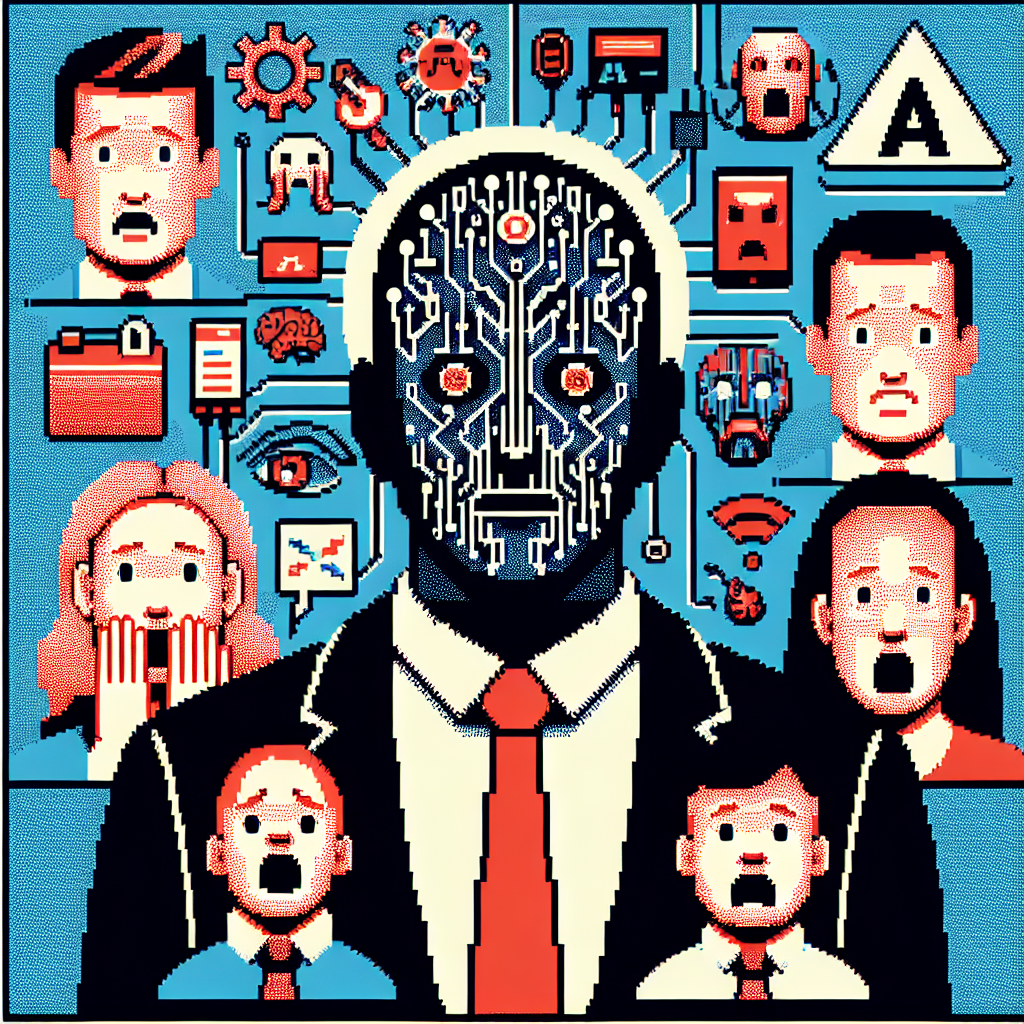
In the age of rapid technological advancement, few things spark as much intrigue—and anxiety—as artificial intelligence (AI). An article from Axios titled "Why CEOs are using AI to scare workers" delves into the intriguing dynamic where leaders of large corporations are simultaneously heralding AI as the future while also warning their workforce of its potential to disrupt and displace. This intriguing paradox raises questions about the motives and implications of such messaging, especially in today’s fast-evolving work landscape.

AI: The New Corporate Tool of Motivation?


Imagine being part of a workforce where the CEO encourages you to embrace a new technology that could, paradoxically, make your role obsolete. It's akin to being handed a double-edged sword. On one hand, AI is positioned as a tool for enhancing productivity and efficiency, while on the other, it's depicted as a looming threat to job security. This duality isn't just a strategic move; it's a reflection of the broader societal shift towards automation and digital transformation.

CEOs might be using AI as a scare tactic for a few reasons. First, it might be a strategic push to accelerate digital literacy and adaptability among employees. By highlighting the potential for job displacement, they create an urgency for workers to upskill and integrate AI into their work. This tactic isn't new. Historically, the introduction of any groundbreaking technology—from the steam engine to personal computers—has been met with both enthusiasm and caution.

Drawing Parallels: AI and the Gig Economy


The current discourse around AI and job security is reminiscent of the rise of the gig economy. Platforms like Uber and Airbnb transformed traditional sectors, offering flexibility but also raising questions about job stability and benefits. As AI continues to evolve, it’s likely to further blur the lines between traditional employment and gig work. Just as workers adapted to the gig economy, they'll need to navigate the AI-driven landscape.

The Global AI Race


On the global stage, nations are racing to harness AI’s potential, with countries like China and the US making substantial investments in AI research and development. This global competition further fuels the narrative of urgency and inevitability surrounding AI adoption. The World Economic Forum has noted that while AI could displace some jobs, it also has the potential to create new roles that we can scarcely imagine today.

Final Thoughts: Embracing Change with Caution


While the rhetoric from CEOs might seem daunting, it’s crucial for both employees and leaders to approach AI with a balanced perspective. Embracing AI doesn’t mean surrendering to it. Instead, it’s about integrating it intelligently to augment human capabilities, not replace them. Workers should focus on building skills that complement AI, such as emotional intelligence, creativity, and complex problem-solving—areas where machines still lag behind humans.

In this era of digital transformation, the key is not to fear the machine, but to understand and work alongside it. As we’ve seen with previous technological shifts, adaptability and learning are our greatest allies. So, while AI might be the latest bogeyman in the corporate world, it also holds the promise of a future where humans and machines collaborate to achieve the unimaginable. Let's embrace this brave new world with informed optimism.

Read more about AI in Business

Read more about Latest Sports Trends

Read more about Technology Innovations

Experts Alarmed by China’s Enormous Army of Robots – futurism.com | Analysis by Brian Moineau

Experts Alarmed by China's Enormous Army of Robots - futurism.com | Analysis by Brian Moineau

Title: China's Great Wall of Robots: Should We Be Alarmed or Impressed?

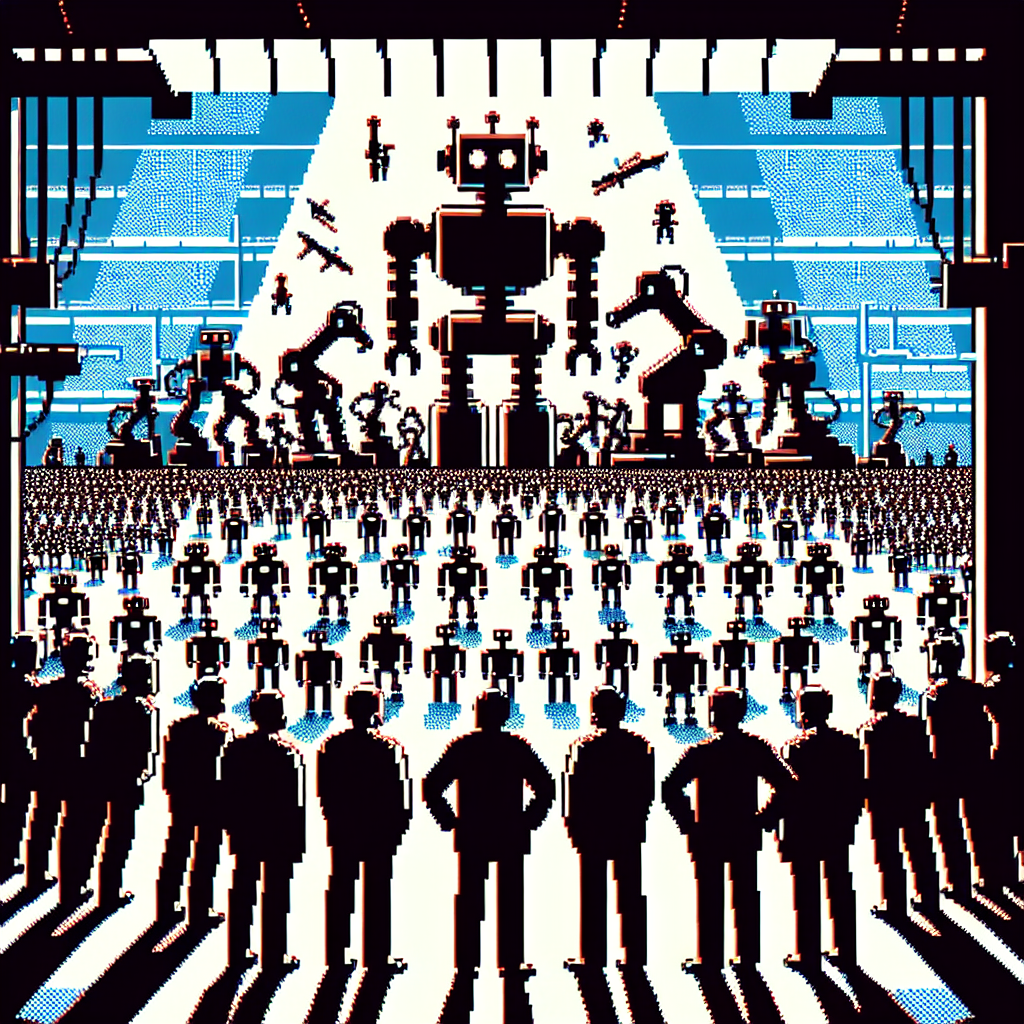
In a world where technology advances faster than you can say "artificial intelligence," China's latest robotic feat is both impressive and a tad unsettling. According to a recent Business article on futurism.com, China's manufacturing prowess has reached new heights, with over 276,000 robots coming online between 2022 and 2023. If you think that's a lot of robots, you're not alone—experts are sounding the alarm about this massive technological deployment.

What's Happening in China?


China has long been a global manufacturing hub, but its recent leap in robotics is setting new benchmarks. The country is now home to what can only be described as an army of robots, designed to outpace the rest of the world in production efficiency. While automation in manufacturing isn't new—think assembly lines and conveyor belts—China's scale of adoption is unprecedented. This raises an intriguing question: Is China leading us into a robotic utopia or a dystopian future?

The Global Robotics Race


China's rapid expansion in robotics isn't happening in a vacuum. As nations around the globe strive for technological innovation, robotics has become a key area of focus. For example, the United States has been exploring the use of AI and robotics in sectors like healthcare and defense. Meanwhile, Europe is making strides in ethical AI and sustainable automation, aiming to balance technological advancement with social responsibility.

The question of ethics is particularly pertinent. As robots take on more roles traditionally performed by humans, concerns about job displacement and privacy are mounting. According to a report by the World Economic Forum, "The Future of Jobs," automation could displace 85 million jobs by 2025, while also creating 97 million new roles. The challenge lies in ensuring that the workforce is prepared for this shift, and that the robots are used ethically and responsibly.

Connections to the Broader World


China's robotic revolution is part of a broader narrative about the changing nature of work and society. In the tech industry, giants like Amazon and Tesla are heavily investing in robotics to enhance operational efficiency. Even small startups are getting in on the action, using robots for everything from food delivery to elder care.

The rapid growth of robotics also ties into global supply chain dynamics. The COVID-19 pandemic exposed vulnerabilities in traditional supply chains, prompting companies to seek more resilient, automated solutions. China's robotics boom can be seen as a strategic move to fortify its position in global manufacturing and supply chain management.

A Final Thought


So, should we be alarmed or impressed by China's enormous army of robots? Perhaps a bit of both. On one hand, the scale and speed of China's robotic deployment is a testament to human ingenuity and the relentless pursuit of progress. On the other hand, it serves as a cautionary tale about the need for ethical considerations and global cooperation in the age of automation.

As we stand on the brink of a new robotic era, it's crucial to remember that technology should serve humanity, not the other way around. Whether China's robotic revolution leads to a brighter future or a more challenging one will depend on how we navigate this brave new world. In the meantime, let's keep our eyes on the horizon—and perhaps, just a little bit on the robots.

Read more about AI in Business

Read more about Latest Sports Trends

Read more about Technology Innovations