Bobby Wagner: From Tackles to Service | Analysis by Brian Moineau

Bobby Wagner’s Moment: From Tackles to True Impact

There’s a scene I keep replaying: Bobby Wagner, eyes steady, voice low but shaking with gratitude, honoring the woman whose memory has shaped his life and work. On the evening the NFL handed out its Walter Payton Man of the Year award, the on-field legend who’s piled up tackles for more than a decade reminded everyone that greatness isn’t just measured in stats — it’s measured in service.

Why this matters right now

  • The Walter Payton NFL Man of the Year is the league’s highest honor for character and community impact, given to a player who combines on-field excellence with meaningful off-field contributions.
  • Bobby Wagner — a veteran linebacker now with the Washington Commanders — was named the 2025 Walter Payton Man of the Year during NFL Honors on February 5–6, 2026.
  • Wagner has been a finalist multiple times; this recognition crowns years of sustained community work and a personal campaign to turn family tragedy into public good.

Quick highlights from the night

  • Wagner accepted the award at NFL Honors and spoke about his mother, Phenia Mae, who died from stroke complications and inspired his charitable focus.
  • His FAST54 / Phenia Mae Fund partners with hospitals and health systems to raise stroke awareness, support patients, and provide resources for families.
  • The award includes a significant donation to the nonprofit of the winner’s choice, amplifying Wagner’s existing community investment.

The backstory: how tackles turned into a platform

Bobby Wagner’s football résumé is familiar to anyone who watches the league: multiple Pro Bowls and All-Pro nods, seasons stacked with 100-plus tackles, and a reputation as one of the most consistent linebackers of his generation. But the Man of the Year award spotlights a different arc — one that begins with a personal loss.

Wagner’s mother died young from stroke complications. He’s used that experience to build FAST54 and the Phenia Mae Fund, working with medical partners (including prominent children’s hospitals and health systems) to educate communities about stroke signs, provide financial assistance and increase access to care. Over time, his off-field initiatives expanded to include work on mental health, social justice, and local community programming in Washington, D.C., and beyond.

Repeated nominations for the Walter Payton award show this wasn’t a sudden pivot; it’s the long-tail effect of consistent engagement. Being a finalist multiple times before finally winning only reinforced the sense that Wagner’s community work had become as durable as his play on the field.

What the award signals for the league and the Commanders

  • It reinforces the NFL’s push to promote player-led social impact initiatives — not as PR moments, but as long-term investments linked to real partners and measurable outcomes.
  • For the Commanders, Wagner’s profile elevates the franchise’s community presence and connects fans to the human stories behind the roster.
  • For younger players, it sets a template: leverage visibility for causes with personal meaning, partner with credible institutions, and commit long-term.

Lessons in leadership from Wagner’s journey

  • Authenticity wins: Wagner’s work is rooted in personal experience, which gives the initiatives credibility and staying power.
  • Consistency matters: Small, repeated acts of service build toward recognition and, more importantly, real impact.
  • Use the platform: Athletic achievement creates access — Wagner turns that access into funding, awareness, and institutional partnerships.

What to watch next

  • The concrete effects of the prize donation — which nonprofit Wagner designates will receive the award’s funds, and how that money gets used locally.
  • How the Commanders amplify and scale Wagner’s initiatives within the D.C. area and in partnership with the NFL’s community programs.
  • Whether more veteran players follow Wagner’s model of sustained, personally rooted philanthropy rather than one-off campaigns.

My take

There’s something quietly radical about a superstar linebacker winning the NFL’s character award. It flips a stereotype: the game’s bruising, physical side and its softer side are not opposites but complements. Bobby Wagner’s story is a reminder that elite athletes can be fierce competitors and deeply committed civic leaders at once. That duality is increasingly the new standard — and Wagner earning the Walter Payton Man of the Year shows how far that standard has come.

Notable takeaways

  • Wagner was named the 2025 Walter Payton NFL Man of the Year during NFL Honors on Feb. 5–6, 2026.
  • His FAST54 / Phenia Mae Fund focuses on stroke awareness and patient support, born from the loss of his mother.
  • The award recognizes long-term, credible community impact paired with professional excellence.

Sources


Related update: We recently published an article that expands on this topic: read the latest post.

Related update: We recently published an article that expands on this topic: read the latest post.

Who is leading The 153rd Open? – The Open | Analysis by Brian Moineau

Who is leading The 153rd Open? - The Open | Analysis by Brian Moineau

Title: Swinging Through History: The Drama Unfolds at The 153rd Open

As the early morning mist lifted from the iconic links of Royal Portrush, the stage was set for another thrilling chapter in the storied history of The Open. Often described as the "world's oldest golf championship," this year's 153rd edition brings together the sport's elite, each vying for the coveted Claret Jug. But who, you ask, is leading the charge?

The spotlight today shines on a familiar face: Rory McIlroy. The Northern Irishman, whose roots run deep in these very greens, is navigating the course with a blend of precision and passion that only a homecoming could inspire. Known for his powerful drives and remarkable resilience, McIlroy seems to be channeling the energy of the crowd, each hole a testament to his skill and determination.

A Local Hero on a Global Stage

Rory McIlroy's journey in golf mirrors a classic underdog story, albeit with a twist. From his early days swinging clubs at Holywood Golf Club to his rise as one of the sport's most charismatic figures, McIlroy's career has been a blend of triumphs and challenges. Winning The Open in 2014 and securing four major titles by age 25, he has long been a beacon of hope for fans worldwide. Yet, his journey hasn't been without its hurdles, from injuries to the pressure of expectations—a narrative that resonates with many athletes in global sports today.

Connecting the Dots: Golf and Global Events

As the drama unfolds at Royal Portrush, it's intriguing to observe how sports often mirror broader global themes. Take, for example, the current emphasis on mental health and wellness, a topic gaining traction across various domains, including athletics. McIlroy himself has been candid about the mental challenges faced in professional sports, advocating for a balanced approach to competition and personal well-being. This perspective aligns with the growing movement towards mental health awareness, underscored by public figures like Naomi Osaka and Simone Biles, who have courageously shared their struggles.

Moreover, this year's Open is a testament to the resilience of international sports in the face of unprecedented global challenges, from the pandemic to geopolitical shifts. The ability of such events to bring people together, transcending borders and differences, is a powerful reminder of sports' unifying potential.

Final Thoughts: Beyond the Leaderboard

While Rory McIlroy may currently lead the pack, The Open is notorious for its unpredictability, where fortunes can change with the wind. As fans, we find ourselves on the edge of our seats, captivated not only by the game but by the stories and emotions it evokes. The 153rd Open is more than just a golf tournament; it's a celebration of tradition, resilience, and the enduring human spirit.

So, as we follow the leaderboard updates and cheer for our favorites, let's remember the broader narrative at play—one that connects us all, from the emerald fairways of Northern Ireland to the bustling streets of Tokyo and beyond. Here's to the golfers, the fans, and the shared moments that make sports such a vital part of our lives. Swing on, Rory, and may the best player win!

Read more about AI in Business

Read more about Latest Sports Trends

Read more about Technology Innovations

T.J. Oshie, the Caps’ beloved ‘warrior,’ announces his NHL retirement – The Washington Post | Analysis by Brian Moineau

T.J. Oshie, the Caps’ beloved ‘warrior,’ announces his NHL retirement - The Washington Post | Analysis by Brian Moineau

Farewell to a Warrior: T.J. Oshie’s Retirement Marks the End of an Era

In the world of sports, where fleeting moments of glory and the relentless passage of time often define careers, T.J. Oshie’s retirement from the NHL is more than just the end of a chapter; it’s the closing of a book filled with thrilling tales of heroism, camaraderie, and the sheer love of the game. Oshie, a name synonymous with determination and skill, has decided to hang up his skates, leaving behind a legacy that will be cherished by fans and fellow players alike.

T.J. Oshie: From Olympic Hero to Stanley Cup Champion

For many, Oshie first captivated the world on a frosty February day during the 2014 Winter Olympics in Sochi. In a nail-biting shootout against Russia, Oshie’s performance was nothing short of legendary. Tasked repeatedly with the unenviable duty of outmaneuvering the formidable Russian goaltender, he delivered four goals that secured a crucial victory for Team USA. In that moment, Oshie wasn’t just a player; he was a symbol of perseverance and national pride, embodying the spirit of competition and the thrill of the underdog triumphing against the odds.

However, Oshie’s career was far from defined by a single Olympic moment. His journey with the Washington Capitals further cemented his place in the annals of hockey history. Joining the Capitals in 2015, Oshie quickly became a fan favorite, beloved not only for his on-ice prowess but also for his infectious enthusiasm and leadership. His efforts culminated in the 2018 season when he played a pivotal role in leading the Capitals to their first Stanley Cup victory. For Washington fans, Oshie wasn’t just a player; he was part of the family, a testament to the idea that sometimes, heart and grit can outshine sheer talent.

A Warrior's Spirit in a Changing World

Oshie’s retirement comes at a time when the world, much like sports, is in a state of transition. In a year marked by significant global events, from social justice movements to technological advancements reshaping industries, Oshie’s departure serves as a reminder of the constants we hold dear: dedication, teamwork, and the pursuit of greatness. Just as Oshie adapted and thrived amidst the evolving landscape of professional hockey, industries and individuals worldwide are learning to navigate change with resilience and innovation.

Off the Ice: The Man Behind the Warrior

Beyond his athletic accomplishments, T.J. Oshie is known for his humility, humor, and heart. He’s been an advocate for mental health awareness, openly sharing his experiences and encouraging others to seek help when needed. This openness and vulnerability have endeared him further to fans, showing that true strength often lies in acknowledging one's struggles and working through them.

Moreover, Oshie’s story resonates with anyone who has ever faced challenges and emerged stronger. His career is a testament to the idea that with hard work and a bit of faith, dreams can indeed become reality. In a world where we often focus on the destination, Oshie’s journey reminds us to cherish the process—the ups, the downs, and everything in between.

Final Thoughts: A Legacy of Inspiration

As T.J. Oshie skates into retirement, he leaves behind not just a legacy of goals and wins, but a blueprint of what it means to be a true sportsman. His career serves as a beacon for aspiring athletes and a reminder to all of us that passion and perseverance can lead to extraordinary achievements.

In the words of Oshie himself, “The journey is the reward.” As we bid farewell to this beloved warrior, we celebrate not just the accolades, but the spirit and joy he brought to the game. T.J. Oshie may be stepping off the ice, but his influence will be felt for generations to come, inspiring future players to lace up their skates and chase their dreams with the same fervor and heart that he did.

So here’s to T.J. Oshie—thank you for the memories, the inspiration, and most importantly, the reminder that even the wildest dreams are within reach when pursued with passion and resilience.

Read more about AI in Business

Read more about Latest Sports Trends

Read more about Technology Innovations

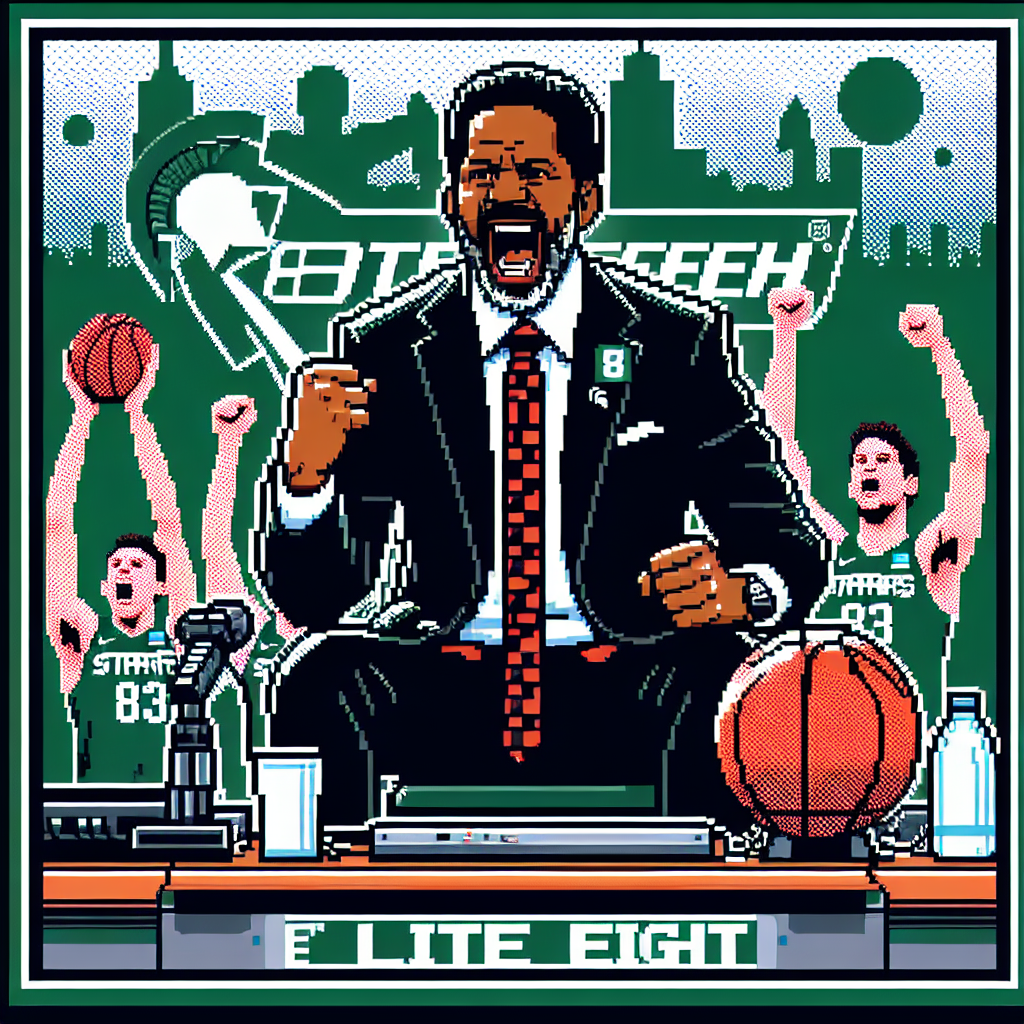
Tom Izzo breaks down in tears during postgame interview after Michigan State reaches Elite Eight – New York Post | Analysis by Brian Moineau

Tom Izzo breaks down in tears during postgame interview after Michigan State reaches Elite Eight - New York Post | Analysis by Brian Moineau

Title: You’re Not Crying. Tom Izzo is Crying: A Heartfelt Moment in Sports

In the world of college basketball, few names resonate more than Michigan State’s legendary coach, Tom Izzo. Known for his fiery passion, strategic acumen, and a knack for developing young talent, Izzo has long been a fixture of March Madness. This year, however, the iconic coach showed a different side of his persona—one that was raw, emotional, and profoundly human. After leading Michigan State to the Elite Eight, a milestone that is both coveted and fiercely contested, Izzo broke down in tears during a postgame interview. And just like that, the man who’s often seen as a pillar of strength revealed a vulnerability that resonated with fans and athletes alike.

The Tears of a Titan

Tom Izzo’s emotional moment was more than just a fleeting instance of vulnerability. It was a testament to the emotional investment that coaches make in their teams. Izzo, a Hall of Famer with a career spanning decades, has been a constant presence in college basketball, leading Michigan State to numerous victories and Final Four appearances. Yet, despite his accolades, this year’s journey to the Elite Eight clearly meant something special.

Why the tears? Perhaps it’s the culmination of a season filled with challenges, both on and off the court. It’s no secret that the pandemic has altered the sports landscape, and adapting to these changes has been no small feat for coaches and players. Izzo’s tears could symbolize the relief of overcoming adversity, the joy of seeing his players succeed, and the weight of expectations finally lifting, if only for a moment.

A Broader Connection

Izzo’s emotional display is a reminder of the broader human experience—where triumph is often accompanied by tears. It’s a sentiment that stretches beyond sports. In recent years, we’ve seen public figures in various fields show vulnerability. From celebrities advocating for mental health awareness to leaders admitting their struggles, there’s a growing acceptance that showing emotion is not a sign of weakness but of authenticity.

In the realm of sports, this trend is evident. Athletes like Naomi Osaka and Simone Biles have openly discussed their mental health challenges, sparking important conversations about the pressures faced by those in the limelight. Izzo’s tears add to this narrative, illustrating that even the strongest among us have moments of profound emotion.

A Look at Tom Izzo

For those unfamiliar with Tom Izzo, his career is a testament to dedication and excellence. Born and raised in Michigan, Izzo has spent his life in basketball, starting as an assistant coach before taking the helm at Michigan State in 1995. Under his leadership, the Spartans have become a powerhouse, known for their defensive prowess and relentless work ethic.

Beyond his coaching skills, Izzo is admired for his mentorship and ability to connect with players on a personal level. His impact on the lives of young athletes is immeasurable, and his dedication to their development—both on and off the court—is what sets him apart.

Final Thoughts

Tom Izzo’s tears are a reminder of the beauty of sports. They encapsulate the highs and lows, the dedication, and the raw emotion that make athletic competitions so compelling. In a world that often emphasizes stoicism and the suppression of feelings, Izzo’s heartfelt moment is a breath of fresh air.

As we celebrate Michigan State’s achievement and look forward to the rest of the tournament, let’s carry with us the understanding that it’s okay to feel deeply. Whether you’re a coach, a player, or an avid fan, emotions are an integral part of the journey. So, the next time you find yourself swept up in a moment of triumph or defeat, remember—you’re not crying, Tom Izzo is crying, and that’s perfectly okay.

Read more about AI in Business

Read more about Latest Sports Trends

Read more about Technology Innovations