Ovechkin’s Uncertain Farewell in D.C | Analysis by Brian Moineau

Alex Ovechkin may have played his final game for the Washington Capitals

Alex Ovechkin may have played his final game for the Washington Capitals — or he might lace up again. That uncertainty hung in the air after the Capitals closed their season with a 2-1 win over the Columbus Blue Jackets on April 15, 2026, a night when the 40-year-old legend assisted on the game-winner and told reporters, “I hope it’s not my last game. I don’t know what’s going to happen.” The line felt both hopeful and honest: a champion pausing at a crossroads, with every next step open.

For fans and observers, this is more than a roster question. It’s the possible end of an era. Ovechkin has been the face of the franchise since 2005, the man who broke Wayne Gretzky’s single-season goal-scoring record and transformed goal scoring into an art form. Whether he returns or retires, the fallout will ripple through Washington, the NHL, and hockey culture itself.

What happened in the season finale

  • The Capitals beat the Blue Jackets 2-1 in Columbus, finishing their regular season on a high note.
  • Alex Ovechkin assisted on Jakob Chychrun’s power-play winner late in the third period and then received a long ovation as the final horn sounded. (nhl.com)
  • Ovechkin repeatedly emphasized that he will decide during the offseason — factoring in health, family conversations, and meetings with Capitals leadership. (nhl.com)

The scene was poetic: the opponent was the Blue Jackets, the same franchise Ovechkin faced in his NHL debut in 2005. Fans traveled from Washington for the chance to see him one more time. He responded to chants of “One more year!” with a wry “I’ll think about it,” and later told reporters he didn’t know what would happen next. The line “I hope it’s not my last game” carried the weight of someone who knows both what he’s achieved and what it takes to keep playing at an elite level.

Why this decision matters beyond goals and games

First, Ovechkin’s status affects the Capitals’ identity. He’s not merely a high-scoring winger; he’s the franchise’s cultural anchor. Losing him to retirement would force a shift in leadership, marketing, and fan engagement. The team has young pieces and an emerging core, but replacing the emotional and on-ice gravity of Ovechkin isn’t a simple transaction.

Second, his choice influences the conversation about longevity and legacy in the NHL. At nearly 41 in September, Ovechkin still produced — playing all 82 games and leading the Capitals in goals this season. If he returns, he’ll be a test case for how elite veterans age gracefully and how teams deploy elder statesmen without compromising development of younger players. If he retires, his legacy will be tidy and thunderous: the greatest pure goal-scorer in NHL history, a Cup champion, and an icon whose highlights will define a generation.

Finally, there’s the human side. Ovechkin repeatedly cited health and family as key input into his decision, and he has been clear he wants to be smart about the next step. For a player who has given so much, the offseason becomes a table for real, personal conversations with coaches, ownership, and his children — a reminder that athletes’ choices are about more than the box score. (apnews.com)

The financial and roster calculus

Teams and fans often speculate about contracts and cap flexibility, but Ovechkin’s decision will be shaped by subtler things: the role he’d accept, minute limits, and how the Capitals plan to balance veteran presence with youth development.

  • If Ovechkin returns, expect a one-year conversation about usage and potentially a team-friendly structure that preserves salary-cap flexibility.
  • If he retires, the Capitals will gain cap room but lose the leadership and draw that a superstar captain provides.

Either path requires careful management by GM Chris Patrick and the front office. In the end, the Capitals will prioritize sustainable competitiveness while honoring the legacy of the player who helped deliver their only Stanley Cup in 2018. (nhl.com)

Fans, sentiment, and nostalgia

Transitioning from the tactical to the sentimental: this offseason feels like a chapter’s end regardless. Fans flocked to that finale in Columbus, signs and chants in tow. Social feeds filled with highlight reels and gratitude. When a player reaches the end of a luminous run, the noise is less about speculation and more about communal memory-making.

There’s also a practical note: whether Ovechkin returns or retires, the league will keep celebrating him. He’s already etched into NHL history with 929 goals and counting as of the end of this season. His eventual Hall of Fame trajectory is a given; the only variable is timing.

What could influence his final call

  • Health and physical readiness after a full 82-game season. (nhl.com)
  • Family priorities and life after hockey.
  • Conversations with team leadership — coach Spencer Carbery, GM Chris Patrick, and owner Ted Leonsis.
  • Desire for one last run at the Cup versus the satisfaction of an already-completed career.

Each factor pulls differently. Sometimes the deciding factor is a single conversation; other times it’s the sum of a season’s wear and the hope of one more deep playoff run.

A final posture

  • He left the ice thanking the fans and saying he’d take the decision into the offseason.
  • The Capitals will meet internally and then wait on Ovechkin’s choice, which may come after summer reflection. (nhl.com)

Final thoughts

There’s beauty in the uncertainty. Watching a career close — or pause — forces us to appreciate the ordinary grit behind extraordinary moments. Alex Ovechkin has given us two decades of theatrical goals, relentless competitive fire, and a charisma that made hockey must-watch TV. Whether he returns for a 22nd season or decides this is the graceful last act, the sport will be richer for the story he wrote.

The offseason will tell us what comes next. For now, savor the highlights, celebrate a rare athlete who redefined scoring, and recognize a moment when a team — and its fans — stand at the threshold of change.

Sources


Related update: We recently published an article that expands on this topic: read the latest post.
Capitals Lose Locker-Room North Star John | Analysis by Brian Moineau

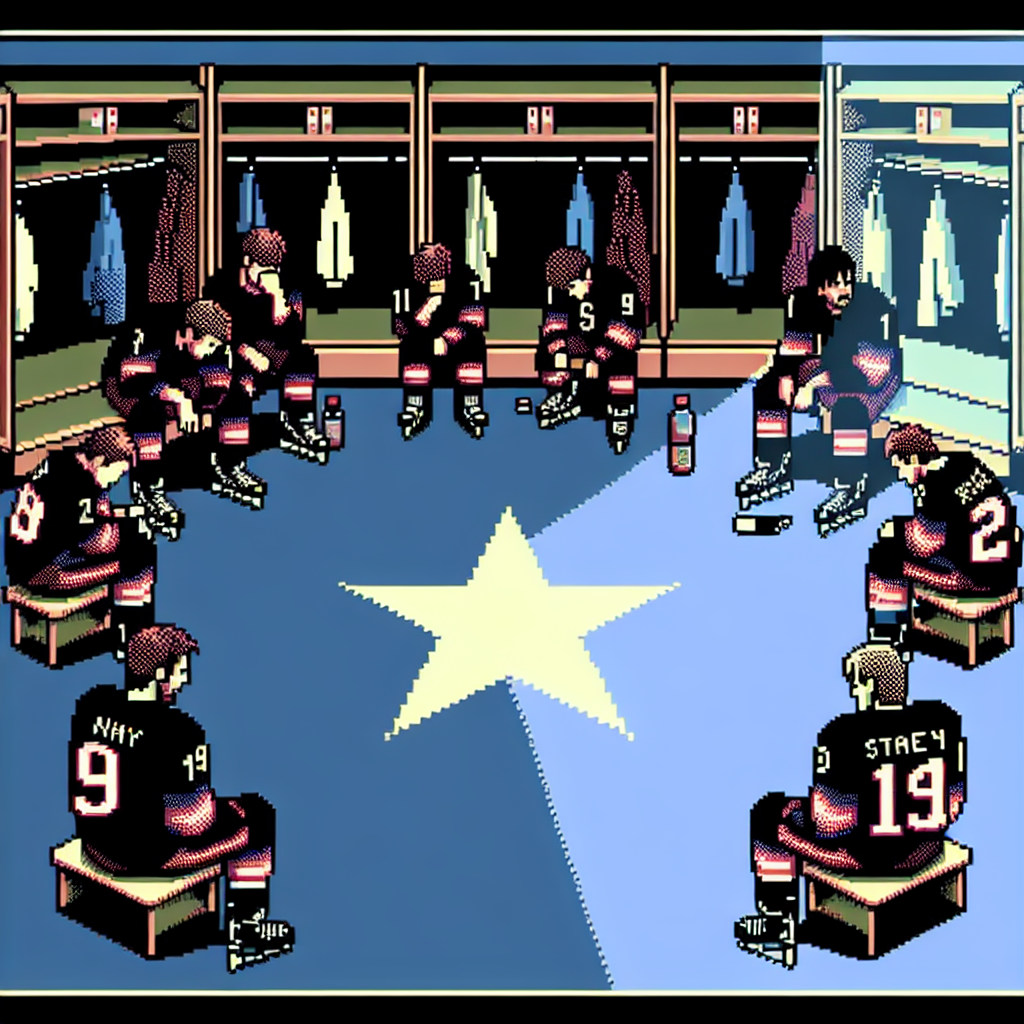
A locker-room compass walks out the door: the end of John Carlson’s Washington story

The bus rolled into the arena like any other morning, but inside the Washington Capitals locker room something felt different — quieter, weightier. After 17 seasons, decades of late-night practices, playoff marches and championship celebration, John Carlson was no longer a Capital. The trade to Anaheim landed before the NHL’s March 6, 2026 deadline and, for a franchise that built seasons around a handful of locker-room pillars, it felt like a small seismic shift.

There’s sports drama and then there’s the human drama that follows longtime teammates when a “North Star” is moved. The reactions — teary-eyed players, stunned staff, a community of fans searching for the right words — captured the tug between competitive reality and deep emotional ties.

Why this matters beyond the box score

  • John Carlson wasn’t just a top-pair defenseman; he was a cultural anchor. He played 17 seasons in Washington, helped lift the franchise’s lone Stanley Cup, and led the blue line in all-time games, goals and points for the team.
  • The trade — Anaheim gave Washington a conditional first-round pick (2026 or 2027) and a 2027 third-round pick — is both cap- and roster-management logic and a symbolic break with the past. Teams in transition trade veterans like Carlson to accelerate a rebuild or restock future assets.
  • The immediate aftermath shows how leadership can’t be measured only in assists or time on ice. When a locker-room “North Star” leaves, the ripple effects are emotional, tactical and strategic.

What happened (concise timeline)

  • March 6, 2026: The Capitals traded John Carlson to the Anaheim Ducks for a conditional first-round pick in 2026 or 2027 and a 2027 third-round pick. (nhl.com)
  • Reaction: Teary goodbyes and locker-room interviews revealed teammates describing Carlson as foundational to the team’s identity — a family man, a mentor and a steady presence. RMNB captured those raw reactions. (russianmachineneverbreaks.com)
  • Media/context: Coverage from national outlets framed the move as part of the Capitals’ pivot at the deadline and a rare modern example of a player being traded after nearly two decades with one franchise. (nhl.com)

The locker-room lens: leadership that numbers don’t capture

Sports analytics do wonders for evaluating on-ice value, but they don’t quantify the quiet, daily leadership — the veteran voice in the pre-game skate, the dad who organizes team family nights, the player who models how to be a pro when things go sideways. Teammates called Carlson a “North Star” for a reason:

  • He was consistent. Seventeen seasons under one banner build habits that younger players copy.
  • He modeled loyalty and accountability, a living lesson that matters when a franchise is teaching its next generation.
  • His presence carried meaning in moments: playoff pushes, media storms, and the everyday grind.

That cultural capital is why trading long-tenured leaders is never purely transactional. It rearranges relationships and expectations inside the locker room.

The trade logic: why the Capitals did it

  • Asset accumulation: A conditional first-round pick is premium currency for a team evaluating a longer-term rebuild or retool. Draft capital gives flexibility to restock the pipeline. (nhl.com)
  • Roster timeline: At 35 (per reporting), Carlson’s peak years were behind him. Teams weigh current performance against future cost and fit; Washington appears to have chosen the future route.
  • Market dynamics: Offers for veteran leaders are rare. If a team can turn an aging core piece into high-value picks, the front office may see the move as necessary, even if wrenching emotionally. (thehockeynews.com)

What this means for Washington’s season and culture

  • Short term: The Capitals lose an all-situation defenseman and a stabilizing presence. On-ice adjustments and minutes redistribution will be necessary immediately.
  • Long term: The draft picks strengthen the franchise’s ability to add young talent or flip picks in other transactions. That’s the strategic payoff for letting go of a beloved veteran.
  • Cultural test: With a leadership vacuum, other players must step forward. The club’s identity will shift from one centered on long-tenured stalwarts to whatever new faces fill those roles.

Voices from the room

  • Teammates were emotional and candid, describing Carlson’s family-first approach and his habit of quietly setting the standard. Those human reactions underscored that this was not just a tactical move — it was the closing of a chapter for players and fans alike. (russianmachineneverbreaks.com)
  • Coverage from the Capitals’ organization acknowledged the era and celebrated Carlson’s legacy, while emphasizing belief in the current roster and the future the picks could buy. (nhl.com)

What to watch next

  • How Washington replaces Carlson’s minutes and power-play role.
  • Whether the Caps use the newfound draft capital to trade up, draft high-impact talent, or acquire a younger, NHL-ready defender.
  • The human follow-up: Will Carlson and Washington find a reunion path (short-term return or offseason free-agent conversations) or will his legacy remain a bittersweet chapter elsewhere? Media chatter suggests a Carlson reunion isn’t impossible, but nothing is certain. (washingtonpost.com)

Takeaways for fans and the casual observer

  • Trades like this are inevitable in cap-era hockey, but they hurt because they are personal. Fans mourn not only the player but the memories and the sense of continuity.
  • Smart roster building balances respect for legacy with strategic planning. Washington’s front office made a decision that favors future flexibility over present sentiment.
  • Leadership is replicable but not interchangeable; it will take time and intentional culture-building to replace a 17-year Capitol of the franchise.

Final thoughts

Watching a locker room process the exit of a player like John Carlson is a reminder that sports are storytelling as much as competition. Teams are living, changing things — and sometimes the toughest calls are the ones that reshape a franchise’s identity overnight. Carlson leaves Washington with a Chamber of memories, a Stanley Cup and a record of leadership few players match. For Capitals fans, the practical gains of draft capital won’t instantly fill the hole he leaves in the room. But in hockey as in life, endings open space for a new chapter to begin.

Sources


Related update: We recently published an article that expands on this topic: read the latest post.


Related update: We recently published an article that expands on this topic: read the latest post.

Capitals Rally to Topple Islanders 4-1 | Analysis by Brian Moineau

Capitals 4, Islanders 1 — When “biggest game of the season” actually feels that big

There’s something delicious about a team answering the noise. On Monday night at Capital One Arena the Washington Capitals faced the New York Islanders in what every local outlet and fan chat had already labeled “the biggest game of the season.” The hype felt earned: two Metro Division rivals separated by four points in the standings, both jockeying for position before the Olympic break. The final score — Capitals 4, Islanders 1 — tells a tidy story, but the way Washington manufactured it says more about identity, depth and momentum than a box score ever could.

Why this mattered more than one scoreboard

  • Both clubs were tight in the Metropolitan Division standings; a home win meant Washington cut the gap and put real pressure on an Islander club that had been playing well.
  • The Caps did it without their top two goalies available, relying on Clay Stevenson — in only his third NHL appearance — to steady the ship.
  • It wasn’t pretty for 60 minutes, but the result was the kind you accept when the playoff picture is on the line: two points and a nudge toward relevance.

What happened, in plain terms

  • Mathew Barzal punished a Tom Wilson turnover late in the first to give the Islanders a 1-0 lead.
  • Early in the second the Caps flipped the script: Martin Fehérváry scored on a give-and-go with Wilson, and 31 seconds later Anthony Beauvillier jammed one home to put Washington up.
  • Nic Dowd added a fortunate — but timely — third in the third period when his pass intended for Alex Ovechkin deflected in, and John Carlson iced it with an empty-netter.
  • Clay Stevenson made 29 saves and looked composed. David Rittich stopped 20 for the Isles.
  • Nic Dowd’s goal came in his 500th game with the franchise, and Ovechkin recorded an assist that moved a franchise-only points metric into rare territory.

(Recaps and box scores from NHL.com and ESPN confirm the sequence and outcomes.) (nhl.com)

Three reasons this win matters beyond the scoreboard

  • Momentum before the Olympics: NHL teams often treat the pre-Olympic stretch as a sprint; winning a divisional “measuring stick” game gives Washington psychological lift and tangible ground in the Metro race. RMNB framed it exactly that way — a huge intra-division victory that reshapes the short-term landscape. (russianmachineneverbreaks.com)
  • Depth showing up: With Logan Thompson and Charlie Lindgren sidelined, Stevenson’s calm performance removed a major worry. When a team can absorb injuries to prime goalies and still get two points, it bodes well as the grind intensifies. Multiple outlets noted Stevenson’s poise and the team’s ability to protect him. (espn.com)
  • Special teams and small margins still matter: Washington’s power play remains a sore point — commentators and analysts keep pointing out how many potential points that unit has cost the Caps this season. But even with a sputtering man advantage, Washington found ways to manufacture offense at even strength and get timely bounces. RMNB’s postgame bluntly called out the Caps’ power-play woes while celebrating the win’s impact. (russianmachineneverbreaks.com)

Standout moments and human color

  • Fehérváry’s goal had an emotional subtext: he scored just days after becoming a father, and the “dad-strength” narrative leapt straight from the crowd to social timelines. RMNB leaned into the storytelling element — newly minted fatherhood and a goal to match. (russianmachineneverbreaks.com)
  • Nic Dowd’s 500th-game bounce: sometimes hockey gives you moments you can’t script. Dowd’s goal — courtesy of an Islanders’ own-unlucky deflection — doubled as a feel-good marker in a veteran’s milestone night. ESPN and the AP noted the milestone alongside the goal. (espn.com)
  • Clay Stevenson’s calmness under pressure: thrust into the spotlight with two goalies out, Stevenson didn’t melt. Multiple recaps highlighted how his steady 29-save night turned a potentially nervy situation into a confidence-building performance. (nhl.com)

What this game doesn’t fix

  • The power play still needs help. Washington’s special teams slowness is a recurring theme; wins like this paper over the weakness briefly, but the math of standings over a full season eventually punishes those inefficiencies.
  • Aesthetic consistency. RMNB and others called the game “not the prettiest win.” That’s a fair description: sloppy zone exits, neutral-zone turnovers (a costly Wilson turnover started the Isles’ only goal), and defensive pinch timing that could have opened bigger holes if not for Stevenson’s saves. (russianmachineneverbreaks.com)

The bigger picture for both clubs

  • Capitals: This feels like a get-right stretch. A three-game winning streak and a resilient performance without top netminders suggests Washington can keep chipping at the Metro cluster. If they can fix special teams and maintain consistency, the team can quietly climb into a meaningful playoff position after the Olympic break. (espn.com)
  • Islanders: Losing two straight after a little winning streak is a reminder that momentum is fragile. They still sit ahead in the standings, but goaltending rotation choices (Rittich getting starts over Ilya Sorokin in some spots) and an inability to prevent quick concession moments (two goals in 31 seconds) are issues to iron out. (nhl.com)

My take

This was the kind of win that feels essential even when it isn’t pretty. Washington didn’t dazzle; they answered. That’s a hallmark of teams that turn close seasons into meaningful ones. The Caps showed depth (Stevenson), veteran grit (Dowd, Carlson), and the kind of timely bounces that define NHL runs. If they can pair nights like this with improved special-teams play and fewer sloppy turnovers, they’ll be more than a feel-good story — they’ll be a force in a crowded division.

Sources


Related update: We recently published an article that expands on this topic: read the latest post.


Related update: We recently published an article that expands on this topic: read the latest post.

T.J. Oshie, the Caps’ beloved ‘warrior,’ announces his NHL retirement – The Washington Post | Analysis by Brian Moineau

T.J. Oshie, the Caps’ beloved ‘warrior,’ announces his NHL retirement - The Washington Post | Analysis by Brian Moineau

Farewell to a Warrior: T.J. Oshie’s Retirement Marks the End of an Era

In the world of sports, where fleeting moments of glory and the relentless passage of time often define careers, T.J. Oshie’s retirement from the NHL is more than just the end of a chapter; it’s the closing of a book filled with thrilling tales of heroism, camaraderie, and the sheer love of the game. Oshie, a name synonymous with determination and skill, has decided to hang up his skates, leaving behind a legacy that will be cherished by fans and fellow players alike.

T.J. Oshie: From Olympic Hero to Stanley Cup Champion

For many, Oshie first captivated the world on a frosty February day during the 2014 Winter Olympics in Sochi. In a nail-biting shootout against Russia, Oshie’s performance was nothing short of legendary. Tasked repeatedly with the unenviable duty of outmaneuvering the formidable Russian goaltender, he delivered four goals that secured a crucial victory for Team USA. In that moment, Oshie wasn’t just a player; he was a symbol of perseverance and national pride, embodying the spirit of competition and the thrill of the underdog triumphing against the odds.

However, Oshie’s career was far from defined by a single Olympic moment. His journey with the Washington Capitals further cemented his place in the annals of hockey history. Joining the Capitals in 2015, Oshie quickly became a fan favorite, beloved not only for his on-ice prowess but also for his infectious enthusiasm and leadership. His efforts culminated in the 2018 season when he played a pivotal role in leading the Capitals to their first Stanley Cup victory. For Washington fans, Oshie wasn’t just a player; he was part of the family, a testament to the idea that sometimes, heart and grit can outshine sheer talent.

A Warrior's Spirit in a Changing World

Oshie’s retirement comes at a time when the world, much like sports, is in a state of transition. In a year marked by significant global events, from social justice movements to technological advancements reshaping industries, Oshie’s departure serves as a reminder of the constants we hold dear: dedication, teamwork, and the pursuit of greatness. Just as Oshie adapted and thrived amidst the evolving landscape of professional hockey, industries and individuals worldwide are learning to navigate change with resilience and innovation.

Off the Ice: The Man Behind the Warrior

Beyond his athletic accomplishments, T.J. Oshie is known for his humility, humor, and heart. He’s been an advocate for mental health awareness, openly sharing his experiences and encouraging others to seek help when needed. This openness and vulnerability have endeared him further to fans, showing that true strength often lies in acknowledging one's struggles and working through them.

Moreover, Oshie’s story resonates with anyone who has ever faced challenges and emerged stronger. His career is a testament to the idea that with hard work and a bit of faith, dreams can indeed become reality. In a world where we often focus on the destination, Oshie’s journey reminds us to cherish the process—the ups, the downs, and everything in between.

Final Thoughts: A Legacy of Inspiration

As T.J. Oshie skates into retirement, he leaves behind not just a legacy of goals and wins, but a blueprint of what it means to be a true sportsman. His career serves as a beacon for aspiring athletes and a reminder to all of us that passion and perseverance can lead to extraordinary achievements.

In the words of Oshie himself, “The journey is the reward.” As we bid farewell to this beloved warrior, we celebrate not just the accolades, but the spirit and joy he brought to the game. T.J. Oshie may be stepping off the ice, but his influence will be felt for generations to come, inspiring future players to lace up their skates and chase their dreams with the same fervor and heart that he did.

So here’s to T.J. Oshie—thank you for the memories, the inspiration, and most importantly, the reminder that even the wildest dreams are within reach when pursued with passion and resilience.

Read more about AI in Business

Read more about Latest Sports Trends

Read more about Technology Innovations

NHL announces start time for Game 5 between Washington Capitals and Carolina Hurricanes – RMNB | Analysis by Brian Moineau

NHL announces start time for Game 5 between Washington Capitals and Carolina Hurricanes - RMNB | Analysis by Brian Moineau

Hockey, Home Ice, and the Heartbeat of Capitals Fans

The NHL's recent announcement of the start time for Game 5 between the Washington Capitals and the Carolina Hurricanes has added another layer of excitement for hockey fans. The Capitals, in their relentless pursuit of the Stanley Cup, have ensured that their fans will witness at least one more electrifying game on home ice in this second-round series. This development is not just about a game; it’s about the unique energy that home ice brings, the camaraderie among fans, and the relentless spirit of the Capitals team.

Home Ice Advantage: More than Just Geography

Playing on home ice is not merely a logistical advantage. For the Capitals, it’s about the roar of the crowd at Capital One Arena, the sea of red jerseys, and the palpable energy that reverberates through the stands. This energy can be a game-changer. According to a study published in the "Journal of Sports Sciences," teams playing at home win approximately 60% of the time, largely due to familiar surroundings and the psychological boost from fans.

The Capitals' journey this season has been nothing short of a rollercoaster. Under the leadership of head coach Spencer Carbery, who took the reins with a fresh perspective and a dynamic approach, the team has shown resilience and adaptability. Carbery’s coaching style, which emphasizes speed and offensive creativity, has been pivotal in getting the Capitals this far. His approach mirrors the tactics seen in the fast-paced world of global sports, such as soccer's Premier League, where rapid transitions and tactical flexibility are key.

The Broader Sporting Context

This game comes at a time when the sports world is buzzing with excitement across various disciplines. For instance, the NBA playoffs are showcasing basketball's finest, with teams like the Golden State Warriors demonstrating why home court is crucial. Similarly, in the world of soccer, teams like Manchester City are thriving in their home stadiums, proving that home advantage is a universal phenomenon in sports.

Moreover, the Capitals' dedication to playing in front of their home crowd serves as a reminder of the importance of community and local support in sports. This is a sentiment echoed by other teams worldwide. For instance, Liverpool FC's famous Anfield atmosphere is often cited as a reason for their resilience in high-stakes matches.

Final Thoughts

As the Capitals prepare for Game 5, fans are gearing up to support their team with unyielding enthusiasm. This game is more than just a battle on ice; it’s a testament to the power of unity and the spirit of competition. Whether you're a die-hard fan or a casual observer, witnessing a game on home ice is a reminder of the passion and unpredictability that make sports so compelling.

In the words of Wayne Gretzky, "You miss 100% of the shots you don’t take." The Capitals are certainly taking their shot, fueled by the cheers of their devoted fans. As they lace up for Game 5, one thing is certain: the heartbeat of the Capitals' community will be felt both on and off the ice.

Read more about AI in Business

Read more about Latest Sports Trends

Read more about Technology Innovations

Blackhawks 3, Capitals 5 — Three Stars, Key Takeaways – Bleacher Nation | Analysis by Brian Moineau

Blackhawks 3, Capitals 5 — Three Stars, Key Takeaways - Bleacher Nation | Analysis by Brian Moineau

Title: A Night to Remember: Ovechkin's Pursuit of Greatness Under Gretzky's Watchful Eye

Last night was one for the history books, as hockey fans worldwide turned their attention to a thrilling face-off between the Chicago Blackhawks and the Washington Capitals. The Capitals triumphed with a 5-3 victory, but the spotlight was firmly on Alex Ovechkin, who was just three goals shy of breaking Wayne Gretzky's long-standing record for the most regular-season goals. To add to the excitement, "The Great One" himself was in attendance, adding a layer of gravitas to an already electrifying atmosphere.

Ovechkin's Chase for the Crown

Alex Ovechkin has long been a force to be reckoned with in the NHL. Known for his incredible scoring ability and tenacity on the ice, Ovechkin has become synonymous with hockey excellence. As he inches closer to eclipsing Gretzky's record, the anticipation is palpable. Ovechkin's journey is reminiscent of other legendary pursuits in sports history, such as when Serena Williams chased Margaret Court's Grand Slam record or when LeBron James surpassed Kareem Abdul-Jabbar for the most career points in NBA history. Each of these athletes has redefined what's possible in their respective realms, and Ovechkin is no different.

The Great One's Endorsement

Having Wayne Gretzky present at the game was more than just a passing of the torch; it was a celebration of hockey's past, present, and future. Gretzky, who has always been gracious about Ovechkin's pursuit, once said, "If anyone deserves to break my record, it's Alex." This camaraderie and respect between the two legends remind us of the sportsmanship and mutual admiration that make hockey such a beloved sport.

A Game of Intrigue

The game itself was a rollercoaster of emotions. With the Capitals taking the lead early, the Blackhawks fought valiantly to close the gap. The Capitals' victory was a testament to their resilience and strategic play, with key players stepping up at crucial moments. This win also highlights the Capitals' potential this season as they aim to build on their current momentum.

Global Connections and Cultural Impact

Ovechkin's record-breaking quest transcends the rink, resonating with global audiences. In a world where borders are increasingly blurred by technology and shared experiences, moments like these unite fans from diverse backgrounds in a common celebration. Much like the recent excitement surrounding the Rugby World Cup or the FIFA Women's World Cup, Ovechkin's pursuit is a reminder of sport's unique ability to bring people together.

Final Thoughts

As the season progresses, all eyes will remain on Ovechkin as he continues his quest for greatness. Whether you're a die-hard hockey fan or a casual observer, there's no denying the gravity of this moment in sports history. With the support of fans, teammates, and even Gretzky himself, Ovechkin's journey is a testament to determination, skill, and the relentless pursuit of excellence.

In a world that often feels divided, it's moments like these that remind us of our shared humanity and the collective joy found in witnessing history in the making. So, here's to Ovechkin, Gretzky, and the beautiful game of hockey — may it continue to inspire and unite us all.

Read more about AI in Business

Read more about Latest Sports Trends

Read more about Technology Innovations