
Capitals Lose Locker-Room North Star John | Analysis by Brian Moineau

A locker-room compass walks out the door: the end of John Carlson’s Washington story

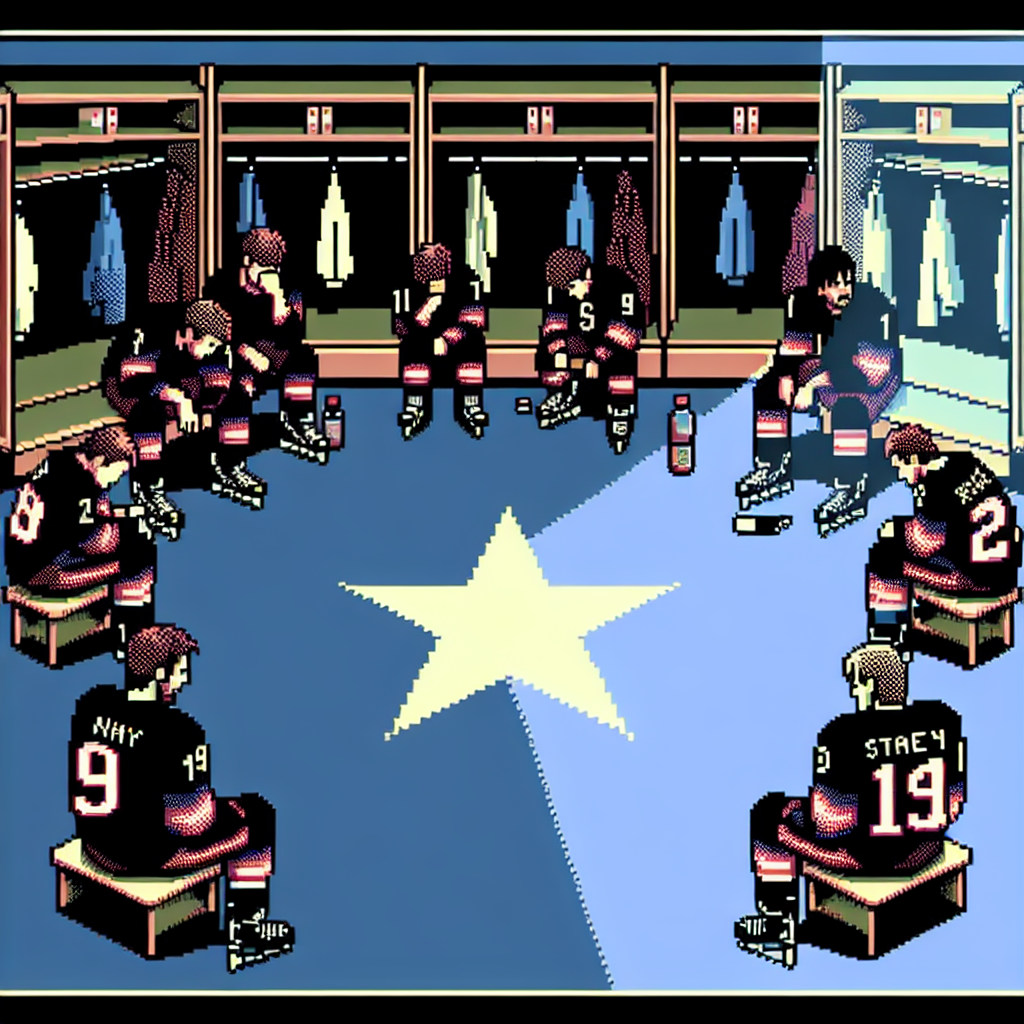
The bus rolled into the arena like any other morning, but inside the Washington Capitals locker room something felt different — quieter, weightier. After 17 seasons, decades of late-night practices, playoff marches and championship celebration, John Carlson was no longer a Capital. The trade to Anaheim landed before the NHL’s March 6, 2026 deadline and, for a franchise that built seasons around a handful of locker-room pillars, it felt like a small seismic shift.

There’s sports drama and then there’s the human drama that follows longtime teammates when a “North Star” is moved. The reactions — teary-eyed players, stunned staff, a community of fans searching for the right words — captured the tug between competitive reality and deep emotional ties.

Why this matters beyond the box score

  • John Carlson wasn’t just a top-pair defenseman; he was a cultural anchor. He played 17 seasons in Washington, helped lift the franchise’s lone Stanley Cup, and led the blue line in all-time games, goals and points for the team.
  • The trade — Anaheim gave Washington a conditional first-round pick (2026 or 2027) and a 2027 third-round pick — is both cap- and roster-management logic and a symbolic break with the past. Teams in transition trade veterans like Carlson to accelerate a rebuild or restock future assets.
  • The immediate aftermath shows how leadership can’t be measured only in assists or time on ice. When a locker-room “North Star” leaves, the ripple effects are emotional, tactical and strategic.

What happened (concise timeline)

  • March 6, 2026: The Capitals traded John Carlson to the Anaheim Ducks for a conditional first-round pick in 2026 or 2027 and a 2027 third-round pick. (nhl.com)
  • Reaction: Teary goodbyes and locker-room interviews revealed teammates describing Carlson as foundational to the team’s identity — a family man, a mentor and a steady presence. RMNB captured those raw reactions. (russianmachineneverbreaks.com)
  • Media/context: Coverage from national outlets framed the move as part of the Capitals’ pivot at the deadline and a rare modern example of a player being traded after nearly two decades with one franchise. (nhl.com)

The locker-room lens: leadership that numbers don’t capture

Sports analytics do wonders for evaluating on-ice value, but they don’t quantify the quiet, daily leadership — the veteran voice in the pre-game skate, the dad who organizes team family nights, the player who models how to be a pro when things go sideways. Teammates called Carlson a “North Star” for a reason:

  • He was consistent. Seventeen seasons under one banner build habits that younger players copy.
  • He modeled loyalty and accountability, a living lesson that matters when a franchise is teaching its next generation.
  • His presence carried meaning in moments: playoff pushes, media storms, and the everyday grind.

That cultural capital is why trading long-tenured leaders is never purely transactional. It rearranges relationships and expectations inside the locker room.

The trade logic: why the Capitals did it

  • Asset accumulation: A conditional first-round pick is premium currency for a team evaluating a longer-term rebuild or retool. Draft capital gives flexibility to restock the pipeline. (nhl.com)
  • Roster timeline: At 35 (per reporting), Carlson’s peak years were behind him. Teams weigh current performance against future cost and fit; Washington appears to have chosen the future route.
  • Market dynamics: Offers for veteran leaders are rare. If a team can turn an aging core piece into high-value picks, the front office may see the move as necessary, even if wrenching emotionally. (thehockeynews.com)

What this means for Washington’s season and culture

  • Short term: The Capitals lose an all-situation defenseman and a stabilizing presence. On-ice adjustments and minutes redistribution will be necessary immediately.
  • Long term: The draft picks strengthen the franchise’s ability to add young talent or flip picks in other transactions. That’s the strategic payoff for letting go of a beloved veteran.
  • Cultural test: With a leadership vacuum, other players must step forward. The club’s identity will shift from one centered on long-tenured stalwarts to whatever new faces fill those roles.

Voices from the room

  • Teammates were emotional and candid, describing Carlson’s family-first approach and his habit of quietly setting the standard. Those human reactions underscored that this was not just a tactical move — it was the closing of a chapter for players and fans alike. (russianmachineneverbreaks.com)
  • Coverage from the Capitals’ organization acknowledged the era and celebrated Carlson’s legacy, while emphasizing belief in the current roster and the future the picks could buy. (nhl.com)

What to watch next

  • How Washington replaces Carlson’s minutes and power-play role.
  • Whether the Caps use the newfound draft capital to trade up, draft high-impact talent, or acquire a younger, NHL-ready defender.
  • The human follow-up: Will Carlson and Washington find a reunion path (short-term return or offseason free-agent conversations) or will his legacy remain a bittersweet chapter elsewhere? Media chatter suggests a Carlson reunion isn’t impossible, but nothing is certain. (washingtonpost.com)

Takeaways for fans and the casual observer

  • Trades like this are inevitable in cap-era hockey, but they hurt because they are personal. Fans mourn not only the player but the memories and the sense of continuity.
  • Smart roster building balances respect for legacy with strategic planning. Washington’s front office made a decision that favors future flexibility over present sentiment.
  • Leadership is replicable but not interchangeable; it will take time and intentional culture-building to replace a 17-year Capitol of the franchise.

Final thoughts

Watching a locker room process the exit of a player like John Carlson is a reminder that sports are storytelling as much as competition. Teams are living, changing things — and sometimes the toughest calls are the ones that reshape a franchise’s identity overnight. Carlson leaves Washington with a Chamber of memories, a Stanley Cup and a record of leadership few players match. For Capitals fans, the practical gains of draft capital won’t instantly fill the hole he leaves in the room. But in hockey as in life, endings open space for a new chapter to begin.

Sources


Related update: We recently published an article that expands on this topic: read the latest post.

Related update: We recently published an article that expands on this topic: read the latest post.
Raiders’ Price Tag: Two Firsts for Crosby | Analysis by Brian Moineau

“Crosby is available, at the right price” — what the Raiders’ steep asking price really means

Introduction hook

You don’t ask for two first-round picks and a player unless you’re trying to change the timeline of a franchise. When the Las Vegas Raiders reportedly told the league they’d only move Maxx Crosby for “two first-round picks and a player,” the sports world did that rare thing: it paused, re-routed conversations, and started imagining blockbuster scenarios. This isn’t just trade chatter — it’s a statement about value, identity and how teams decide between today’s best edge rusher and the uncertain currency of draft capital.

Why the demand is headline-worthy

  • Maxx Crosby is not just a good player. He’s a franchise-defining edge rusher — multi-time Pro Bowler, game-wrecker, and the kind of disruptive force that can flip playoff games.
  • But asking for a package on the scale of what the Cowboys received for Micah Parsons (two first-rounders plus a player) is aggressive. It signals that the Raiders view Crosby as an asset worth anchoring a rebuild or accelerating a contender — not a role player you move for mid-round picks.
  • The timing is notable: Las Vegas holds the top pick in the 2026 draft and looks poised to draft a rookie quarterback to reset the franchise timeline. Moving Crosby would be a clear pivot toward a multiyear rebuild with draft capital as the currency.

Context and relevant background

  • Crosby signed a big extension in 2025 and has remained an elite pass rusher through the 2025 season. Yet the Raiders’ 2025 campaign fell apart; internal friction (including Crosby leaving the facility after being told he wouldn’t play late in the season) was widely reported and raised the specter of an uneasy split. (nbcsports.com)
  • The precedent matters: the Packers–Cowboys–Parsons/Kenny Clark trade set a recent market benchmark for elite edge rushers. That deal involved two first-round picks plus a starting defensive lineman, and teams around the league are using it as a template. The Raiders’ price mirrors that template. (nbcsports.com)
  • Media and analytic outlets have started producing mock trades and lists of suitors (49ers, Bills, etc.), showing there’s real marketplace interest — but also serious complications like salary-cap math and what “a player” actually looks like in a package. (si.com)

What the asking price actually buys Las Vegas

  • Two first-round picks: draft capital lets the Raiders either (a) restock talent over multiple positions, (b) trade back for roster depth, or (c) acquire young, cost-controlled starters to pair with a rookie QB. High picks = flexibility.
  • A player in the return package: that’s the immediate plug-and-play piece — someone who can replace snaps or contribute right away. For a defense, this is typically a starting DL, LB, or complementary edge who can ease the loss of Crosby’s production.
  • In sum: Las Vegas would be exchanging a short-term superstar for a blended pathway back to sustained competitiveness — a classic “win-now” player swapped for long-term optionality.

How contenders and rebuilders should think about this

  • Contenders with a short window (Buffalo, 49ers, Cowboys-style teams) might justify giving up premium picks if they view Crosby as the missing piece to reach — and win — a Super Bowl. The calculus: guaranteed elite pass rush now vs. gambled future talent.
  • Rebuilders should sniff for picks, not players. If a team is four-plus years away from competing, taking the draft capital and flipping it into more picks or young talent is better than mortgaging the future for a veteran.
  • Salary-cap and contract length matter. Crosby’s extension matters to any acquiring team: paying elite money for a 28–29-year-old rusher changes the calculus on how many picks or players teams are willing to include. (nbcsports.com)

Risks and counterarguments

  • Age and wear: Crosby is in his late 20s. Elite pass rushers can remain dominant into their 30s, but injuries and diminishing returns are a real risk.
  • Changing team dynamics: Trading away a cultural leader and face of the defense can destabilize a locker room — even for a rebuild. Crosby’s footprint in Las Vegas isn’t just statistical; it’s identity.
  • Overpaying based on narrative: The Parsons trade set expectations. But Parsons was younger at the time of that deal and carried a different profile. Some insiders (e.g., Ian Rapoport) have warned that Crosby’s market might not match Parsons’ exactly. (raidersbeat.com)

Possible landing spots and what they’d owe

  • San Francisco: A natural fit defensively; they’ve been floated in multiple mock trades and could offer a combination of picks and role players. But their picks are late in Round 1, changing the value calculus. (si.com)
  • Buffalo: Has the playoff window and might be willing to sacrifice picks and a player to add an immediate game-wrecker for Josh Allen. Cap room and roster construction could complicate the deal. (cbssports.com)
  • Other contenders (teams like Detroit, Dallas-style suitors) could also be in the mix depending on how aggressive they want to be and what they can move without gutting depth.

Practical red lines for the Raiders

  • Don’t accept just quantity of picks — quality matters. Two late firsts are not the same as two early ones.
  • The “player” must be a starting-caliber contributor, or the Raiders should remain resolute and let Crosby walk if the market is insufficient.
  • If the franchise plans to draft a franchise QB with the No. 1 pick, any trade must leave the roster competent enough to give that QB a chance to develop; trading every veteran piece for picks would be self-defeating.

A few scenarios that make sense

  • Championship push: A contender gives two early firsts + starting DL — Raiders say yes to accelerate contention.
  • Balanced rebuild: Two mid/late firsts + a young starting-caliber player + a future pick swap — Raiders negotiate, keep cap flexibility, and restock.
  • No fair offer: Raiders keep Crosby, ride with him and the top draft pick — accept that a core veteran-plus-rookie rebuild can be compelling if managed well.

My take

Maxx Crosby is a rare commodity, but the Raiders’ asking price is as much a narrative plaster as it is a negotiating stance. By demanding two first-round picks and a player, Las Vegas is protecting its ability to reshape its roster while signaling that it won’t settle for pennies on the dollar for one of the league’s premier pass rushers. Teams should pay attention: a deal could reshape multiple rosters this spring, but it will require the right mix of draft capital, a reliable immediate contributor, and the willingness to absorb a significant contract.

Final thoughts

Trades like this are chess, not checkers. Crosby’s availability — “at the right price” — gives contenders a chance to flip a calculus and rebuilders a shot at reloading. Whether the Raiders get their exact asking price or a negotiated variant, the discussion alone highlights how much teams now value elite edge disruption. Expect heavy phone traffic, creative offers, and a price discovery process that will occupy the next few weeks of the offseason.

Sources


Related update: We recently published an article that expands on this topic: read the latest post.

Related update: We recently published an article that expands on this topic: read the latest post.

Bulls’ Roster Teardown: Dosunmu Traded | Analysis by Brian Moineau

The Bulls’ latest roster demolition: why trading Ayo Dosunmu hurts and makes sense

There’s a particular sting when a hometown player you’ve watched grow into a reliable pro is packed into a trade bag and sent away before you’ve finished your mid-morning coffee. That’s what happened Thursday when the Chicago Bulls — in the middle of a blitz of deadline moves — shipped Ayo Dosunmu out of town, along with Julian Phillips, while Dalen Terry had already been moved earlier in the day. It felt less like a nudge in a new direction and more like a wholesale teardown.

Below I unpack the context, the logic from both sides, and what this cascade of trades means for the Bulls’ short- and long-term identity.

Why this felt like a gut punch

  • Dosunmu is a hometown success story. Drafted in the second round out of Illinois in 2021, he’d steadily built a reputation as a gritty two-way guard who could defend, create shots, and provide energy off the bench or in spot starts. The emotional attachment runs deep for Chicago fans. (chicago.suntimes.com)
  • The timing. The Bulls had already moved other recognizable pieces (Kevin Huerter, Nikola Vučević, Coby White in earlier deals reported around the deadline), so Dosunmu’s exit felt like another brick pulled from the house rather than a strategic remodel. The narrative shifted from “retool” to “rebuild.” (chicago.suntimes.com)
  • Certainty of departure. Dosunmu was on an expiring deal, meaning the Bulls’ front office faced a classic decision: try to hold onto a fan favorite for a modest chance at a playoff push, or flip him now for longer-term assets. They chose the latter. (foxsports.com)

The trade details (the essentials)

  • Minnesota Timberwolves received: Ayo Dosunmu and Julian Phillips. (espn.com)
  • Chicago Bulls received: Rob Dillingham, Leonard Miller and four future second-round draft picks (reports vary slightly by outlet on exact package timing but the core pieces are consistent). (espn.com)

Dalen Terry, a former first-round pick who never quite locked a long-term role in Chicago, was moved earlier to New York in a deal that brought back Guerschon Yabusele — a move the Sun‑Times framed as partly bookkeeping and partly an admission of development misfires. (chicago.suntimes.com)

The front-office logic: accelerating a rebuild

  • Asset accumulation: The Bulls picked up young prospects and multiple second‑rounders. For a team that’s now clearly pivoting away from the current competitive window, extra picks and young talent are valuable currency. Getting Rob Dillingham (a former lottery pick) and Leonard Miller + draft capital gives Chicago lottery upside and trade chips down the line. (foxsports.com)
  • Avoiding forced re-signs: Dosunmu was an expiring salary and likely would test free agency in the summer. Rather than risk losing him for nothing, the Bulls monetized his value now. That’s pragmatic, even if it’s unpopular with the fanbase. (wsls.com)
  • Clearing confusion: The Bulls’ roster had a jumble of veterans and young wings — moving several established players creates clarity: this is a reset. Artūras Karnisovas has repeatedly said the roster would change; this is the literal fulfillment of that promise. (chicago.suntimes.com)

What Minnesota gains (and why they made the move)

  • Immediate two-way depth: Dosunmu brings energy, defense, and 3‑point shooting that can slide into bench lineups beside Anthony Edwards and boost the Wolves’ perimeter options for a playoff push. He was averaging career-high scoring numbers and shooting efficiently this season — traits playoff teams covet for bench scoring. (foxsports.com)
  • Short-term upgrade: For a contender trying to solidify a seed, adding a polished, affordable rotation guard for the stretch run is low-risk, high-return — especially if Dosunmu fills a role and hits free agency as hoped.

The cost: what Chicago might be sacrificing

  • Fan goodwill and identity: The Bulls are shedding hometown and popular players in rapid succession. That erodes continuity and makes it harder to sell future rebuilds to a passionate local fanbase. (chicago.suntimes.com)
  • Developmental risk: Rob Dillingham and Leonard Miller are young, but neither is a guarantee. Turning proven role players into prospects and picks carries the usual gamble: will those assets become meaningful rotation pieces? (foxsports.com)
  • Perception of incompetence vs. intentionality: Critics will point to busts or mis-picks (the Sun‑Times referenced Dalen Terry not meeting expectations) to paint the front office as flawed. But that critique sits beside a competing narrative: smart teams sometimes need to cut losses and gather flexibility. (chicago.suntimes.com)

Quick wins and longer arcs

  • Short-term: The Bulls will be worse this season on paper — fewer proven scorers and continuity. That may help draft positioning.
  • Medium-term: If Chicago’s evaluators hit on their lottery/later picks and Dillingham/Miller develop, the franchise could swap mid-tier veterans for younger controllable talent and reload cap flexibility.
  • Long-term: This is a multi-year bet. The scoreboard pain now could pay out only if the front office nails scouting, player development, and later acquisitions.

What to watch next

  • How Rob Dillingham and Leonard Miller are deployed — are they given minutes or flipped for different assets?
  • The Bulls’ summer strategy: will they chase a franchise-level swing in free agency, or keep stockpiling picks and hope for a high draft position?
  • Dosunmu’s role in Minnesota and whether he re-signs in free agency — his performance there will color how this deadline trade is judged.

Key takeaways for Bulls fans

  • This was a decisive, not incremental, pivot: the front office is embracing a rebuild and sacrificing immediate familiarity for future optionality. (chicago.suntimes.com)
  • The Bulls gained prospects and picks in exchange for proven role players — a tradeoff between certainty today and upside tomorrow. (foxsports.com)
  • How the club executes on development and future draft decisions will determine whether these moves become celebrated or regretted.

My take

I get the frustration. Trading a hometown player like Ayo Dosunmu stings because it’s personal — he represented a connective thread between the team and the city. But the NBA is a market of windows. The Bulls’ leadership appears to have decided that clinging to incremental competitiveness this season was less valuable than clearing a path to a new core. That’s defensible, even if it’s ugly in the moment.

If Chicago’s brain trust can translate those second‑rounders and young pieces into real talent or smart trades, this chapter will read like a necessary reset. If they don’t, this will look like an avoidable demolition. For now, it’s a bold bet — and bold bets are always polarizing.

Sources


Related update: We recently published an article that expands on this topic: read the latest post.

Five Eagles Headed to 2026 Pro Bowl Games | Analysis by Brian Moineau

Five Eagles Headed to the 2026 Pro Bowl Games — and What It Means for Philly

You could feel it coming all season: a defense that quietly kept piling up stops, a pair of young corners who refused to get targeted, and a line of scrimmage that routinely made life miserable for opponents. On December 23, 2025, the Eagles’ front office and fanbase got formal recognition — five Philadelphia players were named to the 2026 Pro Bowl Games, including two first-time selections and three repeat nods.

Quick snapshot

  • Players named: Zack Baun (LB), Jalen Carter (DT — starter), Cooper DeJean (DB), Cam Jurgens (C), Quinyon Mitchell (CB).
  • Two first-time Pro Bowlers: Cooper DeJean and Quinyon Mitchell.
  • Three second-time selections: Jalen Carter, Zack Baun, Cam Jurgens.
  • Event: 2026 Pro Bowl Games on Feb 3, 2026 in San Francisco (Moscone Center), during Super Bowl week.

Why this matters — short takeaways

  • The defense is the engine: Four of the five Pro Bowlers are defenders, signaling a unit that has become Philadelphia’s identity.
  • Youth meeting production: Mitchell and DeJean — both young and homegrown in the Eagles’ system — are already elite in coverage and nickel roles.
  • Consistency up the middle: Jurgens and Carter provide stability at center and interior defensive line, and Baun’s inside linebacker work ties the scheme together.
  • Depth and recognition: Beyond the five, the team also placed several players on the alternate list (Saquon Barkley, Jalen Hurts, Dallas Goedert, Jaelan Phillips, Kelee Ringo), showing roster-wide respect.

The story behind the names

  • Cooper DeJean and Quinyon Mitchell: Two first-time selections, but neither a surprise. Mitchell (a 2024 first-round pick) has emerged as a lockdown outside corner; according to Next Gen Stats reported by the Eagles, his completion percentage allowed over recent seasons ranked among the NFL’s best. DeJean, a second-rounder from 2024, has morphed into one of the league’s top nickel corners — high tackle numbers, lots of passes defended, and game-changing instincts. Their Pro Bowl nods underscore that Philly’s secondary is no longer just a supporting cast but a core strength.

  • Jalen Carter: The defensive tackle earned starter status on the Pro Bowl roster despite a season with some missed games. When he’s on the field, he’s disruptive — a constant interior threat who demands double teams and creates opportunities for edge rushers and linebackers.

  • Zack Baun: A converted edge-to-inside linebacker for Vic Fangio’s defense, Baun’s quick processing and range have made him a tackling machine and a dependable centerpiece in the middle.

  • Cam Jurgens: The continuity at center is striking — the Eagles now have a Pro Bowler at that spot for a seventh straight season (counting Jason Kelce’s run). Jurgens’ ability to anchor the run game and handle assignments in pass protection keeps the offense balanced, and his repeat selection reflects steady, reliable play rather than flash.

Put in context: roster construction and team trajectory

This Pro Bowl haul is a direct reflection of how the Eagles have been built: a high-investment, high-reward defensive strategy complemented by strong offensive line play. Philadelphia’s draft choices (Mitchell and DeJean both drafted in 2024), savvy free agent additions, and coaching continuity have accelerated a youth movement into legitimate high-level contributors. The presence of veterans like Jurgens and emerging stars like Carter keeps the roster balanced.

From a team-results standpoint, these selections came as the Eagles clinched the NFC East and secured a playoff spot — the kind of recognition that tends to follow success. It’s also worth noting that Pro Bowl voting mixes fan, player, and coach input, so this is validation from multiple angles: public support, peer respect, and coaching acknowledgment.

What to watch next

  • Health and availability: Carter’s missed time this season highlights the fragility of impact players. The Eagles’ postseason hopes — and whether these three repeaters can sustain their form — depend on staying healthy.
  • Turn the honors into momentum: Pro Bowl nods are nice, but playoff football is where legacies are made. Can Philly translate this defensive identity into deeper postseason success?
  • Depth response: With several players listed as alternates, how the Eagles manage minutes and personnel in the playoffs will show whether the roster has the resilience to withstand injuries or matchup stresses.

My take

This feels like more than an awards list. It’s a snapshot of an identity: a Philadelphia team built from the trenches outward, where young defensive talent is no longer a promise but a reality. Two homegrown corners making the Pro Bowl for the first time together is a small but meaningful milestone — the kind that signals draft and development working in lockstep. If the Eagles can keep growing around this defensive core and balance it with effective offense and health, the Pro Bowl mentions will soon be eclipsed by deeper postseason runs.

Sources

Lightning acquire forwards Oliver Bjorkstrand, Yanni Gourde, fifth-round pick from Seattle – NHL.com | Analysis by Brian Moineau

Lightning acquire forwards Oliver Bjorkstrand, Yanni Gourde, fifth-round pick from Seattle - NHL.com | Analysis by Brian Moineau

**Title: Lightning Strikes Seattle: A Trade That Could Change the NHL Landscape**

In a surprising twist of offseason fate, the Tampa Bay Lightning have pulled off a blockbuster trade with the Seattle Kraken, acquiring forwards Oliver Bjorkstrand and Yanni Gourde, along with a fifth-round pick. In return, the Lightning are sending forward Michael Eyssimont, a first-round draft pick in 2026, a first-round draft pick in 2027, and Toronto's second-round draft pick in 2025 to the Kraken.

This move by the Lightning isn't just another page in the NHL's playbook; it's a bold statement of intent. The acquisition of Bjorkstrand and Gourde adds significant depth to Tampa Bay's forward lines. Both players have demonstrated their prowess on the ice with consistent performances and the ability to make pivotal plays in crucial moments. Bjorkstrand, known for his sharp shooting and agility, complements Gourde's relentless energy and versatility, giving the Lightning a dynamic duo capable of turning the tide in any game.

For those unfamiliar, Yanni Gourde is no stranger to Tampa Bay fans. A former Lightning player, Gourde was instrumental in the team's back-to-back Stanley Cup victories in 2020 and 2021. His return to Tampa Bay feels like a homecoming, and it will be interesting to see how quickly he reintegrates with his former teammates. It's a bit like when a beloved band member rejoins the group after a solo career—there's an undeniable chemistry that just feels right.

Bjorkstrand, on the other hand, brings a fresh perspective. Previously with the Columbus Blue Jackets before playing for Seattle, he's known for his precision and ability to find the back of the net in high-pressure situations. His addition could be the spark that reignites the Lightning's championship ambitions.

This trade offers a fascinating parallel to other recent events in the world of sports and beyond. Consider the recent moves in the tech industry, like the acquisition of smaller startups by tech giants. Much like Google or Apple acquiring innovative startups to bolster their technological arsenal, the Lightning are strengthening their roster by adding proven talent to maintain their competitive edge.

Moreover, the stock market has seen similar trends, where companies invest heavily in future assets, much like Tampa's decision to give up first-round draft picks in 2026 and 2027. The Lightning's management is clearly playing the long game, investing in immediate talent to sustain their winning culture, much like companies invest in future technologies to maintain market dominance.

In the broader cultural context, this trade reminds us of the importance of adaptability and strategic foresight. In a world where change is the only constant, whether it's in sports, business, or personal endeavors, the ability to pivot and make bold moves can often be the difference between success and stagnation.

In closing, Tampa Bay's trade with Seattle is a testament to the ever-evolving nature of professional sports. The Lightning are clearly in win-now mode, and their fans must be buzzing with excitement about the season ahead. As we watch this new chapter unfold, one thing is certain: the NHL landscape just got a lot more interesting, and all eyes will be on Tampa Bay to see if their gamble pays off in the form of another Stanley Cup.

So, whether you're a die-hard hockey fan or just someone who appreciates a good strategic play, keep an eye on the ice this season. The Lightning might just be setting the stage for another electrifying performance.

Read more about AI in Business

Read more about Latest Sports Trends

Read more about Technology Innovations