TL;DR
-
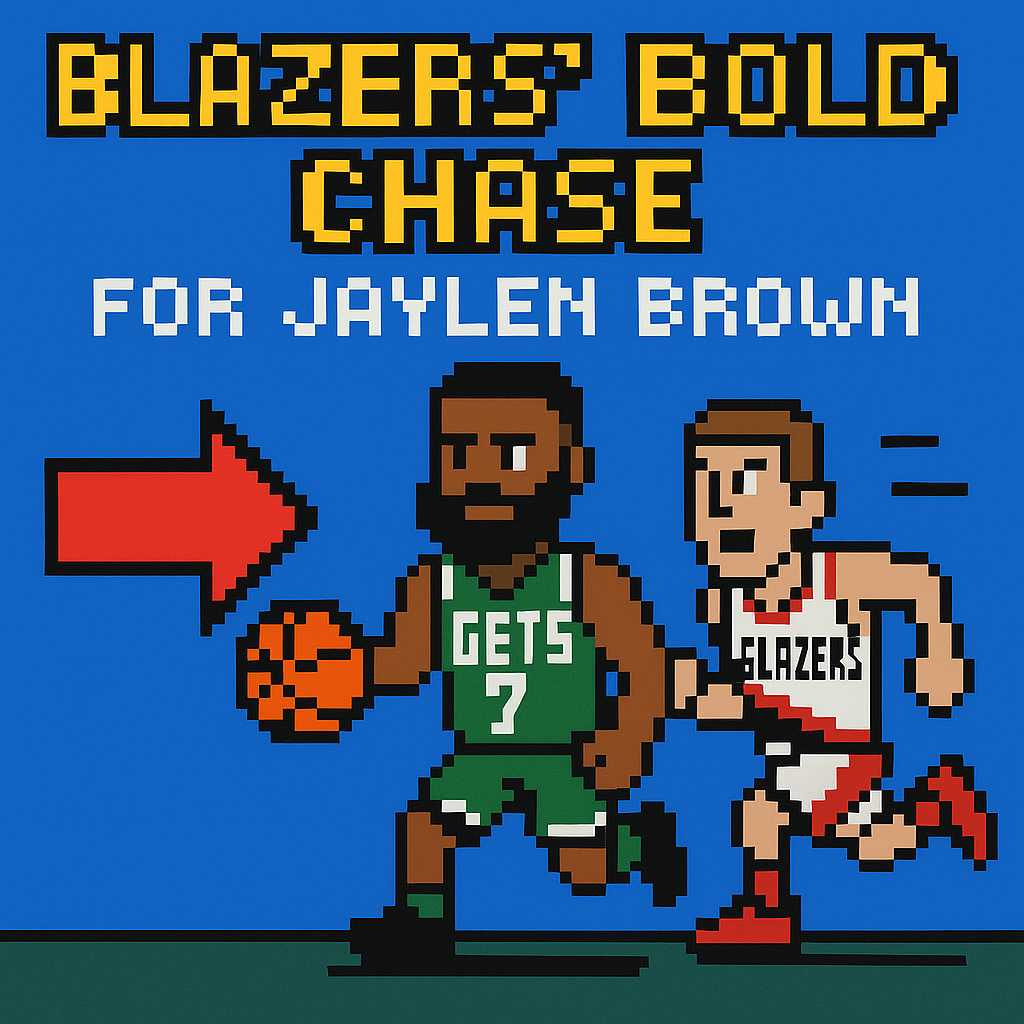
A Jaylen Brown acquisition forces Portland to solve hard CBA math: Brown’s 2026–27 salary projects at $57.1M with a 15% trade kicker and no player option, which tightens matching bands for apron-pressured teams under the 2023 CBA changes [1][2][8].
-
Portland can assemble the ask on paper—unprotected firsts in 2029 from Boston and Milwaukee plus swap rights with the Bucks in 2028 and 2030—but those assets likely land in the 20s, pushing Boston to demand an elite young player as the headline return [4].
-
If Portland just moved Jerami Grant’s $34.2M 2026–27 slot to add Ja Morant’s $42.2M, the Blazers lost their cleanest matching ballast; without Grant, a two‑team Brown deal probably requires Scoot Henderson (year‑4 rookie‑scale in the low‑teens) or Shaedon Sharpe plus multiple firsts, or a three‑team structure to hit 100% matching targets [3][5][2][9].
What the source said
Local and national chatter has linked Portland to star‑wing pursuits since 2023, in part because the Blazers control extra firsts: Milwaukee’s unprotected 2029, Boston’s unprotected 2029, and swap rights with Milwaukee in 2028 and 2030, all recorded on RealGM’s picks ledger [4]. Jaylen Brown’s supermax details—$57.1M in 2026–27, a 15% trade kicker, and no player option—frame Boston’s leverage and the outgoing‑salary bar Portland must clear if it wants to stack Brown beside a young core in the Pacific Northwest [1].
Why it matters
Jaylen Brown (born 1996 and All‑NBA in 2023) is a win‑now piece whose prime‑priced seasons collide with Portland’s youth arc and the 2023 CBA’s apron tripwires that restrict aggregation and salary matching for high‑spend teams starting in 2024–25 [7][2][8]. That timing pressure shapes who moves first: picks, kids, or both.
The asset map is real, not theoretical. Portland’s pick chest features the 2029 BOS 1st, the 2029 MIL 1st, and 2028/2030 MIL swaps; those are valuable but project as late if the Bucks and Celtics remain contenders through 2029, which is why Boston will likely push for Scoot Henderson or Shaedon Sharpe rather than a picks‑only offer [4].
Original analysis
-
Back‑of‑envelope cap/trade math
-
Brown’s 2026–27 number is $57.1M. For an apron‑sensitive buyer, the post‑2023 CBA removes the old 125%+ buffer at higher tiers and introduces tighter, sometimes 100%, matching requirements and aggregation limits once teams cross aprons; that reduces “one big contract + kids” optionality [1][2][8].
-
If Portland already swapped Jerami Grant’s $34.2M (2026–27) to bring in Ja Morant’s $42.2M, the most direct ballast (Grant) is gone. Replacing it requires either (a) a star‑plus‑kids stack or (b) a three‑team build where a neutral club “rents” $20M–$30M of expiring money to square the 100% calculus [3][5][2][8].
-
Shown work example, two‑team try: Morant ($42.2M) is off‑limits. A plausible stack could be Scoot Henderson (year‑4 rookie‑scale in the low‑teens) + Deni Avdija ($13.1M in 2026–27) + smaller contracts. Even with Scoot’s low‑teens and Avdija’s $13.1M, you still trail Brown’s $57.1M by several million, forcing more players or a third team to bridge the gap [9][6][1].
-
Pick payload math: Suppose the ask is four firsts. Portland can deliver 2029 BOS 1st (unprotected), 2029 MIL 1st (unprotected), plus two of: 2028 MIL swap value (if favorable), Portland’s own out‑year firsts within Stepien limits, or additional swaps. Count meets four, but expected value skews late‑first; Boston will price that discount into its player demand [4][2].
-
A quick 2×2: headline piece vs. cap path
-
Headline = blue‑chip (Sharpe/Scoot) + Two‑team path: Cleanest valuation for Boston; worst for Portland’s age curve and depth.
-
Headline = blue‑chip + Three‑team path: Smoother matching via cap‑sponge; still costly but preserves some rotation balance.
-
Headline = non‑blue‑chip + Two‑team path: Likely dead on arrival; picks won’t offset late‑first risk.
-
Headline = non‑blue‑chip + Three‑team path: Possible only if third team adds present‑day value Boston prefers to far‑out picks.
-
Named‑stakeholder breakdown
-
Joe Cronin (Blazers GM): With Morant at $42.2M anchoring the books, Cronin must keep enough surplus‑value contracts (e.g., Avdija at $13.1M in 2026–27 on a descending four‑year, $55M deal) and at least one of the two premium prospects to avoid a second‑apron ceiling [3][6][8].
-
Brad Stevens (Celtics POBO): Brown’s supermax and trade kicker don’t block a deal; they raise the asset floor. Stevens will prioritize a blue‑chip player plus multiple firsts he can re‑route into another star hunt under Stepien‑compliant timing [1][2][4].
-
Deni Avdija and Donovan Clingan: Avdija’s descending deal (~$13.1M in 2026–27) and Clingan’s rookie‑scale years are precisely the contracts that make multiple maxes feasible without gutting the spine [6].
-
Contrarian read
-
Consensus: “Pile four firsts on the table and finish it.”
-
Counter: Losing Jerami Grant’s $34.2M matching slot to add Morant’s $42.2M moved Portland from “cleanest match” to “most complex path.” In a system that compresses aggregation and enforces tighter matching around aprons, complexity is cost—and Boston can take equal pick counts from teams with simpler money [5][3][8].
What others are missing
Analyses that sketch “Grant + picks” frameworks ignore the post‑Grant ledger and the 2023 CBA’s aggregation and apron restrictions that kick harder from 2024–25 forward; the absent $34.2M slot means Portland either headlines with Sharpe/Scoot or recruits a third team with $20M–$30M of expiring salary to reach Brown’s $57.1M without tripping second‑apron landmines [5][1][2][8].
What to watch next
-
By July 31, 2026: Any credible report of substantive Boston–Portland talks will include at least three first‑round picks, with one explicitly identified as either the 2029 BOS 1st or the 2029 MIL 1st; if neither pick appears, treat the “talks” as posturing [4].
-
By August 31, 2026: If a three‑team framework leaks, a third club with $20M–$30M of expiring salary will be named as the cap‑sponge to satisfy near‑100% matching around apron constraints; track whether that team extracts a first or a swap for its trouble [2][8].
-
By opening night of 2026–27: If Brown is not in Portland and remains on Boston’s roster at $57.1M, expect at least one on‑record executive quote about the difficulty of two‑team matching under the new apron rules, confirming that cap math—not just price—stalled a deal [1][2][8].
My take
I would set a hard rule: keep Deni Avdija’s $13.1M 2026–27 value deal and Donovan Clingan’s rookie‑scale years intact, and do not headline with both Scoot Henderson and Shaedon Sharpe in the same outgoing. Brown’s $57.1M slot and 15% kicker are manageable only if Portland protects surplus‑value contracts and at least one premium prospect to avoid second‑apron rigidity in 2026–27 and beyond [1][2][6][8]. If Boston insists on a blue‑chip plus three or four firsts drawn from the 2029 BOS/MIL pool and Portland’s own out‑years, I’d pivot to a three‑team design; if that still prices in both Sharpe and Scoot, I’d pass and conserve the 2029 capital for the next distressed‑star window [4][2].
Sources
-
Spotrac — Jaylen Brown Contract. What this contributes: precise 2026–27 salary ($57.1M), supermax terms, trade kicker, and lack of player option.
-
Larry Coon’s NBA CBA FAQ. What this contributes: trade‑matching bands, Stepien Rule mechanics, apron restrictions, and aggregation limits under the 2023 CBA.
-
Spotrac — Ja Morant Contract. What this contributes: Morant’s 2026–27 salary (~$42.2M) used in matching examples.
-
RealGM — Portland Trail Blazers Future Draft Picks. What this contributes: confirmation of the 2029 BOS 1st (unprotected), 2029 MIL 1st (unprotected), and 2028/2030 MIL swap rights.
-
Spotrac — Jerami Grant Contract. What this contributes: Grant’s 2026–27 salary (~$34.2M) that previously served as matching ballast.
-
Spotrac — Deni Avdija Contract. What this contributes: four‑year, $55M structure and the $13.1M 2026–27 salary on a descending deal.
-
Basketball‑Reference — Jaylen Brown bio/accolades. What this contributes: 1996 birth year and 2023 All‑NBA selection for age/timeline context.
-
Hoops Rumors — 2023 CBA second‑apron/trade restrictions explainer. What this contributes: practical description of tightened 100% matching scenarios and aggregation limits.
-
Spotrac — Scoot Henderson Contract. What this contributes: rookie‑scale framework supporting a “low‑teens” 2026–27 estimate for Year 4.
Related update: We recently published an article that expands on this topic: read the latest post.
Related update: We recently published an article that expands on this topic: read the latest post.
Knicks 123, Trail Blazers 114 — A Night of Small Edges and Big Comebacks
The Moda Center felt electric but not out of control on January 11, 2026 — a tight, high-energy game that swung like a pendulum before the New York Knicks grabbed the final momentum and walked away with a 123-114 win. This wasn’t a blowout or a buzzer-beater; it was a game decided by composure, timely defense and a few veteran plays down the stretch. For Knicks fans, it was a welcome reset after a rough stretch. For Portland, it was a test of depth and health that raised new questions.
Why this game mattered
- The Knicks were coming off a slump, having lost five of six. A road win against a streaking opponent was exactly the kind of reset they needed.
- The Trail Blazers had been rolling — five straight wins — and are trying to prove they can compete in tight spots without their full complement of stars.
- Returns and injuries shaped the narrative: Josh Hart returned for New York after an ankle injury; Jrue Holiday returned for Portland after a calf issue; late in the game Deni Avdija exited with a back tweak that could matter for Portland’s short-term outlook.
What swung the game
- Veteran play and late-game poise: Jalen Brunson (26 points) and OG Anunoby (24) took control when it mattered. Brunson’s scoring and ball security in the fourth pushed the Knicks separation when the Blazers tried to rally.
- A balanced attack: Karl-Anthony Towns added 20 points and 11 rebounds, and Josh Hart contributed a breezy 18 in his first action since Christmas. The Knicks didn’t rely on one hot streak — multiple contributors kept the offense rolling.
- Portland’s resilience — and limits: Deni Avdija poured in 25 for the Blazers and helped keep them in the fight, but his late injury and the team’s thin depth exposed Portland when the Knicks tightened defensively. Jrue Holiday offered a measured return (8 points in 16 minutes), but the Blazers still felt the absence of full-strength continuity.
Midgame turning points
- Third-quarter control: The Knicks built a 10-point edge in the third, looking like they might pull away — only to see Portland rally and tie it early in the fourth. That back-and-forth set the stage for a tense finish.
- Late baskets and defensive stops: Miles McBride’s pullup 3 at 3:47 left the Knicks ahead 109-104 and felt like a tone-setter; Brunson’s later 3 at 2:23 extended the gap and took the sting out of Portland’s comeback attempts.
What the box score tells you
- Balanced scoring: Several Knicks finished with high-teen or 20+ point nights, preventing Portland from focusing on one star.
- Rebounding and second-chance points swung momentum at times, but New York’s late defensive focus (limiting transition and miscues) created separation down the stretch.
- Injuries remain a variable: Avdija’s late back issue — he left after grabbing his back — is the kind of in-game moment that can affect rotations and upcoming matchups for Portland.
A few quick numerical observations:
- Jalen Brunson: 26 points, the steady hand in crunch time.
- OG Anunoby: 24 points and defensive presence across 34 minutes.
- Deni Avdija: 25 points for Portland before exiting late.
(Stats referenced from game coverage and box score reports.)
What this means for both teams
- Knicks: This win can be a psychological turning point. Snapping Portland’s five-game streak and getting meaningful contributions from returning players like Josh Hart helps stabilize rotations and confidence. For a team that’s had streaky stretches, a composed road win matters more than a highlight play.
- Trail Blazers: The Blazers keep showing fight, but health and depth are the bottlenecks. Jrue Holiday’s return is a positive, but late injuries (like Avdija’s back) and the limited minutes of key players leave Portland vulnerable in tight games. They’ll need players beyond the usual rotation to step up if they want to sustain a run.
Three practical takeaways
- Veteran stability matters: In a close fourth quarter, experienced scorers who can avoid turnovers and hit clutch shots make all the difference.
- Health is destiny: Returns help, but lingering or new injuries (especially late-in-game ones) can blunt a team’s momentum and force rapid rotation changes.
- Balanced offenses are tougher to stop: When multiple players can score 15–25 points, opponents can’t key-in on a single defensive game plan.
My take
This game felt like a microcosm of the current NBA midseason: talent everywhere, but the teams that win are the ones that manage the small things — fouls, turnovers, late possessions, and player health. The Knicks showed they can lean on vets and still get production from role players; the Blazers showed grit but also the fragility that injuries can impose. If Brunson, Towns and Anunoby continue to click, the Knicks look like a team that can turn a middling stretch into a solid second half. Portland’s ceiling still depends on bodies staying available and some younger pieces growing into more consistent two-way roles.
Final thoughts
A 123-114 scoreline doesn’t tell the full story — the game lived in the ebb and flow between urgency and composure. For New York, this was a confidence-building win. For Portland, it’s a reminder that every inch matters when rosters are tested. Expect both teams to be active, hungry and a bit cautious as they navigate the next few weeks.
Sources
Related update: We recently published an article that expands on this topic: read the latest post.
Related update: We recently published an article that expands on this topic: read the latest post.
A comeback for the ages: Blazers end Thunder’s last unbeaten run
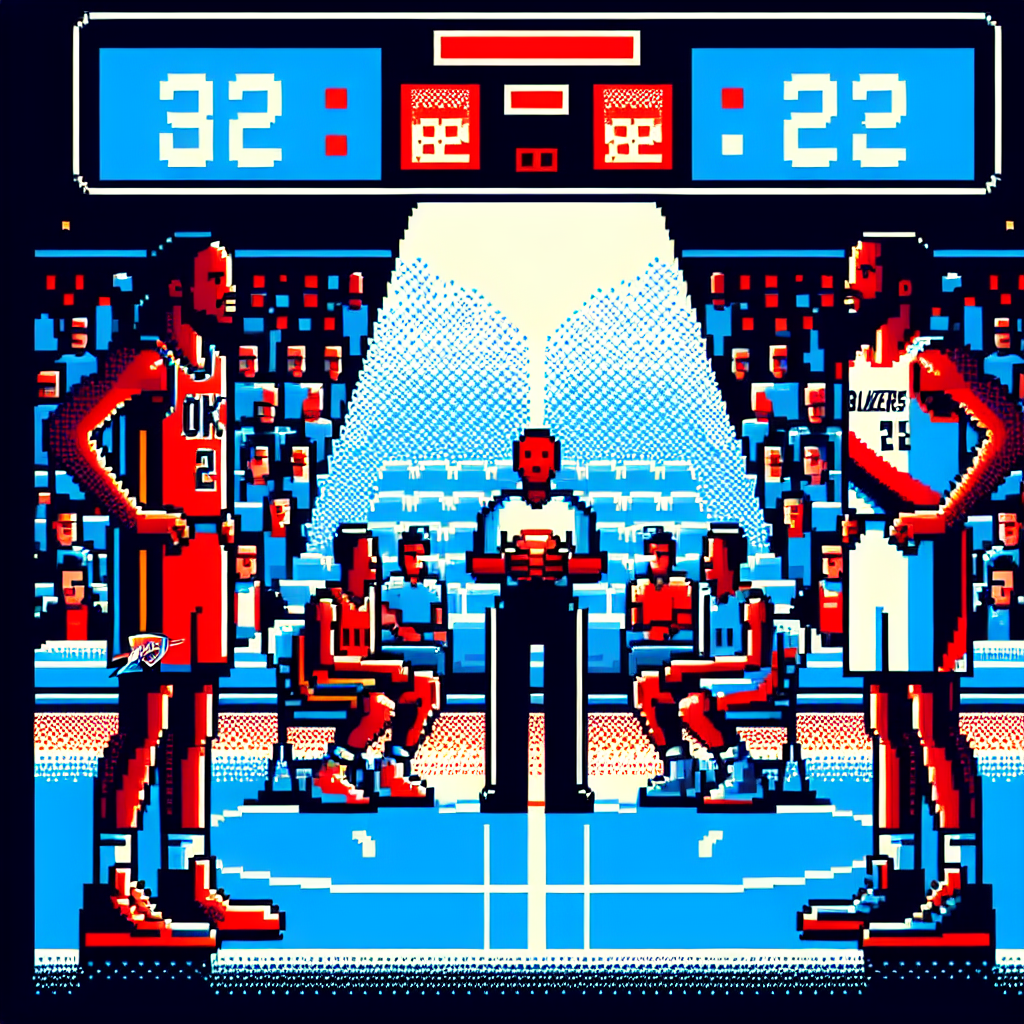
An electric night at the Moda Center turned into a reminder that no lead is truly safe in the modern NBA. On Wednesday, the Portland Trail Blazers erased a 22-point first-quarter deficit to beat the Oklahoma City Thunder 121–119 — and in the process handed the defending champions their first loss of the season. What looked like a runaway game for OKC early became a pulse-pounding finish, and the league’s last unbeaten tag came tumbling down.
Why this game mattered
- The Thunder entered the night as the NBA’s final undefeated team, riding an 8–0 start.
- Portland’s comeback was dramatic — down by 22 in the first quarter and never leading until late in the fourth.
- The win snapped Portland’s long losing stretch to Oklahoma City and injected life into a Blazers squad looking to reestablish itself.
Game snapshot
- Final score: Portland Trail Blazers 121, Oklahoma City Thunder 119.
- Key performers:
- Deni Avdija: 26 points, 10 rebounds, 9 assists (nearly a triple-double).
- Jrue Holiday: 22 points, clutch free throws down the stretch.
- Shai Gilgeous-Alexander: 35 points, 9 rebounds for Oklahoma City.
- Turning point: A decisive 9–0 run by Portland late in the fourth quarter flipped momentum and gave the Blazers their first lead with about six minutes remaining.
- Closing drama: With 0.6 seconds left and trailing by three, Isaiah Joe was fouled on what replay showed to be a three-point attempt; his toe was on the arc, so he shot two free throws, making one and intentionally missing the second. OKC’s last-second tip-in did not connect.
The comeback in context
Comebacks like this are more than just a single-game thrill — they tell you about identity. Portland’s rally showcased:
- Veteran leadership: Jrue Holiday’s late-game poise (and free-throw composure) was textbook.
- Balanced attack: Avdija’s near-triple-double hinted at how Portland can create mismatches without relying on a single superstar.
- Tactical adjustments: After a brutal opening quarter (41–21 in OKC’s favor), Portland tightened rotations, leaned into 3-point shooting and stretched OKC’s defense by mixing lineups.
For Oklahoma City, the result is a harsh reminder that depth, availability and game management matter. OKC was missing several contributors, and while Shai was spectacular (35 points), basketball is a team product — and Portland out-executed them when it mattered.
What this says about both teams
- Portland: This win can be a turning point. Overcoming a 22-point deficit requires belief and execution; if the Blazers can bottle that resilience, they’ll be dangerous in stretches this season. For a young roster still finding its identity, veteran calm and role-player contributions are enormous positives.
- Oklahoma City: The Thunder remain talented and dangerous — the early-season buzz was earned. But this loss highlights potential vulnerability when rotations are thin and key role players are absent. It’s also a reminder that hot starts can be fragile and that game management in the fourth quarter remains crucial.
Moments that will linger
- Avdija’s late surge and efficiency from the line (he finished 15-of-16 at the stripe in the game) — impact beyond the box score.
- Holiday’s late-game shotmaking and free throws that ultimately sealed the win.
- The razor-thin ending where a toe on the arc and an intentional miss determined whether the Thunder would force overtime.
Takeaways worth remembering
- Upsets and comeback wins can reshape a team’s narrative quickly; momentum swings matter in a long season.
- Star scoring (Shai’s 35) is vital, but basketball still rewards depth and situational execution.
- The Thunder’s loss is not a collapse so much as a cautionary note about availability and closing out games; for Portland, it’s evidence they can compete with top teams when everything clicks.
My take
There’s a special electricity when a team erases a massive deficit and wins in dramatic fashion — it glue-s everything: coaching decisions, veteran steadiness, role players stepping up. Portland’s victory wasn’t a fluke; it was a full-team effort with timely shooting and defensive stops. For Oklahoma City, this game will sting, but the core is still elite. Expect both teams to take lessons from this one — Portland for confidence, Oklahoma City for course correction.
Sources
Related update: We recently published an article that expands on this topic: read the latest post.
Related update: We recently published an article that expands on this topic: read the latest post.