Nightstand-Ready Google TV Projector | Analysis by Brian Moineau

Why I Want a Projector on My Nightstand Right Now

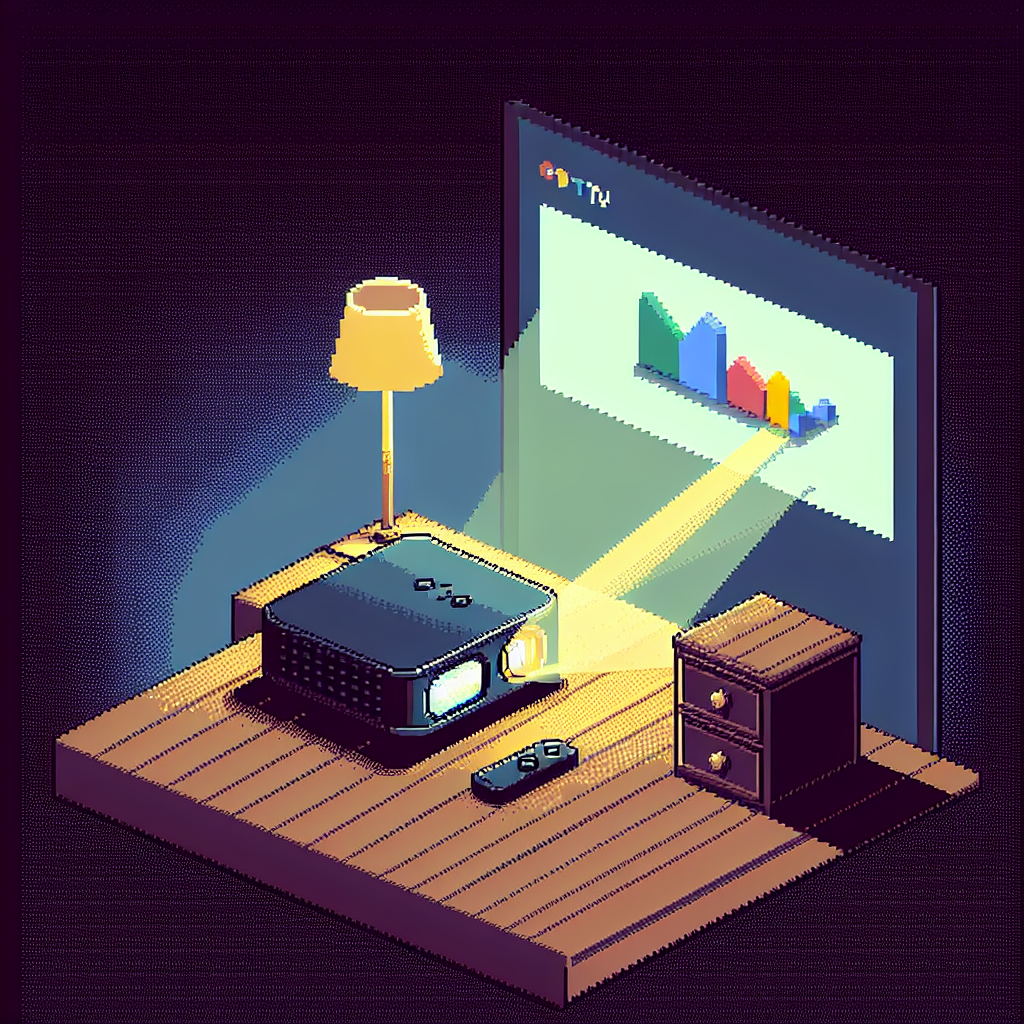
There’s something cozy about waking up to a soft glow on the ceiling and falling asleep to a movie that doesn’t demand a giant TV. Enter the BenQ GV32 — a rotating, Google TV–equipped lifestyle projector that somehow makes bedside streaming feel intentional instead of awkward. After reading the hands-on review and launch coverage, I found myself thinking less about replacing my main TV and more about upgrading how I live with screens in small spaces.

What makes the GV32 feel like a nightstand companion

  • It runs Google TV natively, so you don’t need a streaming stick or extra dongles to open Netflix, YouTube, or Disney+. That alone changes the “put-it-up-and-go” equation for a bedside device.
  • The design prioritizes easy aiming: it tilts vertically up to 135° and rotates a full 360°, so projecting onto a wall or the ceiling is quick and forgiving.
  • Built-in audio is actually useful here — a 2.1 setup with a woofer chamber and 18 W total output gives the kind of punch that portable projectors usually lack.
  • It’s Full HD (1080p) with HDR support and respectable color coverage, meaning shows and movies look good in dim rooms where you’d actually use it as a nightstand piece.
  • USB-C power and DP Alt Mode make it flexible: you can power it from high-capacity power banks and plug in a Switch or laptop with fewer cables.

Those bullets sound like a laundry list of features, but they combine into one thing: a projector that’s designed for bedside life rather than as a living-room centerpiece.

How the GV32 fits into real rooms and real habits

Think about the small-but-functional living spaces a lot of us have now — studio apartments, spare rooms, dorms, guest bedrooms, or even a dedicated nook in a larger home. A wall or ceiling becomes your screen, the GV32 sits on a shelf or nightstand, and you don’t need a permanent mount or complicated wiring.

Practical benefits:

  • Sleep-friendly viewing: Night Shift-like color adjustments and a sleep timer make late-night viewing less harsh on the eyes.
  • Minimal setup changes: Autofocus, keystone correction, and image rotation mean you don’t have to be an AV nerd to get a tidy picture.
  • Flexible audio: The built-in speakers remove the immediate need for a Bluetooth speaker, though the projector can still serve as one if you prefer.

It’s not for every scenario. Bright living rooms will wash it out, and if you’re chasing 4K, ultra-low input lag for competitive gaming, or the absolute highest brightness, this isn’t the replacement for a full home theater. But if your main goal is comfortable, tucked-in viewing without a permanent TV footprint, the GV32 is designed with that life in mind.

Design and daily-use details that stood out

  • Rotating stand: The clever swivel/tilt stand changes where the projector looks without needing to move the whole unit. For ceiling or wall projection, that mechanical flexibility is the product’s personality.
  • Integrated Google TV: Native platform access makes the device feel like a proper smart TV alternative — no separate streamer cluttering the nightstand.
  • Connectivity and power: HDMI 2.0b, USB-A, and USB-C with DisplayPort Alt Mode let you plug in consoles and laptops. USB-C PD power capability means you can run it from a powerful battery pack in a pinch.
  • Picture + audio balance: Full HD resolution and BenQ’s color tuning (Rec.709 coverage and HDR support) with a 2.1 speaker system produce satisfying results for close-range, relaxed viewing.

Who should consider the GV32

  • Small-space dwellers who want a big-picture feel without a bulky screen.
  • People who prefer watching in bed or projecting onto ceilings for a more immersive, low-effort experience.
  • Apartment owners or renters who want to avoid drilling, permanent mounts, or bright TVs in a bedroom.
  • Casual gamers who use a Switch or play non-competitive titles — the USB-C DP Alt Mode and modest input lag make it a reasonable companion.

Who should look elsewhere:

  • Those who need daylight viewing or use a projector as their primary living-room display.
  • Competitive gamers demanding ultra-low latency or 4K resolution.
  • Buyers on strict budgets: the GV32 sits in a midrange price band and competes with other portable models that emphasize battery power or lower cost.

Everyday trade-offs to keep in mind

  • Brightness vs. convenience: With around 500 ANSI lumens, the projector performs best in dim environments — perfect for the bedroom but not for a sunlit living room.
  • Price vs. features: At its launch price, it sits above some ultra-portable options that include batteries or cheaper builds. You’re paying for the Google TV integration, audio quality, and rotation-focused design.
  • Not a full home-theater replacement: This product chooses lifestyle and convenience over raw performance metrics.

Why this product matters beyond specs

What I keep circling back to is how design intent changes usage. Many small projectors feel like compromises: miniaturized TVs that promise portability. The GV32 feels like a rethinking of where a “TV” can live — less about a permanent focal point and more about being an ambient, flexible part of a room’s rhythm. For people who enjoy watching short shows before bed, listening to podcasts on the ceiling, or gaming casually without rearranging furniture, that’s meaningful.

My take

I don’t need a full-time replacement TV in every room, but I love simple things that make life feel a little more comfortable. The BenQ GV32 nails that niche: it’s not the brightest or cheapest, but it’s thoughtful. For the kind of lazy, cozy viewing that happens between the pillows and blankets, this is exactly the sort of device that earns a spot on a nightstand.

Sources

8 Standout Gadgets Worth Your Attention | Analysis by Brian Moineau

Eight fresh gadgets worth a second look this week

If you scroll through the usual product noise, a few real standouts cut through: clever EDC upgrades, camera gear that actually feels designed for creators, and a few practical smart‑home updates that matter. Here’s a personable roundup of the eight picks Gear Patrol highlighted this week, what makes each one interesting, and why they might deserve a spot on your radar.

Why this week felt different

  • Product launches lately haven’t just been iterative—manufacturers are leaning into narrow, problem‑solving features (tiny cables that actually work at full speed, cameras built around long continuous video, and pocket‑sized gimbals that act like mini production rigs).
  • The trend: make something smaller, more capable, and more focused on real workflows—whether that’s a vlogger who needs hours of 4K, an EDC lover who wants a keychain cable that charges a laptop, or a homeowner who wants clear, 2K outdoor video without fuss.

What to watch (quick highlights)

  • Canon PowerShot V1 — A “video first” compact with a cooling system that lets creators film long 4K60 clips without throttling. That’s rare in a point‑and‑shoot and makes the V1 more of a pocket production tool than a toy. (Good for vloggers and run‑and‑gun creators.)
  • DJI Osmo Mobile 7P — DJI’s latest gimbal with ActiveTrack 7.0, an integrated lighting module, and a multifunctional module on the 7P that doubles as a wireless mic receiver. It’s design‑forward for mobile creators who want fewer accessories to carry.
  • Nomad ChargeKey V2 — Tiny, on‑keychain, and rated for up to 240W + 10Gbps data. It’s the kind of failure of imagination solved: why can’t a keychain cable actually handle modern power and transfer speeds? Now it can.
  • Ring Outdoor Cam Plus — Ring’s first outdoor camera with native 2K video, improved Wi‑Fi, and flexible power options (battery, plug‑in, solar). A practical upgrade if you want higher baseline resolution for outdoor monitoring without waiting for software patches.
  • Grado Signature S950 — A premium open‑back headphone drop for audiophiles, swapping the usual metals for walnut housings and positioning itself as a sonic and aesthetic statement.
  • Kim Jim Pomera D250US — A distraction‑free digital typewriter aimed at writers who want a focused drafting device (US keyboard layout via crowdfunding backing).
  • Canon, DJI, Nomad and Ring exemplify how small hardware changes can improve real user workflows—better cooling, smarter gimbal features, faster charging, and higher native camera resolution.

The gadgets, briefly explained

  • Canon PowerShot V1
    • Why it matters: Puts video front and center with a Type 1.4 sensor, 16–50mm zoom, Dual Pixel AF II, and an actual cooling system that enables extended 4K/60fps recording. It feels like Canon building a compact specifically for creators who record a lot. Source coverage highlighted its continuous‑video capability as the defining feature.
  • DJI Osmo Mobile 7P
    • Why it matters: Adds ActiveTrack 7.0, integrated lighting and wireless‑mic reception on the “P” model, and a built‑in extension rod. It’s a gimbal that reduces the number of separate tools creators need to carry.
  • Nomad ChargeKey V2
    • Why it matters: A bona fide EDC charge cable that supports up to 240W and 10Gbps transfer while remaining keychain friendly. Practical, tiny, and solves a real modern annoyance.
  • Ring Outdoor Cam Plus
    • Why it matters: Native 2K out of the box and modern Wi‑Fi (including Wi‑Fi 6 on some models), with flexible powering and improved low‑light performance. Upfront higher resolution is useful for clearer captures of packages, faces, and license plates.
  • Grado Signature S950
    • Why it matters: For listeners who still care about sonic nuance—wooden housings, open‑back staging, and Grado’s character make this a pricey but purposeful audiophile pick.
  • Kim Jim Pomera D250US
    • Why it matters: A deliberately minimal writing device aimed at distraction‑free work. If you want to draft without notifications, the Pomera approach keeps you on task.
  • DJI Mic 3 (brief mention from the week’s releases)
    • Why it matters: Smaller, more capable wireless mic hardware that improves on portability and recording workflows for creators.
  • Nomad and other small accessories (multi‑device chargers, compact EDC power) — incremental but meaningful upgrades to daily convenience.

Patterns worth noting

  • Creator tooling is maturing: instead of lumping features into dense all‑in‑ones, companies are shipping lightweight tools that slot into real workflows (gimbals that act as lighting and audio receivers, cameras that don’t overheat during long takes).
  • Practical over flashy: several of this week’s winners are quietly useful (faster keychain cables, real 2K surveillance cameras, durable EDC). That signals a market move from spectacle to polish.
  • Attention to thermals, connectivity, and battery options: these engineering details make devices actually usable day‑to‑day rather than just concept pieces.

Helpful buying notes

  • If you need continuous long‑form 4K on the go: Canon PowerShot V1 is designed for that purpose—confirm regional availability and price before committing.
  • For mobile creators who film a lot: the Osmo Mobile 7P trims accessory clutter (light + audio reception) and is more efficient for setups where speed matters.
  • If you carry a key cable daily: the Nomad ChargeKey V2 is worth the few extra dollars if you rely on modern fast‑charge workflows (laptops, power adapters).
  • For sensible home security upgrades: a camera with native 2K (Ring Outdoor Cam Plus) will give better baseline captures than older 1080p models—subscription features still matter for cloud recording and advanced detection.

What this means in plain language

Small hardware improvements—better cooling, higher native resolution, legit keychain‑capable power—lead to big improvements in everyday user experience. This week’s releases are less about headline specs and more about reducing friction: fewer overheating cameras, fewer battery worries, fewer adapters and micro‑steps to get a usable shot or a charged device.

A few quick takeaways

  • Product design is solving real user problems instead of chasing higher megapixel counts.
  • Creators benefit most when multiple small improvements are combined (cooling + autofocus + long battery life = more reliable takes).
  • Practical EDC and smart‑home upgrades are the unsung winners of the week.

My take

I like gear that anticipates where people actually use devices. The Canon V1 and DJI’s 7P both show that manufacturers are listening to creators: they’re trimming the friction between idea and execution. And the Nomad ChargeKey V2 is the kind of tiny improvement that quietly makes daily life better—the sort of thing you only notice when it’s missing. For buyers, the lesson is to evaluate a product by the workflow it enables, not just the headline spec.

Sources


Related update: We recently published an article that expands on this topic: read the latest post.


Related update: We recently published an article that expands on this topic: read the latest post.


Related update: We recently published an article that expands on this topic: read the latest post.

Is Google Homes Update Haunted or Helpful? | Analysis by Brian Moineau

Has Google Home’s New Feature Gone Spooky? Exploring the Home Brief Glitches

If you’ve ever wondered what it would be like to live in a smart home, you’re not alone. With devices that listen, learn, and respond to our every command, it seems like we’re living in a science fiction movie. But what happens when our smart assistants start to act a little... uncanny? That’s exactly the question many users are asking with the rollout of Google Home’s new feature, “Home Brief.”

Context: A New Feature with Mixed Reviews

Google Home recently introduced the Home Brief feature, designed to summarize your daily activities, reminders, and updates in a convenient voice briefing. Sounds fantastic, right? However, not everyone is singing its praises. Reports have surfaced describing eerie glitches and odd responses that have left many users feeling as though they’ve unwittingly summoned a ghost into their living room.

Some users have experienced spot-on results, receiving tailored information that is both useful and timely. Others, however, have reported bizarre malfunctions, such as the assistant misinterpreting commands or delivering nonsensical updates. The juxtaposition of these experiences has led to a growing sentiment among users that perhaps this new feature is in need of an exorcism.

Key Takeaways

- Diverse User Experiences: Feedback on the Home Brief feature ranges from highly effective to bizarrely glitchy, showcasing a clear divide among users. - Possible Glitches: Some users report that the Google Home assistant sometimes provides irrelevant or incorrect information, leading to moments of confusion and frustration. - Potential for Improvement: Google has a track record of refining features based on user feedback, suggesting that the Home Brief may see enhancements in future updates. - Smart Home Reliability: The incident raises questions about the reliability of smart home technology and its ability to meet user expectations consistently. - Community Engagement: The mixed reviews have sparked discussions online, with users sharing their experiences and troubleshooting tips.

A Thoughtful Conclusion: Is Our Smart Home Too Smart?

As we dive deeper into the age of smart technology, it’s clear that there’s a fine line between convenience and creepiness. The Home Brief feature from Google Home underscores this point beautifully—or perhaps eerily. While many users appreciate the effort to enhance their daily routines, the glitches and oddities remind us that technology is still very much a work in progress.

As we embrace these innovations, let’s also keep a watchful eye on how they’re evolving. Who knows—maybe the key to a perfectly functioning smart home is simply a little patience (and maybe some sage for those spooky glitches).

---

Sources

- "People think Google Home's latest feature might be in need of an exorcism - Android Authority" - [Android Authority](https://www.androidauthority.com)

In the fast-paced world of technology, your experiences matter. If you’ve tried out Google Home’s Home Brief feature, we’d love to hear your thoughts! Share your experiences in the comments below or join the conversation on social media.

Aqara’s feature-packed G410 video doorbell is now available – The Verge | Analysis by Brian Moineau

Aqara’s feature-packed G410 video doorbell is now available - The Verge | Analysis by Brian Moineau

Aqara G410 Video Doorbell: A New Era of Smart Home Security

In the ever-evolving world of smart home technology, the Aqara G410 video doorbell has emerged as a game-changer, packed with features that are bound to make tech enthusiasts swoon. Priced at a competitive $129.99, this device doesn't just open doors to your home—it opens a world of possibilities for enhancing security and connectivity. As we delve into the specifics of this gadget, let's explore how it fits into the broader landscape of technology and smart living.

A Symphony of Features

The Aqara G410 is not just any video doorbell; it's a symphony of cutting-edge technology. Featuring mmWave radar, it offers advanced motion detection capabilities, allowing it to differentiate between humans and inanimate objects with impressive accuracy. This means fewer false alarms and more peace of mind.

Moreover, the integration with HomeKit Secure Video ensures that your footage is not only easily accessible but also securely encrypted, keeping your privacy intact. With local recording and RTSP support, the G410 caters to a variety of preferences, whether you're an Apple aficionado or a fan of open-source solutions.

One standout feature is its role as a Matter controller. Matter is the new standard for smart home devices, aiming to unify the fragmented world of smart home ecosystems. With the G410, Aqara is not just keeping up with trends—it's setting the stage for future-forward homes that are more connected and interoperable than ever before.

Connecting the Dots

The introduction of the Aqara G410 comes at a time when smart home technology is rapidly advancing. The global smart home market, according to a report by MarketsandMarkets, is projected to reach $138.9 billion by 2026, growing at a CAGR of 27.07%. In this context, devices like the G410 are not just novelties; they are necessities that shape the future of home living.

Furthermore, the emphasis on interoperability, as seen with the inclusion of Matter, mirrors a broader shift in technology towards open standards. This is reminiscent of the recent developments in the tech world where companies like Apple, Google, and Amazon are collaborating on the Matter standard, showcasing a rare spirit of cooperation in an industry often defined by competition.

A Light-Hearted Look at the Future

Imagine a world where your video doorbell can chat with your smart refrigerator about the groceries delivered, or your thermostat adjusting itself when it senses you approaching the door. While this might sound like a scene from "The Jetsons," devices like the Aqara G410 are bringing us closer to this reality.

In a time when technology can sometimes feel overwhelming, the G410 stands out as a beacon of simplicity and efficiency, proving that smart devices can be both functional and fun. It's not just about keeping unwanted visitors at bay; it's about welcoming a smarter way of living.

Final Thoughts

The Aqara G410 video doorbell is a testament to how far we've come in the realm of smart home technology. It's a symbol of the seamless integration of security, convenience, and cutting-edge innovation. As we embrace these advancements, it's essential to remember the ultimate goal: creating homes that are not just smart, but also harmonious and human-centric.

As we keep an eye on the ever-changing landscape of smart home devices, the Aqara G410 reminds us that the future is not just knocking at our doors—it's ringing the bell.

Read more about AI in Business

Read more about Latest Sports Trends

Read more about Technology Innovations