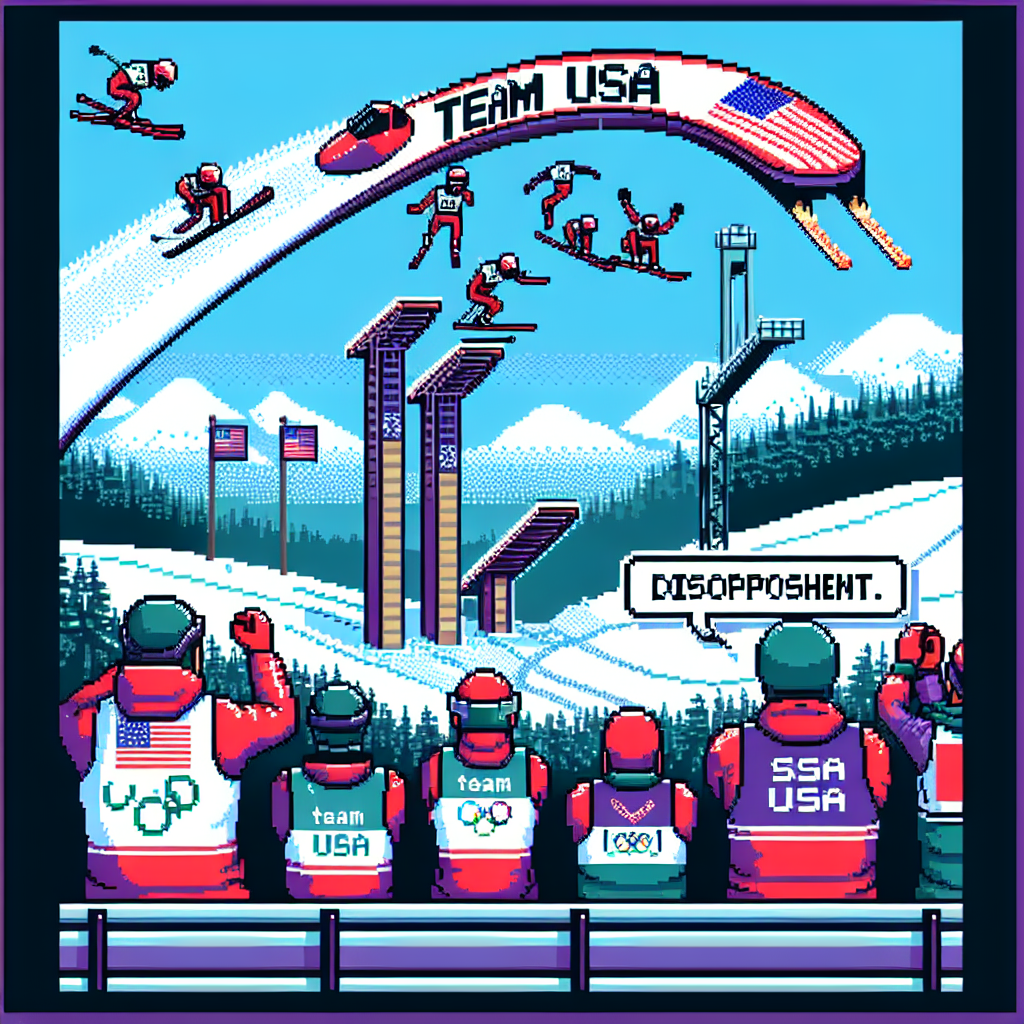
When a Historic Trick Isn’t Enough: The Mac Forehand Silver That Set Twitter Ablaze
An electric moment on the big air ramp — a nose-butter triple cork 2160, a trick the world had never officially seen landed in competition — and yet the scoreboard read “silver.” For a few feverish hours on February 17–18, 2026, social feeds filled with accusations, theories, and calls for an investigation. The drama wasn’t just about a medal; it was about what we expect judged sports to reward when history is made in a single airborne heartbeat.
The moment that broke the internet
- Mac Forehand, 24, landed what commentators called a never-before-seen nose-butter triple cork 2160 in the men’s Olympic freeski big air final at Livigno Snow Park. The trick includes three flips and six full rotations — staggering in complexity and execution. (nbcconnecticut.com)
- Forehand’s final-run score (98.25) vaulted him briefly into the lead and ultimately secured him the silver medal with a two-run total of 193.50; Norway’s Tormod Frostad answered with a 98.50 to take gold (199.50). (mediaite.com)
- Social media users latched on to the narrative that a single judge (identified by some as Norwegian) swung the contest, and many demanded an investigation into judging bias. (mediaite.com)
Why fans felt robbed — and why that feeling spread so fast
- Spectacle bias: A trick that “has never been done” naturally reads as definitive proof of superiority to casual viewers. Fans see novelty + clean landing = gold, and feel the scoreboard should follow. (sportscasting.com)
- Lack of scoring literacy: Big air and other freestyle judged events use multiple criteria (difficulty, execution, amplitude, variety, and landing) and combine runs in specific ways (often averaging best scores). To an untrained eye, nuance looks like nitpicking. (nbcboston.com)
- Narrative optics: When the athlete who attempted the historic trick is American and the gold goes to a Norwegian, national loyalties and conspiracy instincts amplify doubt — especially on fast-moving platforms like Twitter. (mediaite.com)
What the athlete actually said
Forehand himself put a plug in the “robbed” narrative. He called out the chorus of “I got robbed” hot takes common to judged sports and reminded people that those inside the sport — the athletes, coaches, and experts — have a clearer sense of what will score. His comments were pragmatic and grounded: judged events have layers of nuance, and outsiders’ instincts don’t always match technical scoring realities. (mediaite.com)
A quick primer on big air scoring (so the controversy makes more sense)
- Most big air finals use the best-two-of-three format or an average of the top two scores, meaning one single jump — however historic — must be paired with another high-scoring run to win overall. (en.wikipedia.org)
- Judges evaluate multiple elements: amplitude (height), technical difficulty (trick complexity), execution (how cleanly it’s landed), and variety across an athlete’s runs. A groundbreaking trick that sacrifices speed, height, or variety elsewhere may not be enough on its own. (nbcboston.com)
- Small margins decide medals. In this case the difference between gold and silver was 1.75 points on a 200-point-style combined scale — tiny in absolute terms but huge in perception. (mediaite.com)
Lessons from the backlash
- Social media speeds outrage, not understanding. Viral clips of single jumps lack the scoring context that explains outcomes.
- Transparency matters. When judged sports clearly communicate how scores are built and why placements change with each run, it reduces the “robbery” narrative.
- Respect athletes’ perspective. Competitors like Forehand are embedded in the sport’s rhythms and often accept judging verdicts even when the public gets emotional — and their calm can help diffuse conspiracy talk. (nbcconnecticut.com)
What this moment means for freeskiing
- Progress is happening on the sport’s technical frontier. Landing a nose-butter triple cork 2160 is a milestone that will be replayed in highlight reels and studied by athletes for years. That advancement matters regardless of medal color. (nbcconnecticut.com)
- Public debates over judging will keep resurfacing as tricks get more complex and margins stay razor-thin. The sport’s growth will depend on preserving both creative risk-taking and scoring credibility. (sportscasting.com)
Key takeaways
- Historic tricks create headlines, but judged competitions reward a combination of runs and multiple scoring criteria. (en.wikipedia.org)
- Outrage on social platforms often reflects emotion more than a full understanding of the rules. (mediaite.com)
- Athletes like Mac Forehand, who acknowledge the sport’s complexity, can help steer the conversation back to performance and progression. (nbcconnecticut.com)
Final thoughts
There’s a raw joy in watching someone push the limits of what’s possible on skis. Mac Forehand’s nose-butter triple cork 2160 was that kind of moment — one that expands the sport’s language. The rowdy reaction online was predictable and, in a way, a tribute to how invested people are in Olympic outcomes. Still, outrage shouldn’t replace context. Judged sports are messy, incremental, and subjective by nature; they’re also where evolution happens. Today the trick becomes legend. Tomorrow someone else will top it — and the cycle continues, scoreboard and all.
Sources
Related update: We recently published an article that expands on this topic: read the latest post.
Related update: We recently published an article that expands on this topic: read the latest post.
A silver sprint that rewrites 50 years of U.S. cross‑country history
Ben Ogden stood on the snow, chest heaving, medal around his neck — and for a moment the neat, long drought of American men on the Olympic cross‑country podium felt like something that could be folded up and put away. Ogden, a 25‑year‑old Vermonter, skied powerful and smart in the men's sprint classic at the 2026 Milan‑Cortina Winter Olympics, finishing just behind Norway’s Johannes Høsflot Klæbo and delivering the first Olympic medal for a U.S. man in cross‑country skiing since Bill Koch’s silver in 1976.
Why this medal matters
- It ends a 50‑year silence for U.S. men in Olympic cross‑country skiing (Bill Koch, Innsbruck, 1976 → Ben Ogden, Milan‑Cortina, February 10, 2026).
- It’s a symbolic bridge between two Vermont stories: Koch’s legacy and Ogden’s rise through local youth leagues and New England trails.
- Beyond nostalgia, it signals real momentum: American skiers — men and women — are increasingly competitive in sprint formats on the world stage.
The race in a sentence
Ogden qualified second, moved through quarterfinals and semis with composure, and in the final put in a strong classic‑technique sprint (3:40.61) that left him 0.87 seconds behind Klæbo’s winning 3:39.74 — fast enough for silver and history.
Backstory and context
- Ben Ogden grew up in Vermont’s tight cross‑country community, coming up through the Bill Koch Youth Ski League and training on the same trails that shaped previous generations.
- The sprint event is short, tactical and brutal: racers blast through qualification time trials and then jockey through multiple head‑to‑head heats (quarters, semis, final). It rewards not only speed but positioning, recovery and razor‑sharp technique.
- For much of the 20th century and into the 2000s the U.S. was an also‑ran in men’s Olympic cross‑country. The breakthrough of U.S. women in the 2010s (Jesse Diggins, Kikkan Randall) helped reset expectations; Ogden’s medal now continues that upward arc for the men.
- Johannes H. Klæbo remains a benchmark: the Norwegian’s sprint dominance and tactical savvy make him the toughest rival to beat in any championship race.
What this could mean going forward
- Increased visibility and investment: Olympic medals change narratives. Ogden’s silver can boost youth enrollment, sponsorship interest, and funding for U.S. cross‑country programs — especially in classic technique and sprint development.
- A confidence ripple for teammates: American men like Gus Schumacher and J.C. Schoonmaker, and the women already competitive at global level, may race with a new belief that podiums are repeatable, not accidental.
- Tactical evolution: American programs may lean more into sprint‑specific training — starts, explosive power, heat‑recovery protocols — while still keeping the aerobic base that the sport demands.
Quick highlights
- Event: Men’s sprint classic, Tesero (Val di Fiemme), Milan‑Cortina 2026.
- Medalists: Gold — Johannes H. Klæbo (NOR); Silver — Ben Ogden (USA); Bronze — Oskar Opstad Vike (NOR).
- Ogden’s time: 3:40.61. Klæbo’s winning time: 3:39.74.
- Historic note: First U.S. men’s cross‑country Olympic medal since Bill Koch’s 1976 silver.
A human moment
Ogden’s podium celebration — including a backflip he’d promised his 15‑year‑old self he would do if he ever made an Olympic podium — underlined that this was as much a personal milestone as a national one. There’s an intimate, almost poetic thread here: a Vermont kid who grew up tracing the trails of an earlier American medalist now stands where Koch once stood. For small skiing communities, that’s catnip — a reminder that elite sport still has room for neighborhood roots.
My take
This silver feels less like an isolated surprise and more like a punctuation mark on a sentence that’s been building for years: U.S. cross‑country skiing is no longer content with incremental improvement — it’s chasing podiums. Ogden’s medal should be treated as a beginning, not an endpoint. If leaders in U.S. Ski & Snowboard and grassroots programs capitalize on the moment with coaching resources and youth outreach, we may be looking at the start of a sustained American presence in sprint events for the next decade.
Sources
Related update: We recently published an article that expands on this topic: read the latest post.
Related update: We recently published an article that expands on this topic: read the latest post.
Milano Cortina 2026: Team USA athletes worth waking up for
The Winter Olympics always arrive like a cold front — sudden, exciting, and impossible to ignore. Milano Cortina 2026 promises a familiar cocktail of drama, artistry and raw athleticism, and Team USA has a roster stacked with personalities and storylines that will keep you glued to the screen. From record-chasing prodigies to comeback stories and first-time Olympians, here are the Team USA competitors I’d put on your watchlist — and why their stories matter beyond medals.
Why these athletes stand out
- They represent different eras: established champions (Mikaela Shiffrin), rising stars (Ilia Malinin), and athletes making emotional returns (Alysa Liu).
- Some are carrying historical weight — firsts and breakthroughs that expand the narrative of who gets to shine on winter’s biggest stage.
- Others are magnetic personalities who can turn a single performance into a moment that resonates long after the podium photos are taken.
Highlights to follow
-
Mikaela Shiffrin — the alpine benchmark
- A four-time Olympian and one of the most decorated skiers in World Cup history, Shiffrin brings experience across slalom, giant slalom, super-G and downhill. Expect every start to be part racing, part mental chess as she manages pressure and past injuries. Her resilience and range make her a centerpiece of the U.S. alpine effort. (Source: CBS News.)
-
Ilia Malinin — the technical revolution in men’s figure skating
- Malinin arrives as a two-time world champion and the skater who landed the quadruple Axel in major competition. At just 20, he blends technical difficulty with a performance polish that could reshape the scoring conversation and give Team USA a genuine gold medal contender in men’s singles. (Sources: CBS News, NBC Olympics.)
-
Alysa Liu — the comeback artist turned world champion
- After an early-career retirement and a dramatic return, Liu reestablished herself by winning the 2025 World Championships. Her combination of athletic jumping content and renewed artistic focus makes her one of the most compelling American skaters to watch. (Source: CBS News.)
-
Jordan Stolz — speed skating’s young phenom
- Stolz grew up inspired by the Olympic greats and has already made history with world titles across sprint distances. He’s become a bridge between U.S. speed skating ambitions and the Netherlands’ deep tradition in the sport — a storyline that could lift speed skating’s profile back home. (Source: CBS News.)
-
Mikaela Shiffrin (reiterated because of scope) and the alpine sweep potential
- She’s not just a headline name; Shiffrin’s capacity to contest across multiple events means she can affect Team USA’s medal count in a big way. Her presence elevates the entire alpine delegation. (Source: CBS News.)
-
Erin Jackson — speed skating veteran and flagbearer presence
- A 2022 gold medalist and now a multi-time Olympian, Jackson’s story (including almost not making previous teams) is part grit, part public inspiration. She’ll also be a visual symbol for Team USA in the opening ceremony. (Source: CBS News.)
-
Alex Hall & Alex Ferreira — freeskiers with flair
- Both bring X Games pedigree and creative approaches to halfpipe, slopestyle and big air. Their event histories hint at high-variance performances that can flip a day from predictable to must-see. (Source: CBS News.)
-
Jaelin Kauf — moguls specialist for an event’s Olympic debut
- With dual moguls making its Olympic debut, Kauf’s history in the discipline makes her a name to remember — both for potential hardware and for the spectacle of a new Olympic event. (Source: CBS News.)
-
Mystique Ro & Korey Dropkin — fresh faces in sliding and curling
- Rookie Olympians in sliding sports and curling bring fresh energy and local-feel narratives — the “from the club” curling arc for Dropkin and Ro’s multi-sport background add texture to Team USA’s depth. (Source: CBS News.)
Quick context: Team USA going into Milano Cortina
- The U.S. delegation mixes experience and youth. After a strong showing in Beijing 2022 (25 medals), the Americans are aiming to convert world-championship success and X Games dominance into Olympic hardware.
- Winter sports momentum isn’t evenly distributed — figure skating, freeskiing and speed skating are current bright spots thanks to recent world championships and international podiums. (Sources: CBS News, NBC Olympics.)
Fresh formats and event debuts (like dual moguls) and the continued influence of nontraditional winter-athlete backgrounds (track-to-skeleton, inline-skating-to-speedskating) mean Milano Cortina will feel both familiar and refreshingly modern.
Storylines to watch beyond the medals
- Evolution of technical difficulty in figure skating: quads and quad-Axels from young contenders will test judges and expectations.
- The X Games pipeline: how freestyle and freeski athletes translate big-air creativity into Olympic consistency.
- Representation and firsts: athletes breaking barriers (racial, gender, age, or LGBTQ+ visibility) who change the cultural footprint of winter sports in the U.S.
- Athlete comebacks and mental-health narratives: several top Americans are competing after injuries or personal breaks, adding emotional stakes to performances.
Smart ways to follow the Games
- Scan nightly highlight reels for event summaries and human-interest pieces — they capture performances and the backstories that explain why the moment mattered.
- Follow world-champion seasons leading up to the Games to set expectations (World Championships, X Games, World Cups).
- Watch for where innovation meets pressure: new tricks or techniques often surface first at X Games/World Cups and arrive at the Olympics as either polished gold-winning elements or gutting experimentations.
What this means for American winter sports
- Milano Cortina could accelerate fan interest in disciplines outside the traditional U.S. strongholds. When a young American like Malinin or Stolz becomes a household name, participation and funding can follow.
- The Olympics remain the best storytelling platform for winter sports — breakout stars and surprising upsets create headlines that last beyond February.
Final thoughts
This U.S. roster feels like a good balance of bold experiments and steady leadership. Between veterans who ground the team and newcomers who promise fireworks, Milano Cortina 2026 looks set to deliver both edge-of-your-seat competition and moments that tug at the heart. Whether you care most about technical milestones (quad Axels, world records), comeback narratives, or pure spectacle, Team USA has someone worth rooting for.
Sources
Related update: We recently published an article that expands on this topic: read the latest post.
Related update: We recently published an article that expands on this topic: read the latest post.