
Hughes Demands Return of Golden Goal Puck | Analysis by Brian Moineau

Jack Hughes Wants His "Golden Goal" Puck Back — and the Hockey World Isn’t Sure Who’s Right

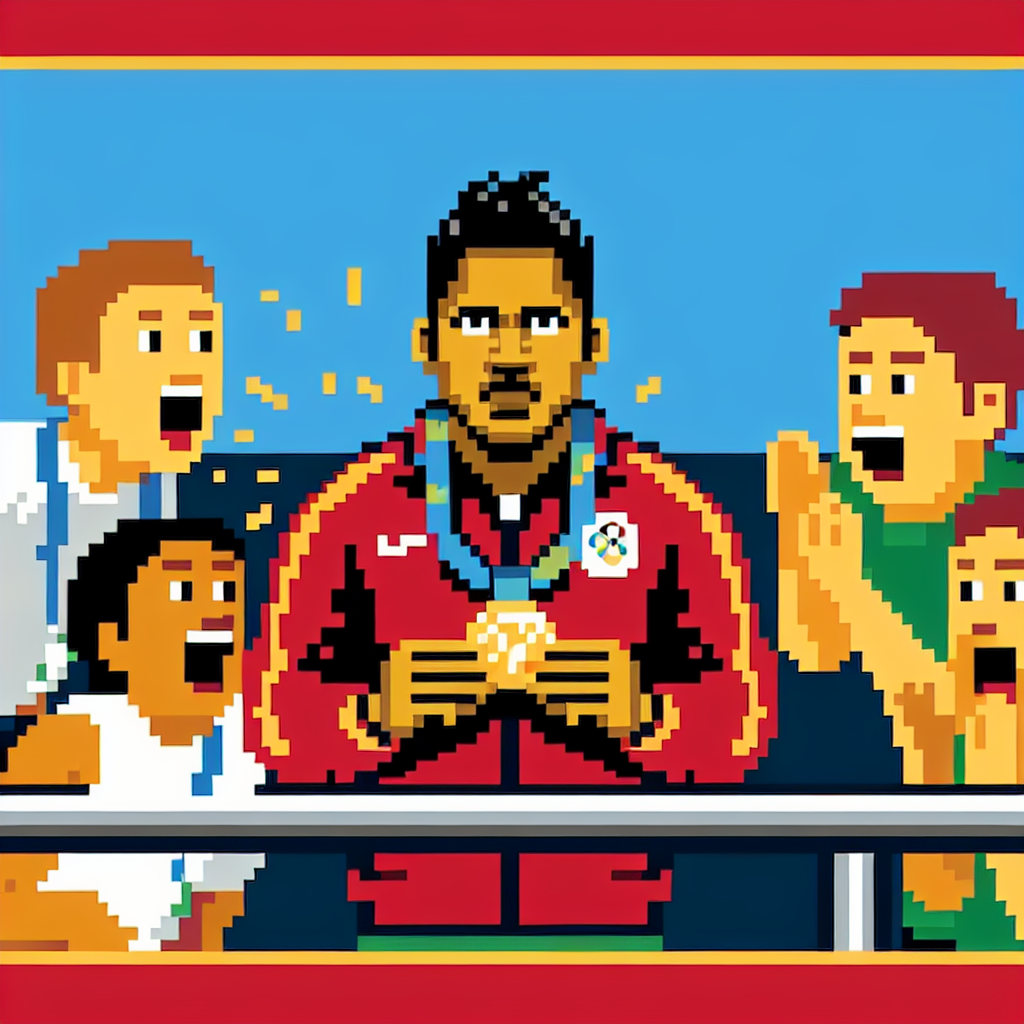
There’s a line every athlete remembers: the puck that changes everything. For Jack Hughes, that puck is literal — the overtime shot that delivered the United States the men’s Olympic hockey gold in Milan-Cortina 2026. But now “Jack Hughes wants his ‘Golden Goal’ puck back” has become its own little drama, one that raises questions about ownership, tradition, and what a single object means to a family versus the sport’s collective memory.

The headline hits you fast: Hughes told ESPN he was trying to get the puck back and called it “bullshit” that the Hockey Hall of Fame (HHOF) had it. He said he wanted to give it to his dad, Jim Hughes, who collects keepsakes from his sons’ careers. The HHOF’s curator, Philip Pritchard, shot back: the puck was never Jack’s to begin with — it arrived as part of an official donation process tied to international authorities and the museum’s stewardship. The puck now sits in Toronto alongside other pieces of hockey lore. (nhl.com)

Why this feels bigger than a puck

Sports fans are sentimental by nature. A puck — small, black, unassuming — can become sacred because of the moment it helped create. Jack Hughes’ goal snapped a 46-year drought for U.S. men’s hockey at the Olympics and instantly joined the sport’s highlight reels, headlines, and social feeds. A handful of seconds in overtime transformed a piece of rubber into a national talisman. That’s why the question of who “owns” it doesn’t feel trivial.

But the legal and institutional reality is messy. International tournaments like the Olympics often have rules or established practices around game-used equipment. Museums and halls of fame rely on formal donation pipelines and relationships with governing bodies (like the IIHF) to curate and preserve artifacts meant for public display and historical record. The HHOF framed its hold on the puck as part of that role: a custodian of shared history rather than a private collector. (sportscollectorsdaily.com)

The human element: family, history, and a simple ask

Put aside the policy for a minute and you see a son wanting to thank his father. Jack’s ask was plain and emotional: he wanted the puck to give to Jim Hughes, a dad who raised three NHL sons and collects meaningful items from their careers. That plea resonates because it’s understandable — athletes often pass milestone objects to family members as keepsakes and symbols of shared sacrifice.

That said, public reaction has been a mixed bag. Some people sympathize with Jack — who’s only 24 and just lived in the brightest possible spotlight — while others point out precedent: iconic items from sport often end up in museums to be shared with future generations. The internet, predictably, turned this into hot takes and memes. (omni.se)

What precedent says (and where the gray area is)

There are examples both ways. Sidney Crosby’s “golden goal” puck (from the 2010 Olympics) ended up in a museum display. Other singular items — sticks, jerseys, even teeth in rare cases — find their way into institutional collections because they’re deemed part of the public story of the sport. Museums argue that keeping such artifacts preserves the narrative for everyone, not just one family.

On the flip side, many players routinely keep personal milestone items: first goals, playoff pucks, and other mementos. That practice is common in club and league play, where team policies and game officials may hand items back to players. The Olympics, operated under different governance and higher-profile archiving practices, creates friction between personal ownership and a broader historical claim. (en.wikipedia.org)

A closer look at the HHOF's position

The Hockey Hall of Fame emphasizes long-standing relationships with international bodies and a formalized donation process. Philip Pritchard framed the situation bluntly: it was never Jack’s puck to own. From the museum’s perspective, taking custody of artifacts from the Olympic Games is standard practice — they accept and display pieces that tell the story of hockey’s global history. That rationale makes sense for preservation and public access, though it also feels bureaucratic when set against a son’s plea. (espn.com)

What could a compromise look like?

There are paths that preserve both the artifact for public viewing and the emotional intent behind Jack’s request.

  • Loan agreements: The HHOF could formalize a loan or replica arrangement so the family receives a certified puck (or an identical replica) while the original remains on display.
  • Time-limited custody: The puck could be temporarily loaned back for a family display or ceremony, then returned to the museum collection.
  • Dual recognition: The HHOF could create a small on-site feature recognizing the family’s role and include high-quality replicas, photos, and an explanatory plaque about the artifact’s journey from Milan to Toronto.

These solutions acknowledge institutional duties while honoring the personal story — a win-win that keeps the history accessible and the family’s emotional claim respected.

What this tells us about sports and memory

This isn’t just a puck battle. It’s a reminder that sports objects are loaded with meaning for individuals, families, and nations. Museums preserve the collective memory, but players and their families live the private history. When those two worlds collide, tensions arise — and sometimes social media inflames them further.

Transitioning from outrage to understanding often requires a little context. The HHOF’s job is stewardship; Jack’s ask came from the heart. Both positions hold merit.

My take

I get why Jack wanted to give the puck to his dad — that impulse is pure and human. I also get why the HHOF, as an institution, would preserve the puck for public history. The best outcome is one that treats the artifact as both a family treasure and a piece of shared heritage. A formal loan or replica solution would be the kind of practical, respectful compromise that keeps history alive without erasing personal meaning.

This little controversy has a silver lining: it pushes a conversation about how we honor moments in sport and how institutions and families can work together to preserve both memory and meaning.

Notes and references

(Note: sources were reviewed to provide context and quotes about the puck and the Hockey Hall of Fame's position.)


Related update: We recently published an article that expands on this topic: read the latest post.

Related update: We recently published an article that expands on this topic: read the latest post.

Curling Bronze Showdown: Stolz Returns | Analysis by Brian Moineau

A busy Saturday at the Games: bronze curling, Stolz back on the ice, and more drama

The sound of stones colliding and blades slicing ice — that’s the rhythm of a Winter Games Saturday. Milan Cortina delivered a little bit of everything: an emotional bronze-medal curling matchup between the U.S. and Canada, Jordan Stolz returning to the ice with Olympic expectations on his shoulders, and a slew of results that kept the medal table in constant motion. If you want a snapshot of why these Games feel so alive, this Saturday was your primer.

Why this day mattered

  • Curling’s bronze match wasn’t just another consolation game. Team USA was playing for its first-ever Olympic women’s curling medal — and Canada, led by Rachel Homan, came in as the favorite and a standard-bearer for the sport.
  • Jordan Stolz’s return to competition kept the spotlight on one of the Olympics’ breakout stars. After earlier wins, every race he skated carried the possibility of history — and the inevitable weight of expectation.
  • Beyond those headline stories, Saturday’s slate illustrated a recurring theme in Milan Cortina: veteran experience meeting youthful audacity, and the small margins that separate podium glory from heartbreak.

Highlights from the day

  • Canada beat Team USA 10–7 to claim bronze in the women’s curling. It was a back-and-forth match that turned decisively in Canada’s favor in the middle ends, when a three-point end opened a gap the Americans couldn’t fully close. For the U.S., finishing fourth tied its best Olympic result in women’s curling; for Canada, it was the sport’s long-awaited return to the podium. (See coverage from NBC Olympics and Sports Illustrated.) (nbcolympics.com)

  • Jordan Stolz continued to be the storyline in speed skating. The 21-year-old American—already a multiple-world champion and Olympic gold medalist at these Games—returned to contest additional distances, drawing comparisons to historic U.S. skaters and stoking talk of multi-gold runs. Broadcasters and previews framed him as a potential multi-event champion and a face of these Games. (nbcolympics.com)

  • The day’s action reinforced an Olympic truth: momentum swings fast. One missed draw, one tactical miscue, or one perfectly timed sprint can rewrite a team’s destiny — whether that’s a curling squad aiming for history or a skater chasing another podium.

What the curling result tells us

  • Experience and composure won out. Rachel Homan’s Canadian rink leaned on its pedigree in the middle ends, turning a close early game into a comfortable margin.
  • Team USA showed it belonged in the conversation. Reaching the bronze match — and matching the country’s best Olympic finish in the sport — marks clear progress for U.S. women’s curling and gives the program momentum heading into the next Olympic cycle.
  • The margin for error at this level is tiny. A couple of misses in a crucial end were enough to tilt the game; that’s the kind of lesson teams study for years.

What Stolz’s presence means for the Games

  • He’s both an engine and a measuring stick. Stolz’s run of fast times and record-setting performances has energized U.S. speed skating and raised the competitive bar for rivals.
  • The “Stolz effect” radiates beyond medals. Young athletes and broadcasters alike gravitate to storylines of a young phenom chasing historic marks — which helps put speed skating and these Games in front of a broader audience.
  • Pressure is real — and in sport, it’s a two-edged sword. Exceptional athletes thrive on it, but every return-to-race after a big win invites fresh scrutiny. That tension makes for compelling viewing.

Quick takeaways from Saturday

  • Canada’s women’s curling program remains elite; the bronze was a reminder of depth and consistent execution.
  • Team USA’s fourth place in women’s curling is progress — painful in the short term, promising for the long term.
  • Jordan Stolz is the signature individual story of these Games: potential history-maker, headline magnet, and a focus for both fans and competitors.

My take

There’s something electric about a day that mixes team strategy (curling) with individual brilliance (speed skating). Saturday captured the Olympics’ dual identity: intimate tactical battles where a single shot matters, and broad heroic narratives where athletes chase their place in history. Team USA left Cortina with both frustration and optimism — a fourth-place finish stings, but it also signals that U.S. curling is closing the gap. And Stolz? He’s both a measuring stick for rivals and a reminder that the next Olympic legend can emerge at any age.

Sources

(News coverage and live updates consulted to shape perspective and context for this recap.)


Related update: We recently published an article that expands on this topic: read the latest post.


Related update: We recently published an article that expands on this topic: read the latest post.

Ben Ogden Breaks 50‑Year U.S. Drought | Analysis by Brian Moineau

A silver sprint that rewrites 50 years of U.S. cross‑country history

Ben Ogden stood on the snow, chest heaving, medal around his neck — and for a moment the neat, long drought of American men on the Olympic cross‑country podium felt like something that could be folded up and put away. Ogden, a 25‑year‑old Vermonter, skied powerful and smart in the men's sprint classic at the 2026 Milan‑Cortina Winter Olympics, finishing just behind Norway’s Johannes Høsflot Klæbo and delivering the first Olympic medal for a U.S. man in cross‑country skiing since Bill Koch’s silver in 1976.

Why this medal matters

  • It ends a 50‑year silence for U.S. men in Olympic cross‑country skiing (Bill Koch, Innsbruck, 1976 → Ben Ogden, Milan‑Cortina, February 10, 2026).
  • It’s a symbolic bridge between two Vermont stories: Koch’s legacy and Ogden’s rise through local youth leagues and New England trails.
  • Beyond nostalgia, it signals real momentum: American skiers — men and women — are increasingly competitive in sprint formats on the world stage.

The race in a sentence

Ogden qualified second, moved through quarterfinals and semis with composure, and in the final put in a strong classic‑technique sprint (3:40.61) that left him 0.87 seconds behind Klæbo’s winning 3:39.74 — fast enough for silver and history.

Backstory and context

  • Ben Ogden grew up in Vermont’s tight cross‑country community, coming up through the Bill Koch Youth Ski League and training on the same trails that shaped previous generations.
  • The sprint event is short, tactical and brutal: racers blast through qualification time trials and then jockey through multiple head‑to‑head heats (quarters, semis, final). It rewards not only speed but positioning, recovery and razor‑sharp technique.
  • For much of the 20th century and into the 2000s the U.S. was an also‑ran in men’s Olympic cross‑country. The breakthrough of U.S. women in the 2010s (Jesse Diggins, Kikkan Randall) helped reset expectations; Ogden’s medal now continues that upward arc for the men.
  • Johannes H. Klæbo remains a benchmark: the Norwegian’s sprint dominance and tactical savvy make him the toughest rival to beat in any championship race.

What this could mean going forward

  • Increased visibility and investment: Olympic medals change narratives. Ogden’s silver can boost youth enrollment, sponsorship interest, and funding for U.S. cross‑country programs — especially in classic technique and sprint development.
  • A confidence ripple for teammates: American men like Gus Schumacher and J.C. Schoonmaker, and the women already competitive at global level, may race with a new belief that podiums are repeatable, not accidental.
  • Tactical evolution: American programs may lean more into sprint‑specific training — starts, explosive power, heat‑recovery protocols — while still keeping the aerobic base that the sport demands.

Quick highlights

  • Event: Men’s sprint classic, Tesero (Val di Fiemme), Milan‑Cortina 2026.
  • Medalists: Gold — Johannes H. Klæbo (NOR); Silver — Ben Ogden (USA); Bronze — Oskar Opstad Vike (NOR).
  • Ogden’s time: 3:40.61. Klæbo’s winning time: 3:39.74.
  • Historic note: First U.S. men’s cross‑country Olympic medal since Bill Koch’s 1976 silver.

A human moment

Ogden’s podium celebration — including a backflip he’d promised his 15‑year‑old self he would do if he ever made an Olympic podium — underlined that this was as much a personal milestone as a national one. There’s an intimate, almost poetic thread here: a Vermont kid who grew up tracing the trails of an earlier American medalist now stands where Koch once stood. For small skiing communities, that’s catnip — a reminder that elite sport still has room for neighborhood roots.

My take

This silver feels less like an isolated surprise and more like a punctuation mark on a sentence that’s been building for years: U.S. cross‑country skiing is no longer content with incremental improvement — it’s chasing podiums. Ogden’s medal should be treated as a beginning, not an endpoint. If leaders in U.S. Ski & Snowboard and grassroots programs capitalize on the moment with coaching resources and youth outreach, we may be looking at the start of a sustained American presence in sprint events for the next decade.

Sources


Related update: We recently published an article that expands on this topic: read the latest post.


Related update: We recently published an article that expands on this topic: read the latest post.

Olympic medals breaking: fragile triumphs | Analysis by Brian Moineau

Handle with care: when Olympic medals snap during victory celebrations

There’s a peculiar, heartbreaking kind of silence that follows a split-second of pure joy — the sound of metal clattering onto the ground where only triumph should have landed. At the Milan Cortina 2026 Winter Olympics, that sound cut through the opening weekend as several athletes discovered their medals had come apart mid-celebration. Breezy Johnson, fresh off a downhill-gold high, laughed and then warned teammates: “Don’t jump in them.” It’s a small phrase, but it points to a bigger moment about craftsmanship, symbolism, and how we treat the physical tokens of athletic history.

Why this feels worse than a broken trinket

  • Medals are not ordinary souvenirs. They’re the tangible proof of years — often decades — of sacrifice, heartbreak, and single-minded focus.
  • The moment of receiving a medal is ritualistic: the anthem, the ribbon, the way it rests against an exhausted chest. When that object fails, it can feel like the ritual itself has been undermined.
  • These aren’t mass-market products sold at a stadium kiosk. They are designed, produced, and presented by organizing committees as part of a Games’ legacy. Quality issues therefore reflect on the event as much as they affect the athlete.

What happened in Milan Cortina 2026

  • During the opening weekend (February 8–9, 2026), multiple athletes had medals detach from their ribbons or break during celebrations. U.S. skier Breezy Johnson said she was “jumping in excitement” when her medal came loose. German biathlete Justus Strelow saw his bronze fall off and a small clasp piece come away. U.S. figure skater Alysa Liu posted video showing a gold medal detached from its ribbon. Organizers said they were investigating and paying “maximum attention.” (abcnews.go.com)

Not the first time: a pattern of medal-quality headaches

  • This isn’t unprecedented. After the Paris 2024 Games, some medals required replacing because athletes complained of tarnishing or corrosion that made the finish look mottled. That issue prompted scrutiny of materials and plating techniques and left athletes uneasy about handing down blemished symbols of achievement. The Milan incidents echo that earlier quality control problem. (washingtonpost.com)

Possible causes (what to consider)

  • Design choices: Modern Olympic medals often incorporate complex materials, cutouts, and mixed metals for aesthetic and sustainability reasons. Those design elements can introduce weak points at attachment points or thin sections.
  • Manufacturing pressure: Tight timelines, outsourcing, or cost constraints can result in inconsistent finishes or assembly problems — especially when organizers aim to produce thousands of medals on a schedule.
  • Attachment hardware: The ribbon-to-medal interface (clasp, loop, soldering) is a mechanical system that must withstand movement, sweat, and ecstatic jostling. Failure there seems to explain several of the recent incidents.
  • Celebration behavior: Athletes hug, jump, spin, toss their heads back while shouting. That kinetic energy is part of the medal’s real-world test — sometimes a harsh one.

The human side: reactions that matter as much as fixes

  • Athletes’ reactions were lighthearted but pointed: Breezy Johnson joked she’d get it fixed; Alysa Liu quipped about her medal not needing the ribbon. The tone matters — many athletes handled it with humor — but that doesn’t erase the emotional sting for winners who want a flawless moment preserved for life and for family.
  • Organizers must act quickly and transparently. Replacing or repairing medals, checking the entire production batch, and explaining corrective measures will help preserve trust. The organizers in Milan Cortina said they were investigating. (abcnews.go.com)

Bigger questions beyond Milan

  • What should Olympic organizers prioritize: aesthetics and innovation, or durability and symbolic permanence? Ideally both, but trade-offs happen.
  • Are athletes given enough input on the final, wearable design? Some delegations and athletes might push for sturdier attachment hardware or simpler designs that tolerate celebration rituals.
  • How will these incidents affect collectors, museums, and the legacy value of medals? A medal that’s damaged immediately risks being viewed as less archival or worthy of display — an odd fate for an object meant to become a family heirloom.

Notes on solutions and fixes

  • Short term: repair and replacement for affected athletes, plus immediate inspection of production batches to prevent more failures.
  • Medium term: re-examine attachment designs (stronger clasps, reinforced loops), test medals under realistic celebration forces, and adopt stricter quality-control checks before ceremonies.
  • Long term: balance creativity and sustainability with mechanical durability. If materials are novel or recycled (a growing trend), manufacturers must anticipate different wear characteristics.

What this moment teaches us

  • Objects carry meaning far beyond their material make-up. When a medal breaks, it irritates a communal idea of perfection that surrounds the Olympics: that the pinnacle moment should be flawless.
  • Manufacturing and design aren’t abstract processes. They intersect with emotion, memory, and national pride.
  • Small things matter in a big spectacle. A clasp failure becomes a PR issue, an emotional footnote, and — for the athlete — an avoidable blemish on a lifetime achievement.

Takeaways for readers and fans

  • Celebrate the athletes first — the humans who earned those medals — not the objects. A broken medal doesn’t diminish the victory.
  • Expect organizers to move fast: investigate, repair, and communicate. Past incidents (Paris 2024 and now Milan Cortina 2026) make swift action necessary. (washingtonpost.com)
  • Appreciate the hidden complexity behind Olympic iconography: design, engineering, and supply chains all have to perform under pressure.

Final thoughts

There’s an irony in witnessing fragile metal fail at the moment it’s supposed to confer permanence. The broken clasp is an invitation to rethink how we treat symbols: more padding in the design process, yes — but also more room for the messy human joy that produced the break in the first place. Let the medals be fixed, let the images be restored, but don’t let these little fractures obscure what the Games are for: the athletes, their work, and the stories they carry home.

Sources


Related update: We recently published an article that expands on this topic: read the latest post.


Related update: We recently published an article that expands on this topic: read the latest post.