Why I Want a Projector on My Nightstand Right Now
There’s something cozy about waking up to a soft glow on the ceiling and falling asleep to a movie that doesn’t demand a giant TV. Enter the BenQ GV32 — a rotating, Google TV–equipped lifestyle projector that somehow makes bedside streaming feel intentional instead of awkward. After reading the hands-on review and launch coverage, I found myself thinking less about replacing my main TV and more about upgrading how I live with screens in small spaces.
What makes the GV32 feel like a nightstand companion
- It runs Google TV natively, so you don’t need a streaming stick or extra dongles to open Netflix, YouTube, or Disney+. That alone changes the “put-it-up-and-go” equation for a bedside device.
- The design prioritizes easy aiming: it tilts vertically up to 135° and rotates a full 360°, so projecting onto a wall or the ceiling is quick and forgiving.
- Built-in audio is actually useful here — a 2.1 setup with a woofer chamber and 18 W total output gives the kind of punch that portable projectors usually lack.
- It’s Full HD (1080p) with HDR support and respectable color coverage, meaning shows and movies look good in dim rooms where you’d actually use it as a nightstand piece.
- USB-C power and DP Alt Mode make it flexible: you can power it from high-capacity power banks and plug in a Switch or laptop with fewer cables.
Those bullets sound like a laundry list of features, but they combine into one thing: a projector that’s designed for bedside life rather than as a living-room centerpiece.
How the GV32 fits into real rooms and real habits
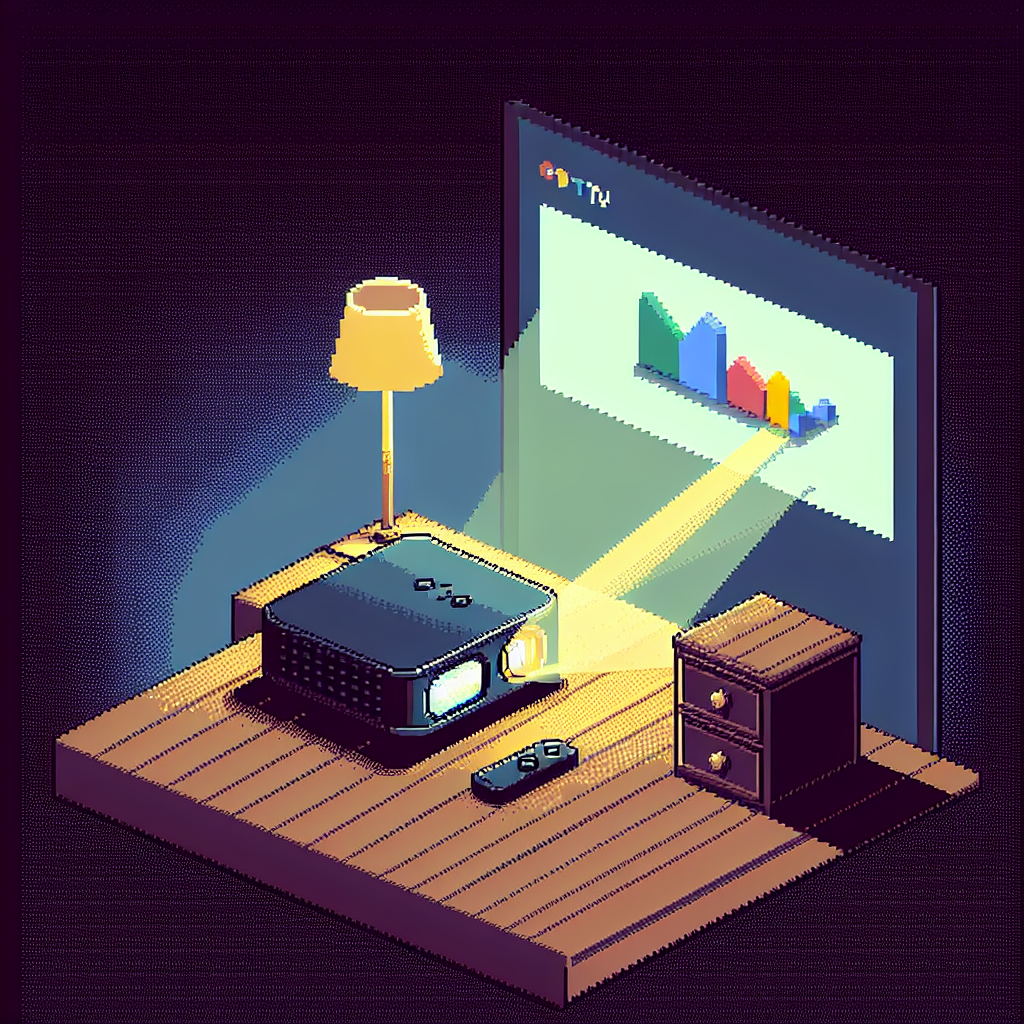
Think about the small-but-functional living spaces a lot of us have now — studio apartments, spare rooms, dorms, guest bedrooms, or even a dedicated nook in a larger home. A wall or ceiling becomes your screen, the GV32 sits on a shelf or nightstand, and you don’t need a permanent mount or complicated wiring.
Practical benefits:
- Sleep-friendly viewing: Night Shift-like color adjustments and a sleep timer make late-night viewing less harsh on the eyes.
- Minimal setup changes: Autofocus, keystone correction, and image rotation mean you don’t have to be an AV nerd to get a tidy picture.
- Flexible audio: The built-in speakers remove the immediate need for a Bluetooth speaker, though the projector can still serve as one if you prefer.
It’s not for every scenario. Bright living rooms will wash it out, and if you’re chasing 4K, ultra-low input lag for competitive gaming, or the absolute highest brightness, this isn’t the replacement for a full home theater. But if your main goal is comfortable, tucked-in viewing without a permanent TV footprint, the GV32 is designed with that life in mind.
Design and daily-use details that stood out
- Rotating stand: The clever swivel/tilt stand changes where the projector looks without needing to move the whole unit. For ceiling or wall projection, that mechanical flexibility is the product’s personality.
- Integrated Google TV: Native platform access makes the device feel like a proper smart TV alternative — no separate streamer cluttering the nightstand.
- Connectivity and power: HDMI 2.0b, USB-A, and USB-C with DisplayPort Alt Mode let you plug in consoles and laptops. USB-C PD power capability means you can run it from a powerful battery pack in a pinch.
- Picture + audio balance: Full HD resolution and BenQ’s color tuning (Rec.709 coverage and HDR support) with a 2.1 speaker system produce satisfying results for close-range, relaxed viewing.
Who should consider the GV32
- Small-space dwellers who want a big-picture feel without a bulky screen.
- People who prefer watching in bed or projecting onto ceilings for a more immersive, low-effort experience.
- Apartment owners or renters who want to avoid drilling, permanent mounts, or bright TVs in a bedroom.
- Casual gamers who use a Switch or play non-competitive titles — the USB-C DP Alt Mode and modest input lag make it a reasonable companion.
Who should look elsewhere:
- Those who need daylight viewing or use a projector as their primary living-room display.
- Competitive gamers demanding ultra-low latency or 4K resolution.
- Buyers on strict budgets: the GV32 sits in a midrange price band and competes with other portable models that emphasize battery power or lower cost.
Everyday trade-offs to keep in mind
- Brightness vs. convenience: With around 500 ANSI lumens, the projector performs best in dim environments — perfect for the bedroom but not for a sunlit living room.
- Price vs. features: At its launch price, it sits above some ultra-portable options that include batteries or cheaper builds. You’re paying for the Google TV integration, audio quality, and rotation-focused design.
- Not a full home-theater replacement: This product chooses lifestyle and convenience over raw performance metrics.
Why this product matters beyond specs
What I keep circling back to is how design intent changes usage. Many small projectors feel like compromises: miniaturized TVs that promise portability. The GV32 feels like a rethinking of where a “TV” can live — less about a permanent focal point and more about being an ambient, flexible part of a room’s rhythm. For people who enjoy watching short shows before bed, listening to podcasts on the ceiling, or gaming casually without rearranging furniture, that’s meaningful.
My take
I don’t need a full-time replacement TV in every room, but I love simple things that make life feel a little more comfortable. The BenQ GV32 nails that niche: it’s not the brightest or cheapest, but it’s thoughtful. For the kind of lazy, cozy viewing that happens between the pillows and blankets, this is exactly the sort of device that earns a spot on a nightstand.
Sources
BenQ GV32 review: A bedside projector with built-in Google TV — Android Authority
https://www.androidauthority.com/benq-gv32-review-3644032/BenQ Launches GV32 LED Ceiling Projector — ProjectorCentral
https://www.projectorcentral.com/news_story_2488.htmTurn your ceiling into a Google TV movie screen with BenQ's latest — Android Authority (launch coverage)
https://www.androidauthority.com/benq-gv32-led-projector-launch-3603151/BenQ launches GV32 portable ceiling projector with Google TV — Gizmochina
https://www.gizmochina.com/2025/10/05/benq-gv32-portable-ceiling-projector-launched-specs-price/