iPhone 17e: Affordable Game-Changer | Analysis by Brian Moineau

Apple’s classic playbook, but cheaper: why the iPhone 17e could be a real game-changer

Apple has a knack for two moves: make something feel essential, then make it feel reachable. If the latest reports are right, that familiar choreography is about to play out again — with an iPhone that keeps price pressure front and center while quietly adding the features that actually matter to most users.

A quick hook

Imagine getting the performance and ecosystem perks you care about (speed, accessories, reliable connectivity) without the sticker shock of a flagship. That’s the bet behind the rumored iPhone 17e: modest on paper, meaningful in everyday use — and priced to widen the funnel.

Why this matters now

  • Apple just reported another blockbuster quarter and is sitting on an installed base north of 2.5 billion active devices. That scale lets incremental changes have outsized effects.
  • Component costs — especially memory — are rising, which puts pressure on margins across the industry. Apple can either pass those costs to buyers or absorb them strategically.
  • Rivals are fragmenting: Google’s Pixel “a” line and mid-tier Samsung models are focusing on value. Apple’s answer appears to be a product that’s genuinely more capable at its price point, not merely a stripped-down option.

What the 17e reportedly brings (and why it matters)

  • A19 chip: faster performance that narrows the gap with the premium line — real-world responsiveness improves across apps and gaming.
  • MagSafe support: not a gimmick. MagSafe unlocks an entire accessory ecosystem (car mounts, chargers, wallets) that enhances convenience and makes the phone feel newer than just “one more model.”
  • New in-house modem and connectivity chips (C1X/N1): better, more consistent wireless performance and lower total cost of ownership for enterprise and international buyers.
  • No price increase: reports peg the starting price at $599 — a psychological and marketable threshold that signals affordability without undercutting perceived value. (thestreet.com)

The strategic play: classic Apple, tweaked for affordability

Apple’s playbook has often been to introduce a high-end product that defines desirability, then cascade features downward over time. The 17e feels like a flipped version of that strategy: push premium connectivity and accessory compatibility into the affordable tier to convert holdouts who keep older phones because “new ones are too expensive.”

That does three things for Apple:

  • Expands the addressable market in price-sensitive segments and emerging markets.
  • Keeps users inside the Apple ecosystem (accessories, services, app purchases).
  • Lets Apple absorb some margin pressure now, betting on scale and services revenue to offset component cost inflation. (thestreet.com)

What to watch (risks and limits)

  • Incremental upgrades: If the 17e is mainly a chipset and MagSafe update without display or camera leaps, it may disappoint buyers used to headline specs.
  • Margin pressure: Apple could be taking near-term margin hits to protect market share; if memory costs stay high, that strategy isn’t forever.
  • Timing and market reaction: An aggressive value play could pressure rivals — or it could shift perception that Apple’s best value comes in “e” models rather than top-tier devices, subtly changing brand dynamics.

How this could reshape buying decisions

  • For upgrade-averse users: A real alternative to “my phone still works fine” — enough value at $599 to tip the scales.
  • For enterprise buyers: Lower upfront costs with better connectivity and long Apple support lifecycles improves total cost of ownership.
  • For accessory makers and retailers: MagSafe at a lower price point could revive accessory purchases and spur a new cycle of add-ons.

My take

Apple pulling this move would be classic: keep the core premium brand intact while using a well-priced, capable model to grab incremental market share. It’s smart defensive strategy — not a dramatic reinvention — but it’s precisely the kind of product-level nuance that alters ecosystem economics: more active devices, more accessory spend, more services subscribers. If the price holds at $599 and the device truly matches the rumored connectivity and MagSafe upgrades, expect a quiet but meaningful reshaping of the iPhone lineup’s value ladder.

What to expect next

  • An official reveal or event window tied to spring updates (rumors point to mid/late February announcements and iOS developer betas soon after). (techradar.com)
  • Coverage focused less on flashy hardware headlines and more on real-world use cases: battery life, MagSafe ecosystem activity, and carrier/enterprise promotions.
  • Short-term investor chatter about margins, but medium-term effects that favor ecosystem monetization.

Final thoughts

This isn’t a headline-grabbing revolution. It’s a tactical, high-leverage move: give more of what people actually use, at a price that invites them in. If Apple executes, the 17e could quietly become the model that nudges millions toward an iPhone upgrade — and that’s a different kind of game-changer.

Sources

OpenAIs 2026 Device: AI Goes Physical | Analysis by Brian Moineau

OpenAI’s Hardware Play: Why a 2026 Device Could Change How We Live with AI

A little of the future just walked onto the stage: OpenAI says its first consumer device is on track for the second half of 2026. That short sentence—uttered by Chris Lehane at an Axios event in Davos—does more than announce a product timeline. It signals a strategic shift for the company that built ChatGPT: from cloud‑first software maker to contender in the messy, expensive world of physical consumer hardware.

The hook

Imagine an always‑available, pocketable AI that understands context instead of just answering queries—a device designed by creative minds who shaped the modern smartphone look and feel. That’s the ambition flying around today. It’s tantalizing, but it also raises familiar questions: privacy, battery life, compute costs, and whether consumers really want yet another connected gadget.

What we know so far

  • OpenAI’s timeline: executives have told reporters they’re “looking at” unveiling a device in the latter part of 2026. More concrete plans and specs will be revealed later in the year. (Axios) (axios.com)
  • Design pedigree: OpenAI’s hardware push follows its acquisition/partnerships with design talent associated with Jony Ive (the former Apple design chief), suggesting a heavy emphasis on industrial design and user experience. (axios.com)
  • Rumors and supply chain signals: reporting from suppliers and industry outlets has pointed to small, possibly screenless form factors (wearable or pocketable), engagement with Apple‑era suppliers, and various prototypes from earbuds to pin‑style devices. Timelines in some reports stretch into late 2026 or 2027 depending on hurdles. (tomshardware.com)

Why this matters beyond a new gadget

  • Productization of advanced LLMs: Turning a model into a responsive, always‑on product requires different engineering priorities—latency, offline inference, secure context retention, and efficient wake‑word detection. A working device would be one of the first mainstream bridges between large multimodal models and daily, ambient interactions.
  • Platform power and partnerships: If OpenAI ships hardware, it won’t just sell a device—it will create another platform for models, apps, and integrations. That has implications for existing tech partnerships (including those with cloud providers and phone makers) and competition with companies that already own both hardware and ecosystems.
  • Design as differentiation: Pairing top‑tier AI with high‑end design could reshape expectations. People tolerated clunky early smart speakers and prototypes; a device with compelling industrial design and thoughtful UX could accelerate adoption.
  • Privacy and regulation: An always‑listening, context‑aware device intensifies privacy scrutiny. How data is processed (on‑device vs. cloud), what’s retained, and how transparent the device is about listening will likely determine public and regulatory reception.

Opportunities and risks

  • Opportunities

    • More natural interaction: voice and ambient context could make AI feel less like a search box and more like a helpful companion.
    • New experiences: context memory and multimodal sensors (audio, possibly vision) could enable truly proactive assistive features.
    • Market differentiation: OpenAI’s brand and model strength, combined with great design, could attract buyers dissatisfied with current assistants.
  • Risks

    • Compute and cost: serving powerful models at scale (especially if interactions rely on cloud inference) could be prohibitively expensive or require compromises in performance.
    • Privacy backlash: always‑on sensors and context retention will invite scrutiny and could deter mainstream uptake unless privacy is baked in and clearly communicated.
    • Hardware pitfalls: manufacturing, supply chain, battery life, and durability are areas where software companies often stumble.
    • Ecosystem friction: device makers and platform owners may be wary of a third‑party assistant competing on their hardware.

What to watch in 2026

  • Concrete specs and pricing: Are we seeing a $99 companion device or a premium $299+ product? Price frames adoption potential.
  • Architecture choices: How much processing happens on device versus in the cloud? That will reveal tradeoffs OpenAI is willing to make on latency, cost, and privacy.
  • Integrations and partnerships: Will it be tightly integrated with phones/OSes, or positioned as a neutral companion that works across platforms?
  • Regulatory and privacy disclosures: Transparent, simple explanations of how data is used will be crucial to avoid regulatory headaches and consumer distrust.

A few comparisons to keep in mind

  • Humane AI Pin and Rabbit R1 showed the appetite—and the pitfalls—for new form factors that try to shift interactions away from phones. OpenAI has stronger model tech and deeper user familiarity with ChatGPT, but hardware execution is a new test.
  • Apple, Google, Amazon: each company already mixes hardware, software, and cloud in distinct ways. OpenAI’s entrance could disrupt how voice and ambient assistants are designed and monetized.

My take

This isn’t just another gadget announcement. If OpenAI ships a polished, privacy‑conscious device that leverages its models intelligently, it could nudge the market toward more ambient AI experiences—where the interaction model is context and conversation, not tapping apps. But the company faces steep non‑AI challenges: supply chains, cost control, battery engineering, and the thorny politics of always‑listening products. Success will depend less on model size and more on product judgment: what to process locally, what to ask the cloud, and how to earn user trust.

Sources

Final thoughts

We’re at an inflection point: combining the conversational strengths of modern LLMs with thoughtful hardware could make AI feel like a native part of daily life instead of an app you visit. That’s exciting—but the real test will be whether OpenAI can translate AI brilliance into a device people actually want to live with. The second half of 2026 may give us the answer.


Related update: We recently published an article that expands on this topic: read the latest post.


Related update: We recently published an article that expands on this topic: read the latest post.


Related update: We recently published an article that expands on this topic: read the latest post.

Snap’s $400M AI Search Gambit Changes | Analysis by Brian Moineau

Snap’s $400M Bet on Perplexity: Why Snapchat Just Got a Lot More Curious

Snap’s announcement that Perplexity will pay $400 million to integrate its AI-powered search engine into Snapchat feels like one of those pivot moments you can almost hear in slow motion. The deal — a mix of cash and equity, rolling out early in 2026 — immediately lit a fuse under Snap’s stock and reframed the company’s AI ambitions from experiment to platform play. But beyond the market fireworks, this pact tells us something about the next phase of social apps: search and conversation are converging inside the apps people already use every day.

Quick snapshot

  • Perplexity will be integrated directly into Snapchat’s Chat interface, surfacing verifiable, conversational answers to user questions.
  • The $400 million payment is to Snap over one year (cash + equity) and revenue recognition is expected to start in 2026.
  • Snap will keep its own My AI chatbot; Perplexity will act as an “answer engine” available inside chat, with Perplexity controlling the response content.
  • The news came alongside stronger-than-expected Q3 results from Snap, and the stock jumped sharply on the announcement. (investor.snap.com)

Why this matters (and why investors cheered)

  • Distribution = growth for AI startups. Perplexity gains nearly a billion monthly users as a built-in capability inside Snapchat — a shortcut to scale that usually takes years (and huge marketing). That distribution is worth a lot in today’s attention economy. (techcrunch.com)
  • New revenue model for Snap. Instead of building and owning every AI layer, Snap is becoming a marketplace — a platform that offers high-quality third-party AI features and captures revenue for the placement. That’s a faster, less risky route to monetization than trying to train everything in-house. (investor.snap.com)
  • User behavior is changing. People prefer getting answers where they already spend time. Embedding conversational search inside chat reduces friction and keeps attention and ad dollars inside Snapchat instead of sending users off to the open web. (reuters.com)

The practical trade-offs and questions

  • Who controls the content? Snap says Perplexity will control its responses and that Perplexity won’t use those replies as ad inventory. That preserves a level of editorial and brand separation — but it also raises questions about moderation, factual accuracy, and how disputes will be handled when AI answers go wrong. (investor.snap.com)
  • Data and privacy. Snap has claimed user messages sent to Perplexity won’t be used to train the model, but users will still have messages routed to an external engine. Transparency about data flows and safeguards will be crucial for trust — especially for younger users and privacy-conscious markets. (investor.snap.com)
  • Economics vs. compute. Paying for AI placement is one thing; making the unit economics work long-term is another. Perplexity is effectively buying distribution today — but as usage scales, compute and moderation costs could balloon. Will revenue from the placement plus future monetization options offset those costs? Analysts flagged this as a watch item. (investing.com)

A competitive angle: Snap’s place among the AI arms race

Snap isn’t the only company stuffing AI into social. Meta, TikTok, X and others are all experimenting with conversational assistants, generative features, and AI-powered search. But Snap’s path is distinct:

  • Platform-first, partner-driven. Rather than bake everything into a proprietary stack, Snap is inviting specialized AI companies into its app as first-class partners. That could accelerate innovation and let Snap remain nimble.
  • Youthful audience, mobile-native context. Snapchat’s demographic — heavy on 13–34-year-olds — gives Perplexity a unique testbed for conversational search behaviors that other platforms may not replicate as cleanly. (investor.snap.com)

This approach could scale if Snap builds a robust ecosystem of AI partners (and if regulators or policy changes don’t intervene). Spiegel has signaled openness to further partnerships, hinting at a future in which different AI assistants sit alongside each other inside Snapchat for different tasks. (engadget.com)

Design and user experience implications

  • Contextual answers inside chat feel natural: asking a quick question in a conversation or while viewing content is low friction and meets users where they already are.
  • Verification and citations matter: Perplexity emphasizes “verifiable sources” and in-line citations. If executed well, that could distinguish Snapchat’s answers from hallucination-prone assistants and slow the growing distrust around AI outputs.
  • Product sequencing is key: early 2026 rollout gives Snap time to AB test placements, UI patterns, moderation flows, and ad/product hooks — which will determine whether this is sticky utility or a novelty. (investor.snap.com)

Possible risks and blind spots

  • Over-reliance on a single external provider. If Perplexity’s performance, reliability, or content decisions become problematic, Snapchat’s experience could suffer.
  • Regulatory heat. As governments scrutinize algorithmic systems, an in-app AI that serves tailored answers to young users could draw policy attention on age protections, misinformation, or advertising rules.
  • Cultural fit. Not all of Snap’s users will see value in an in-chat search engine. Adoption will depend on product framing, speed, trust signals, and how well the feature integrates into everyday use cases.

Snap’s playbook — what to watch next

  • Product signals: how prominently Perplexity is surfaced, whether it’s opt-in, and how Snap handles user controls and transparency.
  • Metrics: engagement lift, usage frequency per user, and whether this drives higher ad yields or subscription conversions for Snapchat+.
  • Ecosystem moves: announcements of other AI partners or a developer program that lets more AI agents plug into Snapchat.

My take

This deal is smart theater and pragmatic strategy rolled into one. For Perplexity, access to Snapchat’s massive, young, mobile-native audience is a growth shortcut. For Snap, the pact buys relevance in the AI moment without assuming all the execution risk. The real test will be execution: whether conversational search becomes a daily habit inside chats or remains a flashy add-on.

If Snap gets the UX right (speed, clear sourcing, and easy context switching) and keeps control over moderation and privacy, it could redefine how a generation asks questions — not by opening a browser but by typing into the same chats where they plan their weekends, gawk at memes, and swap streaks. That feels like a small change with outsized ripple effects.

Final thoughts

Big-dollar partnerships like this one are shorthand for a larger shift: apps are turning into ecosystems of specialized AI services, and the companies that win will be the ones that make those services feel native, trustworthy, and undeniably useful. Snap’s $400 million deal with Perplexity is a bold step in that direction — one that could either cement Snapchat as a go-to AI distribution channel or become another expensive experiment if the execution falters.

Sources


Related update: We recently published an article that expands on this topic: read the latest post.

OpenAI: The $1 Trillion AI Dealmaker | Analysis by Brian Moineau

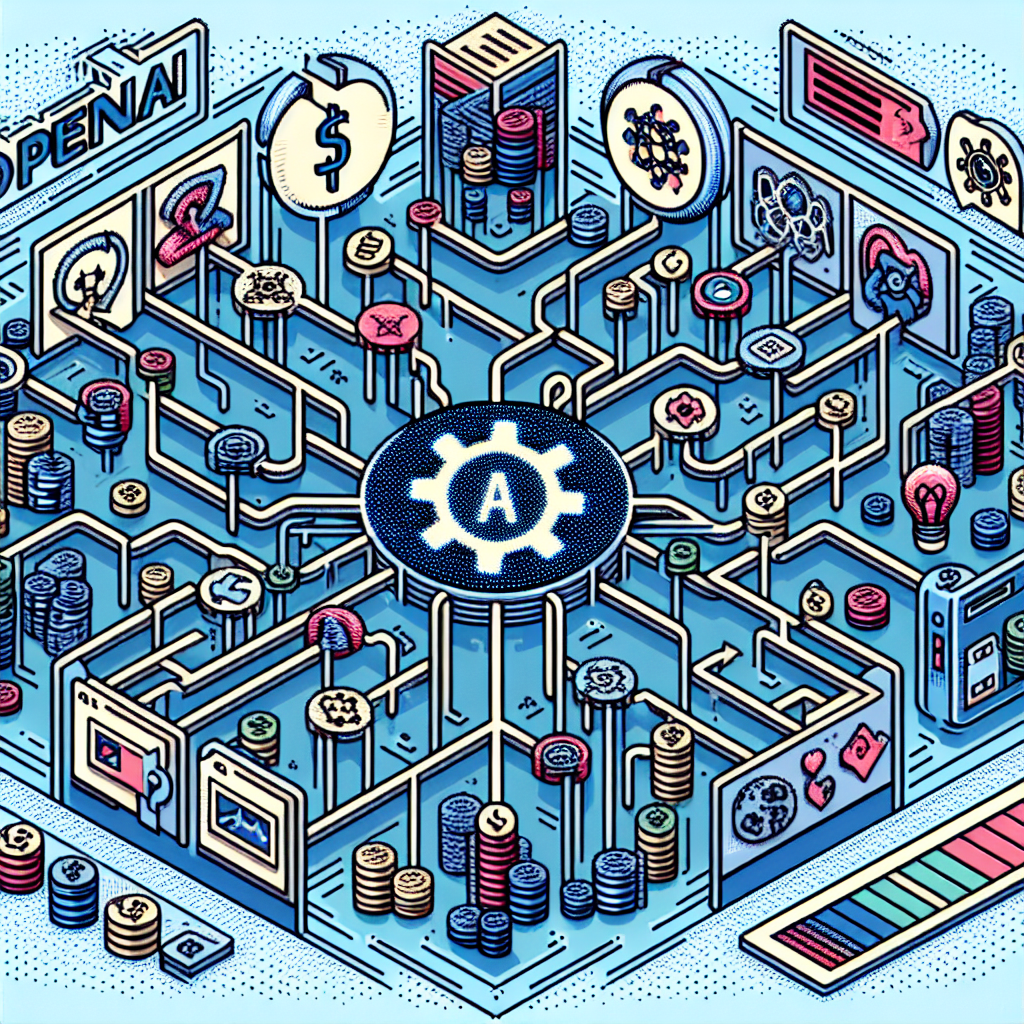
OpenAI: The Epicenter of a $1 Trillion AI Network

In the ever-evolving landscape of artificial intelligence, few stories are as captivating as that of OpenAI. With the launch of ChatGPT, this innovative company has not only changed the way we interact with technology but has also positioned itself as a linchpin in a burgeoning $1 trillion network of deals. But how did OpenAI become the go-to partner for tech giants, and what does this mean for the future of AI? Let’s dive in.

The Rise of OpenAI: A Brief Background

Founded in December 2015, OpenAI set out with a mission to ensure that artificial general intelligence (AGI) benefits all of humanity. Its commitment to safety and ethical considerations in AI has resonated with stakeholders across various industries. However, it was the introduction of ChatGPT in late 2022 that propelled OpenAI into the spotlight. The demand for conversational AI surged, and suddenly, companies recognized the value of integrating OpenAI’s technology into their operations.

Fast forward to today, and OpenAI has entered into strategic partnerships with major players like Microsoft, Google, and others, creating a complex web of financial dependencies. According to a recent Financial Times article, these collaborations have placed OpenAI at the center of a $1 trillion network, significantly shaping the AI ecosystem.

Key Events Shaping OpenAI’s Dominance

1. Strategic Investments: Microsoft’s multibillion-dollar investment in OpenAI has not just provided financial backing; it’s allowed Microsoft to integrate OpenAI’s models into its products, enhancing offerings like Azure and Office 365. This partnership has effectively positioned both companies as leaders in AI solutions.

2. Collaborations and Licensing: OpenAI has entered into licensing agreements with various companies, allowing them to build their own applications on top of OpenAI’s technology. This has created a ripple effect, driving innovation while also generating revenue.

3. Growing Ecosystem: As more companies leverage OpenAI’s capabilities, there’s a growing reliance on its technology, which fosters a network effect. The more companies that use and depend on OpenAI, the stronger its position in the market becomes.

4. Focus on Ethics and Safety: OpenAI’s commitment to ethical AI development has attracted partnerships with organizations that prioritize responsible technology use, further solidifying its reputation in the industry.

5. Market Influence: OpenAI’s leadership in AI technology has led to increased competition, prompting other companies to invest heavily in AI to keep pace. This has created an environment ripe for innovation and growth across the sector.

Key Takeaways

OpenAI has positioned itself as a central player in the AI landscape, signing lucrative partnerships with major tech companies. – Financial dependencies are shaping the future of AI development, creating a network that enhances collaboration and innovation. – Ethics and safety are paramount for OpenAI, attracting partners focused on responsible AI use. – The competitive landscape is evolving, with OpenAI’s influence driving other firms to invest more in AI capabilities.

Reflecting on OpenAI’s Future

As OpenAI continues to extend its reach within the tech industry, its impact on the future of artificial intelligence cannot be overstated. The company’s ability to foster collaboration while emphasizing ethical standards sets a precedent for how AI can be developed and utilized responsibly. The next few years will undoubtedly be pivotal in determining not only OpenAI’s trajectory but also the broader implications of AI technology on society.

With the stakes this high, it’s clear that OpenAI isn’t just a player in the game; it’s becoming the game itself.

Sources

– Financial Times. “How OpenAI put itself at the centre of a $1tn network of deals.” [Financial Times](https://www.ft.com/content/openai-network-deals) – OpenAI Official Website. [OpenAI](https://openai.com) – Microsoft Official Blog. [Microsoft AI](https://blogs.microsoft.com/ai)

By keeping an eye on OpenAI and its network of alliances, we can better understand the transformative power of AI in our everyday lives. Whether you’re a tech enthusiast or a business leader, the unfolding narrative around OpenAI is one to watch closely.


Related update: We recently published an article that expands on this topic: read the latest post.