Southwest’s New Policy Spurs Travel Loss | Analysis by Brian Moineau

“A betrayal”: Southwest’s new plus-size rule and the passengers it sidelines

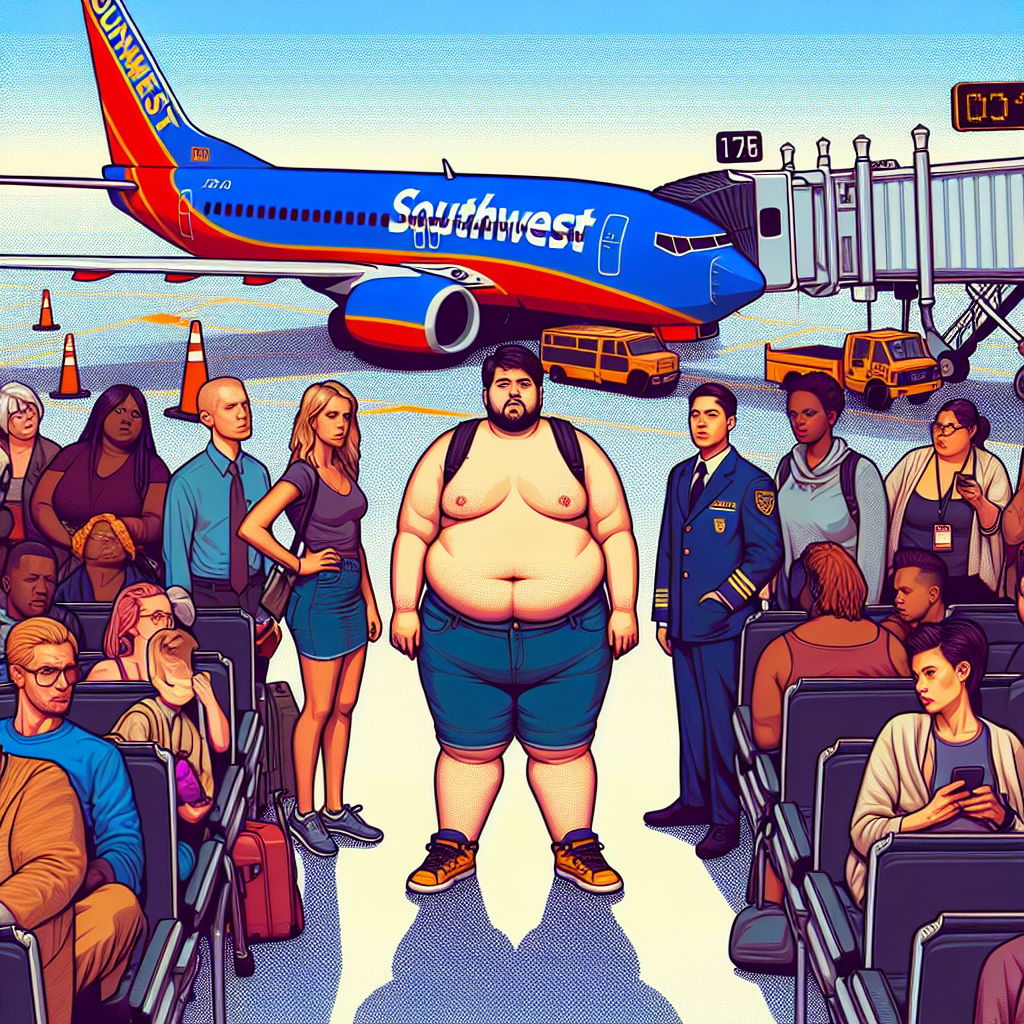
Southwest Airlines has built a brand on being the friendly, affordable airline that makes travel feel a little easier. Which is why the recent change in its “Customer of Size” policy — requiring travelers who need more than one seat to buy the adjacent seat at booking rather than relying on a last-minute accommodation — hit so many loyal customers like a gut punch. For some regulars, it isn’t just an inconvenience: it’s a decision that shrinks their ability to travel at all.

Why this feels personal

  • The policy change goes into effect January 27, 2026 — the same day Southwest abandons its decades-old open-seating approach and adopts assigned seats.
  • Under the previous practice, plus-size travelers who needed an extra seat could request one at the gate and often receive a refund afterward if space allowed.
  • Now, travelers who “encroach upon the neighboring seat(s)” are asked to proactively purchase the adjacent seat when booking. Refunds are allowed only if specific conditions are met (the flight had at least one open seat, both seats were in the same fare class, and the passenger requests the refund within 90 days).

That mixture of ambiguity (what exactly counts as “encroaching”) and financial risk (pay now, maybe get money back later) is what’s driving the anger and the sense of betrayal among longtime Southwest customers.

The human impact

  • For some travelers, buying two seats doubles the cost of a trip — suddenly making family visits, medical travel, or business trips unaffordable.
  • The change shifts the burden onto individuals who already face stigma and logistical barriers when they travel.
  • Because refunds depend on the flight’s occupancy at departure, travelers can’t know in advance whether they’ll get their money back. That uncertainty pressures people to either pay upfront or gamble on being rebooked — an untenable choice for many.

You can see why advocacy groups and regular flyers call the move “fatphobic” or discriminatory in practice. Even if the airline frames it as operational fairness (ensuring every passenger has the seat they purchased), the outcome disproportionately affects a marginalized group.

The broader context

This policy isn’t happening in a vacuum. Southwest has been reshaping its product and revenue model throughout 2025–2026:

  • It ended the open-seating tradition and introduced assigned seating.
  • It rolled out new fare tiers and seat types (Standard, Preferred, Extra Legroom).
  • Starting in 2025, Southwest began charging for checked bags on many fares — a major departure from its historic “two free bags” perk.

Those changes reflect a strategic pivot toward the commercial norms of legacy carriers: more segmentation, more ancillary fees, and more ways to upsell. For investors, that can look like maturation and profit optimization; for some customers, it feels like losing the airline’s original promise.

Practical questions the policy raises

  • How will “encroaching” be measured? Southwest refers to the armrest as the boundary and reserves discretion for staff; that leaves room for inconsistent application.
  • What happens if a traveler buys a seat and it’s later assigned to someone else as a standby or reissued? Reports suggest confusion and inconsistent refunds have already surfaced in some cases.
  • Will crews be trained and supported to handle emotionally charged interactions when a passenger is asked to buy an extra seat at the gate or be rebooked?

These are operational details that will determine whether the policy functions as a polite nudge toward fairness or as a recurring source of conflict and exclusion.

Perspectives around the change

  • Supporters say the rule is reasonable: if a passenger truly needs more space, paying for two seats treats them like any other customer who buys multiple seats and prevents disputes over who’s entitled to what.
  • Critics counter that the policy ignores systemic issues — from seat width standards to social stigma — and imposes additional cost and humiliation on people who may already avoid travel because of these barriers.

The airline’s stated intent is to “ensure space” and align policies with assigned seating. But intent and impact are different things, and for people whose mobility and livelihood depend on accessible—and affordable—air travel, the impact is what matters.

What travelers can do now

  • If you or a traveling companion might need an extra seat, consider purchasing it at booking to avoid last-minute gate pressure.
  • Keep documentation and fare class parity if you hope to qualify for a post-travel refund (and request the refund within the stated 90 days).
  • When possible, pick flights with lower expected loads or times that historically have less demand; refunds depend on open seats at departure.

None of these are ideal fixes — they’re stopgap tactics while customers and advocates push for clearer, fairer approaches.

A few fast takeaways

  • Southwest’s policy, effective Jan 27, 2026, requires advance purchase of adjacent seats for passengers who “encroach” on neighboring seats; refunds are limited and conditional.
  • The change coincides with Southwest’s shift to assigned seating and other revenue-driven reforms.
  • The policy creates financial and emotional burdens for plus-size flyers and leaves significant operational ambiguity.

My take

This feels like a classic clash between operational clarity and human dignity. Airlines need clear rules to run safe, predictable operations — but rules should be designed with empathy and equity. Requiring upfront payment for an extra seat is administratively tidy, but when the policy disproportionately reduces access for a vulnerable group, it risks crossing from practical to punitive.

If Southwest wanted to uphold both operational integrity and inclusion, it could publish clear, objective criteria (rather than discretionary ones), offer a straightforward refund guarantee when an airline cancels or reassigns seats, and couple the policy with investments in brighter, wider cabin options over time. Otherwise, the airline may gain short-term predictability while losing the loyalty of travelers who helped define its identity.

Sources


Related update: We recently published an article that expands on this topic: read the latest post.
The Era of Forever Layoffs in 2025 | Analysis by Brian Moineau

A slow bleed: 1.1 million layoffs and the rise of “forever layoffs”

The economy is sending mixed signals: corporate profits and soaring stock indexes on one hand, and a steady trickle of pink slips on the other. In 2025, U.S. employers announced roughly 1.17 million job cuts through November — the most since the pandemic year and a level you have to go back to 2009 to match. That “drip, drip” pattern isn't just a statistical quirk; it’s remaking how people experience work and how companies manage labor. (fortune.com)

What’s new: forever layoffs explained

  • “Forever layoffs” describe frequent, small-scale reductions — dozens instead of thousands — that recur throughout the year rather than one headline-grabbing mass layoff. Glassdoor says these rolling cuts now account for a growing share of corporate reductions and have shifted the emotional tenor at work from shock to chronic unease. (fortune.com)
  • Challenger, Gray & Christmas counted about 1,170,821 announced job cuts through November 2025, a 54% increase from the same period in 2024. November’s announced cuts were 71,321, down sharply from October but still historically elevated for the month. (reuters.com)

Why this matters now

  • Psychological effect: small, repeated cuts keep employees anxious in a way a one-time event doesn’t. Glassdoor’s analysis suggests mentions of “layoffs” and “job insecurity” in company reviews are higher now than in March 2020. That sustained anxiety corrodes morale and productivity. (fortune.com)
  • Structural shift: companies are leaning into automation and AI and reorganizing around tools that require fewer people for the same work. Challenger and Glassdoor data show AI and restructuring are explicit drivers of many cuts. (reuters.com)
  • Labor market disconnect: hiring plans through November were the weakest since 2010, with employers announcing far fewer planned hires than layoffs — a recipe for “jobless growth” and weak labor mobility. (fortune.com)

The context: not just tech, not just one sector

  • Technology remains among the hardest-hit private industries, but telecom, retail, food processing, nonprofits, media, and small businesses have all trimmed staff in 2025. The pattern is broad-based, meaning the risk of churn exists in many workplaces. (fortune.com)
  • Federal datasets such as JOLTS suggest the raw count of people separated from jobs may be even higher than announced cuts, underscoring the gap between announced plans and actual labor-market churn. Glassdoor cited JOLTS in noting about 1.7 million separations over the same window, a reminder that announced cuts are a partial view. (fortune.com)

Who wins, who loses

  • Winners: Large firms with balance sheets, scale, and access to capital can restructure without immediate pain and can adopt automation to protect margins. Investors can celebrate efficiency; boards may pat themselves on the back. (fortune.com)
  • Losers: Workers — especially early-career and white-collar employees who once counted on steady upward mobility — face career uncertainty, fewer entry-level roles, and tougher bargaining power. Small businesses, with thin margins, are also vulnerable and have been shedding jobs in aggregate. (fortune.com)

Economic and social implications

  • A K-shaped recovery becomes more entrenched: high earners continue spending while lower-income households pull back, widening inequality and concentrating demand among a narrower consumer group. (fortune.com)
  • Consumer confidence and spending patterns may fragment: if many workers live with chronic job insecurity, durable spending and housing decisions will be delayed — a drag on growth that’s hard to capture in headline GDP figures. (fortune.com)
  • Political pressure grows: sustained layoffs and weak hiring invite policy debates about unemployment insurance, retraining, AI regulation, and labor protections — issues already emerging in 2025 discussions. (reuters.com)

Practical signals to watch in the coming months

  • Hiring plans vs. announced cuts: if the gap narrows because hiring picks up, the worst of the labor-market anxiety may ease. If cuts continue to outpace hires, the “forever” trend is likely to persist. (reuters.com)
  • Sectoral shifts: watch how many announced layoffs explicitly cite AI or automation. That will tell us whether the job losses are cyclical or structural. (reuters.com)
  • Small business payrolls: ADP’s November data showed small businesses bore most November private-sector losses; continued weakness here suggests consumer-facing parts of the economy could weaken further. (fortune.com)

My take

We’re living through a recalibration of corporate labor strategy. The 1.17 million announced cuts through November 2025 are a headline number — but the real story is how layoffs are being delivered: quietly, repeatedly, and often in ways that avoid the reputational cost of mass firings. That makes the phenomenon harder to measure with a single statistic and more corrosive to worker confidence. For policymakers and leaders who care about sustainable growth, the policy challenge is twofold: soften the human cost (through better transitions, training, and safety nets) and shape incentives so investments in people aren’t replaced wholesale by automation that concentrates gains at the top.

Final thoughts

If this pattern holds, we won’t remember 2025 simply as a year of layoffs; we’ll remember it as the year the employment contract changed. The task ahead is to decide whether that change will become a grinding permanent norm or a painful but short-lived rebalancing. Either way, the millions affected this year deserve policies, corporate practices, and community responses that treat transitions as human — not just accounting — problems. (fortune.com)

Sources

Southwest Airlines’ new policy will affect plus-size travelers. Here’s how – ABC News | Analysis by Brian Moineau

Southwest Airlines' new policy will affect plus-size travelers. Here's how - ABC News | Analysis by Brian Moineau

Flying High: Navigating the Skies with Southwest Airlines' New Policy

Ah, the joy of air travel. The thrill of soaring above the clouds, the delight of tiny complimentary snacks, and now, the latest wrinkle in the flight plan: Southwest Airlines' new policy for plus-size travelers.

In a move that's already creating quite a buzz, Southwest Airlines has announced that passengers who are unable to fit within the armrests of a single seat will be required to purchase an additional seat in advance. This policy is designed to ensure comfort and safety for all passengers, but it's also sparking conversations about fairness, inclusivity, and the ever-evolving landscape of air travel.

Navigating the Skies: A Balancing Act

Southwest's decision comes at a time when airlines are continually striving to balance passenger comfort with operational efficiency. The topic of space on airplanes has been a hot-button issue for years, as airlines have faced criticism for shrinking seat sizes while increasing passenger loads. The International Air Transport Association (IATA) has long advocated for standard seat dimensions to ensure passenger comfort, yet airlines often have the final say.

This new policy from Southwest may seem like a step backward to some, but the airline argues that it is necessary for ensuring all passengers have a comfortable and safe experience. It's worth noting that Southwest has long been known for its customer-friendly policies, including no change fees and free checked bags, which sets it apart from many of its competitors. This new policy, though, puts them in line with several other airlines that have similar requirements, such as American Airlines and Delta.

A Wider Context: Inclusivity in Travel

The broader discussion of inclusivity in travel is not limited to the skies. Across the globe, industries are grappling with how to accommodate people of all sizes and abilities. For instance, the fashion industry has been making strides by introducing plus-size models and more inclusive clothing lines. Similarly, theme parks like Disney have been updating their ride designs to accommodate larger guests.

This shift towards inclusivity is crucial, but it also highlights the challenges businesses face in implementing these changes. Companies must balance financial realities with the moral imperative to be inclusive. Southwest's new policy is a reminder of the ongoing struggle to find this equilibrium.

Soaring Forward: The Future of Air Travel

As we navigate these skies of change, it’s important to remember that air travel, like any other industry, is in a constant state of evolution. Policies will continue to adapt as societal norms shift and as we all strive for a more inclusive world.

While Southwest’s policy may be a point of contention for some, it also serves as a catalyst for broader discussions about inclusivity, comfort, and fairness. As travelers, we should remain engaged in these conversations, advocating for policies that respect and accommodate everyone.

Final Thoughts

As we pack our bags and head to the airport, let’s keep in mind that the skies belong to all of us. Whether you're a frequent flyer or an occasional traveler, each journey is a chance to reflect on how we can make the world a more welcoming place for everyone. Who knows? Maybe the next time you're wedged between two armrests, you'll be inspired to launch the next big idea in inclusive travel. Until then, happy flying!

Read more about AI in Business

Read more about Latest Sports Trends

Read more about Technology Innovations