TL;DR
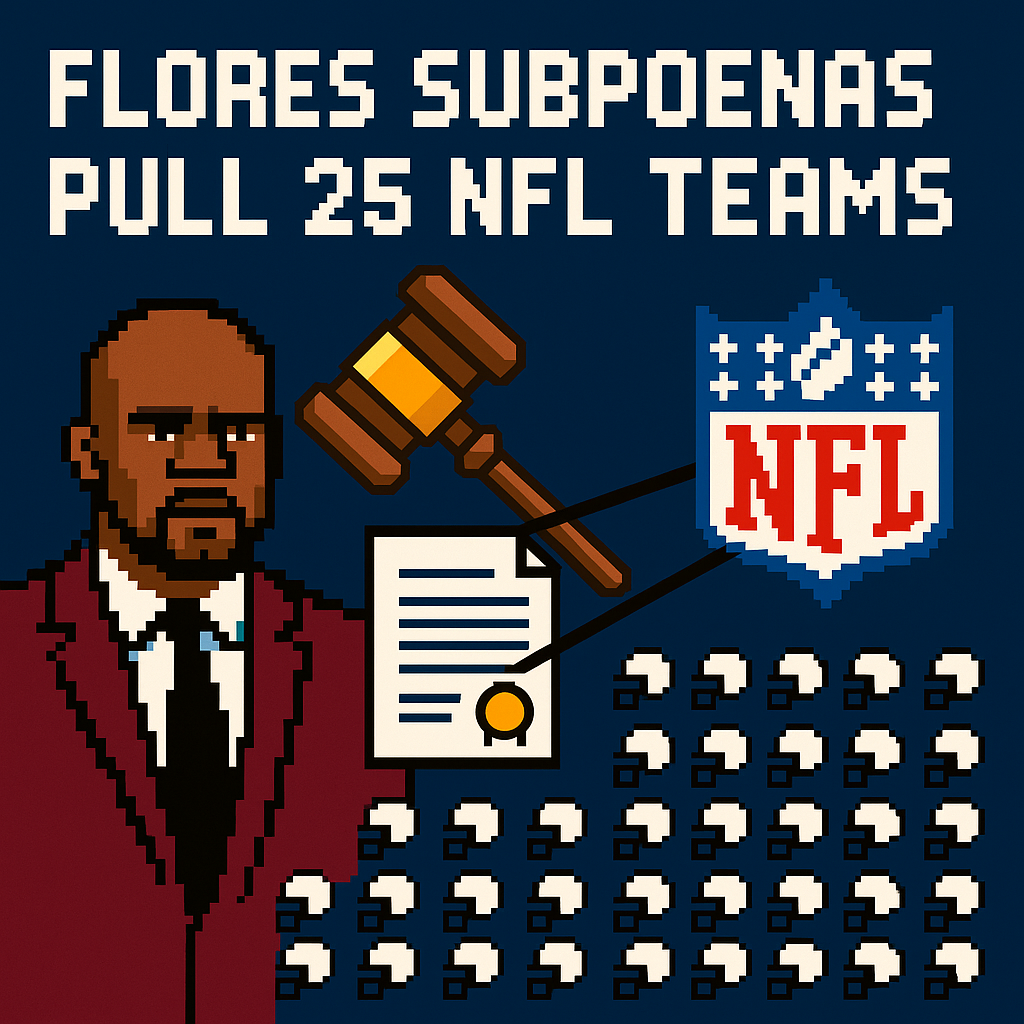
- Brian Flores’ legal team subpoenaed 25 of the NFL’s 32 clubs and issued more than 1,000 discovery requests, pulling about four-fifths of the league into potential document and chat production tied to his race discrimination suit. [1]
- The requests reportedly include a 24-year lookback, converting this into a long‑horizon paper-and-messages hunt well beyond the six teams named in the complaint. [1]
- The real fight in 2026 isn’t email; it’s whether iMessage, WhatsApp, Slack, and Teams data survive preservation and production battles, because candid hiring chatter often moved off email after 2015. [6][10]
What the source said
ESPN reported that Flores’ counsel served subpoenas on 25 teams and sent more than 1,000 discovery requests in federal court, seeking communications, interview files, and policy documents on hiring practices that he says reflect systemic bias. The requests aim at “sham” interview evidence and Rooney Rule compliance trails from coaches’ slates to reference notes. The matter sits in the Southern District of New York with discovery disputes active, and the filing did not publicly identify which 25 clubs were subpoenaed. [1][2]
Why it matters
Since the NFL adopted the Rooney Rule in 2003, clubs have had to document certain interview steps, but those artifacts rarely see daylight; court‑ordered production could reveal how decision paths formed over two decades. For Black coordinators and position coaches, that means scorecards, finalist lists, and notes that show if “fit” correlated with predetermined choices. [3]
Owners, presidents, and general managers now face broad nonparty discovery risk across phone, cloud, and chat repositories. Even when courts narrow scope, long‑tail PR damage can follow—as it did in 2021 when leaked Washington Football Team materials led to Jon Gruden’s resignation after emails became public. [5]
Original analysis
Scope math and posture
- Breadth: 25 of 32 clubs were subpoenaed—78.1% of the league. If you include the six defendant teams also named in filings, up to 31 clubs could be touched, or 96.9% of the NFL’s membership. 25 ÷ 32 ≈ 78.1%; (25 + 6) ÷ 32 ≈ 96.9%. [1]
- Timeframe: A 24‑year lookback implies 25 clubs × 24 seasons = 600 club‑years of potentially responsive hiring material, even before you count the defendant teams. [1]
- Posture: The case proceeds in S.D.N.Y. before Judge Valerie Caproni, who previously split claims between court and arbitration and is now refereeing discovery scope and burden fights. [2]
Back‑of‑envelope cost signal: Processing data to get it into review commonly runs tens to low hundreds of dollars per gigabyte before attorneys read a single message; $25–$125/GB is a published range, which scales fast across phones, laptops, and chat exports for dozens of custodians. The dollar figure is secondary to the institutional risk that candid strings surface in public filings or hearings. [4]
A simple 2×2 for where “smoking guns” live
- Record type (structured vs. unstructured) × Custody (corporate vs. personal) creates four buckets:
- Structured/corporate: applicant tracking systems, HRIS fields, and calendar invites from 2010–2024; low heat, high completeness.
- Structured/personal: rare, e.g., interview scorecards saved in a coach’s personal Google Drive; moderate heat, tricky custody.
- Unstructured/corporate: email threads and Slack/Teams channels created after 2016; high heat, improved admin logs.
- Unstructured/personal: iMessage/WhatsApp/Signal on BYOD devices from executives and scouts; very high heat, highest spoliation risk if auto‑delete or “disappearing” settings were active. [6][7][10]
Historical analogue (what it predicts)
In October 2021, New York Times reporting on leaked emails tied to the Washington investigation triggered Jon Gruden’s resignation from the Raiders; those messages were collateral to another probe and not the centerpiece of a hiring lawsuit. When discovery spans most teams in 2026–2027, analogous reputational shrapnel becomes more likely even if the court narrows scope. Expect at least one unflattering exchange about “preselected” candidates to surface once exhibits become public. [5]
Contrarian read
Conventional wisdom says judges will prune the asks as a fishing expedition and the league will settle quickly to stop leaks. That overlooks coordination frictions: 25 nonparty clubs each have distinct counsel, archives, and risk tolerances, which complicates any global off‑ramp. It also misreads incentives in 2026, when validating documented interview processes offers the league a reason to litigate proportionality and preserve the narrative that Rooney Rule steps reflect genuine consideration. [1][2]
Named‑stakeholder breakdown
- Judge Valerie Caproni (S.D.N.Y.): She will decide what portions of the 24‑year scope survive, which custodians matter, and whether mobile/chat data must be imaged and produced; those orders will set national headlines. [2]
- NFL headquarters: Park Avenue lawyers must coordinate objections, search terms, and rolling productions across 25 nonparties, where a single email chain can sink months of DEI messaging. [1]
- Giants, Broncos, Texans: As defendants named in Flores’ 2022 complaint, their 2019–2022 HC and coordinator searches face the closest scrutiny and earliest deadlines. [2]
- Minnesota Vikings: Flores served as defensive coordinator in 2023, creating added sensitivity around any interview files or communications that reference his candidacies and evaluations. [1]
- Black coordinator pipeline: QB, DC, and OC candidates interviewed between 2010 and 2024 could gain empirical artifacts—finalist slates, rubric scores—to contest “fit” narratives that often lack auditable evidence. [3]
What others are missing
The most consequential fight is over collaboration and mobile data, not email. In 2023, a federal court sanctioned Google for auto‑deleting Chats in a DOJ antitrust case, signaling that ephemeral or “history off” settings won’t shield candid business communications from discovery or sanctions. The FTC’s Model Second Request and modern ESI protocols explicitly press for Slack/Teams/WhatsApp data and mobile collections, which means clubs that failed to lock down BYOD phones when litigation was reasonably anticipated face real spoliation exposure. That is where interview‑theater vs. substantive‑consideration evidence will likely appear. [6][10][7]
What to watch next
- By August 30, 2026, Judge Caproni will narrow—but not quash—the nonparty subpoenas, compelling at least interview notes, finalist slates, and job descriptions from 2010–2024 for a subset of custodians.
- By December 31, 2026, at least one internal club communication about a head‑coach interview will appear in a public filing or hearing exhibit and trigger either an internal review or formal discipline announced by a team or the league.
- By November 15, 2026, at least one motion for sanctions alleging spoliation of chat or text messages (iMessage, WhatsApp, Slack, or Teams) will be filed on the public docket in S.D.N.Y. in this case.
Sources
[1] ESPN — Report on Flores’ subpoenas to 25 teams and 1,000+ discovery requests; anchors breadth, timeframe, and nonparty scope.
[2] Reuters — Coverage of Judge Valerie Caproni’s rulings in Flores v. NFL; establishes S.D.N.Y. posture and discovery/arbitration context.
[3] NFL Operations (Rooney Rule overview) — Documents the rule’s 2003 adoption and interview‑process intent; frames what records clubs likely kept.
[4] ComplexDiscovery ESI Pricing Survey (2023–2024) — Benchmarks eDiscovery processing costs in the $25–$125/GB range; supports cost math.
[5] New York Times (Oct. 11, 2021, Jon Gruden emails/resignation) — Historical analogue for collateral disclosure risk from unrelated probes.
[6] U.S. v. Google LLC (N.D. Cal. 2023, Chat spoliation order) — Demonstrates courts’ intolerance for ephemeral messaging deletions; pertinent to Slack/Chat/iMessage disputes.
[7] The Sedona Conference, Commentary on Ephemeral Messaging (2023) — Best‑practice guidance on preserving mobile and chat data; informs sanctions risk.
[10] FTC, Model Second Request (2021 update) — Explicitly addresses collaboration tools and mobile collections; maps to civil discovery expectations.
Related update: We recently published an article that expands on this topic: read the latest post.
Related update: We recently published an article that expands on this topic: read the latest post.
Related update: We recently published an article that expands on this topic: read the latest post.
Related update: We recently published an article that expands on this topic: read the latest post.