Xbox Identity Crisis: What Comes Next | Analysis by Brian Moineau

What even is an Xbox anymore?

A good marketing tagline sticks. A product that people can describe in one sentence — a phone, a pickup truck, a streaming service — is easier to love, defend, and buy. Lately, Xbox has been anything but tidy. After decades and billions of dollars spent on studios, subscriptions, and cloud dreams, the brand feels like an argument with itself: is Xbox a console, a subscription, a cloud service, or a Microsoft-shaped ecosystem stitched across everything? The Verge’s recent piece captures that unease perfectly — and the leadership shake-up at Microsoft’s gaming division only raises more questions about what comes next.

Why this matters now

  • Phil Spencer, the public face of Xbox for more than a decade, announced his retirement on February 23, 2026.
  • Microsoft promoted Asha Sharma, a senior AI and CoreAI executive, to lead Microsoft Gaming.
  • Xbox president Sarah Bond is leaving, and internal promotions (like Matt Booty becoming Chief Content Officer) aim to anchor creative output.
  • These moves come after huge, headline-grabbing acquisitions — Bethesda ($7.5B) and Activision Blizzard ($68.7B) — and heavy investment in Game Pass and cloud initiatives that have reshaped Xbox’s strategy and identity.

Taken together, those facts make this more than a CEO change: it’s a brand identity crisis at scale.

The messy legacy of “Game Pass first”

The last decade under Spencer is, in one word, transformative — in another, contradictory.

  • Microsoft pivoted from a hardware-first console identity toward subscription and cloud-first thinking. Game Pass became the north star: an all-you-can-play library meant to expand Xbox beyond living-room consoles.
  • To fuel that vision, Microsoft bought entire studios and publishers. The result: more content, but also unexpected costs, antitrust headaches, layoffs, canceled projects, and a dilution of the old “this is an Xbox” simplicity.
  • Game Pass growth has slowed. Public metrics have been sparse since the service reported 34 million subscribers in 2024, far from the 100 million-by-2030 target once floated. Meanwhile the economics of bundling day-one releases with a subscription have complicated traditional game-sales revenue streams.

That mix — massive content buys, aggressive subscription bets, and a partially cloud-driven future — left Xbox with incredible capabilities and an unclear pitch for players.

What Asha Sharma’s hiring signals

Asha Sharma comes from Microsoft’s CoreAI organization, not from decades inside game development. That has provoked two reactions:

  • Worry: gaming communities and some industry watchers fear the company will lean heavy on AI-driven efficiencies, monetization shortcuts, or product decisions steered by machine-first thinking rather than craft.
  • Hope: others see a fresh strategic lens. Xbox has been accused of losing its way; an executive experienced in large-scale platform shifts (AI, cloud) might be exactly the toolkit needed to reframe Xbox for a multi-device, multi-modal future.

In her early messaging, Sharma pledged a “return of Xbox” and explicitly rejected “soulless AI slop” in creative work. That’s encouraging as rhetoric, but it’s vague — and rhetoric doesn’t replace clear product direction.

The core problem: identity, not just organization

The leadership turnover highlights a deeper question: Xbox means different things to different audiences.

  • To some, Xbox has been a hardware brand — recognizable green console boxes, controllers, and platform exclusives.
  • To others, it’s Game Pass, a subscription that breaks games out from devices and into libraries across PC, cloud, and console.
  • To developers and studios, Xbox is a publisher, partner, or corporate owner whose incentives shape projects and pipeline decisions.

Those roles are compatible in theory, but Microsoft’s choices — bringing its biggest acquisitions to multiple platforms and making many first-party titles available everywhere — blurred the lines. The “This is an Xbox” campaign tried to redefine the brand as a state of play that lives on any screen. The risk: a diluted brand that has trouble inspiring fervent fans, convincing console buyers, or explaining what unique value Xbox contributes that competitors do not.

What to watch next

  • Clarity on exclusives: will Microsoft make recently acquired franchises truly exclusive, or continue a multiplatform approach that treats exclusivity as an afterthought?
  • Game Pass economics: will Microsoft change pricing, tier structure, or content windows to stabilize revenue vs. subscriber growth?
  • Hardware roadmap: Sharma’s memo referenced “starting with console” — watch for clear signals on next-gen hardware or Windows-integrated devices (e.g., handhelds, Xbox-branded PCs).
  • Studio autonomy and layoffs: after past closures and reorganizations, preserving creative teams and confidence will be essential to shipping compelling games.
  • How AI is used (and limited): concrete policies about creative AI — when it’s used, and when human-driven craft is protected — will matter for developer trust and public perception.

The reader’s cheat-sheet

  • This is not just a CEO swap. It’s a reframing of Microsoft’s bets on gaming at scale.
  • Past spending bought content and capability, not an automatic audience. Xbox’s identity problem is now a business problem.
  • The company’s next concrete moves — exclusivity, pricing, hardware, and studio support — will decide whether this is a course correction or more strategic drift.

My take

Microsoft’s bet on a cloud-and-subscription future was bold and inevitable in many ways — but bold doesn’t mean flawless. Building a new, platform-spanning definition of “Xbox” needed both product clarity and patient execution. What’s happened instead is a high-cost experiment with uneven returns and a brand that’s harder to explain to newcomers and die-hards alike.

Asha Sharma’s appointment is an honest admission that the playbook has to change. Whether that means returning to a strong, console-rooted identity, fully embracing an everywhere-play playbook, or inventing something genuinely new depends on the humility to learn from what didn’t work and the courage to pick a clearer direction. The next year will be decisive: rhetoric about “the return of Xbox” needs follow-through in product roadmaps, studio support, and messaging that players can actually understand.

Sources


Related update: We recently published an article that expands on this topic: read the latest post.

Related update: We recently published an article that expands on this topic: read the latest post.

DeBoer’s Rose Bowl Call Sparks Toughness | Analysis by Brian Moineau

What in the world was Kalen DeBoer thinking on that fourth-down call?

The image is burned in a lot of minds: Alabama lined up to punt from its own 34 on fourth-and-1 in the Rose Bowl, Ty Simpson under center after a timeout, a Wildcat-style shovel pass called — and it fails. Indiana gets a short field, scores, and the game spirals into a 38-3 rout. Curt Cignetti, Indiana’s coach, didn’t just celebrate his team; he took a not-so-subtle jab at Alabama’s identity: this is how you break a program’s will — you run and run until the armor cracks.

Let’s unpack what happened, why the decision landed so badly, and what it might mean for Alabama’s direction under Kalen DeBoer.

The setup: context that matters

  • This was the College Football Playoff quarterfinal at the Rose Bowl — the stage is huge and mistakes are amplified.
  • Alabama trailed 3-0 at the time. Traditionally, teams would punt in that spot, flip field position, and trust a defense built on physicality to handle the opponent.
  • DeBoer’s Alabama this season has been noticeably aggressive on fourth down, gambling often and converting at an impressive clip during the year. That aggressive identity carried into the playoff.
  • Curt Cignetti watched the whole sequence and afterward highlighted the old-school, grind-it-out way to beat Alabama: run the ball, wear them down, break their will. He pointed to the running game as the decisive factor in Indiana’s dominance. (archive.vn)

The call itself and why it stung

  • Fourth-and-1 at your own 34 is textbook punt territory: even if you convert, you gain a sliver of field position at enormous risk.
  • DeBoer dialed a Wildcat shovel pass after lining up in punt formation (with timeouts and a change of formation). The play is creative and has worked for Alabama on other fourth-down gambles this season — but the Rose Bowl felt like a time for prudence. (si.com)
  • When the gamble failed, Indiana had a short field and turned it into points. Momentum swung hard, and the game never recovered.

Why the call felt worse than a standard failed gamble:

  • It took the ball out of the realm of conservative, historically “Alabama” football (punt/defend/rush).
  • It looked, to many observers, like a calculated risk with nothing to gain but pride; the downside was immediate and game-altering.
  • DeBoer’s own acknowledgement after the game — “when you fall short, it was the wrong decision” — softened none of the sting. He defended his aggressiveness as belief in his offense and defense, but admitted it backfired. (archive.vn)

Curt Cignetti’s jab and what it signals

  • Cignetti praised his team’s physical approach and explicitly contrasted it with what Alabama did: run, wear opponents down, and break wills. His postgame comment — that breaking a team’s will by running the ball is the way to win — landed like a challenge and a coach’s confidence. (archive.vn)
  • That comment wasn’t just trash talk. It underscored a theme from the game: Indiana’s toughness on the line and commitment to a grinding identity neutralized Alabama’s creative-but-risky tendencies.

The bigger picture: identity, hiring, and the future

  • DeBoer came in as a modern, more “UP-tempo / West Coast / analytics-friendly” type compared to the Nick Saban era. That shift in identity has produced big wins but also moments that test fan patience and program expectations. (washingtonpost.com)
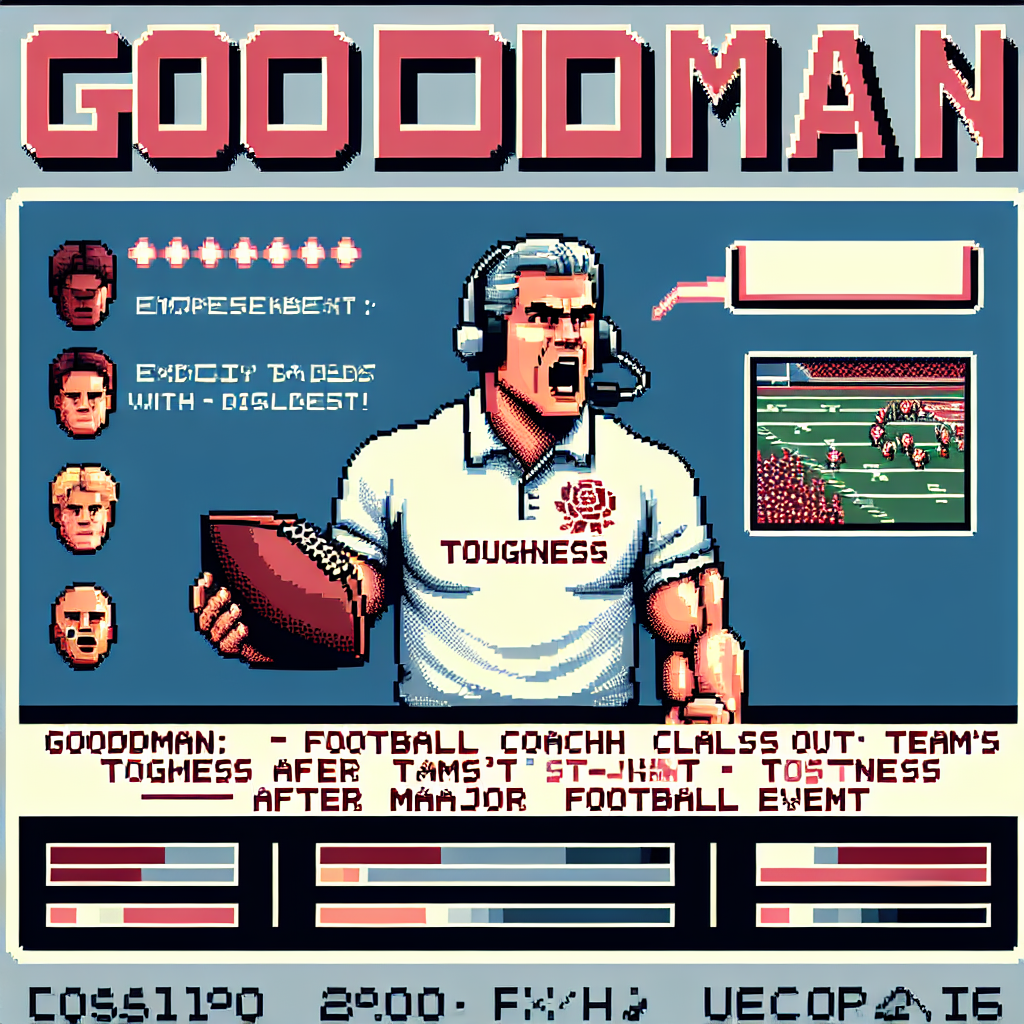
  • Goodman’s column framed the fourth-down call as “emblematic” of a larger concern: has Alabama moved away from the kind of physical, field-position-first football that defined its dynasty? And is that change worth it if the program loses some of its traditional edge? (archive.vn)
  • One game doesn’t rewrite a coach’s legacy. But playoff losses — especially self-inflicted-looking ones — raise legitimate questions about decision-making in high-leverage moments and whether a new identity is fully rooted.

Why the reaction is so visceral

  • Alabama’s brand is expectations. When the Tide isn’t simply better, every unconventional call is scrutinized through the lens of a program used to being “the standard.”
  • Fans and columnists aren’t just mad at one play; the shovel pass is shorthand for perceived hubris at a moment that demanded restraint.
  • Cignetti’s critique amplified that feeling because it came from the coach who controlled the game plan that exposed Alabama’s flaws. That kind of postgame message cuts deep and sticks in the narrative.

What this means moving forward

  • Expect DeBoer (and his staff) to revisit situational decision thresholds. Coaches who gamble must calibrate risk according to stage and opponent.
  • The offense will still be creative — that’s part of DeBoer’s appeal — but there will be pressure to demonstrate a tougher, more conservative baseline in short-yardage, field-position-sensitive spots.
  • For Indiana, Cignetti’s comments are a statement of identity: physical, relentless, and unapologetically old-school in execution. That identity beat Alabama on a big stage. (crimsonquarry.com)

A quick summary for the short-attention fan

  • The fourth-down shovel pass was a high-variance play that backfired in a moment where conservative play was eminently defensible.
  • Curt Cignetti used it as a teaching point: wear teams down, and you’ll win the fourth quarter.
  • The fallout is less about a single coach’s ego and more about how identity, roster construction, and situational discipline must align at a program with Alabama’s standards.

Final thoughts

Football loves drama; coaches love choices that define them. DeBoer’s aggressiveness delivered wins this season but met its limit in Pasadena. The shovel pass will be replayed, debated, memeified — and then it will do what big coaching moments do: force adjustments. If Alabama wants to reconcile modern creativity with the time-honored “punt-and-pummel” ethos its fans revere, it’ll take more than a press conference apology. It’ll take a roster and a game plan that can absorb and justify those gambles on the sport’s biggest stages.

Notes worth remembering

  • One play rarely costs a whole program its soul, but one play can expose where the program still needs tempering.
  • Cignetti’s line about “breaking their will” is a useful lens: championships are often won in the trenches, not by flash alone. (archive.vn)

Sources


Related update: We recently published an article that expands on this topic: read the latest post.


Related update: We recently published an article that expands on this topic: read the latest post.

Apple Cinemas responds to Apple lawsuit – The Verge | Analysis by Brian Moineau

Apple Cinemas responds to Apple lawsuit - The Verge | Analysis by Brian Moineau

Apple Cinemas vs. Apple Inc.: A Cinematic Showdown


In the latest twist of corporate drama worthy of its own blockbuster, Apple Cinemas finds itself in a legal skirmish with tech giant Apple Inc. over trademark rights. The spotlight falls on a small cinema chain as it stands its ground, declaring, “We are committed to defending our brand, our history, and our continued right to operate as Apple Cinemas.” But what’s at the core of this legal showdown, and why does it matter? Let’s dive into the story, and explore the broader implications, all while keeping it light.

A Tale of Two Apples


On one side, we have Apple Inc., a behemoth in the tech industry known for its sleek gadgets and innovative technology. On the other, Apple Cinemas, a beloved regional movie theater chain that’s been bringing Hollywood's magic to the big screen. The crux of the lawsuit rests on trademark infringement, with Apple Inc. claiming that the cinema's use of “Apple” could confuse consumers and dilute its brand.

The irony? Despite their shared namesake, the two Apples operate in distinctly different realms. One could argue that the likelihood of someone confusing an iPhone purchase with a cinema ticket is as rare as finding a golden ticket in a chocolate bar à la Willy Wonka.

Navigating the Trademark Tango


Trademark disputes in the business world are as common as popcorn at the movies. Companies fiercely protect their brand images, and Apple Inc. is no stranger to this arena. Remember when it took on Samsung over smartphone designs? Or the time it faced off against a small meal prep company over the use of a pear logo?

Yet, in a world where we’re seeing collaborations like Crocs teaming up with fast-food chain KFC for fried chicken-themed clogs, one might wonder if there’s room for a peaceful co-existence between the technology titan and the cinema chain. After all, both brands evoke a sense of innovation and enjoyment in their respective fields.

The Broader Context


This legal spat comes at a time when the film industry is facing its own upheaval. The pandemic accelerated the shift towards streaming services, leaving cinema chains grappling with how to draw audiences back to theaters. Apple Cinemas’ fight for its brand is not just about a name; it’s about preserving a piece of cultural history and the shared experience of movie-going.

Interestingly, the case unfolds against a backdrop of increasing scrutiny over big tech companies’ influence and market power. Just as Apple Inc. defends its trademark, it’s also navigating ongoing antitrust investigations and debates over digital privacy. Could this legal battle with a cinema chain further shape public perception of the tech giant?

Final Thoughts


As the curtain rises on this legal drama, it’s easy to get caught up in the spectacle. Yet, at its heart, the case is a reminder of the importance of brand identity and the lengths to which companies will go to protect it. Whether David can hold his own against Goliath remains to be seen, but one thing is clear: Apple Cinemas is not going quietly into the night.

As we await the next chapter in this saga, let’s appreciate the simpler things—like catching a film with friends, popcorn in hand, knowing that somewhere, both Apples are striving to offer us the best of their worlds. Who knows, maybe one day, they’ll find a way to collaborate and bring us an Apple-themed cinematic experience. Until then, stay tuned for the sequel.

Read more about AI in Business

Read more about Latest Sports Trends

Read more about Technology Innovations