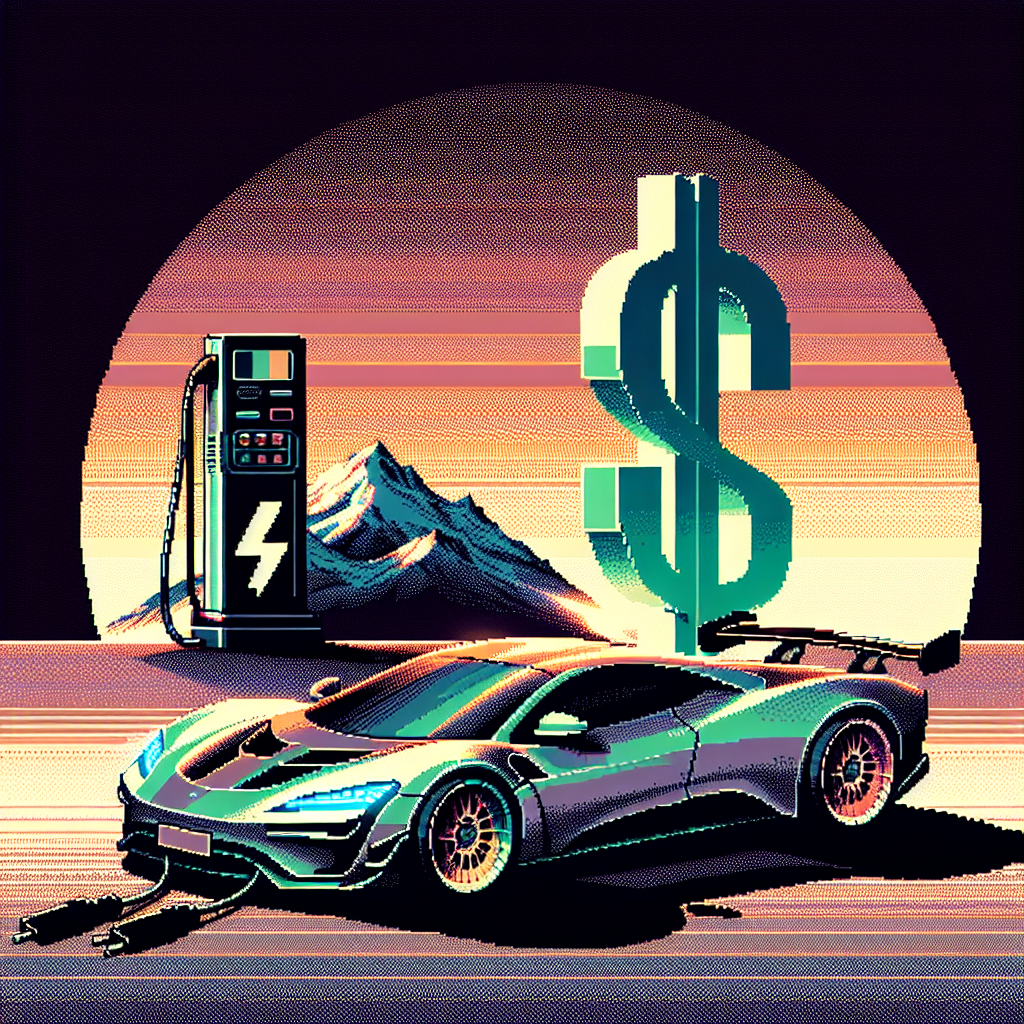
Porsche says EV intransigence will lose it $6B. Its solutio…
Porsche’s Slow Move into the EV Market: A $6 Billion Gamble As the world races toward electrification, it’s hard to imagine a storied automaker like Porsche ch…
Porsche’s Slow Move into the EV Market: A $6 Billion Gamble
As the world races toward electrification, it’s hard to imagine a storied automaker like Porsche choosing to hit the brakes. Yet, in a recent announcement, Porsche hinted at a strategy that might just do that—potentially costing the company a staggering $6 billion. In a time when competitors, particularly from China, are speeding ahead in the electric vehicle (EV) space, one has to wonder: is Porsche’s decision to take its time a strategic masterstroke or a major misstep?
Understanding the Landscape of the EV Market
To grasp the implications of Porsche’s recent announcement, we need to look at the broader context of the automotive industry. The global shift towards electric vehicles is not just a trend; it’s a revolution. Governments worldwide are setting ambitious targets for phasing out internal combustion engines, and consumers are showing an increasing preference for sustainable options.
As Tesla continues to lead the charge in EV innovation and Chinese manufacturers like BYD and NIO accelerate their market presence, traditional automakers face mounting pressure to adapt or risk obsolescence. Instead of embracing the urgency of this moment, Porsche seems to be opting for a more gradual approach, citing concerns about profitability and market readiness.
The $6 Billion Question: Why Move Slower?
Porsche has publicly stated that its cautious stance could lead to a loss of $6 billion. This figure is not just a number; it represents the potential market share and innovation opportunities that could slip through its fingers as it lags behind quicker competitors. The rationale behind this slower rollout seems to be rooted in an effort to maintain the brand’s luxury status and ensure the quality of its vehicles.
However, this strategy raises eyebrows. With the rapid advancements in battery technology and the increasing availability of charging infrastructure, the argument for taking a slower approach becomes less convincing. As competitors continue to innovate and capture consumer interest with their cutting-edge EV offerings, Porsche risks becoming irrelevant in a market that is evolving faster than ever.
Key Takeaways
– Porsche’s Slow Strategy: The automaker is choosing a gradual approach to EV development, potentially sacrificing $6 billion in market opportunities. – Competitors on the Fast Track: Rivals, especially from China, are rapidly innovating and capturing market share, putting Porsche at risk of falling behind. – Luxury vs. Innovation: Porsche is trying to balance its luxury brand image with the need for technological advancement, a challenging tightrope to walk in this fast-paced market. – Market Readiness Concerns: The company cites concerns about profitability and market readiness for EVs, but these fears may not hold water as consumer demand grows. – The Stakes are High: With the automotive industry in a state of flux, slow decisions could have long-term consequences for brand relevance and market position.
Concluding Reflection
In a world where agility often trumps tradition, Porsche’s strategy of moving slowly into the EV market could be seen as a gamble that might not pay off. While there’s something to be said for maintaining quality and brand integrity, the question remains: can a luxury automaker afford to be slow in an industry that’s shifting beneath its feet? Only time will tell if Porsche’s cautious approach will secure its legacy or if it will find itself left in the dust by more nimble competitors.
Sources
– “Porsche says EV intransigence will lose it $6B. Its solution? Move even slower – Electrek” [Electrek](https://electrek.co/2023/10/20/porsche-ev-intransigence-6-billion-solution-move-slower/)
By keeping tabs on the evolving landscape, we can better understand how legacy brands like Porsche adapt—or fail to adapt—to a new world that demands speed, innovation, and sustainability.
Related update: We recently published an article that expands on this topic: read the latest post.
Related update: We recently published an article that expands on this topic: read the latest post.
Related update: We recently published an article that expands on this topic: read the latest post.