
Moon Factory Plan: Musk’s AI Space Gamble | Analysis by Brian Moineau

Moonshots and Mutinies: Elon Musk Wants a Lunar Factory to Launch AI Satellites

The headline sounds like science fiction: build a factory on the Moon, assemble AI satellites there, then fling them into orbit with a giant catapult. But this is exactly the vision Elon Musk sketched for xAI at a recent all‑hands meeting — a talk first reported by The New York Times and covered by TechCrunch and other outlets. The timing is notable: co‑founders departing, a major reorg, and a SpaceX‑xAI merger that some expect will lead to a blockbuster IPO later this year. The result is a mix of bravado, engineering fantasy, strategic logic, and regulatory questions — the kind of story that forces you to ask whether this is grand strategy or grandstanding.

Why this matters now

  • xAI is freshly merged into Elon Musk’s space and social empire, amplifying ambitions and tightening the spotlight.
  • Several of xAI’s original co‑founders have recently left, raising questions about execution and culture during a pivotal scaling phase.
  • Musk’s moon plan reframes the debate about where the future of compute will live — on Earth, in orbit, or on the lunar surface — and what would be required to get there.

The pitch in plain language

According to reporting summarized by TechCrunch, Musk told xAI employees that:

  • xAI will need a lunar manufacturing facility to build AI satellites.
  • The proposed lunar facility would include a mass driver — an electromagnetic catapult — to launch satellites into space.
  • The rationale is raw compute scale: the Moon (and space in general) offers a way to access vast energy and cooling potential that Earth datacenters can’t match.

Those comments came during an all‑hands that coincided with a flurry of departures by co‑founders such as Tony Wu and Jimmy Ba, and as the merged entity prepares for a possible IPO. TechCrunch later published the full 45‑minute all‑hands video, which adds context to the public reporting.

Why a lunar factory sounds plausible (on paper)

  • Energy and cooling: Space (and the lunar surface) offers unique opportunities, e.g., direct access to sunlight for massive solar farms and passive cooling in shaded regions — appealing for power‑hungry AI clusters.
  • Vertical integration: Musk’s conglomerate already spans rockets (SpaceX), social/data platforms (X), and energy/transport (Tesla, Starlink synergies). Adding lunar manufacturing could be pitched as the next step in controlling a full stack of data, transport, and infrastructure.
  • Proprietary data and differentiation: A moon‑based platform could, in theory, enable data flows and sensors unavailable to competitors — feeding a unique “world model” that Musk has described as the long‑term objective.

The big, practical hurdles

  • Engineering scale: Building habitable factories, reliable lunar construction techniques, and a functional mass driver are orders of magnitude harder than launching satellites from Earth. Cost, time, and risk are enormous.
  • Legal and geopolitical limits: The 1967 Outer Space Treaty bars national appropriation of celestial bodies. U.S. law allows companies to extract resources they mine, but the legal landscape for permanent facilities and mass industrial activity is contested internationally.
  • Talent and timing: Key technical leaders exiting during a reorg makes execution riskier. Ambitious long‑horizon projects don’t mesh easily with the short timelines and accountability of public markets and IPO cycles.
  • Environmental and safety concerns: Unproven large‑scale lunar manufacturing and mass drivers raise questions about space debris, lunar environment stewardship, and collision risk for satellites and crewed missions.

What investors and competitors see

  • Investors may cheer the vision’s upside: unique assets and defensible moats that could justify sky‑high valuations if achieved.
  • Shorter time‑horizon stakeholders (public markets, customers, partners) will want tangible milestones: product roadmaps, revenue paths, and credible technical milestones long before any lunar steel is laid.
  • Competitors are watching the tech stack: if the Moon pitch is an attempt to lock in energy, data, and unique sensors, rivals will adapt via orbital compute, international partnerships, or legal/policy pressure.

A few scenarios to watch

  • Near term (months): continued reorg and talent churn at xAI; more public messaging to frame the Moon idea as long‑term strategy rather than an immediate product pivot.
  • Medium term (1–3 years): concrete engineering programs announced — prototypes for orbital data centers, power projects, or lunar robotics partnerships — which would signal movement from concept to execution.
  • Long term (decades): if the idea survives technical, legal, and funding hurdles, it could reshape where large AI clusters live — and who controls the data those clusters consume.

Notes on credibility and context

  • TechCrunch’s coverage and the publicly posted all‑hands video are non‑paywalled, accessible records of the pitch and surrounding company changes.
  • Reporting across outlets (The Verge, Financial Times, TechCrunch) shows consistent core claims: Musk pitched lunar infrastructure as part of xAI’s future while several co‑founders departed.
  • Some outlets add detail or editorial framing (e.g., energy scale ambitions, concerns about deepfakes on X), which are relevant to the company’s near term optics but separate from the moon manufacturing claim itself.

What this says about Musk’s strategy

  • Moon plans are less a literal product roadmap than a narrative lever: they signal scale, ambition, and an integrated multi‑domain approach that stokes investor enthusiasm.
  • The vision ties disparate pieces of Musk’s empire into a single storyline: rockets, satellites, social data, and energy converge into a proprietary vertical. That’s strategically coherent — if technically audacious.
  • For employees and early leaders, the shift from a scrappy startup to a multi‑domain industrial ambition means differing skill sets and appetites for risk — which helps explain departures amid reorganization.

My take

There’s a productive tension here between audacity and accountability. Big visions — even wildly improbable ones — have a role in attracting capital and talent. But the moment you promise lunar factories and mass drivers, you invite intense scrutiny: technical feasibility, timelines, legal permission, and human capital. The most useful question for xAI and its stakeholders is not whether the Moon is “possible” in a vacuum; it’s whether the company can credibly deliver meaningful intermediate milestones that justify investment and retain top talent while the moonshot remains decades away.

Final thoughts

Ambition keeps technology moving forward, but execution makes it real. Musk’s lunar pitch is headline‑grabbing and strategically provocative; whether it becomes a blueprint or a branding exercise depends on the hard, incremental work that follows: prototypes, partnerships, regulatory clarity, and, crucially, people who stay to build it.

Sources


Related update: We recently published an article that expands on this topic: read the latest post.

Related update: We recently published an article that expands on this topic: read the latest post.

ASUS’s Smarter AM5 Boards for Every | Analysis by Brian Moineau

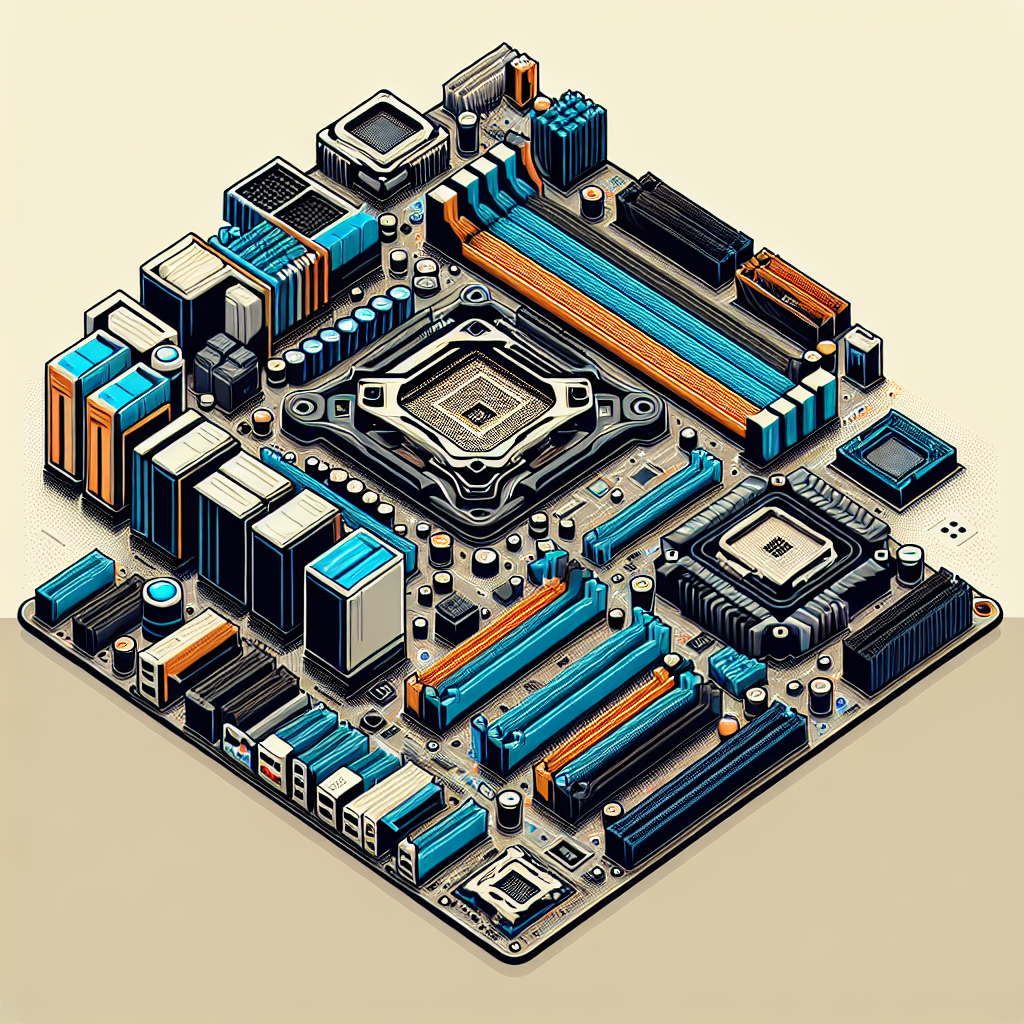
A smarter AM5 playground: ASUS’s refreshed ROG, TUF, and ProArt motherboards

Hook: If you’ve built a PC in the last five years you know the motherboard is the multiverse where decisions collide — socket, lanes, cooling, and style. ASUS just redesigned that multiverse for AMD’s AM5 platform, and the result isn’t just more choices: it’s more sensible choices. Whether you want an extreme showcase board for a Ryzen 9000 enthusiast, a no-nonsense gaming rig, or a creator-focused workstation, ASUS’ new AM5 line aims to give each user the tools they actually need — without burying them under features they don’t.

Why this matters right now

  • AMD’s AM5 socket (Ryzen 7000/8000/9000 families) has become the backbone for high-performance desktops and workstations. As CPUs push more cores and faster DDR5 memory, the motherboard’s role shifts from “box with slots” to “traffic director” for power, PCIe lanes, and thermal headroom.
  • ASUS updated its AM5 family across ROG, ROG Strix, TUF Gaming, Prime, and ProArt lines to better match modern workflows: multi-M.2 storage, WiFi 7 on many boards, improved DDR5 reliability, and cleaner, user-friendly features for builders.
  • The change isn’t just about top-tier bragging rights. ASUS brought some refinements down to B850/B840 class boards so mainstream builders benefit from things like tool-free M.2 installation, higher-resolution BIOS UI, and expanded USB options.

What’s new across the lineup

  • Enhanced PCIe lane layouts and smarter bandwidth allocation.
    • Some boards now allow two PCIe 5.0 M.2s plus multiple PCIe 4.0 M.2s while keeping the primary x16 slot at full bandwidth for GPUs — important for gamers who also want heavy local storage.
    • Certain ProArt and Crosshair models support x8/x8 for dual GPU or heavy I/O use.
  • Broader DDR5 compatibility and overclocking improvements.
    • PCB and manufacturing changes (e.g., low-etch processes, back-drilling, and NitroPath DRAM tweaks) increase stability for high-speed DDR5 kits and push memory OCs further on more boards — not just the flagships.
  • More refined DIY and usability features.
    • Tool-free M.2 Q-Release, Q-Code/Q-Dashboard improvements, easier graphics card removal mechanisms, and a 1920×1080 BIOS GUI make builds faster and less fiddly.
  • Modern connectivity moves.
    • WiFi 7 appears on many B850-class boards, along with USB 20 Gbps front-panel headers, USB4/Thunderbolt-capable ports on select models, and more onboard 10 GbE/5 GbE options on ProArt/creator boards.
  • Practical cooling and layout upgrades.
    • New vapor-chamber-style 3D VC M.2 heatsinks and beefed-up VRM cooling on high-end Crosshair and Glacial boards to sustain heavy loads for gaming, streaming, and AI workloads.

Who each family is for

  • ROG Crosshair X870E Glacial / Dark Hero
    • For the enthusiast who wants absolute headroom: extreme VRM, multi-M.2 support, premium memory tuning, and flagship aesthetic. These boards are built to be pushed and showcased.
  • ROG Strix B850 / X870E Neo series
    • For mainstream gamers who want great performance without flagship price tags. They balance lots of USB ports, tool-free install features, and style options (black or white aesthetics).
  • TUF Gaming X870 / B850 series
    • Durability and value with practical overclocking features (now including asynchronous clock options on select models). Good for long-lived builds and those who want stability-first hardware.
  • ProArt B850-Creator WiFi Neo
    • Designed for creators and multi-GPU setups on a budget. Dual PCIe 5.0 x16 slots (x8/x8), professional I/O (dual 5GbE, USB 10Gbps Type-C with DP Alt Mode), and understated styling.
  • B840 family
    • Aimed at efficient, budget-conscious builds — especially good if you don’t plan to overclock or need PCIe 5.0 GPU/M.2 support, and want a cost-effective AM5 platform.

Build-level takeaways

  • If you plan heavy local SSD use (many M.2s) and a high-end GPU, check the board’s lane-sharing notes carefully. ASUS’ newer lane layouts aim to preserve GPU x16 on several boards while offering multiple PCIe 5.0 M.2 slots — but exact behavior depends on the model.
  • Memory overclocking potential is improving beyond flagship boards thanks to PCB and manufacturing tweaks; you don’t necessarily need the priciest Crosshair to get better DDR5 behavior.
  • WiFi 7 and USB4 presence on B850 boards mean next-gen connectivity is trickling down. If future-proofing networking and front-panel bandwidth matters, these midrange boards are compelling.
  • Creative pros who want multi-GPU on a budget should look at ProArt’s B850-Creator Neo for x8/x8 GPU support plus robust networking.

Design and build experience: small but meaningful refinements

ASUS invested in what I’d call “boring but delightful” upgrades — things that don’t headline reviews but smooth the building process: clearer BIOS resolution and navigation, real tool-free M.2 install mechanisms, easier graphics-card release systems, and more accessible troubleshooting LEDs or Q-Dashboards. Those are the touches that matter when you’re two hours into a cable tangle and want to finish the build without a meltdown.

My take

ASUS’ refreshed AM5 lineup reads like a maturity update rather than a reimagining. The company is listening: instead of adding ever-more esoteric features only ultra-enthusiasts use, ASUS redistributed practical capabilities across more price points. That means mainstream buyers get genuine improvements — faster memory support, better storage options, and cleaner build workflows — while enthusiasts still have truly overbuilt flagships to chase records with.

If you’re building now and torn between “wait for the next gen” and “pull the trigger,” these Neo/B850 updates make now a reasonable time to build an AM5 machine that will feel modern for years: better memory headroom, improved PCIe flexibility, and contemporary connectivity. The main caveat is to confirm exact lane-sharing and I/O behavior for the specific model you plan to buy — spec sheets still hide the small but critical bandwidth trade-offs.

Choices to consider before buying

  • Do you need PCIe 5.0 M.2 slots or will PCIe 4.0 suffice? Multiple 5.0 drives plus a GPU can create sharing limitations on some boards.
  • Memory: if you plan high-frequency DDR5, prioritize boards with NitroPath DRAM and the robust PCB treatments ASUS lists for better stability.
  • Connectivity: want WiFi 7 or USB4 at the front panel? Those features are now present beyond flagship boards — check the model spec.
  • Future upgrades: think about whether x8/x8 GPU support, dual 10GbE, or many M.2s matter down the road — pick a board that aligns with your upgrade path.

Final thoughts

ASUS’ incremental but thoughtful AM5 refresh is a reminder that platform evolution is often about better trade-offs, not just more bling. Builders win when features are sensibly distributed across product lines — and that’s exactly what this lineup aims for. Whether you’re sketching a white-themed showcase, assembling a quiet content-creation workstation, or building a budget Ryzen system, there’s now more chance you’ll find an AM5 board that fits the job rather than forcing compromises.

Sources


Related update: We recently published an article that expands on this topic: read the latest post.


Related update: We recently published an article that expands on this topic: read the latest post.


Related update: We recently published an article that expands on this topic: read the latest post.

iPhone 17 Pro’s Alleged Vapor Chamber Cooling System Partly Revealed – MacRumors | Analysis by Brian Moineau

iPhone 17 Pro's Alleged Vapor Chamber Cooling System Partly Revealed - MacRumors | Analysis by Brian Moineau

The Cool Factor: iPhone 17 Pro and the Vapor Chamber Revolution


As the global tech community eagerly anticipates the release of Apple's iPhone 17 Pro, a tantalizing rumor has surfaced that promises to shake up the smartphone landscape: the introduction of a vapor chamber cooling system. This new feature, aimed at enhancing performance and managing heat dissipation, could mark a significant leap forward in the world of mobile technology.

The Vapor Chamber: A Breath of Fresh Air for Smartphones


The concept of vapor chamber cooling isn't entirely new. It's been a staple in high-performance gaming PCs and laptops for some time, lauded for its ability to efficiently manage heat and maintain optimal functioning under heavy workloads. Now, Apple appears poised to import this technology into its flagship iPhone line, specifically the iPhone 17 Pro and iPhone 17 Pro Max models, according to a credible leaker.

Why is this significant? Well, as our pocket-sized devices become more powerful, they also generate more heat. Traditionally, smartphones have relied on passive cooling methods, which can sometimes fall short during intensive tasks such as gaming or video editing. By integrating a vapor chamber, Apple could maintain high performance without compromising on temperature control, ensuring a smoother user experience.

A Nod to the Competition


It's worth noting that Apple isn't the first to explore advanced cooling solutions in smartphones. Brands like Samsung and Xiaomi have already experimented with similar technologies in their high-end models. However, Apple's entry into this realm could set a new standard, given its history of refining and perfecting existing technologies.

In the broader tech industry, we've seen a push towards more efficient and sustainable designs. From electric vehicles harnessing regenerative braking systems to data centers utilizing liquid cooling to reduce energy consumption, the trend is clear: efficiency is king. Apple's potential adoption of vapor chamber cooling aligns perfectly with this movement, underscoring its commitment to innovation and sustainability.

A Bigger Picture


Beyond the realm of technology, the iPhone 17 Pro's rumored feature also reflects a larger cultural shift towards embracing advanced solutions to age-old problems. Whether it's the shift to renewable energy sources in response to climate change or the global pivot towards remote work prompted by a pandemic, our world is increasingly defined by adaptability and innovation.

Moreover, this development could spark a conversation about the future of mobile gaming and content creation. As smartphones become more powerful, they inch closer to becoming legitimate alternatives to traditional gaming consoles and PCs. The introduction of vapor chamber cooling could further bridge this gap, allowing for more complex and demanding applications to thrive on mobile platforms.

Final Thoughts


While we await official confirmation from Apple, the mere rumor of vapor chamber cooling in the iPhone 17 Pro is enough to excite tech enthusiasts and casual users alike. It represents a potential leap forward in smartphone design, promising greater performance and efficiency. In a world where technology continues to evolve at breakneck speed, it's innovations like these that keep us on our toes, eager to see what comes next.

As we look to the future, one thing is certain: the race for the coolest tech—quite literally—continues to heat up. Whether you're an Apple aficionado or simply a curious observer, the iPhone 17 Pro's potential vapor chamber cooling system is a development worth keeping an eye on. Stay tuned, and keep your devices (and yourself) cool!

Read more about AI in Business

Read more about Latest Sports Trends

Read more about Technology Innovations