When Corporates Fight, Fans Lose Access | Analysis by Brian Moineau

Does anyone care about the consumers?

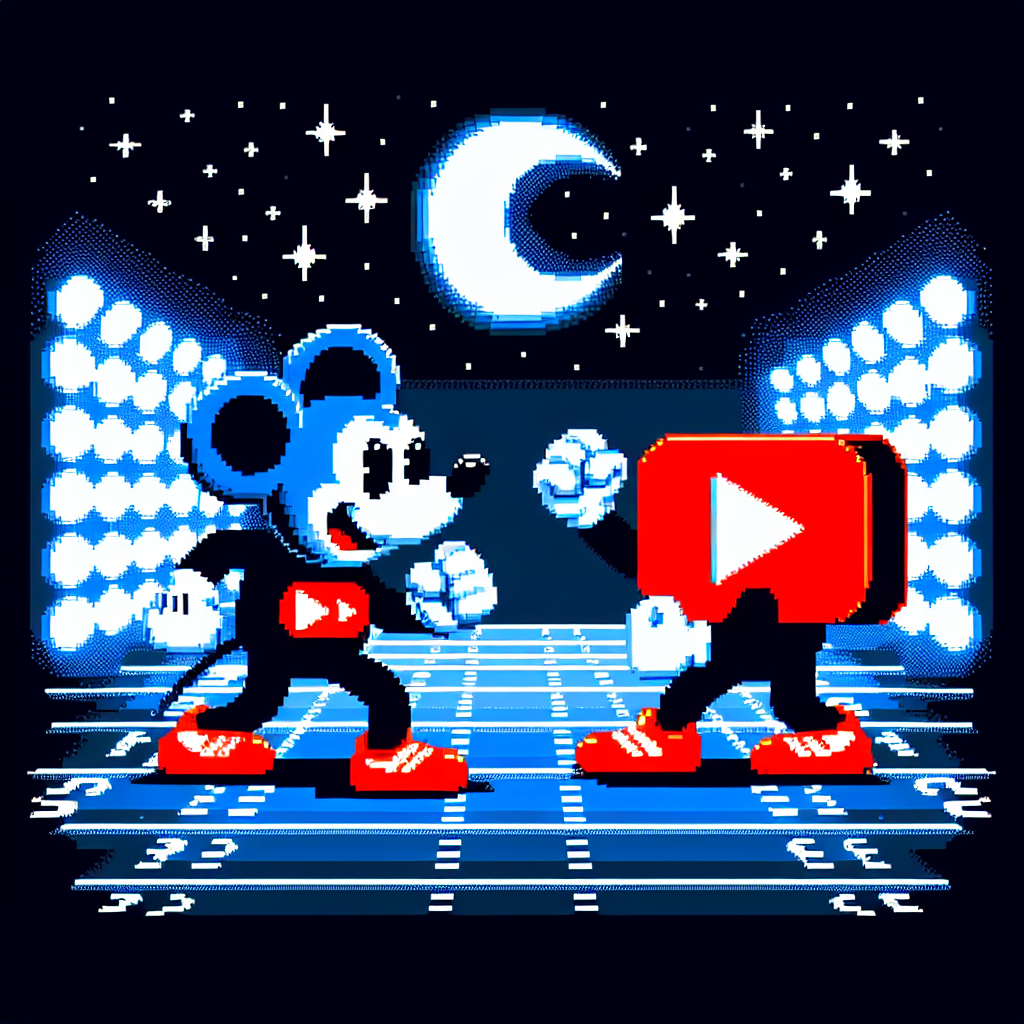
A lot of people woke up this week ready for college football highlights and Monday Night Football — and discovered their streaming lineup had turned into a choose-your-own-frustration. YouTube TV and Disney (which runs ESPN and ABC) are locked in a carriage fight that has already pulled Disney channels off YouTube TV for millions of subscribers. The timing — right in the middle of the football season — makes the question painfully simple: when big media companies brawl over fees, who actually looks out for the viewer?

Why this fight matters right now

  • The dispute centers on carriage fees and how Disney’s pricing and platform strategy (including Hulu + Live TV and its expanding stake in Fubo) intersects with Google’s YouTube TV ambitions. If no deal is reached, YouTube TV subscribers lose access to ESPN and ABC programming — including big games. (Nov 2–3, 2025 developments.) (nbcsports.com)
  • Sports rights are skyrocketing in value; networks want to recoup costs, distributors push back to avoid yet another price hike. That tug-of-war plays out directly in your living room when a blackout removes the game you planned your evening around. (businessinsider.com)
  • Both sides are using public pressure and PR: Disney rallied ESPN personalities and launched a site urging subscribers to "keep my networks," while YouTube TV highlights the possibility of higher prices and even offered subscribers a credit if the blackout drags on. The result: fans get propaganda instead of access. (businessinsider.com)

What this feels like for consumers

  • Frustrating: sudden loss of channels with little control or easy alternatives for live sports.
  • Confusing: companies point fingers and push viewers toward their own apps or rival platforms.
  • Expensive pressure: even if short-term fixes exist (trial offers or switching services), ongoing rights inflation means everyone may pay more in the long run.

Quick takeaways for readers

  • The blackout is a symptom, not the disease: escalating sports-rights costs and platform consolidation create repeated standoffs between content owners and distributors. (businessinsider.com)
  • Consumers are caught between two businesses optimizing for different goals — Disney monetizes content across its streaming ecosystem; Google wants to keep YouTube TV priced competitively. Neither has a primary incentive to prioritize the viewing public. (houstonchronicle.com)
  • Short-term fixes (credits, temporary workarounds, or switching services) help some users, but they don't solve the structural problem of fragmented access and rising prices. (houstonchronicle.com)

The investor-versus-consumer tug

This is where the incentives get ugly. Disney answers to shareholders who expect returns on massive sports contracts; YouTube TV answers to Google’s broader business strategy (and user-price sensitivity). When each side negotiates as if their primary audience is investors or corporate strategy committees, the ordinary fan is reduced to a bargaining chip.

  • Disney's leverage: premium sports channels and originals that people will chase.
  • YouTube TV’s leverage: a large, sensitive subscriber base that will balk at further price increases.
  • The missing stakeholder in negotiations: the consumer experience — consistent access, clear pricing, and minimal friction.

My take

This blackout is a reminder that the streaming era hasn’t delivered true consumer-first TV. The mechanics changed — cable’s set-top box replaced by apps — but the core dynamic remains: content owners and distributors treat viewers as units of monetization. The only real way to break the cycle is a market structure or product design that forces alignment: either clearer, standardized bundling, regulation that protects access to essential live content, or business models that reward reliability over short-term bargaining power.

Until then, expect more of these weekend-ruining spats during the high-stakes parts of sports seasons.

Final thoughts

Fans are being asked to play referee in fights they didn't start. Whether you root for the Cowboys, binge college games on Saturdays, or just want your Monday night ritual, the basic ask is reasonable: make the game available. Corporate positioning and profit engineering are fine boardroom topics, but when negotiations remove core live experiences, the companies involved should remember the two words that keep brand loyalty alive: keep watching.

Sources


Related update: We recently published an article that expands on this topic: read the latest post.


Related update: We recently published an article that expands on this topic: read the latest post.


Related update: We recently published an article that expands on this topic: read the latest post.


Related update: We recently published an article that expands on this topic: read the latest post.


Related update: We recently published an article that expands on this topic: read the latest post.

Blackout Fallout: Consumers Left Watching | Analysis by Brian Moineau

Does anyone care about the consumers?

A streaming blackout, Monday Night Football at stake, and two giant companies playing chicken

You open your living room app, ready for Monday Night Football, and—nothing. No ESPN banner, no kickoff, just a polite notice that the channel is “unavailable.” That’s the reality millions of YouTube TV subscribers faced this week as negotiations between Google’s YouTube TV and Disney broke down, pulling ESPN, ABC and other Disney-owned networks off the platform. The corporations trade blame; viewers lose access to the content they pay for. So where’s the consumer in all of this?

A quick snapshot of what happened

  • Disney’s carriage agreement with YouTube TV expired, and no new deal was reached, causing a blackout of Disney-owned channels on the platform. (This affected ESPN, ABC, FX, Nat Geo, SEC/ACC networks and more.) (washingtonpost.com)
  • The timing was brutal: college football on Saturday was disrupted and Monday Night Football (Cardinals vs. Cowboys the night after the blackout) became unavailable to YouTube TV subscribers. That raised the stakes for future marquee matchups. (nbcsports.com)
  • Earlier this season Google reached deals with Fox and NBCUniversal, yet Disney remains locked in a standoff that threatens millions of viewers and key sports windows. (reuters.com)

Why this feels so rotten for consumers

  • Live sports are time-sensitive. Missing a game is not the same as missing a scripted show you can stream later. A blackout during football season is especially painful. (washingtonpost.com)
  • Many subscribers chose YouTube TV for its aggregated convenience—one app, multiple channels, cloud DVR. When channels vanish overnight, the product promise is broken. (washingtonpost.com)
  • Alternatives are expensive or incomplete. Getting ESPN back might mean paying for Hulu + Live TV, Sling, DirecTV Stream, or buying an ESPN standalone tier — added cost and fragmentation. (washingtonpost.com)

The corporate chess game (and whose move matters)

  • Disney’s position: negotiate carriage rates that reflect the value of its live sports and unscripted programming, and protect the economics of its own streaming bundles. Disney has argued that Google was leveraging its platform to undercut industry-standard terms. (washingtonpost.com)
  • Google/YouTube TV’s position: push back on rising retransmission costs that they say would force higher subscriber prices and fewer choices for viewers. They’ve been willing to walk away in negotiations. (washingtonpost.com)
  • The consequence is predictable: both sides use negotiating leverage (blackouts) as a tactic, but it’s subscribers who feel the pain immediately while the companies posture for months.

The broader implications

  • Fragmentation: Media consolidation and content-holder vertical integration means consumers face more “must-have” services and more risk of blackouts.
  • Leverage vs. loyalty: Platforms that control distribution have power — but persistent blackouts risk driving subscribers to competitors or to piracy for live events.
  • Regulatory attention: Repeated high-profile blackouts raise political and regulatory questions about fair carriage practices and the consumer harm caused by market leverage.

A few practical things viewers can do (realistic, not ideal)

  • Check if ESPN/ABC are available through alternative services you already have (Hulu, Fubo, traditional antenna for ABC where available). (washingtonpost.com)
  • Explore temporary direct-to-consumer options (Disney/ESPN often offer standalone streaming tiers) — but account for added monthly cost. (washingtonpost.com)
  • Track official statements from both companies for updates and any credits/compensations YouTube TV might offer subscribers during the blackout. (washingtonpost.com)

What they’re not saying out loud

  • Neither company wants to be the face of a permanent loss in subscribers or ad reach; yet both are willing to see short-term consumer pain if it secures longer-term economics. That’s a sign that subscriber experience is secondary to corporate balance sheets in these fights.
  • Sports rights have become a pressure valve: owners and leagues can exert influence when their windows are at risk, but leagues often avoid stepping into distribution fights directly—preferring to let rights holders and distributors argue.

My take

This isn’t a negotiation problem; it’s a design problem in how modern TV is structured. When distribution hinges on a handful of expensive live-rights packages, every carriage cycle becomes a high-stakes game of chicken. Consumers are collateral damage. Companies will frame it as defending price or fairness, but the outcome too often leaves viewers paying more, switching services, or missing the moments that matter.

The simplest, most consumer-friendly route is obvious: cut a deal that keeps content available while moving toward clearer, more transparent pricing models. But simple and profitable rarely align. Until someone redesigns the incentives—whether by market shifts, consumer pushback, or regulation—these blackouts will keep happening.

Final thoughts

Sports are communal experiences: we watch together, cheer, complain and share highlights. The current carriage model treats those shared moments as bargaining chips. That’s bad business and worse customer care. Consumers shouldn’t be left filling the gap between corporate negotiating positions — particularly not on Monday nights when the games matter most.

Sources


Related update: We recently published an article that expands on this topic: read the latest post.


Related update: We recently published an article that expands on this topic: read the latest post.

Disney Looks to Higher Streaming, Parks Growth – The Wall Street Journal | Analysis by Brian Moineau

Disney Looks to Higher Streaming, Parks Growth – The Wall Street Journal | Analysis by Brian Moineau

Disney’s Double Feature: Streaming and Parks on the Rise

Ah, Disney. The name alone conjures up images of magical kingdoms, beloved characters, and childhood dreams. It’s a brand that has been synonymous with entertainment for generations. But even the most enchanting empires must evolve, and that’s exactly what Disney is doing. According to a recent article in The Wall Street Journal, Disney is focusing on boosting its streaming and parks growth, and it’s a strategy that seems to be paying off.

In a world where streaming services are as common as pumpkin spice lattes in October, Disney+ has emerged as a formidable player. Launched in late 2019, Disney+ has quickly amassed millions of subscribers, driven by a mix of nostalgia-inducing classics and new hits like “The Mandalorian.” Yet, in an ever-competitive market, Disney isn’t resting on its laurels. The company is keen on expanding its streaming offerings further, likely inspired by the success stories of Netflix and Amazon Prime Video which have successfully diversified their content portfolios.

On the flip side, the parks division, which was hit hard during the pandemic, is bouncing back with vigor. The return of visitors to the parks is a testament to the enduring allure of Disney’s physical worlds. According to a CNBC report, the parks have seen a surge in attendance as families seek real-world experiences after months of lockdowns. It’s a heartwarming reminder that while digital content is king, there’s still a place for tangible, shared experiences.

What’s fascinating is how Disney’s strategy mirrors broader trends in the entertainment and leisure industries. For instance, Universal Studios, a key competitor, has also been doubling down on both its streaming content via Peacock and enhancing its theme park experiences. The synergy between digital and physical realms is a balancing act that many in the industry are striving to perfect.

In terms of leadership, Disney’s CEO Bob Chapek, who took over from the venerable Bob Iger, has certainly had his plate full. Navigating a global pandemic while steering the company towards new growth horizons is no small feat. Chapek’s approach has been pragmatic, focusing on leveraging Disney’s vast intellectual property library to drive both streaming and park experiences. It’s a strategy that underscores his understanding of Disney’s core strengths and his ability to adapt to the shifting sands of the entertainment landscape.

In a broader context, Disney’s dual focus reflects a world in flux. As people oscillate between digital immersion and a craving for physical experiences, companies that can offer both are poised to thrive. It’s a sentiment echoed in other sectors too, from retail to education, where hybrid models are becoming the norm.

So, what’s the takeaway from Disney’s latest moves? Perhaps it’s the reminder that even giants must adapt and innovate. In an era defined by rapid technological advancements and shifting consumer preferences, staying stagnant is not an option. Disney’s commitment to evolving its offerings ensures that it remains a cherished part of our lives, whether we’re streaming at home or exploring the magic in person.

In conclusion, Disney’s journey is a testament to the power of adaptability and the enduring appeal of storytelling. Whether through a screen or within the gates of a theme park, the magic of Disney continues to captivate and inspire. As we look to the future, one thing is clear: wherever Disney leads, dreams are sure to follow.

Read more about AI in Business

Read more about Latest Sports Trends

Read more about Technology Innovations


Related update: We recently published an article that expands on this topic: read the latest post.

Disney+ to Change Content Warnings Ahead of ‘Dumbo,’ ‘Peter Pan’ and More Old Movies Amid DEI Strategy Shift – Variety | Analysis by Brian Moineau

Disney+ to Change Content Warnings Ahead of ‘Dumbo,’ ‘Peter Pan’ and More Old Movies Amid DEI Strategy Shift - Variety | Analysis by Brian Moineau

Title: Disney's New Chapter: Rewriting the Story of Inclusivity

In the ever-evolving landscape of entertainment, Disney has announced a shift in its Diversity, Equity, and Inclusion (DEI) strategy, which includes adjusting content warnings for some of its classic films like "Dumbo" and "Peter Pan." This move is part of a broader initiative to address and reflect modern sensibilities while maintaining the charm that has made these films timeless.

For decades, Disney has been a beacon of storytelling magic, captivating audiences across generations. However, like many institutions with rich histories, it must now grapple with aspects of its past that no longer align with current societal values. The introduction of updated content warnings is a step towards acknowledging these elements and opening up dialogues about the cultural contexts of these creations.

**A New Lens on Old Classics**

The films in question, "Dumbo" and "Peter Pan," are beloved by many but also contain outdated portrayals that can be insensitive by today's standards. For instance, "Dumbo" has faced criticism for its depiction of the crows, which some interpret as a racial stereotype, while "Peter Pan" includes portrayals of Native American characters that are seen as culturally inappropriate. By updating content warnings, Disney aims to provide context and encourage viewers to engage with these films with a more critical eye.

This approach aligns with the broader trend in media and entertainment to reassess past content. Warner Bros., for example, has added disclaimers to some of its older cartoons, acknowledging their historical context while not shying away from the problematic elements they contain.

**A Global Shift in Perspective**

Disney's re-evaluation comes at a time when industries worldwide are rethinking representation and inclusivity. The fashion industry, for instance, is increasingly embracing diversity by featuring models of different ethnicities, sizes, and abilities. Similarly, the publishing world is seeing a rise in authors and stories from diverse backgrounds, reflecting a more inclusive array of voices and experiences.

The tech industry is also making strides in this direction. Companies like Google and Apple are actively working to diversify their workforces and create products that are accessible and representative of their global user base. These efforts reflect a growing recognition that diversity and inclusion are not just moral imperatives but also drivers of innovation and success.

**The Bigger Picture**

Disney’s decision to update content warnings is just one piece of a larger puzzle. The entertainment giant is also investing in new content that showcases diverse stories and characters. Recent films like "Raya and the Last Dragon" and "Encanto" have been praised for their vibrant representation of different cultures and communities. Such efforts are pivotal in shaping narratives that resonate with a wider audience and foster understanding and empathy.

As Disney continues to navigate its DEI journey, it will be interesting to see how these changes impact its brand and audience engagement. Will these adjustments open up new opportunities for storytelling? Can they inspire other industry players to follow suit?

In conclusion, Disney's step towards updating content warnings is a testament to the power of reflection and growth. By acknowledging past missteps and embracing a more inclusive future, Disney is not just rewriting its own story but also contributing to a broader cultural shift towards understanding and acceptance. This move reminds us all that even the most magical stories can evolve, and in doing so, they can help create a world where every voice is heard and celebrated.

Read more about AI in Business

Read more about Latest Sports Trends

Read more about Technology Innovations