TL;DR
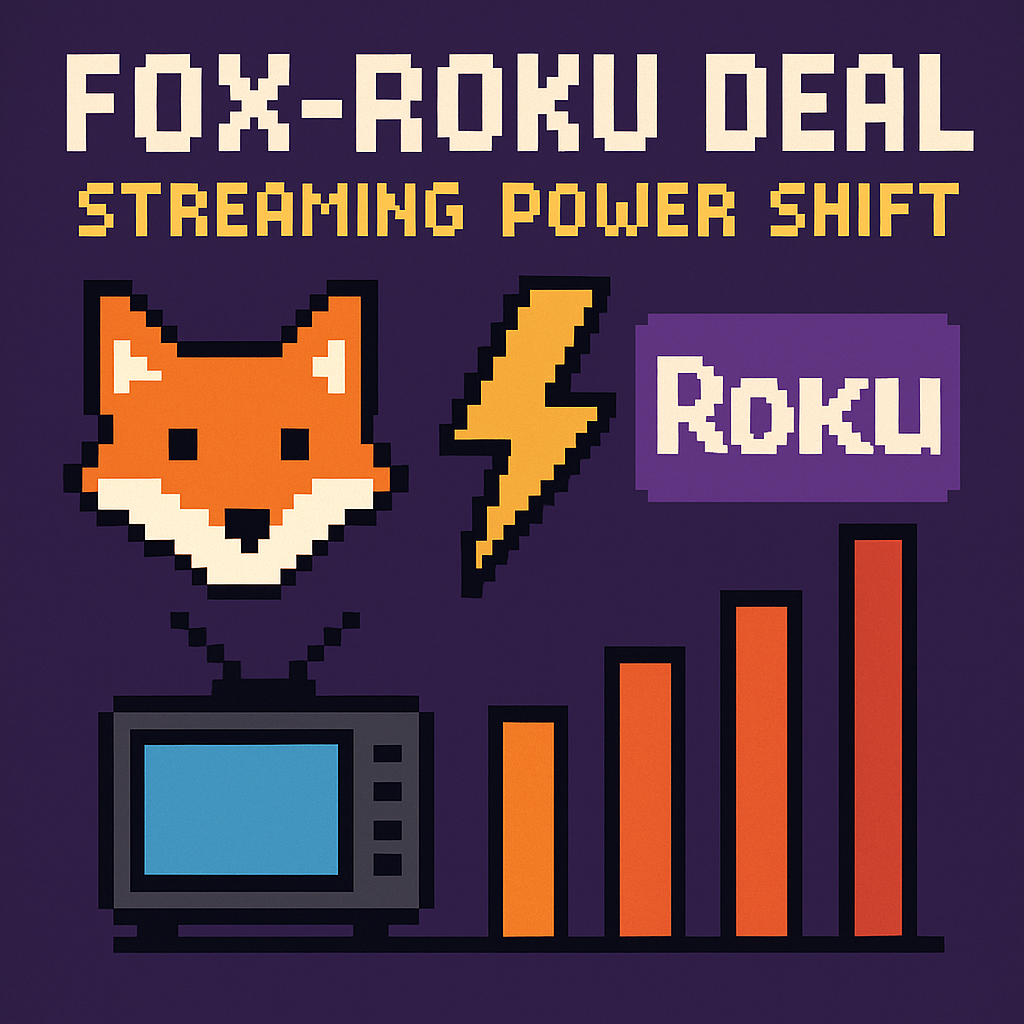
- The Fox–Roku deal doesn’t just add content; it seizes the TV “home screen,” giving Fox bargaining power over discovery, data, and ad flows across tens of millions of U.S. living rooms. [2][5]
- If DOJ lets Paramount–WBD close, David Ellison would consolidate two national newsrooms (CBS and CNN) while Fox consolidates distribution—an inverted barbell of power that squeezes everyone in the middle. [7][8]
- Expect higher ad yields, tougher carriage terms for rival streamers, and regulatory flashpoints around “default bias” on Roku’s OS—the new choke point of the streaming wars. [3][5][7]
What the source said
Salon argues that Fox’s $22 billion acquisition of Roku and DOJ’s treatment of Ellison’s $111 billion bid to merge Paramount with Warner Bros. Discovery shift the fight from content to distribution power. [1][2][3][7][8]
The piece cites Pew’s 36% pay‑TV figure in 2025 as context for cord‑cutting, and points to Paramount’s refusal to air an advocacy ad as an example of consolidation’s real‑world effects. The thesis: control the pipe, shape the message. [4][16]
Why it matters
Two chokepoints are emerging in U.S. video in 2026. On one end, Fox buys Roku and, with it, the default interface and first‑party data that steer what Americans watch via Roku OS. On the other, Ellison’s Paramount–WBD deal would centralize CBS and CNN alongside major studios under a single balance sheet. [2][5][7][8]
Real stakeholders aren’t just “the audience.” They’re the streamers (Disney, Netflix, Amazon) that rent Roku’s shelf space; advertisers shifting budget into connected TV; and regulators (DOJ, FCC, state AGs) weighing whether TV‑OS defaults and self‑preferencing echo the Microsoft browser‑bundling fights in 2001. Local broadcasters, smaller FASTs, and publishers face worse negotiating power if they lack a gateway. [4][5][10]
Original analysis
The consensus take says “Fox bought Roku to bulk up streaming; Ellison’s Paramount–WBD is another mega‑merger.” That’s surface‑level. The deeper story is a pivot from programming to power over defaults on the TV home screen. That is exactly what Roku already sells—and what Fox just bought. [2][3][5]
In connected TV, defaults drive outcomes at scale. The company that sets the home screen, controls the search graph, and allocates promotional tiles determines which shows get sampled, which subscriptions renew, and which ad impressions clear. Those choices turn into revenue and bargaining power against every app on the platform. [2][5]
Historical analogue (what it predicts): United States v. Microsoft (2001) centered on bundling Internet Explorer into Windows to maintain OS power; courts upheld monopoly‑maintenance findings under Sherman Act §2 and scrutinized tying. Replace Windows with Roku OS and IE with house channels (Tubi, The Roku Channel), and the rhyme is obvious: default placement and self‑preferencing can foreclose rivals without banning them outright. Expect complainants to frame “home screen promos” and search ranking as a connected‑TV version of browser bundling. [7][10]
Back‑of‑envelope math (distribution economics):
- Roku platform revenue in 2025 was roughly $4.15B; Roku guided high‑teens platform growth for 2026—assume +18% to ~$4.90B. [11][12][13][14]
- If 70–80% of platform revenue is ad‑driven, apply +5% yield uplift from Fox‑controlled self‑preferencing to the midpoint (75%) of $4.90B: 0.75 × $4.90B = $3.675B ad base → +5% ≈ +$184M incremental annual ad revenue before partner concessions; even if half materializes, that’s ~$90M of low‑capex uplift tied to UI nudges. [11][12]
- Share math: In Feb. 2026, The Roku Channel captured 2.9% of streaming viewership vs. Tubi at 2.2%; in ad‑supported streaming, Tubi ranked No. 1 at 6.2% in Q4 2025. If Fox diverts even one point of FAST discovery toward Tubi while IAB projects 2026 U.S. digital video at $80B+ (CTV a ~$20B slice), a 1‑point FAST share swing can translate into nine‑figure revenue depending on CPMs and sell‑through. Direction beats precision. [6][9][15][16]
A named typology: The TV Gatekeeper Matrix
- Owned Content × Owned Distribution: Fox + Roku (Tubi, The Roku Channel inside Roku OS). Advantage: default bias, first‑party data, ad stack. Risk: antitrust scrutiny of self‑preferencing. [2][3][5]
- Owned Content × Rented Distribution: Paramount–WBD (post‑deal) still reliant on third‑party platforms while building its own apps. Advantage: IP scale across CBS, CNN, and studios. Risk: platform tolls and discovery dependence. [7][8]
- Rented Content × Owned Distribution: Samsung Tizen, LG webOS—OS control with thinner originals. Advantage: OEM reach into U.S. households. Risk: monetization frictions with app partners. [5]
- Rented Content × Rented Distribution: Niche FASTs and SVODs living on others’ OSes. Advantage: focus. Risk: margin squeeze and limited shelf space.
Stakeholder breakdown (one‑liners):
- Disney/Netflix/Amazon: Higher platform taxes and tougher placement negotiations on Roku; hedge with Samsung, LG, and Google TV distribution. [5]
- NBCU/Peacock and YouTube: Near‑term winners—YouTube’s share lead holds across OSes; Peacock can still buy top‑shelf tiles but at rising prices. [6]
- Samsung/LG: Counter with subsidized smart‑TV bundles and revenue‑share promos to pry apps from Roku‑centric funnels. [5]
- Advertisers (P&G, GM, SMEs): Better cross‑screen targeting via Roku’s first‑party graph—if Fox preserves openness; CTV’s double‑digit growth in 2026 strengthens this pull. [13][15]
- Regulators/State AGs: The case file writes itself: defaults, house‑channel boosting, and discovery throttling—citing Microsoft 2001 on page one. [10]
Contrarian read: The fear is Fox will blatantly stack the deck for Tubi and Fox News on Roku. My read: Fox will publicly preach “open platform” to keep Netflix, Disney, Amazon, and OEMs cooperative. The bias will creep in via subtle defaults—autoplay rows, search ranking, “continue watching” tiles, and cross‑app identity prompts that privilege Fox properties without visibly burying rivals. Those nudges are harder to litigate and more powerful commercially. [3][5][10]
What others are missing
The overlooked variable is ad‑tech plumbing, not just app placement. Roku controls native formats (home‑screen marquees, channel rails), measurement hooks, and self‑serve demand tools; Fox inherits those primitives and can bind them to Tubi’s inventory, sports shoulder‑programming, and news clips. Price those units as outcomes (site visits, app installs) instead of impressions, and the multiple expands. If Roku’s 2026 reporting split highlights double‑digit ad growth, Fox can ride a faster re‑rating because Wall Street values ad‑tech like software, not like TV. [11][13][14]
What to watch next
-
By Q4 2026, at least one top‑5 streamer (YouTube, Netflix, Prime Video, Disney+, Max) publicly alleges or files comments about discriminatory placement or search treatment on Roku’s home screen.
-
By Q2 2027, Fox integrates Tubi and The Roku Channel demand into a single ad‑buy surface with unified targeting and measurement, and discloses on an investor call a synergy run‑rate uplift of $100M+ tied to this integration. [11][14]
-
By Q1 2027, a multistate AG coalition opens a probe into connected‑TV “default bias” and self‑preferencing on TV operating systems, naming Roku and at least one OEM OS as targets. [10]
My take
If you think the Fox–Roku deal is “about content,” you’re missing the real grab: owning the map—defaults, search, identity, and ad signal—on the living‑room OS in 2026. Per Nielsen’s Gauge reporting cited by Cord Cutters News, streaming’s share of viewing keeps rising, and IAB projects U.S. digital video ad spend to surpass $80B in 2026. Ellison’s roll‑up may grab headlines, but Fox just bought the steering wheel. I’d be long the gatekeepers and wary of any content company renting shelf space without an OS‑level fallback. [6][9][3][4][5][15]
Sources
-
With Roku, Fox just won the streaming wars for the right — Salon (https://www.salon.com/2026/06/21/with-roku-fox-just-won-the-streaming-wars-for-the-right/) — The starting thesis that Fox’s Roku buy and Ellison’s bid are a shift from content to distribution.
-
Fox Corporation to Acquire Roku, Inc. — Fox Corporation (https://www.foxcorporation.com/news/corp-press-releases/2026/fox-corporation-to-acquire-roku-inc/) — Confirms the $22B deal and states the “third‑largest by viewing share” claim.
-
Fox to buy Roku for $22 billion — Axios (https://www.axios.com/2026/06/15/fox-roku-22-billion) — Independent confirmation of the deal terms and strategic framing.
-
83% of U.S. adults use streaming; only 36% subscribe to cable/satellite — Pew Research Center (https://www.pewresearch.org/short-reads/2025/07/01/83-of-us-adults-use-streaming-services-far-fewer-subscribe-to-cable-or-satellite-tv/) — Cord‑cutting baseline used in the analysis.
-
Roku 28% and Samsung 23% of U.S. broadband‑household CTV usage — Parks Associates (press release) (https://www.prnewswire.com/news-releases/parks-associates-roku-28-and-samsung-23-dominate-connected-tv-platforms-controlling-access-to-streaming-audiences-in-the-us-market-302749732.html) — OS‑level market power data.
-
The Roku Channel 2.9% vs. Tubi 2.2% of streaming in Feb. 2026 — Cord Cutters News (https://cordcuttersnews.com/the-roku-channel-is-the-most-watched-free-streaming-service-beating-tubi-pluto-tv-according-to-nielsen/) — Comparative FAST viewing shares cited from Nielsen’s Gauge.
-
DOJ will “absolutely not” fast‑track Paramount–WBD for political reasons — Variety (https://au.variety.com/2026/film/news/doj-paramount-warner-bros-deal-review-fast-track-review-political-reasons-34449/) — Regulatory posture and ongoing scrutiny.
-
U.S. clears Paramount’s $111B Warner Bros. takeover (report) — Moneycontrol (https://www.moneycontrol.com/world/us-clears-paramount-s-111-billion-warner-bros-takeover-article-13948430.html) — Report of DOJ clearance juxtaposed with continued reviews; shows contested status.
-
IAB: U.S. digital video ad spend to surpass $80B in 2026 — IAB (https://www.iab.com/insights/video-ad-spend-report-2026/) — Ad‑market context underpinning the revenue math.
-
Microsoft antitrust: Court of Appeals opinion (default bundling precedent) — U.S. DOJ (https://www.justice.gov/atr/cases/f204400/204468.htm) — The historical analogue for default‑driven platform power.
-
Fellow Shareholders: 4Q25 letter — Roku (https://image.roku.com/bWFya2V0aW5n/4Q25-Shareholder-Letter.pdf) — Platform revenue of ~$4.15B and channel share commentary.
-
Roku 10‑K and 8‑K excerpts on platform growth and home screen monetization — SEC (https://www.sec.gov/Archives/edgar/data/1428439/000162828026008114/roku-20251231.htm) — Definitions and revenue mix context.
-
Roku Q1 2026 ad revenue split (reporting change) — MediaPost (https://www.mediapost.com/publications/article/414752/roku-q1-ad-spend-up-27-to-613m.html) — Ad‑revenue growth and disclosure useful for back‑of‑envelope math.
-
Roku Q1 2026 earnings summary (third‑party extract) — StockTitan (https://www.stocktitan.net/sec-filings/ROKU/10-q-roku-inc-quarterly-earnings-report-05c5a40d6823.html) — Additional color on how platform revenue is earned.
-
Tubi expands Nielsen deal; 6.2% of ad‑supported streaming in Q4 2025 — MediaPost (https://www.mediapost.com/publications/article/412569/tubi-expands-nielsen-deal-now-accounts-for-62-o.html) — FAST strength data for the revenue scenario.
-
Paramount refused to air FPF’s ad critical of its merger — The Guardian (https://www.theguardian.com/us-news/2026/jun/16/paramount-rejects-ad-on-warner-bros-acquisition) — Concrete example of consolidation effects cited in the post.
Related update: We recently published an article that expands on this topic: read the latest post.
Related update: We recently published an article that expands on this topic: read the latest post.