Yesavage’s Unhittable Splitter Stuns | Analysis by Brian Moineau

The legend of Trey Yesavage grows with each unhittable splitter

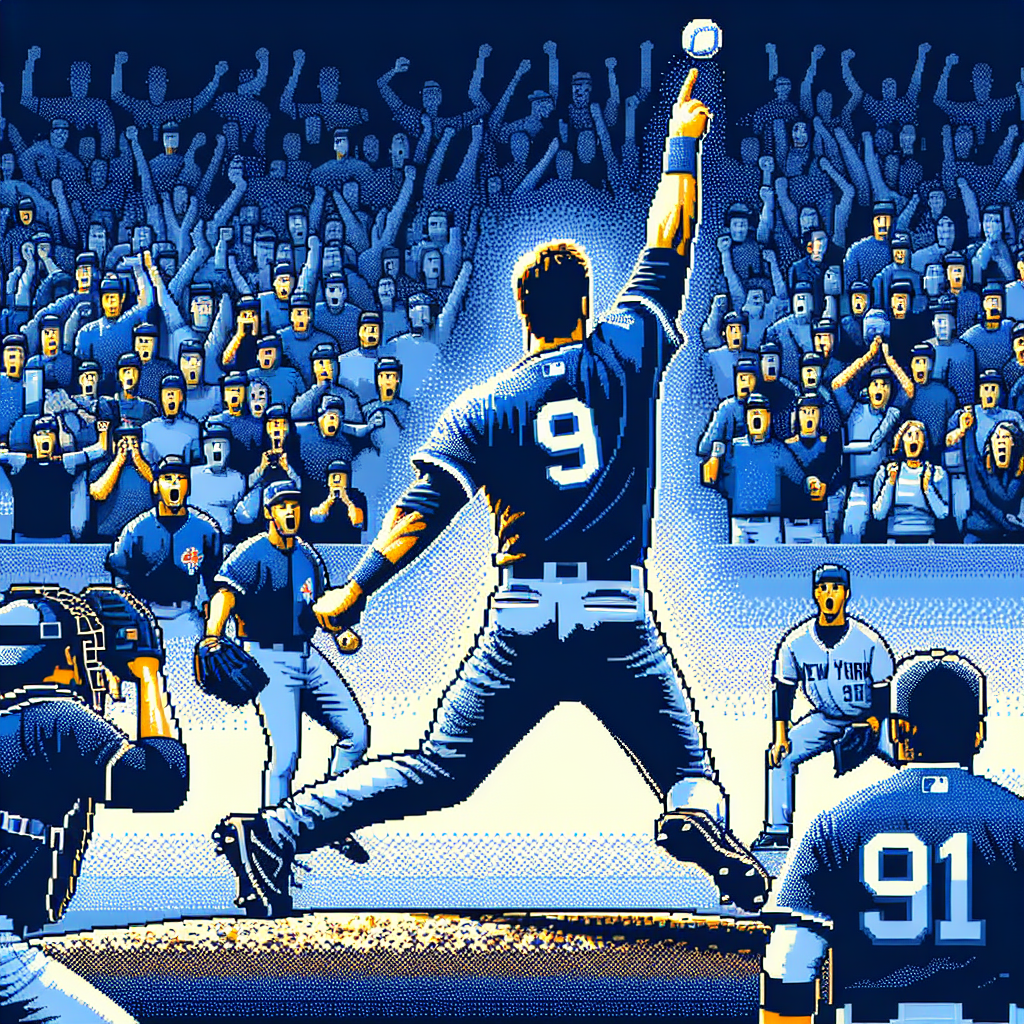
There are moments in sports that arrive fully formed — small, electric flashes that demand you stop and watch. Trey Yesavage’s latest outing against the Dodgers was one of those moments: a young pitcher whose splitter seems to have its own gravitational pull, leaving hitters flailing and teammates whispering “It’s like damn, wow.” The Blue Jays’ rookie didn’t just pitch; he announced himself on baseball’s biggest stage.

Key takeaways

  • Yesavage’s splitter has become a true wipeout pitch, generating huge swing-and-miss rates and shaping his early postseason dominance.
  • He delivered a historically dominant World Series performance, combining strikeouts, control and poise beyond his few major-league starts.
  • Opposing teams game-plan around that “from the sky” splitter, but Yesavage pairs it with a rising four-seam and a slider to keep hitters unbalanced.
  • His rapid ascent — first-round pick, September debut, postseason stardom — is a reminder of how quickly a young pitcher can shift a franchise’s trajectory.

A hook: when a pitch feels like destiny

Picture this: the stadium hushes, the hitter steps in, and the baseball seems to come from a different altitude entirely. That’s what watching Yesavage’s splitter feels like — a pitch released high, then dropping so late the batters' eyes betray them at the last second. Teammates and announcers use phrases that sound like hyperbole, but the outcomes — looking strikes, missed swings, and strikeouts — do the talking.

Why the splitter is more than a single pitch

Yesavage’s mechanics and pitch design make the splitter more than a nasty secondary offering. Analysts and Statcast breakdowns highlight a few features that make his arsenal sing together:

  • High release and extreme downhill plane make both his fastball and splitter travel on similar trajectories before diverging dramatically, confusing hitter timing.
  • His four-seamer shows above-average “rise,” which sets up the illusion: hitters expect a continuing path up in the zone and then the splitter plummets beneath the bat.
  • The splitter’s late, violent drop yields high chase and whiff rates, so when Yesavage lands it below the zone he gets swings-and-misses rather than fouls or weak contact.

These aren’t abstract numbers — they show up in the box score and in the body language of opponents. Dave Roberts and Dodgers hitters said they tried to lay off the splitter; when a lineup is forced to do that, you know it’s working. (Sources: MLB Statcast, ESPN, AP.)

The moment against the Dodgers: more than a stat line

Yesavage’s outing versus Los Angeles wasn’t just effective, it was historic. Facing one of baseball’s most fearsome lineups in the World Series, he mixed the splitter, slider and rising fastball to rack up strikeouts, limit hard contact, and tilt the game early in Toronto’s favor. For a pitcher with only a handful of regular-season starts, to deliver that kind of performance in Game 5 is remarkable — and the kind of moment that lingers in franchise lore.

  • He struck out a large number of batters and walked few or none, showing both swing-and-miss stuff and command.
  • Even when he didn’t lean on the splitter as much as usual, its mere presence altered hitters’ approaches.
  • Teammates responded with the kind of stunned admiration reserved for rare displays: silence, then “wow.”

(See detailed game coverage and postgame quotes from ESPN and AP for context.)

What this means for Toronto and the broader game

A pitcher like Yesavage changes matchups. Opposing managers must decide whether to attack his splitter zone aggressively — risking strikeouts — or to sit back and try to punish other pitches. For the Blue Jays, having a young starter who can control games in October deepens rotation flexibility and shortens the path to a title.

On a larger scale, Yesavage’s emergence is a reminder that baseball’s evolution — new grips, analytics-driven pitch usage, and refined mechanics — still produces old-fashioned spectacle: devastating breaking pitches, late swings, and the thrill of postseason theater.

A short reflection

There’s something magnetic about watching a rookie not just survive, but own the moment. Yesavage’s rise is the kind of story fans love because it’s uncontrived: talent meeting preparation, with a pitch that looks unfair. Whether he becomes a long-term ace or another memorable October hero, his splitter has already earned a place in the game’s highlight reels — and his teammates’ stunned, delighted silence says more than any headline could.

Sources


Related update: We recently published an article that expands on this topic: read the latest post.

Related update: We recently published an article that expands on this topic: read the latest post.

18-Inning World Series Drew 17.6M Viewers | Analysis by Brian Moineau

How many people stuck around to watch the end of Game 3 of the World Series?

The clock read 2:50 a.m. Eastern Time when Freddie Freeman launched the walk-off homer that finally ended the 18-inning, six-hour-and-39-minute epic between the Dodgers and Blue Jays. You might assume most of the nation had long since given up and gone to bed — and yet, a staggering number of viewers were still glued to their screens.

Key takeaways

  • 8.5 million viewers in the United States were still watching when the game ended around 2:50 a.m. ET.
  • The game averaged roughly 11.4 million U.S. viewers across Fox platforms, with a peak near 13.1 million earlier in the night.
  • When you add Canadian audiences, the combined U.S.–Canada audience for Game 3 was around 17.6 million.
  • The unusual combination of prolonged drama, star power (Shohei Ohtani, Freddie Freeman) and a strong Canadian audience helped retain viewers deep into the night.

The hook: why that 8.5 million figure matters

Imagine a typical late-night crowd watching TV: by 2:50 a.m., most primetime audiences have evaporated. So when Sports Illustrated and Nielsen reported that roughly 8.5 million Americans were still watching the final swing, it wasn’t just a number — it was proof that a rare live sporting event can hold attention past the point where most programming loses it.

That figure means more people watched the walk-off than watched the first pitch earlier that evening in some viewing windows. It also tells TV executives, advertisers, and leagues that premium live sports — especially when they turn into dramatic, unpredictable marathons — still command huge, engaged audiences even in the unlikeliest time slots.

Context: the marathon that made viewers stay

  • The showdown took place on Monday, October 27, 2025 (Game 3).
  • The game tied the record for most innings in World Series history (18) and ran nearly 6 hours and 40 minutes.
  • Shohei Ohtani put on a historic offensive display, and Freddie Freeman finished it with his dramatic walk-off homer.
  • The telecast faced direct competition from Monday Night Football, which drew a larger audience that night; still, the World Series’ retention deep into the night was remarkable.

Long games often bleed viewers as casual fans sign off, but this one retained a surprising share — more than half of its earlier peak audience remained into the early-morning hours. That level of retention is unusual and notable for modern TV where on-demand viewing and multiple live options fragment attention.

Reading the numbers: averages, peaks, and late-night retention

  • Average U.S. audience: roughly 11.3–11.4 million viewers for the full telecast.
  • Peak audience: about 13.1 million (around the ninth inning earlier in the night).
  • Late-night audience at game end: ~8.5 million still watching at ~2:50 a.m. ET.
  • Combined U.S. + Canada audience: reported around 17.6 million, highlighting how the Blue Jays’ presence supercharged Canadian viewership.

The slight variations in the averages reported by different outlets (11.31M vs. 11.4M) reflect typical rounding and platform-count differences; the standout, consistent stat is the 8.5M who stayed to the finish.

Why viewers stayed — three quick reasons

  • Drama and unpredictability: Extra innings, shifting momentum, and the possibility of history keep viewers invested.
  • Star players and storylines: Ohtani’s record-setting night and Freeman’s late heroics gave casual fans reasons to stay.
  • National pride and regional interest: A massive Canadian audience for the Blue Jays lifted the combined numbers, and American viewers were willing to stay up for the rare baseball spectacle.

Small reflection

In an era when so much content is bite-sized and time-shiftable, live sports remain one of the clearest reminders that real-time, unscripted drama still has power. That 8.5 million people at 2:50 a.m. were not just watching — they were witnessing a moment together. There’s something ancient and communal about staying up late to see the end of a story not yet written.

Sources


Related update: We recently published an article that expands on this topic: read the latest post.


Related update: We recently published an article that expands on this topic: read the latest post.

Dodgers Triumph Over Brewers in NLDS Game | Analysis by Brian Moineau

Dodgers Dominate Brewers in Game 2 of the NLDS: A 3-1 Victory

As the crisp autumn air settles in, baseball fans across the nation are glued to their screens, eagerly watching the postseason unfold. In a thrilling matchup on October 16, 2025, the Los Angeles Dodgers showcased their dominance against the Milwaukee Brewers, clinching a 3-1 victory in Game 2 of the National League Division Series (NLDS). Let’s dive into what made this game a pivotal moment in the Dodgers’ playoff journey.

A Brief Context: The Road to the NLDS

The Los Angeles Dodgers, perennial powerhouses in Major League Baseball, entered the postseason with high expectations. After winning the NL West title, their eyes were set on another World Series appearance. Facing off against the Milwaukee Brewers, a team known for their grit and determination, the Dodgers knew they had to bring their A-game.

Game 1 had already set the tone for the series, with the Dodgers narrowly edging out the Brewers in a tight contest. Fans were buzzing with anticipation for Game 2, eager to see if the Dodgers could maintain their momentum and take a commanding 2-0 series lead.

Highlights from the Game: Pitching and Power

The game unfolded with a mix of stellar pitching and key offensive plays. Dodgers’ ace pitcher, Clayton Kershaw, took the mound and delivered a performance reminiscent of his Cy Young days. With pinpoint accuracy and a devastating curveball, Kershaw held the Brewers to just one run, striking out eight batters over seven innings.

On the offensive side, the Dodgers capitalized on their scoring opportunities. A crucial two-run homer from Mookie Betts in the fifth inning turned the tide, giving the Dodgers the cushion they needed. Additionally, Freddie Freeman’s consistent hitting kept the pressure on the Brewers throughout the game.

Key Takeaways

Kershaw’s Masterclass: Clayton Kershaw proved once again why he’s a postseason legend, delivering a dominant performance that kept the Brewers at bay. – Mookie Betts Shines: Betts’ power swing not only lifted the team’s morale but also solidified his status as a postseason clutch player. – Dodgers’ Depth: The Dodgers showcased their depth with contributions from multiple players, emphasizing their strength as a team rather than relying on a single star. – Brewers’ Resilience: Despite the loss, the Brewers fought hard, demonstrating their ability to challenge the Dodgers and setting the stage for an exciting Game 3. – Momentum Shift: The victory puts the Dodgers in a favorable position to sweep the series, adding pressure on the Brewers to respond in the upcoming games.

Concluding Reflection

As the Dodgers celebrate their victory, the focus now shifts to Game 3, where the Brewers will look to make adjustments and fight back. The postseason is always unpredictable, and while the Dodgers have taken the lead, the Brewers are not to be underestimated. With the stakes higher than ever, fans can expect an intense battle ahead as both teams vie for a coveted spot in the NL Championship Series.

Baseball is more than just a game; it’s a saga of resilience, strategy, and moments that define legacies. Here’s to the thrill of October baseball!

Sources

– ESPN – Dodgers 3-1 Brewers (Oct 16, 2025) Game Recap: [ESPN Game Recap](https://www.espn.com/mlb/recap?gameId=401445937)


Related update: We recently published an article that expands on this topic: read the latest post.


Related update: We recently published an article that expands on this topic: read the latest post.

MLB Gameday: Padres 4, Dodgers 5 Final Score (08/17/2025) – MLB.com | Analysis by Brian Moineau

MLB Gameday: Padres 4, Dodgers 5 Final Score (08/17/2025) - MLB.com | Analysis by Brian Moineau

Title: A Day at the Ballpark: Padres vs. Dodgers - A Classic Showdown in the City of Angels

Ah, the sweet sounds of summer: the crack of the bat, the cheer of the crowd, and the hushed anticipation before the pitch. On August 17, 2025, fans at Dodger Stadium were treated to an electrifying matchup between the San Diego Padres and the Los Angeles Dodgers. With a final score of 5-4, the Dodgers managed to edge out the Padres, adding another chapter to their storied rivalry.

This game wasn't just about the score; it was a narrative woven with tension, strategy, and a little bit of drama. The Dodgers have long been a powerhouse in Major League Baseball, with a history of success and a fan base that spans the globe. On the other hand, the Padres, the underdogs with a fighting spirit, have been steadily rising, challenging the old guard with every swing of the bat.

The Padres vs. Dodgers matchup is more than just a game; it's a spectacle. It's about two teams that embody the spirit of their cities. Los Angeles, with its glitz and glamour, and San Diego, with its laid-back, never-say-die attitude, make for a clash that's as much about culture as it is about baseball.

In this game, the Dodgers' victory was hard-fought. The Padres, led by their charismatic manager, Chavo "Chavito" Martinez, put up a relentless fight. Martinez, who took over the Padres' reins in 2023, has been instrumental in injecting energy and hope into the franchise. His leadership style, a mix of old-school wisdom and modern analytics, has been pivotal in the Padres' recent successes.

The game also saw standout performances from key players. For the Dodgers, veteran pitcher Julio Urías proved once again why he's a cornerstone of their rotation. His command on the mound, mixed with an uncanny ability to get out of tight spots, was a highlight of the evening. On the Padres' side, young slugger Juan Soto showcased his prowess, driving in crucial runs and reminding everyone why he's one of the most exciting talents in baseball today.

Beyond the game, this matchup reflects broader trends in the world of sports and beyond. In recent years, we've seen a shift towards embracing youthful talent and innovation, both on and off the field. Teams are investing in young players, new technologies, and data analytics to gain a competitive edge. This mirrors trends in other industries, where innovation and adaptability have become key to success.

Moreover, the game was a reminder of sports' power to bring people together. In a world often divided by politics, economics, and ideologies, sports remain a unifying force. Fans from different walks of life, united by their love for the game, come together to cheer, jeer, and share in the highs and lows of their favorite teams.

As we reflect on this game, it's clear that baseball is more than just America's pastime; it's a dynamic, evolving sport that continues to capture hearts and imaginations. Whether you're a die-hard Dodgers fan or rooting for the Padres, there's no denying the excitement and passion that games like these bring.

In the end, whether you're in the upper decks or watching from home, the thrill of a close game, the camaraderie among fans, and the timeless beauty of baseball are what truly make it special. As the season progresses, we can only anticipate more such thrilling encounters that keep us on the edge of our seats.

Final Thoughts: As the Dodgers and Padres continue their seasons, this game serves as a reminder of the unpredictable nature of baseball. It's a sport where, on any given day, anything can happen, and that's precisely what keeps us coming back for more. Whether you're in it for the stats, the stories, or the sheer love of the game, baseball is a ride that's always worth taking.

Read more about AI in Business

Read more about Latest Sports Trends

Read more about Technology Innovations