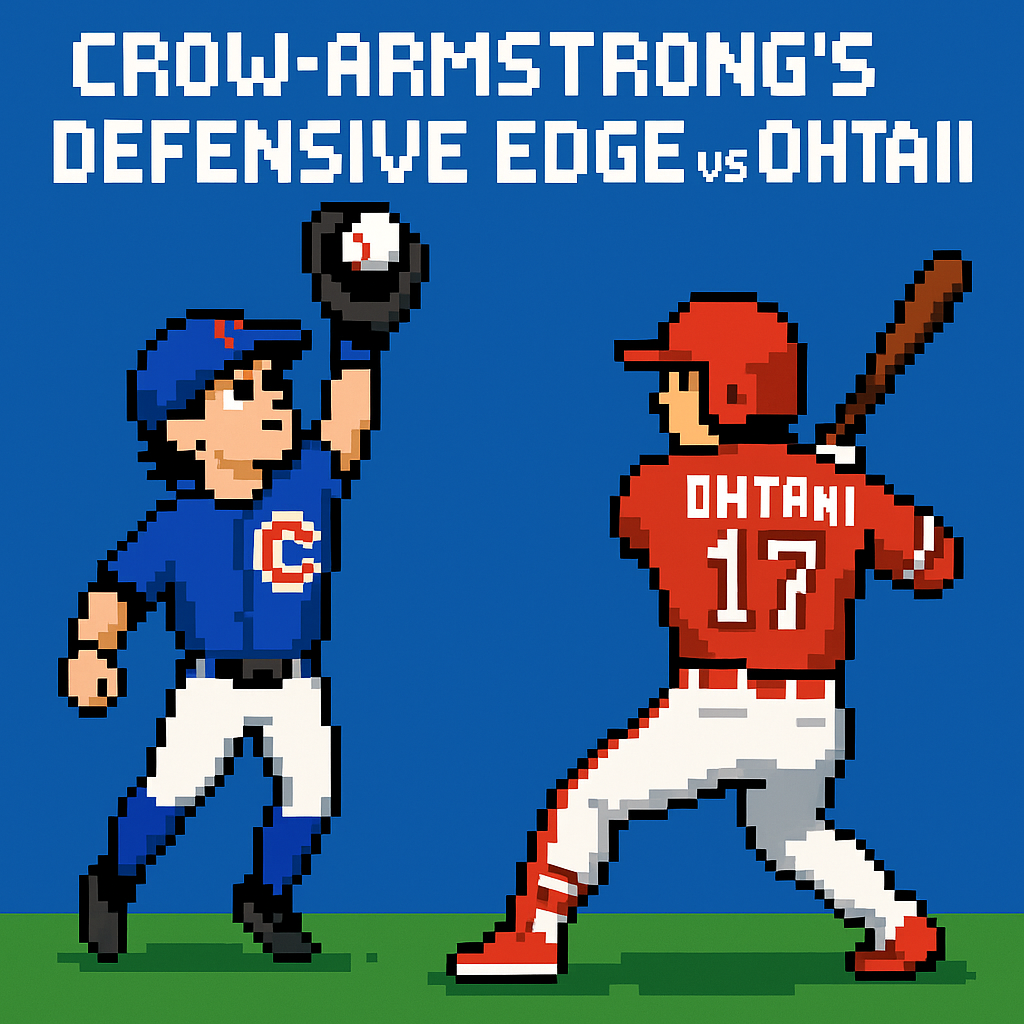
Crow-Armstrong’s Defensive Edge vs Ohtani | Analysis by Brian Moineau

TL;DR

  • The Crow-Armstrong vs. Ohtani NL MVP race has shifted from vibe to variance: sportsbooks now price Pete Crow-Armstrong as a slight favorite over Shohei Ohtani as of August 19, 2026, reflecting defensive value and Ohtani’s uncertain pitching volume. [2][5]
  • Statcast has Crow-Armstrong leading MLB outfielders at +23 Outs Above Average in 2026; if you translate those runs to wins, his glove alone is contributing roughly two-plus wins — a hidden edge in a close ballot. [3][6]
  • Unless Ohtani meaningfully returns to the mound in September, the two-way tiebreaker evaporates; LA’s own updates suggest opener-style stints rather than full starts are likelier down the stretch. [4][5]

What the source said

ESPN frames the National League MVP debate as a daily coin flip between two elite but radically different stars in 2026: Dodgers phenom Shohei Ohtani and Cubs center fielder Pete Crow-Armstrong. The feature contrasts Ohtani’s two-way upside with Crow-Armstrong’s contact-speed-defense stack, using evaluator quotes and on-field examples from Los Angeles and Chicago. It stresses how voters must weigh a DH’s thunderous bat (plus a possible pitching return) against a center fielder’s run prevention and baserunning, with Statcast feeds shaping the case on both coasts. The tone: a tightening race with divergent value components under a 2026 microscope. [1]

Why it matters

The real stakeholders aren’t only Cubs and Dodgers fans. The BBWAA electorate must reconcile modern tracking data (OAA, baserunning runs) with traditional MVP heuristics; VegasInsider’s lines already react to updates on Ohtani’s mound timeline; national TV partners want a September arc that keeps neutral fans watching. A mispriced narrative — “Ohtani if he pitches, otherwise PCA” — can distort betting markets, media framing, and even late-season usage decisions. [2]

Chicago’s front office built a run-prevention roster around Wrigley’s expansive outfield; a Crow-Armstrong MVP validates that 2026 strategy in a league drifting back toward athletic defense. For Los Angeles, the calculus is postseason-first at Dodger Stadium: they’re chasing a World Series three‑peat, and a healthy Ohtani on the mound matters more than an August odds swing — but that same opener-style choice could tip the award margin in September. [4][5]

Original analysis

Crow-Armstrong vs. Ohtani NL MVP race: value matrix

  • A named typology (Value Matrix)

    • Visible Offense, High Volume: Ohtani’s nightly DH thunder; the case most fans perceive in real time.
    • Visible Offense, Multirole: Ohtani’s two‑way ceiling if he returns to the mound with real innings.
    • Hidden Prevention, High Frequency: Crow-Armstrong vacuuming singles in center; every tracked route trims expected runs.
    • Hidden Prevention, Momentum Plays: Extra bases denied, 5‑star catches, “don’t test that arm” deterrence — the runs no box score credits but Statcast tallies. [3]
  • Back‑of‑envelope calculation (with the math)

    • Crow-Armstrong’s 2026 Statcast OAA: +23, MLB-best among outfielders as of August 19, 2026. [3]
    • Rule of thumb: roughly 10 runs ≈ 1 win (the conversion varies with run environment; FanGraphs outlines the method). [6]
    • If we treat OAA as a proxy for defensive runs saved (intuition aid): +23 OAA ≈ ~+2.3 wins.
    • Add his 2026 baserunning “Baserunning Runs” of +5 on Savant (component-level estimate) and you’re near +0.5 wins more; together, that’s roughly three wins of non-bat contribution before the slash line enters the chat. [3][6]
  • The pitching variable that props up Ohtani’s case has softened

    • Dodgers updates from late July and early August cite knee-driven caution, bullpen sessions, and a likely “multi‑inning opener” path rather than 5–6 inning starts before October. That caps pitching WAR accumulation and, crucially, the narrative torque of “two‑way” in voters’ eyes. [4][5]
    • If he logs opener stints, Ohtani’s offense must carry the rest. That recasts the race as bat-only Ohtani versus two‑phase Crow-Armstrong (defense + baserunning), not true two-way versus glove-first CF. [4][5]
  • Markets are already tilting

    • As of August 19, VegasInsider’s consolidated board lists PCA at roughly -160 and Ohtani in the +125 to +150 range (books vary), implying a ~61–65% chance for PCA versus ~40–44% for Ohtani before juice. [2]
  • Stakeholder breakdown (one‑liners)

    • Dodgers (Dave Roberts, front office): Prioritize October; opener stints protect health but surrender the regular-season two-way aura that sways MVP votes. [4][5]
    • Cubs (Craig Counsell, Jed Hoyer): Keep PCA in center daily; defense and baserunning compound even when the bat cools at Wrigley Field.
    • BBWAA voters: This is the cleanest test yet of whether Statcast‑driven prevention (OAA, extra bases prevented) earns equal billing with HR/RBI in MVP math. [3]
    • Sportsbooks: Price risk around Ohtani’s mound timeline more than day‑to‑day wRC+ splits; status updates move lines faster than a single 3‑for‑4. [2][4]
    • MLB broadcast partners: The split‑screen September — Ohtani’s bullpen cams vs. PCA’s nightly jumps — fuels prime‑time segments in Los Angeles and Chicago.
  • A contrarian read

    • Consensus: “If Ohtani throws even a handful of September starts, the MVP is his to lose.”
    • The case against: LA’s public posture makes full-length starts unlikely before October; the likelier opener usage doesn’t create enough delta in pitching WAR or narrative to overcome PCA’s day‑to‑day prevention lead and Chicago’s highlight‑caliber plays in a playoff chase. Betting markets — cold-blooded aggregators of that probability tree — already reflect this shift. [2][4][5]

What others are missing

Coverage keeps circling WAR totals but undersells the play-by-play mechanics giving Crow-Armstrong his edge: Statcast’s “Extra Bases Prevented” and “Outfielder Jump.” In 2026, PCA sits at +23 OAA with elite jump components (reaction +1.9 ft, route +4.6 ft vs. average on tracked plays) and positive “Fielder Runs” in outfield defense; that mix slashes liners in front and gashes in the gaps while shrinking first‑to‑third attempts (four runs credited in baserunner deterrence). Those micro-denials reduce stressful pitches and shorten innings for a Cubs bullpen that benefits at Wrigley Field every night. [3]

What to watch next

  1. By September 25, 2026, the Dodgers will use Ohtani only in opener-style regular-season pitching appearances (≤3 IP each), with no traditional 5+ inning start before the postseason. [4]
  2. By September 30, 2026, Crow-Armstrong will finish the regular season with ≥20 OAA and rank first among all MLB outfielders in OAA. [3]
  3. By September 20, 2026, NL MVP odds will widen to PCA -250 or shorter at at least one major book aggregator if Ohtani has not logged a 5+ inning start by then. [2][4]

My take

Give me Crow-Armstrong for NL MVP in 2026. The two-way tiebreaker that usually hands Ohtani the crown won’t materialize if Los Angeles keeps him on an opener leash — and they should, because October at Dodger Stadium matters more than plaques. Meanwhile, PCA’s Statcast record is a metronome: +23 OAA, top‑tier jump, and real baserunning runs that change innings. In a season where the margins are thin, the right answer isn’t the loudest bat — it’s the player who erases the most runs while adding enough with the stick. [3][6][4][2]

Sources

  1. Crow-Armstrong vs. Ohtani NL MVP race — ESPN MLB (https://www.espn.com/mlb/) — The debate setup: contrasting PCA’s defense/speed with Ohtani’s two‑way ceiling through opponent/evaluator perspectives in 2026.

  2. 2026 MLB Most Valuable Player Odds — VegasInsider (https://www.vegasinsider.com/mlb/odds/mvp/) — Current market pricing as of August 19, 2026: PCA favored over Ohtani across major books; establishes the live tilt.

  3. Pete Crow-Armstrong — Baseball Savant Statcast page (https://baseballsavant.mlb.com/savant-player/pete-crow-armstrong-691718?season=2026) — Verifies +23 OAA (rank 1 among OF), 2026 outfielder jump components, sprint speed, and 2026 fielding/baserunning run values.

  4. Dodgers/Ohtani pitching status updates — MLB.com Dodgers news (https://www.mlb.com/dodgers/news/) — Late July–early August notes: bullpen sessions resumed; regular-season workload framed toward multi‑inning opener stints.

  5. Shohei Ohtani’s return to the mound remains unclear — Los Angeles Times (https://www.latimes.com/sports/dodgers) — Independent reporting that LA had not reached a shut‑down decision but acknowledged uncertainty around regular-season pitching volume.

  6. Converting Runs to Wins — FanGraphs Sabermetrics Library (https://library.fangraphs.com/misc/war/converting-runs-to-wins/) — Explains the runs‑to‑wins conversion and the “~10 runs per win” rule of thumb used in the back‑of‑envelope calculation.


Related update: We recently published an article that expands on this topic: read the latest post.

Related update: We recently published an article that expands on this topic: read the latest post.

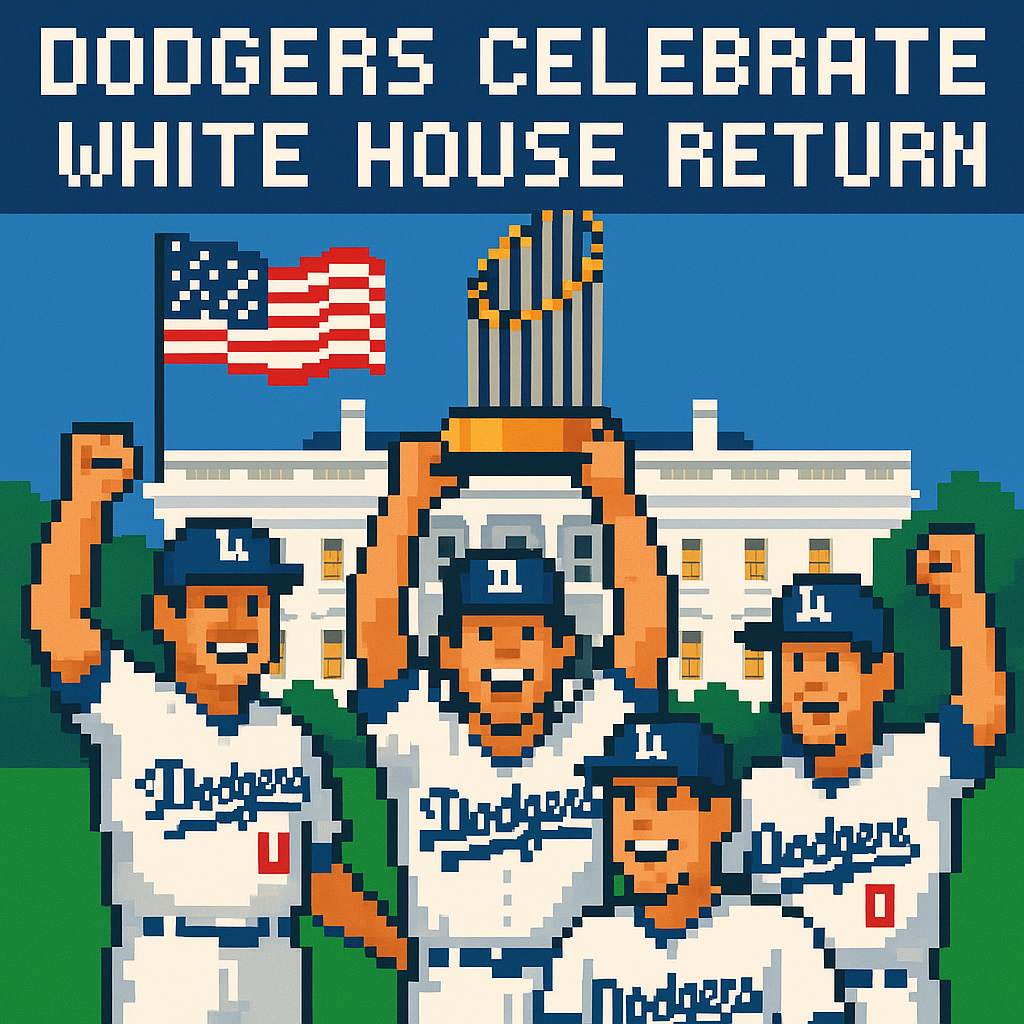
Dodgers Celebrate White House Return | Analysis by Brian Moineau

TL;DR

  • Donald Trump hosted the back-to-back World Series champion Los Angeles Dodgers at the White House for the second straight year, praising the franchise as “one of the great brands anywhere in the world.” [1][2]
  • The optics pair a global baseball roster—Shohei Ohtani, Freddie Freeman, and Yoshinobu Yamamoto—with a media-savvy White House, giving both sides reach, legitimacy, and content on the Rose Garden stage. [2][3]
  • The commercial engine hums underneath: Forbes values the Dodgers at $7.8B with 2025 revenue near $850M, while an $8.35B local TV pact and new streaming tiers convert cultural spikes into subscription and merchandise lifts. [4][6][8]

What the source said

ABC News says President Donald Trump welcomed Shohei Ohtani, Freddie Freeman, and the Los Angeles Dodgers to a Rose Garden ceremony in Washington, D.C., calling them “one of the great brands anywhere in the world.” The report references a 2025 East Room event for the 2024 title over the Yankees and corrects the month of the 2025 Game 7 clincher to November. The White House event displayed two World Series trophies, a “Trump 47” jersey, and a replica ring, and Manager Dave Roberts joked about a “three-peat.” [1][2]

Why it matters

Two U.S. institutions—the White House at 1600 Pennsylvania Avenue and the Dodgers at Chavez Ravine—cross-promoted before national cameras in 2026, attaching the presidency to Ohtani’s global fandom and a bicoastal base stretching from Los Angeles to New York. For the franchise, the shot list—South Lawn podium, twin trophies, Roberts’ “three‑peat” line, and the president’s “great brand” quote—feeds highlight packages, sponsor reels, and social cuts within hours. [2][3]

Stakeholders have dollars on the line. Forbes puts the Dodgers at $7.8B with about $850M in 2025 revenue, while MLB.com’s jersey rankings show Ohtani at No. 1 with teammates close behind. Tie that to SportsNet LA’s $8.35B rights deal and 2025’s SNLA+ streaming option, and the Rose Garden turns from photo op into top‑of‑funnel for merchandise, tickets, and subs. [4][7][6][8]

Original analysis

Trump and the Dodgers staged a mutually beneficial media hit in the Rose Garden: the president linked his office to baseball’s current juggernaut, and the club captured broadcast‑quality footage that plays in Southern California, Japan, and any U.S. market where visiting fans wear blue. This is transactional civics with a revenue model attached, not a culture‑war rerun. [2][3]

Labelled analyses:

  1. Back-of-the-envelope math
  • Revenue lift: Starting from Forbes’ $850M 2025 revenue, assume a conservative +6% “championship afterglow” for 2026, which many teams see via merch and ticketing. 0.06 × $850M = $51M; $850M + $51M = ~$901M. If MLB’s average valuation gain runs ~12% into 2027, the $7.8B mark grows to $7.8B × 1.12 ≈ $8.74B. A true three‑peat could support a 10–15% premium on top of trend, implying roughly $780M–$1.17B of incremental enterprise value. [4]

  • Media kicker: Spectrum SportsNet LA’s agreement totals $8.35B over 25 years, with SNLA+ launching in 2025 to address cord‑cutters. A White House clip that ricochets through AP, ABC, and MLB channels functions as acquisition creative for those subs and for Fanatics carts, contributing directly to the top line. [6][8][2][3]

  1. Contrarian read
  • Consensus: White House visits carry political downside and limited upside for teams.
  • Counter: For the Dodgers, upside is measurable. The 2025 World Series ended 5–4 in 11 innings on Nov. 1, with an 18‑inning Game 3 earlier in the set—catnip for casuals and die‑hards. Trump’s “one of the great brands anywhere in the world” line supplies a portable tagline, while Ohtani’s No. 1 jersey status keeps the register ringing. This ceremony extends the emotional half‑life of those wins, which is how repeat champions monetize narrative. [3][2][7]
  1. Named-stakeholder breakdown
  • Guggenheim/Mark Walter: Another blue‑chip validation of a decade‑long talent and media thesis that supports the next valuation step. [4]
  • Charter/Spectrum (SportsNet LA): National mentions of Dodgers content sharpen the consumer case for SNLA carriage and SNLA+ in an RSN shakeout. [6][8]
  • MLB/Fanatics/Nike: Ohtani in the Rose Garden after consecutive titles refreshes jersey cycles and stokes international demand across Japan and North America. [7]
  • The White House: A feel‑good baseball ceremony yields friendly footage and low‑risk, cross‑partisan earned media in Washington. [2]
  1. 2×2: Optics vs. Monetization
  • High optics / High monetization: Dodgers (brand footage + subs/merch), White House (unifying visuals + audience reach).
  • High optics / Low monetization: Casual fans who watch clips but don’t buy—valuable as awareness.
  • Low optics / High monetization: Local die‑hards converting to SNLA+ at $x/month after highlight exposure. [6]
  • Low optics / Low monetization: Non‑sports voters unlikely to engage—acceptable collateral.

Note: The on‑field spine is real. The Dodgers beat the Yankees 4–1 in the 2024 World Series, then edged the Blue Jays 5–4 in 11 innings on Nov. 1, 2025, with an 18‑inning Game 3 remembered across broadcasts. The brand story sits on those outcomes, not the other way around. [5][3]

What others are missing

The RSN and direct‑to‑consumer math. SportsNet LA’s $8.35B, 25‑year foundation sets the floor, and 2025’s SNLA+ plus MLB app integrations add a metered upsell that turns one Rose Garden clip into sequential retargeting: wire photos on AP, a segment on ABC, and highlight reels on MLB.com within 24 hours. That sequence justifies carriage asks, premium tiers under $25/month, and ARPU gains when lapsed cable homes re‑enter the funnel before October. Most political writeups stop at optics; the Dodgers’ media unit will run this like a paid acquisition loop. [2][6][8]

What to watch next

  1. By November 30, 2026, MLB and Fanatics publish jersey rankings with Shohei Ohtani at No. 1 and at least two other Dodgers in the top five. [7]
  2. By April 1, 2027, Spectrum expands SNLA+ availability or bundles it with MLB platforms beyond current footprints, at a stated monthly price under $25. [6][8]
  3. By March 31, 2027, Forbes lists the Dodgers above $8.5B in valuation, attributing gains to multi‑year titles and direct‑to‑consumer media growth. [4]

My take

Treat the White House ceremony like a Q3 launch. Stitch the “great brand” quote into sponsor decks, run a 72‑hour “Back‑to‑Back” SNLA+ promo in Los Angeles and Orange County, and drop a limited Ohtani/DC jersey on Fanatics before Sunday night baseball. The Yankees didn’t turn dynasties into cash by accident; they systematized it. The Dodgers now have the content, the channels, and the global star to do it at 2026 scale. [2][4][6][7]

Sources

  1. Trump will welcome the World Series champion Dodgers to the White House — ABC News (https://abcnews.com/Politics/wireStory/trump-world-series-champion-dodgers-white-house-135023469) — The base report: Rose Garden venue, the “great brands” quote, attendee names, and timeline.

  2. Trump fetes Dodgers at the White House again, saying the team is “one of the great brands” — Associated Press (https://apnews.com/article/0daaeadffe276338e5d45ad77663fcb0) — Independent confirmation of ceremony details, quotes, and the repeat‑visit context.

  3. Dodgers win 2025 World Series; Game 7 facts and figures — MLB.com (https://www.mlb.com/news/dodgers-win-2025-world-series) and (https://www.mlb.com/news/dodgers-blue-jays-world-series-game-7-facts-and-figures) — Official recaps: Nov. 1, 2025, 11‑inning clincher and the 18‑inning Game 3.

  4. Los Angeles Dodgers — Forbes (https://www.forbes.com/teams/los-angeles-dodgers/) and MLB Valuations List (https://www.forbes.com/mlb-valuations/list/) — Valuation ($7.8B, March 2026), revenue (~$850M for 2025), and league growth comps.

  5. 2024 World Series: Dodgers over Yankees (4–1) — Baseball‑Reference (https://www.baseball-reference.com/postseason/2024_WS.shtml) — Box‑level confirmation of the five‑game 2024 result.

  6. Spectrum offering a streaming‑only subscription for Dodgers; SNLA+ details — Los Angeles Times (https://www.latimes.com/sports/dodgers/story/2025-03-17/spectrum-dodgers-streaming-2025-season-games) — How SportsNet LA moved into DTC in 2025, with product and pricing context.

  7. Most popular MLB jerseys for 2025 — MLB.com (https://www.mlb.com/dodgers/news/most-popular-mlb-jerseys-for-2025) — Ohtani’s No. 1 jersey ranking and teammate placement substantiate merchandise demand.

  8. Spectrum SportsNet LA — ESPN explainer on the $8.35B, 25‑year deal (https://www.espn.com/mlb/story/_/id/44250840/mlb-2025-los-angeles-dodgers-villains-heroes-ohtani-freeman-betts) — Contract scale and RSN context that tie national moments to local media economics.


Related update: We recently published an article that expands on this topic: read the latest post.


Related update: We recently published an article that expands on this topic: read the latest post.

18-Inning World Series Drew 17.6M Viewers | Analysis by Brian Moineau

How many people stuck around to watch the end of Game 3 of the World Series?

The clock read 2:50 a.m. Eastern Time when Freddie Freeman launched the walk-off homer that finally ended the 18-inning, six-hour-and-39-minute epic between the Dodgers and Blue Jays. You might assume most of the nation had long since given up and gone to bed — and yet, a staggering number of viewers were still glued to their screens.

Key takeaways

  • 8.5 million viewers in the United States were still watching when the game ended around 2:50 a.m. ET.
  • The game averaged roughly 11.4 million U.S. viewers across Fox platforms, with a peak near 13.1 million earlier in the night.
  • When you add Canadian audiences, the combined U.S.–Canada audience for Game 3 was around 17.6 million.
  • The unusual combination of prolonged drama, star power (Shohei Ohtani, Freddie Freeman) and a strong Canadian audience helped retain viewers deep into the night.

The hook: why that 8.5 million figure matters

Imagine a typical late-night crowd watching TV: by 2:50 a.m., most primetime audiences have evaporated. So when Sports Illustrated and Nielsen reported that roughly 8.5 million Americans were still watching the final swing, it wasn’t just a number — it was proof that a rare live sporting event can hold attention past the point where most programming loses it.

That figure means more people watched the walk-off than watched the first pitch earlier that evening in some viewing windows. It also tells TV executives, advertisers, and leagues that premium live sports — especially when they turn into dramatic, unpredictable marathons — still command huge, engaged audiences even in the unlikeliest time slots.

Context: the marathon that made viewers stay

  • The showdown took place on Monday, October 27, 2025 (Game 3).
  • The game tied the record for most innings in World Series history (18) and ran nearly 6 hours and 40 minutes.
  • Shohei Ohtani put on a historic offensive display, and Freddie Freeman finished it with his dramatic walk-off homer.
  • The telecast faced direct competition from Monday Night Football, which drew a larger audience that night; still, the World Series’ retention deep into the night was remarkable.

Long games often bleed viewers as casual fans sign off, but this one retained a surprising share — more than half of its earlier peak audience remained into the early-morning hours. That level of retention is unusual and notable for modern TV where on-demand viewing and multiple live options fragment attention.

Reading the numbers: averages, peaks, and late-night retention

  • Average U.S. audience: roughly 11.3–11.4 million viewers for the full telecast.
  • Peak audience: about 13.1 million (around the ninth inning earlier in the night).
  • Late-night audience at game end: ~8.5 million still watching at ~2:50 a.m. ET.
  • Combined U.S. + Canada audience: reported around 17.6 million, highlighting how the Blue Jays’ presence supercharged Canadian viewership.

The slight variations in the averages reported by different outlets (11.31M vs. 11.4M) reflect typical rounding and platform-count differences; the standout, consistent stat is the 8.5M who stayed to the finish.

Why viewers stayed — three quick reasons

  • Drama and unpredictability: Extra innings, shifting momentum, and the possibility of history keep viewers invested.
  • Star players and storylines: Ohtani’s record-setting night and Freeman’s late heroics gave casual fans reasons to stay.
  • National pride and regional interest: A massive Canadian audience for the Blue Jays lifted the combined numbers, and American viewers were willing to stay up for the rare baseball spectacle.

Small reflection

In an era when so much content is bite-sized and time-shiftable, live sports remain one of the clearest reminders that real-time, unscripted drama still has power. That 8.5 million people at 2:50 a.m. were not just watching — they were witnessing a moment together. There’s something ancient and communal about staying up late to see the end of a story not yet written.

Sources


Related update: We recently published an article that expands on this topic: read the latest post.


Related update: We recently published an article that expands on this topic: read the latest post.

First All-Star Ballot update: Judge, Ohtani dominating; NL OF is stacked – MLB.com | Analysis by Brian Moineau

First All-Star Ballot update: Judge, Ohtani dominating; NL OF is stacked - MLB.com | Analysis by Brian Moineau

Title: The All-Star Ballot Update: Why Judge and Ohtani are MLB's Titans and a Nod to the Stacked NL Outfield

The thrill of the Major League Baseball season often culminates in the anticipation of the All-Star Game, a stage where fans get to witness the crème de la crème of baseball talent. This year, the buzz around the first All-Star Ballot update has baseball enthusiasts buzzing, as the Yankees’ Aaron Judge and the Dodgers’ Shohei Ohtani are leading the charge in the American and National Leagues, respectively.

A Glimpse into the Voting System


Before we dive into the profiles of these MLB titans, it’s worth noting how the voting process works. The All-Star starters are determined through a two-phase fan voting system. This democratic method not only boosts engagement but also gives fans a sense of ownership as they see their favorites on the field. It's akin to American Idol, but with baseball bats and gloves, where every vote counts towards the crowning glory of the season.

Aaron Judge: The Bronx Bomber


Aaron Judge, with his Herculean physique and penchant for home runs, continues to be a fan favorite. Leading the American League votes, Judge's influence extends beyond mere statistics. His presence is reminiscent of the legendary Babe Ruth, bringing a sense of nostalgia to Yankee fans while carving his own niche in MLB history. Judge's leadership and sportsmanship, coupled with his on-field prowess, make him a staple in All-Star discussions.

Off the field, Judge is known for his community involvement and humble demeanor. This year, in particular, has seen Judge step up as a leader, not just in the locker room but also in societal issues, supporting various charitable causes and encouraging young athletes to pursue their dreams. His journey from a small-town kid to an MLB superstar is an inspiring tale of perseverance and dedication.

Shohei Ohtani: The Two-Way Sensation


On the other side of the nation, Shohei Ohtani continues to redefine the game. Leading the National League votes, Ohtani's dual-threat capability as both a pitcher and a hitter has left fans and analysts alike in awe. It's rare to see a player excel in both roles, and Ohtani does it with a grace that evokes memories of baseball legends like Babe Ruth, but with a modern twist.

Ohtani's global appeal, particularly in Japan, adds an international flavor to the MLB, making baseball a beloved sport across continents. His influence transcends the game itself, serving as a bridge between cultures, and reminding us of the unifying power of sports. Ohtani’s journey from the Nippon Professional Baseball league to becoming a household name in the MLB is a testament to his extraordinary talent and work ethic.

The Stacked National League Outfield


While Judge and Ohtani dominate the headlines, the National League outfield roster is a spectacle in itself. With a plethora of talent, picking the starters is no easy task. Players like Mookie Betts, Juan Soto, and Ronald Acuña Jr. are just a few names in this star-studded lineup, each bringing their unique flair to the game. The depth of talent in the NL outfield is a testament to the league's competitive spirit and the exciting future of baseball.

Final Thoughts


The All-Star Game is more than just a mid-season exhibition; it’s a celebration of the sport and its unifying spirit. As we follow the journey of Judge and Ohtani, along with the stacked NL outfield, let’s remember that these athletes are not just players; they are icons, leaders, and ambassadors of the game. Their impact goes beyond the diamond, inspiring millions and reminding us of the joy and hope that sports bring to our lives.

So, as we cast our votes and cheer for our favorites, let's celebrate the diversity, talent, and passion that these players bring to the field. Here's to the All-Stars of today and the legends of tomorrow!

Read more about AI in Business

Read more about Latest Sports Trends

Read more about Technology Innovations