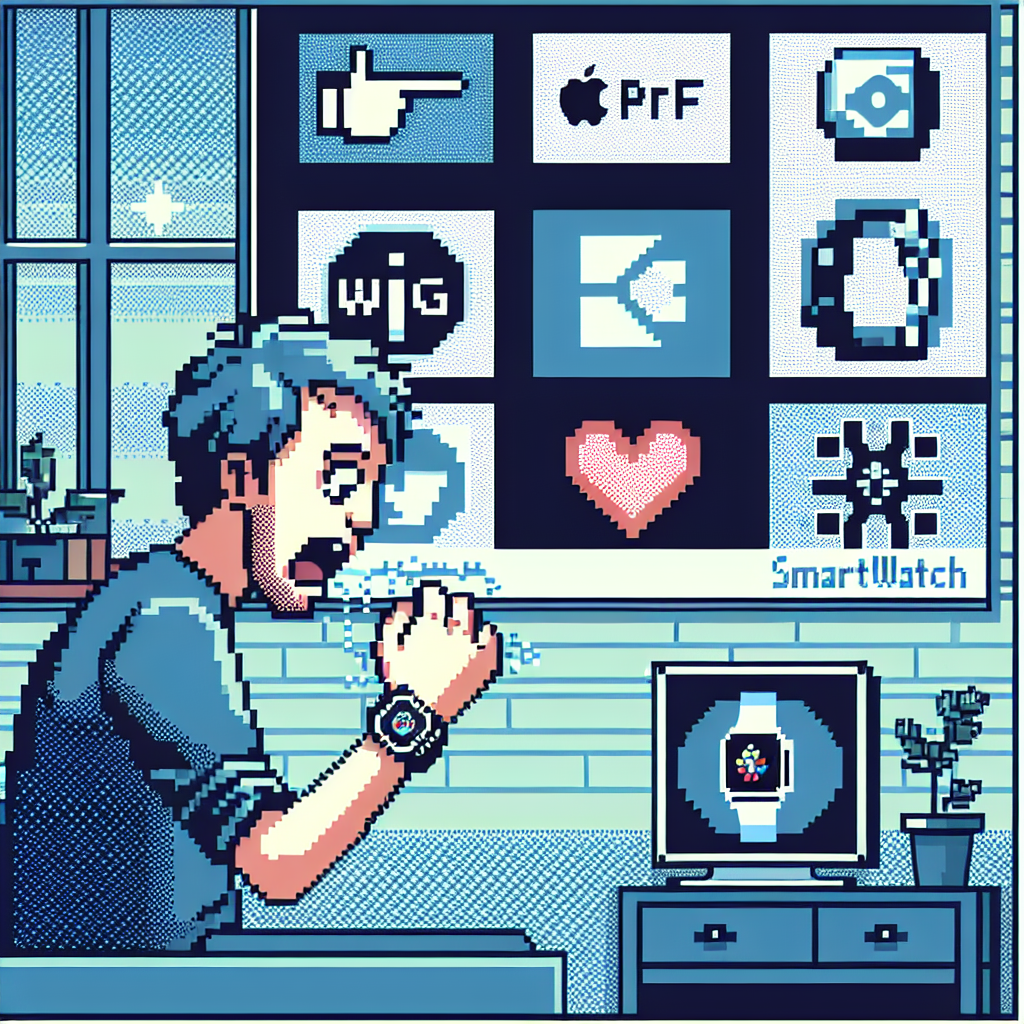
Am I addicted to my smartwatch? The tiny device that keeps pulling at my attention
There’s a tiny buzz on my wrist. I glance. A heart-rate spike, a congratulatory confetti for closing my rings, a calendar nudge about a meeting I already forgot. My smartwatch promises fitness, safety and calm — and yet sometimes it feels like it’s the one making me anxious. Do Apple Watch and Samsung Galaxy Watch actually help us live better lives, or are they quietly turning our well-being into a stream of notifications and metrics?
Why this matters right now
Smartwatches are everywhere. From runners timing their 5K to people tracking sleep, oxygen saturation and “stress,” modern wearables do a lot more than count steps. That expansion has sparked two conversations at once:
- The hopeful one: wearables give us data to act on — nudging us toward more movement, better sleep and earlier detection of health issues.
- The wary one: constant feedback, alerts and “insights” can create pressure, obsession and information overload — especially when the metrics aren’t perfect or are poorly explained.
The BBC recently explored this tension in a piece that mixes first-person experiences with wider questions about whether these devices reduce harm — or contribute to stress. The debate is worth paying attention to: the devices aim to change daily behavior and mental states, so their real-world effect matters.
What smartwatches promise
- Continuous health signals: heart rate, HRV (heart rate variability), SpO2, sleep stages, and sometimes ECGs or blood-pressure estimates.
- Activity tracking and motivation: step counts, workout detection, coaching and goal reminders.
- Safety features: fall detection, emergency SOS, location sharing.
- Behavioral nudges: stand reminders, breathing exercises, and trend-based “energy” or stress scores.
These features are powerful in theory. They give immediate feedback and can gamify healthy choices. But promise and reality aren’t always the same.
What the evidence says — helpful but mixed
-
Wearables can increase physical activity. Reviews and umbrella studies indicate moderate evidence that wearables help many people move more (more steps, more minutes of activity), especially when combined with behavior support or programs, rather than being used passively. (link.springer.com)
-
Accuracy and clinical value vary. Systematic reviews show that while wearables are getting better at detecting activity and some physiological signals, their accuracy for diagnosing medical conditions or replacing clinical measurement is still limited. That matters when users treat a smartwatch reading as medical truth. (pubmed.ncbi.nlm.nih.gov)
-
Stress detection and intervention can work — with caveats. Pilot studies using heart rate and HRV data show promise for flagging stress, and interventions that combine momentary prompts with reflective visualizations have reduced stress frequency and intensity in controlled studies. Still, those studies are limited, and commercial “stress alerts” may not match the careful context used in research. (arxiv.org)
In short: wearables can be helpful tools, but their benefits depend on accuracy, context, how feedback is framed, and whether users integrate data into realistic behavior change — not compulsive checking.
Why smartwatches can make us stressed
- Notification overload: constant pings for messages, health flags and “reminders” interrupt flow and increase cognitive load.
- Ambiguous signals: a high heart rate could mean exercise, excitement, caffeine, or anxiety. Without context, a spike can feel alarming.
- Gamification pressure: daily goals and streaks motivate some users, but for others they foster comparison and a sense of failure.
- False reassurance or false alarms: relying on a device for health reassurance can delay care, while false positives can cause unnecessary worry.
The BBC article shares personal stories of people who felt overwhelmed by messages — from productivity nudges that made pregnant users feel “not productive enough” to constant prompts that exaggerated normal bodily variation. Those anecdotes mirror broader research showing the psychological duality of feedback loops: motivating for some, stress-inducing for others. (nz.news.yahoo.com)
How to keep the benefits and reduce the harm
- Curate notifications ruthlessly.
- Turn off non-essential alerts (apps, promotional nudges) and keep only what helps you act.
- Contextualize metrics.
- Remember that one number seldom tells the whole story — look for trends over time rather than fixating on a single reading.
- Use insights, not guilt.
- Treat weekly or monthly summaries as coaching data. Set small, achievable goals rather than chasing perfection.
- Pair devices with human support when needed.
- Structured programs, coaches, or clinicians amplify benefits; passive tracking alone is less likely to produce lasting change. (mdpi.com)
- Give yourself tech-free windows.
- Schedule periods where your watch switches to Do Not Disturb or Theatre mode so you can restore focus.
A few realistic limits to expect
- Not every measurement is clinical-grade. For clinical decisions, rely on medical-grade tests and professional advice.
- The novelty effect fades. Many people increase activity early on, then regress without behavior design or social support.
- Personal differences matter. Some people thrive on quantified feedback; others find it intrusive. There’s no single “right” relationship with a wearable.
How companies could make things better
- Improve calibration and transparency about what a metric really means.
- Offer simpler, optional modes focused on wellbeing rather than constant tracking (e.g., a “calm” profile that limits alerts and prioritizes long-term trends).
- Make personalization easier so the device learns how you respond to alerts and reduces harmful nudges.
My take
Smartwatches are powerful little coaches — and, depending on how you use them, either useful allies or nagging bosses. The difference usually isn’t the hardware itself but the relationship you form with it. Turn down the noise, focus on trends not single data points, and use wearables as one part of a broader wellbeing strategy (sleep hygiene, regular exercise, social connection, and professional care when needed). When used thoughtfully, these devices can nudge small, meaningful improvements. If they start to increase anxiety or make you compulsively check your wrist, that’s your cue to change the settings — or simply take a break.
Quick takeaways
- Smartwatches can increase activity and help detect patterns, but their accuracy and clinical usefulness vary.
- Constant feedback and notifications can create stress for some users.
- Best results come when wearables are combined with behavior support and personalized settings.
- You control the device: curate alerts, focus on trends, and take tech-free breaks.
Sources
-
Apple Watch, Samsung Galaxy Watch: Am I addicted to my smartwatch? — BBC (mirror).
https://nz.news.yahoo.com/am-addicted-smartwatch-000448883.html -
Stress Watch: The Use of Heart Rate and Heart Rate Variability to Detect Stress: A Pilot Study Using Smart Watch Wearables — Sensors (MDPI).
https://www.mdpi.com/1424-8220/22/1/151 -
Wearable Devices to Improve Physical Activity and Reduce Sedentary Behaviour: An Umbrella Review — Sports Medicine – Open.
https://link.springer.com/article/10.1186/s40798-024-00678-9 -
Momentary Stressor Logging and Reflective Visualizations: Implications for Stress Management with Wearables — arXiv (study on prompts and stress reduction).
https://arxiv.org/abs/2401.16307
Related update: We recently published an article that expands on this topic: read the latest post.