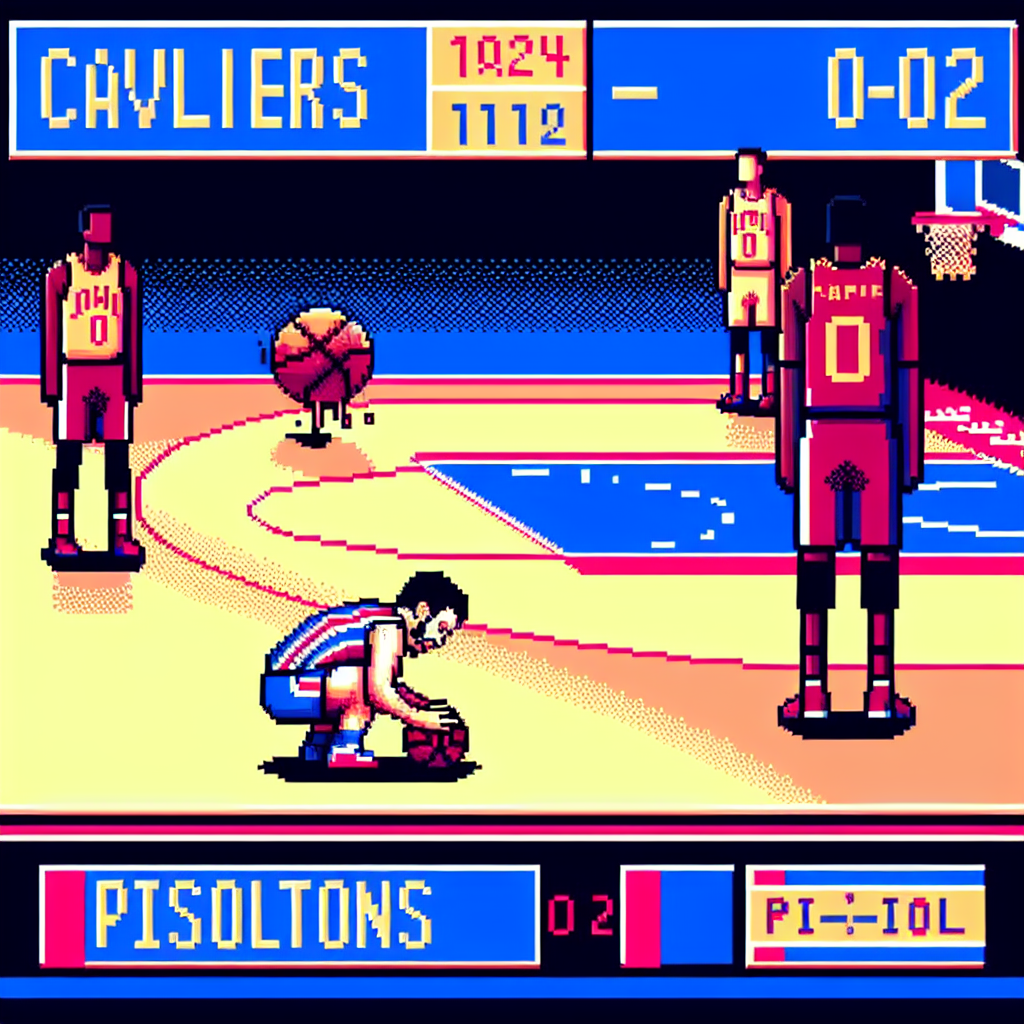
Harden’s Collapse Deepens Cavs’ 0–2 Hole | Analysis by Brian Moineau

When a Superstar Stumbles: Harden’s Night to Forget

There’s a peculiar kind of silence that follows a basketball player when everything that can go wrong does. Harden had his worst playoff game as a Cavalier, and you could feel that silence ripple through Little Caesars Arena — then swell into loud, uncomfortable chatter. The Cavs lost Game 2 to the Detroit Pistons, 107–97, and Cleveland heads home staring at a 0–2 hole that suddenly looks much less salvageable.

This wasn’t merely a cold shooting night. It was a collapse built from turnovers, missed looks, and the kind of decision-making that forces coaches to redraw lines mid-series. When a veteran of Harden’s pedigree falters like this, the consequences don’t stop at the box score — they infect chemistry, rotations, and the trust that teams need to climb out of adversity.

Harden had his worst playoff game as a Cavalier

The headline tells a brutally simple story: James Harden, usually one of Cleveland’s reliable playmakers, looked lost. He committed multiple turnovers at critical moments, took contested shots he’d normally avoid, and failed to control the pace when the Cavs needed it most. Those miscues compounded a broader team issue — Cleveland’s perimeter shooting went ice-cold and Detroit executed a game plan that limited easy paint touches.

Meanwhile, Donovan Mitchell tried to counterpunch with a strong scoring night, Jarrett Allen held his own inside, and Evan Mobley offered defensive impact that didn’t fully translate into offensive flow. Yet Harden’s problems loomed larger because he’s the fulcrum of Cleveland’s spacing and late-game orchestration. When that fulcrum bends, the whole axis shakes.

  • Harden’s turnovers exacerbated transition chances for Detroit.
  • Cleveland shot poorly from three (a major theme across the night).
  • The Pistons grabbed momentum and never really surrendered it.

Transitioning from the first half to the final quarter, the Cavs simply could not find the consistent ignition necessary to close out runs. Detroit’s game plan — protect the paint, crowd the ball, and let Cade Cunningham and his supporting cast punish mistakes — worked.

How this game snowballed

At a glance, the storyline is straightforward: missed shots lead to rushed possessions, rushed possessions produce turnovers, and turnovers produce easy points. But the anatomy of this particular collapse is worth a closer look.

First, Harden’s role is twofold: he creates for others and controls tempo. On this night, both responsibilities faltered. Reckless passes and late clock decisions handed the Pistons extra possessions. Second, Cleveland’s shooters — usually reliable enough to keep defenses honest — could not provide exterior relief. Detroit’s defenders sagged into the lane and dared the Cavs to hit threes. They didn’t.

Third, the Pistons imposed physicality and energy. Detroit rebounded with purpose and pushed on transition. That converted missed Cavs looks into momentum and scoreboard pressure. Once the visitors started hitting enough shots to stay ahead, the Cavs’ late possessions felt like they were carved out of desperation.

Consequently, the coaching staff faces uncomfortable questions. Do you ride Harden through a slump hoping the veteran reverts to type? Or do you adjust lineups and usage to limit damage while trying to spark other scorers? Kenny Atkinson hinted at tactical changes after the game — and for good reason. When a series starts trending the wrong way, timely adjustments matter.

What the numbers don’t fully capture

Box scores are efficient but blunt instruments. They show turnovers, shooting percentages, and plus-minus, but they can’t measure the micro-moments that alter a team’s confidence.

  • The timing of Harden’s turnovers mattered more than the raw count.
  • Defensive schemes that forced Cleveland into stagnant possessions don’t show up as a single stat.
  • The psychological weight of “another bad possession” — both for Harden and teammates — is invisible on stat sheets.

That said, the metrics still ring alarm bells. Harden’s playmaking was ineffectual at moments when Cleveland needed clean looks. Plus, the Cavs’ bench barely shifted the needle; missing contributions from role players magnified Harden’s slip.

The Pistons’ blueprint and why it worked

Credit the Pistons for a clear plan. Detroit attacked the Cavs’ weakness: transition and defensive rebounding. They also executed late-game possession discipline and kept Cade Cunningham in control. When an opponent outlines a straightforward game plan and your team provides a series of self-inflicted wounds, the result is predictable.

Importantly, the Pistons didn’t just neutralize Harden — they made the Cavs uncomfortable across positions. They contested shots, doubled selectively, and forced Cleveland into low-percentage plays. That level of consistent pressure over 48 minutes turned a winnable game into a loss.

Where Cleveland can pivot

There are several practical pivots Cleveland can try before Game 3:

  • Reduce Harden’s exposure in high-leverage halfcourt sets and use him instead as a floor spacer in staggered minutes.
  • Increase ball movement through quicker passes and more off-ball screens to free up shooters.
  • Mix defensive looks to disrupt Detroit’s rhythm and force them into uncomfortable possessions.
  • Activate the bench earlier to change pace and take pressure off starters.

All of these are short-term bandages; the long-term fix is consistency. Harden — a veteran pro with championship-caliber chops — will almost certainly get another chance to flip the narrative. But the Cavs must decide whether to shelter him through the slump or adjust aggressively to prevent a 0–3 hole.

My take

This game is a reminder that even experienced stars can have nights that ripple well beyond their own stat lines. Harden had his worst playoff game as a Cavalier, yes — but basketball is stubbornly team-oriented. The loss reflects systemic flaws and timely execution from Detroit as much as it does one player’s lapse.

If the Cavs are to recover, they’ll have to recalibrate usage patterns, find their shooting touch, and restore defensive rebounding margins. The playoffs are a sprint of micro-adjustments; Cleveland’s next moves will tell us whether this series is a temporary stumble or the start of a deeper problem.

Final thoughts

Basketball narratives love redemption arcs, and there’s room for one here. Harden has the experience to respond, and Cleveland has enough talent to shift momentum. Yet the clock is unforgiving: being down 0–2 in a best-of-seven—or worse, 0–3—changes the shape of a series. For now, the Cavs must own the discomfort, correct the mistakes, and return with a sharper plan. Otherwise, Harden’s worst playoff game as a Cavalier will be remembered not as an oddity, but as a turning point.

Sources


Related update: We recently published an article that expands on this topic: read the latest post.

Related update: We recently published an article that expands on this topic: read the latest post.

Lakers Must Be Near Perfect vs Thunder | Analysis by Brian Moineau

The Lakers understand their playoff dilemma. They need to be near their best to win, and the defending champ Thunder do not.

The line lands hard: The Lakers understand their playoff dilemma. They need to be near their best to win, and the defending champ Thunder do not. That sentence — blunt, honest, a little savage — is the lens through which Game 2 of Lakers-Thunder should be read. After a Game 1 in which Oklahoma City comfortably controlled tempo, shot well, and got timely contributions beyond its stars, Los Angeles faces the familiar playoff problem: it can’t rely on flashes from one superstar and hope the rest of the roster carries enough weight against a deep, confident champion.

This matters because playoff basketball punishes unevenness. The Thunder can absorb a clunker or two from a role player and still win; the Lakers, constrained by roster balance and matchup issues, must find a higher floor across quarters and rotations. Let’s break down three things to watch in Game 2 and why each will determine whether the Lakers can steal a win in Oklahoma City.

What to watch: can the Lakers fix their supporting cast night?

  • In Game 1, the Lakers got a big scoring night from a primary star, but the supporting cast was inconsistent. Austin Reaves’ 3-for-16 outing became emblematic — when bench creators and secondary scorers go cold, spacing vanishes and defenses shrink the paint.
  • The Lakers’ role players must do more than survive; they have to move the Thunder’s attention. That means crisp off-ball movement, better 3-point shots, and fewer turnovers leading to easy Thunder transition points.
  • Watch substitution windows. Coach JJ Redick will need to balance minutes so starters don’t tire chasing Oklahoma City’s pace. If LA’s bench can produce even 20–25* effective minutes, the team’s offensive variance drops and scoring becomes more reliable.

Transition: fixing the supporting cast ties directly into the next key issue — ball security.

What to watch: ball security and limiting easy Thunder possessions

  • The Thunder thrive on pace and scoring off turnovers. In Game 1, Oklahoma City turned LA miscues into quick points, and those transition baskets are the exact margin salt in a playoff wound.
  • The Lakers must protect the ball on entry passes and in break-the-press moments. Fewer turnovers means fewer fast breaks and fewer rhythm-restoring threes for OKC’s role wings.
  • LeBron (and other primary ball-handlers) should be deliberate in pick-and-roll reads and avoid risky passes into the teeth of the defense. That’s not glamorous, but it’s functional: it takes the Thunder’s edge away.

Transition: even with better ball control and bench production, matchup dynamics can tilt the series — especially paint control.

What to watch: winning the paint and rebounding battle

  • Oklahoma City’s size and switchable defensive pieces make paint scoring and defensive rebounds a critical battleground. If the Thunder control glass and convert second-chance points, LA’s margin for error evaporates.
  • Deandre Ayton’s presence on the glass is vital; he won’t need to out-score every opponent, but winning rebound opportunities and defending the rim matter a lot. On offense, getting Ayton touches near the rim forces help defenders to collapse, opening kick-outs to shooters.
  • The Lakers must box out aggressively and limit offensive rebounds for OKC. Fewer offensive rebounds not only deny second opportunities — they slow the Thunder’s momentum, which is essential for a team content to ride streaks rather than force plays.

Transition: beyond these three items are subtler, but no less decisive, strategic threads.

Matchups, foul calls, and momentum swings

Small details often create the swing. The Thunder are a championship-caliber team because they can manufacture offense in multiple ways: elite isolation play, secondary ball movement, and role shooters who hit timely threes. The Lakers’ margin for error is slender, so how referees call physicality and how both teams manage foul trouble — especially for key defenders — can flip momentum.

Look also at how OKC deploys its depth. In Game 1, wings and young guards popped in with efficient scoring bursts. If the Thunder get similar bench flavor in Game 2, LA will need consistent counters — whether that’s match-up switching, zone looks to disrupt rhythm, or more intentional double-team packages on primary creators.

Mid-series chess: adjustments to expect

  • Expect the Lakers to try and tighten passing lanes and shorten possessions. That may mean more isolations for LeBron and designed actions for Ayton to draw in help.
  • Expect the Thunder to continue riding balance — multiple scoring threats every quarter. Their model doesn’t require everyone to go off every night; they win by being more consistent across 48 minutes.
  • Watch the coaching adjustments. Mark Daigneault’s lineup construction and how he manages minutes are part of a bigger advantage: depth. Redick’s ability to in-game tweak rotations could be decisive.

Key takeaways

  • The Lakers need balanced production; one great night from a superstar won’t be enough against OKC’s depth.
  • Ball security and limiting transition points are essential to slow the Thunder’s rhythm.
  • Controlling the paint and the rebound margin will determine possession quality and second-chance scoring.

My take

The most compelling thing about this series is the conceptual contrast. The Thunder, as defending champs, can lean on structural advantages: depth, a roster built to generate consistent offense, and a style that tolerates variance from any single player. The Lakers are a team that, to win here, must elevate their baseline. That’s a lot to ask on the road in a hostile environment.

But basketball isn’t only about rosters; it’s about will and narrative. The Lakers have the experience and a superstar who can still tilt a game. If the supporting cast finds an early rhythm, if turnovers drop, and if the team fights for every rebound, Game 2 could be tighter than the playoff odds suggest. If not, expect the Thunder to continue imposing their identity: relentless, deep, and measurably harder to beat.

Sources


Related update: We recently published an article that expands on this topic: read the latest post.


Related update: We recently published an article that expands on this topic: read the latest post.

Spurs vs Timberwolves: Semifinals Begin | Analysis by Brian Moineau

And now they have an opponent: Spurs Western Conference Semifinals schedule

The Spurs Western Conference Semifinals schedule landed like good news and a dare all at once. The NBA released the dates for San Antonio’s second-round series — and, crucially, the Spurs now have an opponent: the Minnesota Timberwolves. With Game 1 set for Monday, May 4, and the series mapped through a possible Game 7 on May 17, the city has gone from savoring a hard-fought first-round win to recalibrating for a matchup that will test how quickly this young Spurs group can rise to playoff pressure.

What the schedule says (and why it matters)

  • Game 1: Monday, May 4 — Spurs at home.
  • Game 2: Wednesday, May 6 — Spurs at home.
  • Game 3: Friday, May 8 — at Minnesota.
  • Game 4: Sunday, May 10 — at Minnesota (Mother’s Day).
  • Game 5*: Tuesday, May 12 — Spurs at home (if needed).
  • Game 6*: Friday, May 15 — at Minnesota (if needed).
  • Game 7*: Sunday, May 17 — Spurs at home (if needed).

These dates come from the NBA’s schedule announcement and were summarized in Pounding The Rock’s open thread covering Tom Orsborn’s post and the Express-News coverage. The rhythm — two at home, two away, then the 2-2-1-1-1 if needed — gives San Antonio a strong early chance to seize home-court momentum. Yet, as any playoff vet will tell you, the calendar is only the start: matchups, injuries, and adjustments write the rest of the story.

Spurs vs. Timberwolves: matchup feel and storyline

First, let’s set the scene. The Timberwolves just dispatched the Denver Nuggets in six games to punch their ticket; the Spurs closed their first-round series against Portland in five. Minnesota brings postseason muscle and a physical frontcourt presence that will force the Spurs to answer on both ends.

  • Offense vs. defense: The Spurs have shown offensive creativity, ball movement, and a budding inside-out game anchored by their young centerpiece. Conversely, Minnesota plays with defensive length and veteran rim deterrence. That contrast will shape possessions: will the Spurs attack the paint early to draw help, or dry-hump matchups for open threes?
  • Youth vs. experience: San Antonio’s core still feels young and sometimes mercurial. Minnesota’s playoff experience — and the mental edge it affords — could matter in tight fourth quarters.
  • Health caveats: The Wolves’ series with Denver carried injuries and storylines that may affect availability. Conversely, the Spurs must manage minutes of breakout contributors to stay fresh for a physical, potentially long series.

Taken together, this isn’t a mismatch on paper. The Spurs have talent and momentum; the Wolves have playoff-tested pieces and defensive toughness. Expect adjustments, physicality, and coaching chess.

Why the schedule favors urgency

Because Game 1 and Game 2 are in San Antonio, the Spurs can start with energy and community advantage. That matters for three reasons:

  • Momentum: Winning both home games would put pressure on Minnesota and let the Spurs use crowd energy to close out possessions.
  • Matchup leverage: Home games give the Spurs a chance to implement their ideal scheme before traveling into Minnesota’s tougher environment.
  • Rest and recovery: The spacing (May 4, 6, then May 8, 10) creates a dense block. Teams that survive that sprint with freshness will have an edge if the series drags to Game 6 or 7.

However, urgency cuts both ways. Falling into a 0-2 hole at home would flip the series script quickly. So the Spurs can’t treat the opening two games as experiments.

X-factors to watch

  • Interior defense and rebounding. If the Spurs let Minnesota control the boards, second-chance points will tilt the series.
  • Perimeter shooting. Open threes will open the paint; missing them forces the Spurs to attack a beefy Wolves defense one-on-one.
  • Foul trouble for bigs. Playoff refereeing tightens on off-ball contact. The Spurs need their interior pieces available late in games.
  • Coaching adjustments. Both staffs will have to react quickly — who gets the better counter over the first four games may decide the series.

Momentum, narrative, and the city

San Antonio has felt a buzz this postseason — rare playoff life after years of rebuild talk. That intangible matters. The schedule gives the city almost a full week to lean into the series before the teams swap arenas. Expect the Frost Bank Center to feel electric for Games 1 and 2; those nights could define whether this series becomes a Spurs statement or a grind-out battle.

Transitioning from a first-round victory, the Spurs now face a different kind of challenge: longer series planning, deeper scouting, and the need to protect players’ legs across a swift schedule. The Spurs organization — from coaching to strength-and-conditioning — must treat this like a step up, not the finish line.

My take

This series is a true measuring stick. The schedule gives the Spurs an early chance to seize control, but Minnesota’s blueprint for physical defense and playoff toughness won’t make it easy. If San Antonio’s young core leans into that pressure, plays with discipline on defense, and keeps the ball moving, they can make this a long summer for Minnesota.

On the other hand, if the Spurs rely too heavily on isolated scoring or fail to secure rebounds and close-out defense, the Wolves’ experience could flip the home-court advantage. I expect close games, varying game plans, and a lot of halftime adjustments — the kind of series that reveals whether a team is merely good or legitimately resilient.

Final thoughts

The NBA’s announced Spurs Western Conference Semifinals schedule gives San Antonio a clear roadmap and a big opportunity: win early at home, and the path to the West feels real. Lose focus, and the path narrows. Either way, the city gets playoff basketball that matters — and the next two weeks will tell us whether the Spurs are poised for a deep run or still learning what postseason consistency looks like.

Enjoy the games, savor the suspense, and keep an eye on how adjustments change the series story from one game to the next. This will be fun.

Sources


Related update: We recently published an article that expands on this topic: read the latest post.


Related update: We recently published an article that expands on this topic: read the latest post.

Stevenson: Jake Paul is Surprisingly | Analysis by Brian Moineau

When a lightweight world champion meets a YouTuber-turned-boxer: the sparring that turned heads

You expect sparring sessions to be routine—two fighters feeling each other out, testing timing, and poking holes in game plans. But when WBC lightweight champ Shakur Stevenson slipped into the ring with Jake Paul, it wasn't routine. Stevenson walked away surprised, impressed, and maybe a little more respectful than many in boxing had been willing to be. His takeaway? Jake Paul is "better than people would even understand." (sports.yahoo.com)

Why this moment matters

  • Jake Paul has been polarizing: entertainer, promoter, and increasingly a serious boxing project. His rise from YouTube boxing spectacles to fights against former pros has invited skepticism and ridicule—but also attention. (en.wikipedia.org)
  • Anthony Joshua vs. Jake Paul, a heavyweight match scheduled for December 19, 2025 in Miami, throws that skepticism into the spotlight: one of boxing’s old-guard stars vs. boxing’s new-era disruptor. That clash makes any insight from a respected pro like Stevenson especially relevant. (kaseyacenter.com)

What Stevenson actually said (and why it stings for skeptics)

Stevenson described lining up six or seven rounds with Paul after Paul’s team reached out. His reaction was strikingly candid: he expected a novice, and instead found someone who “is better than people would even understand.” He praised Paul’s commitment—training camps, a coaching setup, instincts to avoid getting hit—and admitted he was impressed. (au.sports.yahoo.com)

Why that matters:

  • Coming from an elite boxer who’s competed at world-class levels, calling someone “better than people would even understand” is not casual praise.
  • It reframes the narrative: Paul’s progress isn’t just hype or luck. It’s the product of coaching, repetition, and instincts that can be sharpened even if you start late.

The broader context: skill vs. size vs. spectacle

  • Technical improvement doesn’t erase the practical realities of a matchup. Stevenson himself noted the huge size/experience gap between Paul and Anthony Joshua and suggested that Joshua should beat Paul on merit. That’s the heart of the debate—can technique plus hard work overcome massive differences in weight, reach, and decades of top-level experience? (au.sports.yahoo.com)
  • For boxing fans, this is a two-track conversation:
    1. The purist track: world titles, traditional career ladders, and respect for the sport’s hierarchy.
    2. The spectacle track: crossover appeal, paydays, and the reality that unconventional routes can still produce competent fighters—and massive events. The Stevenson sparring story lives at the intersection of both.

Takeaways for fight-night watchers

  • Don’t underestimate preparation: Paul’s evolution isn’t a fluke. He’s benefitted from high-level trainers and a full-time approach. Stevenson’s words confirm that Paul’s fundamentals and instincts have improved. (au.sports.yahoo.com)
  • Upset odds still lean one way: size, power, and experience matter—especially at heavyweight. Stevenson expects Joshua to win; his praise of Paul doesn’t equate to predicting a shocker. (au.sports.yahoo.com)
  • Expect a chess match within a spectacle: even if Joshua is heavily favored, Paul’s confidence and improved skills mean he won’t be a total pushover. That can make for a more interesting, watchable fight than many expect. (espn.com)

My take

Stevenson’s comments are an important corrective to easy mockery. They don’t legitimize every crossover fight, nor do they erase structural differences between fighters who grew up in the pro ranks and fighters who came up later. But they do force a more honest conversation: skill is not binary. Improvement can be real, even if earned unconventionally.

If you care about boxing’s purity, Stevenson’s words should make you less dismissive and more curious: how much can dedicated coaching and high-level sparring shorten the gap? If you care about the sport’s spectacle and business, the encounter underscores why crossover boxing keeps drawing huge audiences—because it produces unexpected, human moments that professional boxing sometimes struggles to deliver.

Final thoughts

This sparring session didn’t crown Paul or dethrone any champions. What it did do is move the conversation forward—from memes and hot takes to a clearer assessment from a respected athlete. That alone is worth paying attention to as the sport wrestles with its future: blending tradition with new, sometimes messy, opportunities.

Sources


Related update: We recently published an article that expands on this topic: read the latest post.

Are Smartwatches Helping or Hurting Us | Analysis by Brian Moineau

Am I addicted to my smartwatch? The tiny device that keeps pulling at my attention

There’s a tiny buzz on my wrist. I glance. A heart-rate spike, a congratulatory confetti for closing my rings, a calendar nudge about a meeting I already forgot. My smartwatch promises fitness, safety and calm — and yet sometimes it feels like it’s the one making me anxious. Do Apple Watch and Samsung Galaxy Watch actually help us live better lives, or are they quietly turning our well-being into a stream of notifications and metrics?

Why this matters right now

Smartwatches are everywhere. From runners timing their 5K to people tracking sleep, oxygen saturation and “stress,” modern wearables do a lot more than count steps. That expansion has sparked two conversations at once:

  • The hopeful one: wearables give us data to act on — nudging us toward more movement, better sleep and earlier detection of health issues.
  • The wary one: constant feedback, alerts and “insights” can create pressure, obsession and information overload — especially when the metrics aren’t perfect or are poorly explained.

The BBC recently explored this tension in a piece that mixes first-person experiences with wider questions about whether these devices reduce harm — or contribute to stress. The debate is worth paying attention to: the devices aim to change daily behavior and mental states, so their real-world effect matters.

What smartwatches promise

  • Continuous health signals: heart rate, HRV (heart rate variability), SpO2, sleep stages, and sometimes ECGs or blood-pressure estimates.
  • Activity tracking and motivation: step counts, workout detection, coaching and goal reminders.
  • Safety features: fall detection, emergency SOS, location sharing.
  • Behavioral nudges: stand reminders, breathing exercises, and trend-based “energy” or stress scores.

These features are powerful in theory. They give immediate feedback and can gamify healthy choices. But promise and reality aren’t always the same.

What the evidence says — helpful but mixed

  • Wearables can increase physical activity. Reviews and umbrella studies indicate moderate evidence that wearables help many people move more (more steps, more minutes of activity), especially when combined with behavior support or programs, rather than being used passively. (link.springer.com)

  • Accuracy and clinical value vary. Systematic reviews show that while wearables are getting better at detecting activity and some physiological signals, their accuracy for diagnosing medical conditions or replacing clinical measurement is still limited. That matters when users treat a smartwatch reading as medical truth. (pubmed.ncbi.nlm.nih.gov)

  • Stress detection and intervention can work — with caveats. Pilot studies using heart rate and HRV data show promise for flagging stress, and interventions that combine momentary prompts with reflective visualizations have reduced stress frequency and intensity in controlled studies. Still, those studies are limited, and commercial “stress alerts” may not match the careful context used in research. (arxiv.org)

In short: wearables can be helpful tools, but their benefits depend on accuracy, context, how feedback is framed, and whether users integrate data into realistic behavior change — not compulsive checking.

Why smartwatches can make us stressed

  • Notification overload: constant pings for messages, health flags and “reminders” interrupt flow and increase cognitive load.
  • Ambiguous signals: a high heart rate could mean exercise, excitement, caffeine, or anxiety. Without context, a spike can feel alarming.
  • Gamification pressure: daily goals and streaks motivate some users, but for others they foster comparison and a sense of failure.
  • False reassurance or false alarms: relying on a device for health reassurance can delay care, while false positives can cause unnecessary worry.

The BBC article shares personal stories of people who felt overwhelmed by messages — from productivity nudges that made pregnant users feel “not productive enough” to constant prompts that exaggerated normal bodily variation. Those anecdotes mirror broader research showing the psychological duality of feedback loops: motivating for some, stress-inducing for others. (nz.news.yahoo.com)

How to keep the benefits and reduce the harm

  • Curate notifications ruthlessly.
    • Turn off non-essential alerts (apps, promotional nudges) and keep only what helps you act.
  • Contextualize metrics.
    • Remember that one number seldom tells the whole story — look for trends over time rather than fixating on a single reading.
  • Use insights, not guilt.
    • Treat weekly or monthly summaries as coaching data. Set small, achievable goals rather than chasing perfection.
  • Pair devices with human support when needed.
    • Structured programs, coaches, or clinicians amplify benefits; passive tracking alone is less likely to produce lasting change. (mdpi.com)
  • Give yourself tech-free windows.
    • Schedule periods where your watch switches to Do Not Disturb or Theatre mode so you can restore focus.

A few realistic limits to expect

  • Not every measurement is clinical-grade. For clinical decisions, rely on medical-grade tests and professional advice.
  • The novelty effect fades. Many people increase activity early on, then regress without behavior design or social support.
  • Personal differences matter. Some people thrive on quantified feedback; others find it intrusive. There’s no single “right” relationship with a wearable.

How companies could make things better

  • Improve calibration and transparency about what a metric really means.
  • Offer simpler, optional modes focused on wellbeing rather than constant tracking (e.g., a “calm” profile that limits alerts and prioritizes long-term trends).
  • Make personalization easier so the device learns how you respond to alerts and reduces harmful nudges.

My take

Smartwatches are powerful little coaches — and, depending on how you use them, either useful allies or nagging bosses. The difference usually isn’t the hardware itself but the relationship you form with it. Turn down the noise, focus on trends not single data points, and use wearables as one part of a broader wellbeing strategy (sleep hygiene, regular exercise, social connection, and professional care when needed). When used thoughtfully, these devices can nudge small, meaningful improvements. If they start to increase anxiety or make you compulsively check your wrist, that’s your cue to change the settings — or simply take a break.

Quick takeaways

  • Smartwatches can increase activity and help detect patterns, but their accuracy and clinical usefulness vary.
  • Constant feedback and notifications can create stress for some users.
  • Best results come when wearables are combined with behavior support and personalized settings.
  • You control the device: curate alerts, focus on trends, and take tech-free breaks.

Sources


Related update: We recently published an article that expands on this topic: read the latest post.

Manning’s Return Sparks Texas Rally | Analysis by Brian Moineau

Arch Manning’s comeback and a 75-yard first-play reminder that momentum loves drama

AUSTIN — If you like theater, Saturday’s Texas-Vanderbilt tilt wrote itself with bold strokes: Arch Manning, fresh off concussion protocol, steps back under center and uncorks a 75-yard touchdown to Ryan Wingo on the very first play. The Longhorns raced to a seemingly comfortable 34-10 lead, only to watch the Commodores stage a furious fourth-quarter push that made the closing minutes feel like a playoff game — and an onside kick bounce that decided everything.

This wasn’t just a win. It was a mood swing, a test of Texas’ resilience, and a reminder that college football flips faster than you can blink. Manning finished with 328 yards and three touchdown passes, but the story is as much about recovery, momentum, and the thin margin between confident control and late-game chaos.

Key takeaways

  • Arch Manning returned from concussion protocol and delivered a high-impact performance: 328 passing yards and three touchdown passes, including a 75-yard bomb to Ryan Wingo on the first play.
  • Texas built a big fourth-quarter cushion (34-10) but nearly squandered it as Vanderbilt rallied behind dynamic plays from Diego Pavia and Eli Stowers.
  • The Commodores’ comeback fell short after an onside kick rolled out of bounds — a reminder that even the best surges need a little luck.
  • The win keeps Texas’ résumé intact as they chase postseason positioning, but the late wobble exposes areas (closing out games, defensive consistency) that still need work.

The hook play: why one throw changed the day

That first-play 75-yard touchdown felt like a message. Not just to Vanderbilt, but to anyone still wondering whether Manning’s concussion layover had left him rusty. He didn’t just return — he ripped the game open. There’s psychological power in an opening-play score: it forces the opponent to answer immediately, energizes your crowd, and lets your offense operate with a bit more swagger.

But football isn’t a movie with a tidy first-act triumph. The middle act left Texas with a 24-point lead and all the veneer of control — and the final act nearly turned it into a horror show. Vanderbilt’s late barrage showed why teams don’t celebrate until the clock reads zero. Momentum can be contagious, and Pavia’s arm and legs sparked a late life that made Royal-Memorial Stadium sweat.

Arch Manning, recovery, and the quarterback narrative

Manning’s season has been a roller coaster: preseason hype, flashes of elite play, inconsistency, and now a concussion scare. Returning and playing well immediately is a positive sign for Texas and for Manning’s draft-season narrative. It also underscores how teams manage injury risk and the thin line coaches walk between caution and competitiveness.

That said, a single game shouldn’t erase the season’s ups and downs. What Texas got Sunday was a blend of encouraging poise and a reminder of the team’s vulnerability when an opponent refuses to quit.

What the late Vanderbilt rally says about both teams

  • Vanderbilt: The Commodores proved they can strike quickly and hang around against top opponents. Diego Pavia’s ability to create big plays (long TD runs and throws) makes Vanderbilt dangerous in every comeback scenario. A resilient team that doesn’t panic is a team to watch down the stretch.
  • Texas: Offensively potent and able to build blowout leads, but the defense’s late surrender of big plays is worrisome. Coaches will love the win but cringe at the scoreboard’s wobble. Closing games cleanly is as much a coaching and discipline issue as it is talent-based.

Bigger-picture implications

  • Polls and postseason hopes: A top-25 Texas win over a top-10 Vanderbilt matters in November. It keeps momentum in the Longhorns’ favor for conference positioning and resume-building.
  • Player stock-watch: Arch Manning regained some narrative shine; a timely performance after an injury boosts his profile. Ryan Wingo’s explosive playmaking also reaffirms him as a go-to vertical threat.
  • Coaching adjustments: Sarkisian’s team showed offensive firepower but will need to tighten late-game execution and defensive containment to avoid future scares.

Short reflection

There’s something poetic about sports’ unpredictability: two plays can feel like seasons. For Texas, this was a small but meaningful test passed — mostly. For neutral fans, it was the kind of roller-coaster that keeps college football intoxicating. Manning’s performance today is a plot twist, not the final chapter. The Longhorns won a high-stakes November game, but the way the lead evaporated is a useful nudge toward humility for a team with bigger goals.

Sources

Bills Must Reset During Bye Week Challenge | Analysis by Brian Moineau

Time to Hit the Reset Button: What the Bills Need During Their Bye Week

After a promising 4-0 start to the season, the Buffalo Bills find themselves in a tough spot, heading into their bye week on a two-game losing streak. The recent loss to the Atlanta Falcons has raised questions, and head coach Sean McDermott is calling for a reset. It’s a crucial moment for a team that began the season with high hopes but is now grappling with injuries and inconsistencies. So, what should the Bills focus on during this pivotal week off?

Context: A Rocky Turn of Events

The Bills kicked off the season with an impressive 4-0 record, showcasing their potential as serious playoff contenders. However, back-to-back losses have cast a shadow over the team’s early success. The latest defeat against the Falcons exposed some glaring weaknesses, particularly in the areas of defensive cohesion and offensive execution. Injuries have taken their toll, and now, as the team enters the bye week, it’s time for reflection and recalibration.

Coach McDermott emphasized the importance of utilizing this time wisely, indicating that the players need to “start over” as they prepare for the second half of the season. With several key players nursing injuries, the coaching staff must assess their roster and strategize for the upcoming games.

Key Takeaways

Injury Management is Key: The Bills have been hit hard by injuries, and addressing player health during the bye week is crucial for a successful comeback.

Time for Reflection: This break presents an opportunity for players and coaches to analyze game footage, identify weaknesses, and implement necessary adjustments before the next matchup.

Focus on Fundamentals: The Bills need to return to the basics—solid tackling, effective blocking, and disciplined play. A return to fundamental football can help them regain their winning form.

Mental Reset: The psychological aspect of sport is just as important as the physical. Taking time to regroup mentally can help the team approach the rest of the season with renewed vigor.

Reassess Goals: With the first quarter of the season behind them, the Bills should revisit their goals. Setting achievable milestones can help refocus their efforts and maintain motivation.

Conclusion: A New Beginning Awaits

While it’s easy to feel disheartened after a couple of losses, the bye week offers a chance for the Buffalo Bills to regroup and reenergize. By leveraging this time to heal, reflect, and refocus, they can emerge stronger and more determined for the second half of the season. The journey is far from over, and with their talent and grit, the Bills have the potential to turn things around.

As fans, let’s hope they use this time wisely, because the best is yet to come!

Sources

– McDermott: Bills must use bye week to start over – ESPN [ESPN Article](https://www.espn.com/nfl/story/_/id/38483600/bills-bye-week-start-over)

*Remember to stay tuned for the Bills’ next games and updates as they work to turn their season around!*


Related update: We recently published an article that expands on this topic: read the latest post.


Related update: We recently published an article that expands on this topic: read the latest post.


Related update: We recently published an article that expands on this topic: read the latest post.


Related update: We recently published an article that expands on this topic: read the latest post.

Steichen Hails Stafford as All-Time Great | Analysis by Brian Moineau

Shane Steichen Praises Matthew Stafford: An Insightful Look at Quarterback Greatness

When it comes to the NFL, few names resonate as powerfully as Matthew Stafford’s. Recently, Shane Steichen, head coach of the Indianapolis Colts, expressed his admiration for Stafford, describing him as “probably one of the best to ever do it.” This statement was made in the context of the Colts’ matchup against the Los Angeles Rams in Week 4 of the 2023 season, a game that marked one of Anthony Richardson’s first starts as a rookie quarterback. But what makes Stafford such a revered figure in the league? Let’s dive into the context and nuances behind Steichen’s praise.

The Context: A Clash of Generations

The Colts and Rams faced off in a highly anticipated game earlier this season, showcasing the promising talent of Anthony Richardson against the seasoned veteran Stafford. For Richardson, this was a significant moment in his young career—a chance to learn from one of the best while proving his worth on the field. On the other hand, Stafford, having led the Rams to a Super Bowl victory just two seasons prior, represented the pinnacle of quarterback achievement.

Steichen’s comments about Stafford were not just idle praise; they reflected the respect that young quarterbacks hold for those who have paved the way. Stafford’s journey from being the first overall pick in the 2009 draft to becoming a Super Bowl champion is a testament to his resilience and skill. His ability to make plays under pressure, combined with an impressive arm and football IQ, makes him a formidable competitor even as he navigates the latter stages of his career.

Key Takeaways

Legacy of Excellence: Matthew Stafford’s career is marked not just by personal accolades but also by his ability to elevate those around him, a quality that makes him a role model for younger quarterbacks like Richardson.

Rookie Learning Curve: For Anthony Richardson, facing a veteran like Stafford provides invaluable learning experiences, particularly in understanding game management and decision-making under pressure.

Coaching Respect: Shane Steichen’s acknowledgment of Stafford highlights the respect that coaches have for proven players, emphasizing the importance of mentorship in the NFL.

Evolution of the Quarterback Position: Stafford’s playing style offers insights into how the quarterback position has evolved, bridging the gap between traditional pocket passers and the modern dual-threat quarterbacks.

Impact of Experience: The contrast between a rookie and a veteran quarterback underscores the significance of experience in high-stakes games, particularly in crucial moments where every decision counts.

Conclusion: The Bridge Between Eras

As we reflect on Shane Steichen’s comments about Matthew Stafford, it’s clear that admiration in the NFL often transcends team loyalties and rivalries. The respect shown by Steichen isn’t just a nod to Stafford’s past achievements; it’s an acknowledgment of the lessons that can be learned from those who have walked the path before. For Anthony Richardson and other young quarterbacks, the journey is just beginning, but with veterans like Stafford leading the charge, the future of the league looks bright.

Sources

– NBC Sports: Shane Steichen: Matthew Stafford is probably one of the best to ever do it – [NBC Sports](https://www.nbcsports.com/) – NFL.com: Quarterback Evolution and Coaching Mentorship – [NFL](https://www.nfl.com/)

By celebrating the greatness of players like Stafford while nurturing the next generation of talent, the NFL continues to thrive as a league rich in history and innovation.


Related update: We recently published an article that expands on this topic: read the latest post.


Related update: We recently published an article that expands on this topic: read the latest post.

NFL Week 3: Injuries and Emerging Stars | Analysis by Brian Moineau

NFL Week 3 Aftermath: Injury Reports and Emerging Opportunities

The NFL never fails to serve up a rollercoaster of emotions, and Week 3 was no exception. As fans, we ride the highs of exhilarating plays and the lows of injuries that can change the course of a season. This week, the spotlight shone brightly on James Conner’s devastating ankle injury, while players like CeeDee Lamb and Omarion Brown found their names trending for different reasons. Let’s dive into the crucial storylines from the week and what they mean for teams and fans alike.

James Conner’s Injury: A Tough Blow for the Cardinals

One of the most heartbreaking moments of Week 3 came when Arizona Cardinals running back James Conner suffered a significant ankle injury. The Cardinals have relied heavily on Conner this season, and his absence could have far-reaching effects on both his team and fantasy football rosters. Early reports suggest that he may miss multiple games, which means the Cardinals will need to adjust their game plan moving forward. Conner’s injury not only shakes up the Cardinals’ backfield but also raises questions about their overall offensive strategy.

CeeDee Lamb’s Timeline: A Bright Spot for the Cowboys

On a more positive note, CeeDee Lamb of the Dallas Cowboys is on track to return sooner than expected from his own injury. Lamb, who has been a critical player in the Cowboys’ offense, looked to be sidelined for a longer duration, but recent updates indicate that he could make a comeback as early as next week. His return would be a massive boost for quarterback Dak Prescott and the entire Cowboys offense, who are looking to build momentum as the season progresses.

Omarion Brown: Seizing the Opportunity

While injuries often signal trouble for teams, they can also present opportunities for other players to shine. Enter Omarion Brown, who capitalized on his chance to step up amidst the chaos. With Conner out and other players underperforming, Brown has the potential to emerge as a key player for the Cardinals. His performance in the coming weeks could define not just his season, but also the Cardinals’ outlook as they navigate a challenging schedule.

Key Takeaways

James Conner’s Injury: A significant ankle injury could keep Conner sidelined for multiple weeks, impacting the Cardinals’ offensive strategy and fantasy rosters. – CeeDee Lamb’s Return: Positive updates indicate that Lamb might return sooner than anticipated, providing a critical boost to the Cowboys as they seek to maintain their momentum. – Opportunity for Omarion Brown: With injuries creating gaps in the lineup, Brown has the chance to make a name for himself and become a key contributor for the Cardinals. – Fantasy Football Impact: Conner’s injury and Lamb’s potential return are set to shake up fantasy football lineups, with many managers needing to pivot quickly. – Coaching Adjustments: Teams will need to adapt their strategies in light of injuries, making coaching decisions more critical than ever.

Conclusion

As we reflect on the aftermath of NFL Week 3, it’s clear that the landscape continues to shift dramatically with each passing game. Injuries can shatter hopes but also pave the way for new heroes to emerge. For fans and fantasy players alike, keeping a close eye on these developments will be essential in navigating the rest of the season. With every game, the narrative changes, and that’s what makes the NFL so captivating.

Sources

– NBC Sports: Sunday Aftermath: James Conner’s injury, CeeDee’s timeline, Omarion’s opportunity and more – [NBC Sports Article](https://www.nbcsports.com) (Note: URL provided is a placeholder; please replace with the actual URL if available.)


Related update: We recently published an article that expands on this topic: read the latest post.


Related update: We recently published an article that expands on this topic: read the latest post.