Roblox Turns Ads into Immersive Brand | Analysis by Brian Moineau

A new stage for ads: Roblox doubles down on immersive marketing for Gen Z and Gen Alpha

Roblox just signaled that advertising on its platform isn’t an experiment anymore — it’s a strategy. With new ad formats, measurement partners, and programmatic ties announced at CES and in recent product posts, Roblox is positioning itself as a place where brands can both reach and meaningfully engage the next generations without ripping players out of their experiences.

Why this matters right now

  • The platforms where Gen Z and Gen Alpha spend time are shifting away from passive feeds toward participatory, creator-driven spaces. Roblox sits at the center of that shift: users don’t just consume content, they inhabit it.
  • Advertisers have chased attention for years; now they need engagement that’s measurable and non-disruptive. Rewarded and immersive ad formats give brands a way to be welcomed — or at least tolerated — by offering value inside experiences.
  • Roblox’s moves (new homepage/premium formats, rewarded video, partnerships for programmatic buying and measurement) turn the company into a more conventional ad channel while keeping its core play-first ethos intact.

What Roblox announced (the highlights)

  • A new Homepage Feature: a premium, CPM-buyable unit that can transform a brand’s video creative into an immersive 3D micro-experience when clicked. Roblox says the homepage is the start point for hundreds of millions of daily sessions, making it a high-reach placement. (corp.roblox.com)
  • Rewarded Video and other immersive formats are being scaled through programmatic and direct buys via partners like Google Ad Manager; rewarded videos let players opt in to watch up to 30-second ads in exchange for in-game benefits. Early tests show high completion rates and positive user sentiment. (corp.roblox.com)
  • Expanded measurement and verification partnerships with firms such as DoubleVerify, Integral Ad Science (IAS), Kantar, Nielsen, and Cint — an effort to give advertisers the familiar metrics and safeguards they need to justify spend. (corp.roblox.com)
  • More “native” ad formats like Video Billboards and Sponsored Experiences, and deeper commerce integrations to help turn attention into action. (corp.roblox.com)

A marketer’s dilemma — reach versus authenticity

  • Traditional digital ads buy impressions and clicks. On Roblox, brands must earn attention inside spaces where users are creators and peers. That raises three practical challenges:
    • Creative fit: Brands need creative that works in 3D, social, and game-like contexts without feeling tone-deaf.
    • Measurement parity: Agencies want to compare Roblox campaigns to other channels — hence Roblox’s focus on third-party partners and programmatic access.
    • Community risk management: Ads must respect age gates, safety policies, and creator economics to avoid backlash.

Roblox’s new partnerships are aimed at solving the middle challenge (measurement & distribution) first; the creative and community challenges remain where brands and creators will need to collaborate more closely.

Who wins (and who should be cautious)

  • Winners
    • Brands targeting teens and young adults: reach and engagement with Gen Z/Alpha are hard to replicate elsewhere.
    • Game and experience creators: new ad formats and programmatic demand expand monetization options.
    • Agencies that want to consolidate buys across channels: Google integration and measurement partners make Roblox buys more familiar and auditable. (corp.roblox.com)
  • Be cautious
    • Brands that treat Roblox like a banner network: straightforward creative repurposing may underperform without genuine in-experience value.
    • Advertisers without strict safety/age strategies: Roblox stresses 13+ ad eligibility, but brand suitability still requires attention. (corp.roblox.com)

What good execution looks like

  • Start with value: use rewarded formats or in-experience mechanics that give players something worthwhile (currency, boosts, exclusive cosmetics).
  • Co-create with top creators: partner with studios or creators who understand their communities and can adapt brand narratives into native experiences.
  • Measure like a modern marketer: combine platform metrics (engagement, completion) with brand-lift and cross-platform reach metrics via third-party partners.
  • Plan for long-term presence: one-off takeovers make noise; recurring, content-driven integrations build affinity.

Early signals and evidence

  • Tests reported by Roblox show rewarded video completion rates above 80% in many cases and positive user feedback on rewarded formats — an encouraging sign that opt-in, reward-based ads can be additive rather than disruptive. (corp.roblox.com)
  • Media coverage and industry reactions (TechCrunch, Reuters) highlight the Google partnership as a turning point for scale and buyability for advertisers used to programmatic ecosystems. (techcrunch.com)

My take

Roblox is doing the required work to make immersive advertising feel like “real” media inventory: easier to buy, easier to measure, and safer to scale. That’s critical if brands are going to meaningfully invest. But success will hinge on whether brands can actually adapt creative and planning to native, participatory contexts — and whether creators reap enough upside to keep experiences authentic.

If advertisers treat Roblox as yet another placement for repurposed spot commercials, the opportunity will underperform. If they treat it as a new cultural canvas and invest in co-creation, the platform could become a central channel for reaching younger audiences over the next decade.

Final thoughts

Roblox’s expansion of ad formats and its industry partnerships accelerate an inevitable trend: advertising is following attention into immersive, social, creator-driven spaces. For marketers this is both an opportunity and a change in mindset — the metrics and programmatic plumbing are catching up, but the creative and community-first work is still what will make or break results.

Sources


Related update: We recently published an article that expands on this topic: read the latest post.


Related update: We recently published an article that expands on this topic: read the latest post.

Debt Burden Shifts Costs to Younger | Analysis by Brian Moineau

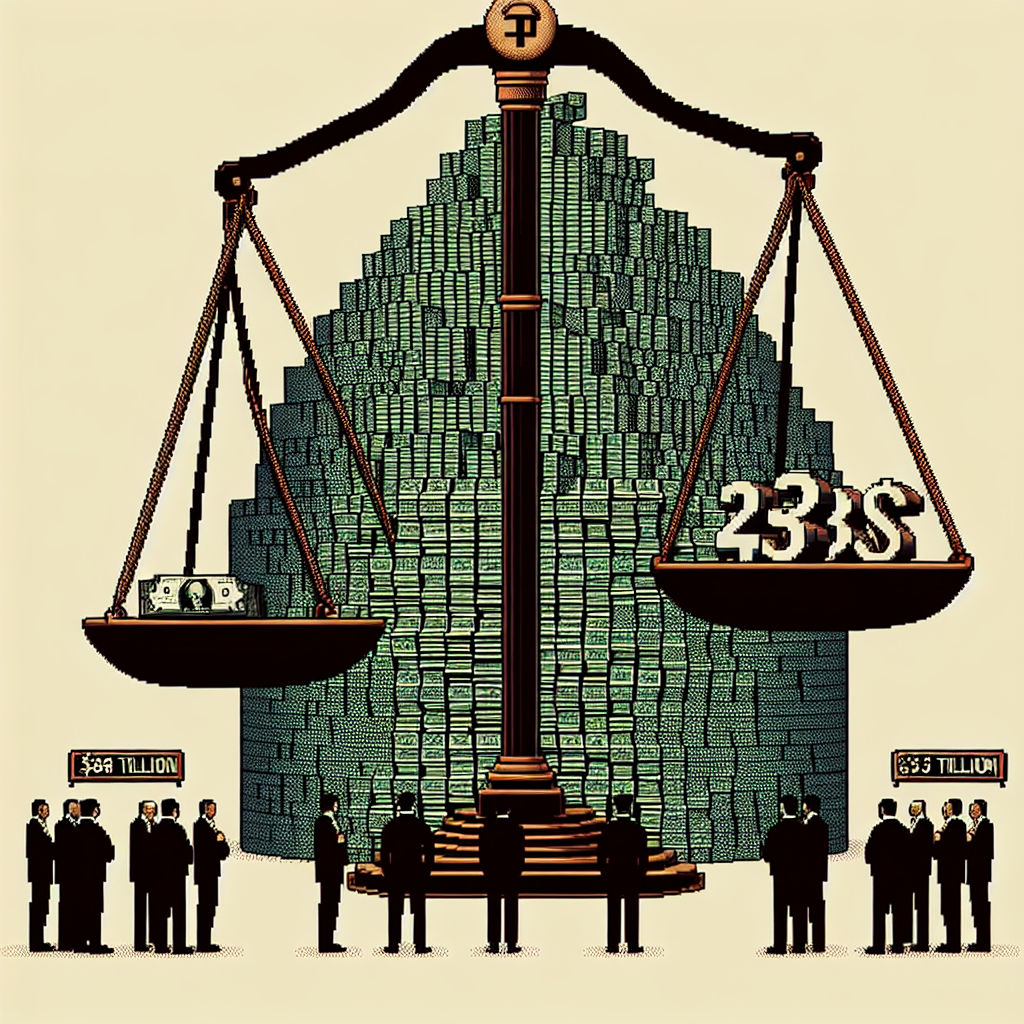
When $38 Trillion Isn’t Just a Number: How America’s Debt Could Tip the Generational Scales

We love big round numbers until they start deciding our futures. $38 trillion is one of those numbers — headline-grabbing, slightly abstract, but increasingly real for anyone trying to buy a home, save for college, or imagine retirement. A recent think‑tank note picked up by Fortune warns that America’s mounting national debt won’t fall evenly across the population: it will weigh on younger generations the most. That warning deserves a closer look.

A quick, human-sized snapshot

  • The U.S. federal debt has crossed the $38 trillion mark in 2025, a milestone reached faster than many expected. (fortune.com)
  • Rising interest costs are already a major budget item; they threaten to crowd out spending on education, infrastructure, research — things that boost long‑term prosperity. (fortune.com)
  • Jordan Haring, director of fiscal policy at the American Action Forum, warns that these developments exacerbate generational imbalances, shifting costs onto millennials, Gen Z, and future workers. (fortune.com)

Why generational imbalance matters (and why this isn’t just political theater)

Think of the federal budget like a household budget that’s borrowed to stay comfortable. When debt servicing (interest) grows, less is left for investments that raise future incomes — schools, roads, basic research, child care supports. The American Action Forum’s analysis, cited in Fortune, makes three linked points:

  • Higher interest costs mean a bigger share of tax dollars goes to past borrowing instead of future growth. (fortune.com)
  • Demographic trends (aging population, lower birth rates) increase pressure on entitlement spending while shrinking the relative size of the workforce that finances those promises. (fortune.com)
  • If policymakers don’t change course, younger cohorts will face either higher taxes, reduced benefits, or both — plus slower wage growth if public and private investment is crowded out. (fortune.com)

That dynamic creates a policy trap: politically powerful older voters push to preserve benefits earned under prior rules, while younger voters—who will carry the fiscal burden—have less political leverage today.

The mechanics: how debt becomes a generational problem

  • Interest and crowding out
    As the debt rises, interest payments climb. Those dollars are fungible: every extra dollar to interest is a dollar not available for things that foster growth. Over time, that constraints opportunity for younger workers. (pgpf.org)

  • Demographics and entitlement pressure
    Medicare and Social Security scale with an aging population. With fewer workers per retiree, the math becomes harder: either taxes go up or benefits are trimmed — both outcomes bite future generations. (fortune.com)

  • Market reactions and macro risks
    If debt grows faster than the economy for long, lenders demand higher yields; that raises borrowing costs across the economy (mortgages, business loans), slowing growth and wages — again, a heavier share of the pain lands on those just starting their careers. (fortune.com)

Contrasting views and caveats

  • Not everyone frames the problem the same way. Some economists emphasize growth, inflation dynamics, or monetary policy as the bigger risk drivers rather than demographics alone. High public debt is a vulnerability, but timing and severity of consequences depend on policy responses and macro conditions. (fortune.com)

  • The American Action Forum is a conservative-leaning think tank; critics have disputed past estimates and assumptions. That doesn’t negate the underlying concern — high debt creates constraints — but it does mean projections depend heavily on assumptions about growth, interest rates, and future policy. (fortune.com)

What policy options could ease the burden?

  • Slow debt growth through a mix of spending restraint and revenue measures, ideally spread across program areas so the cost is shared rather than concentrated. (pgpf.org)
  • Re-target or reform entitlement rules to stabilize long‑term obligations (gradual retirement‑age adjustments, means‑testing, or benefit formula tweaks). (fortune.com)
  • Invest in growth-enhancing priorities (education, infrastructure, research) to raise future GDP and improve the debt-to-GDP picture without purely austerity‑style measures. (fortune.com)

None of these are politically painless. Each redistributes costs across time, income groups, or generations — which is why agreement is hard to come by.

What young people (and their allies) should watch for

  • Budget tradeoffs: are rising interest payments displacing education and infrastructure? (pgpf.org)
  • Tax policy design: whether reforms are progressive or regressive will determine who bears new burdens. (fortune.com)
  • Long-term commitments: look at whether short-term fixes are crowding out durable solutions that protect future generations’ economic mobility. (fortune.com)

A few practical questions worth asking policymakers

  • How will proposed fiscal plans change debt trajectories over the next 10–30 years?
  • Which public investments are being prioritized or cut as interest costs rise?
  • Do revenue measures shift the burden toward future workers or distribute it more evenly across incomes and ages?

My take

Numbers like $38 trillion can feel distant, but the policy choices we make now determine whether that sum acts as a drag on future opportunity or a problem we responsibly manage. The American Action Forum’s warning — that younger Americans will disproportionately shoulder the cost — is persuasive in its logic even if specific projections vary. If we want a fairer fiscal future, conversations about debt can’t remain technocratic sidebar arguments; they must center the people who will live with the bill longest.

Sources


Related update: We recently published an article that expands on this topic: read the latest post.


Related update: We recently published an article that expands on this topic: read the latest post.


Related update: We recently published an article that expands on this topic: read the latest post.

Gen Z men with college degrees now have the same unemployment rate as non-grads—a sign that the higher education payoff is dead – Fortune | Analysis by Brian Moineau

Gen Z men with college degrees now have the same unemployment rate as non-grads—a sign that the higher education payoff is dead - Fortune | Analysis by Brian Moineau

The Great Education Debate: Is the College Degree Really Dead for Gen Z?

In a world where the return on investment is the mantra for every decision, the latest findings from Fortune have thrown a curveball into the traditional equation of higher education equals guaranteed success. According to the article, Gen Z men with college degrees are now facing the same unemployment rates as their non-graduate peers. This revelation has ignited debates everywhere about the true value of a college degree in today's rapidly evolving job market.

For decades, a college degree was seen as the golden ticket to a prosperous career. The narrative was simple: invest in education, reap the professional rewards. However, the tide seems to be shifting, especially for Gen Z, the digital-native generation known for challenging norms and redefining success. As the world becomes increasingly interconnected and technology-driven, it's no wonder they're questioning the relevance of traditional educational pathways.

The Gen Z Perspective: A Degree or Not a Degree?

Gen Z, born between 1997 and 2012, are entering the workforce at a time of unprecedented change. The COVID-19 pandemic accelerated remote work, digital transformation, and the gig economy, making it clear that adaptability is key. For many young people, especially those with hefty student loans, the promise of a high-paying job post-graduation seems more like a mirage.

The data showing equal unemployment rates between degree-holding and non-degree-holding Gen Z men adds fuel to the fire. This isn't just about dissatisfaction; it's about a fundamental shift in how we perceive education's role in career success. The tech industry, for instance, famous for its disrupt-or-be-disrupted ethos, is increasingly valuing skills over degrees. Tech giants like Google and Apple have made headlines for hiring based on skill rather than educational pedigree, setting a trend that other industries are beginning to follow.

Global Shifts and the Education Equation

This trend isn't isolated to the United States. Globally, traditional education systems are being scrutinized for their ability to prepare students for the future workforce. In countries like India and China, where education has long been revered as the quintessential ladder to success, there's a growing emphasis on vocational training and skill development. The World Economic Forum has highlighted the importance of lifelong learning, suggesting that adaptability and continuous skill acquisition will be more critical than ever.

Moreover, the rise of online learning platforms like Coursera and edX offers accessible alternatives to conventional degree programs. These platforms provide skills and certifications that are increasingly valued by employers, often at a fraction of the cost of a college degree. With technology evolving at breakneck speed, the need for constant learning and upskilling is undeniable.

A Final Thought: Redefining Success

As the debate rages on, one thing is clear: the definition of success is changing. For Gen Z, it's less about following a prescribed path and more about creating their own. Whether through entrepreneurship, skill-based careers, or traditional professions, this generation is unafraid to challenge the status quo.

The question isn't whether a college degree is dead, but rather how we can adapt our educational systems to meet the needs of a dynamic world. Embracing flexibility, fostering creativity, and prioritizing lifelong learning could be the keys to unlocking a future where education once again equates to opportunity. As we move forward, it may be wise to remember that while the path may be different, the destination—fulfilling, meaningful work—is still the ultimate goal.

Read more about AI in Business

Read more about Latest Sports Trends

Read more about Technology Innovations

Eric Edholm 2025 NFL mock draft 3.0: Four first-round quarterbacks! Jaguars take RB Ashton Jeanty – NFL.com | Analysis by Brian Moineau

Eric Edholm 2025 NFL mock draft 3.0: Four first-round quarterbacks! Jaguars take RB Ashton Jeanty - NFL.com | Analysis by Brian Moineau

Draft Day Drama: Quarterbacks Steal the Spotlight in 2025 NFL Mock Draft

Ah, the NFL Draft—a time of hope, speculation, and dreams as teams across the nation eagerly await the chance to reshape their futures. The 2025 NFL Draft is no exception, and Eric Edholm's final mock draft has fans buzzing: four quarterbacks are projected to go in the first round. Yes, you read that right—four! And if that wasn't enough to stir the pot, running back Ashton Jeanty is expected to go in the top five. Let's dive into this whirlwind of anticipation and see what it means for the league.

Quarterbacks: The Belle of the Ball


In Edholm's mock draft, four quarterbacks are set to be picked in the first round, marking a significant shift in teams' strategies. The NFL has always been a quarterback-driven league, and this year is no different. Whether it's the electric playmaking ability of a dual-threat QB or the precision of a pocket passer, franchises are banking on these young talents to lead them into the future.

This surge in quarterback selections isn't just about filling roster gaps—it's about adapting to the changing dynamics of the game. Take, for instance, the rise of mobile quarterbacks like Lamar Jackson or Jalen Hurts, who have redefined what it means to be a modern NFL quarterback. Teams are now looking for players who can not only throw but also extend plays with their legs, adding a new dimension to their offense.

Ashton Jeanty: The Running Back Renaissance


Amidst the quarterback frenzy, running back Ashton Jeanty has carved out his own spotlight. Projected to go in the top five, Jeanty represents a nod to the traditional power of the ground game. In recent years, the value of running backs has fluctuated, with some teams opting for a "running back by committee" approach. However, Jeanty's potential selection signals a possible renaissance for bell-cow backs who can dominate both in rushing and receiving.

Jeanty's rise is reminiscent of the impact players like Derrick Henry and Christian McCaffrey have had on the league. His ability to break tackles and catch passes out of the backfield makes him a dual-threat weapon that any team would covet.

Connections Beyond the Gridiron


Interestingly, the dynamics of this draft mirror broader societal trends. Just as NFL teams are searching for versatile players, businesses worldwide are increasingly valuing adaptability and multi-talented individuals. In a rapidly changing world, whether in sports or the corporate arena, the ability to pivot and perform multiple roles is more valuable than ever.

Moreover, the theme of youth leadership extends beyond football. With Gen Z stepping into more significant roles across various sectors, there's a parallel to the NFL's infusion of young quarterback talent—both are reshaping their respective landscapes with fresh perspectives and innovative approaches.

Final Thoughts


As the draft day clock ticks down, fans can only speculate which of Edholm's predictions will come true. Will these quarterbacks live up to their hype? Can Ashton Jeanty reignite the running back revolution? One thing is for sure: the 2025 NFL Draft promises to be a spectacle of surprises and potential that could redefine the future of the league.

So, whether you're a die-hard fan or a casual observer, grab your popcorn and get ready for a night of drama, excitement, and endless possibilities. Here's to the future stars of the NFL—may they dazzle us on and off the field.

Read more about AI in Business

Read more about Latest Sports Trends

Read more about Technology Innovations

Why it suddenly feels like every fast-food restaurant has fun, flavored drinks – CNBC | Analysis by Brian Moineau

Why it suddenly feels like every fast-food restaurant has fun, flavored drinks - CNBC | Analysis by Brian Moineau

Sippin' on Sunshine: Why Fast-Food Restaurants Are Shaking Up Their Drink Menus

If you've swung by your favorite fast-food joint lately, you might have noticed that your drink options have expanded beyond the usual lineup of soda fountains. Wendy's, Taco Bell, and Chick-fil-A, among others, are all diving into the realm of "fun, flavored drinks," shaking up their menus to tantalize our taste buds with something a little more adventurous.

So, what's behind this fizzy revolution? It's not just about quenching thirst—it's about creating an experience. These days, consumers are hungry for more than just a meal; they're looking for a taste adventure. And what better way to elevate a quick bite than with a colorful, Instagram-worthy beverage?

The Beverage Renaissance

It's no secret that the beverage industry is experiencing a renaissance. With health-conscious consumers veering away from sugary sodas, fast-food chains have been inspired to innovate. Starbucks led the charge years ago with their vibrant Frappuccinos and Refreshers, setting a high bar for drink creativity. Now, other chains are catching on, crafting drinks that combine exotic flavors, vivid colors, and a dash of nostalgia.

Take Wendy's for instance, which recently introduced a new line of lemonades, including flavors like Pineapple Mango and Tropical Berry. These drinks don't just quench thirst—they transport you to a sunny beach, even if you're just sitting in traffic on your lunch break. Taco Bell, known for its bold and spicy menu, complements its offerings with drinks like the Mountain Dew Baja Blast, a cult favorite that has almost as much fanfare as their tacos.

Beyond the Soda Fountain

The emphasis on unique beverages also signifies a shift in consumer preferences. Millennials and Gen Z, in particular, are driving demand for more varied and health-conscious options. According to a report by Beverage Digest, there's been a noticeable decline in soda consumption over the past decade, while interest in flavored teas, lemonades, and sparkling waters has surged.

These drinks aren't just a treat—they're a statement. They reflect a move towards personalization and choice, allowing customers to customize their meal experience in a way that's uniquely theirs. It's not just about taste—it's about identity, mood, and even social media presence.

A Global Flavor Trend

Interestingly, this trend isn't confined to the U.S. Globally, there's a growing fascination with fun, unique beverages. In Japan, for example, seasonal and limited-edition drinks are a cultural phenomenon, with brands like Coca-Cola and Starbucks frequently launching region-specific flavors that draw long lines and social media buzz. The explosion of bubble tea shops worldwide also underscores this global thirst for novel drink experiences.

Final Sips

In a world where we're constantly seeking new experiences, it's no wonder that fast-food chains are stepping up their drink game. These fun, flavored concoctions are not just beverages; they're a form of escapism, a momentary vacation from the mundane. Whether you're a fan of a zesty lemonade or a sweet tropical tea, there's something exciting about knowing that your next drink could be a passport to a new flavor destination.

So, next time you find yourself at the drive-thru, consider swapping your usual soda for something a little more adventurous. Who knows? You might just find your new favorite sip. Cheers to the beverage renaissance—may it be bright, bold, and delicious!

Read more about AI in Business

Read more about Latest Sports Trends

Read more about Technology Innovations