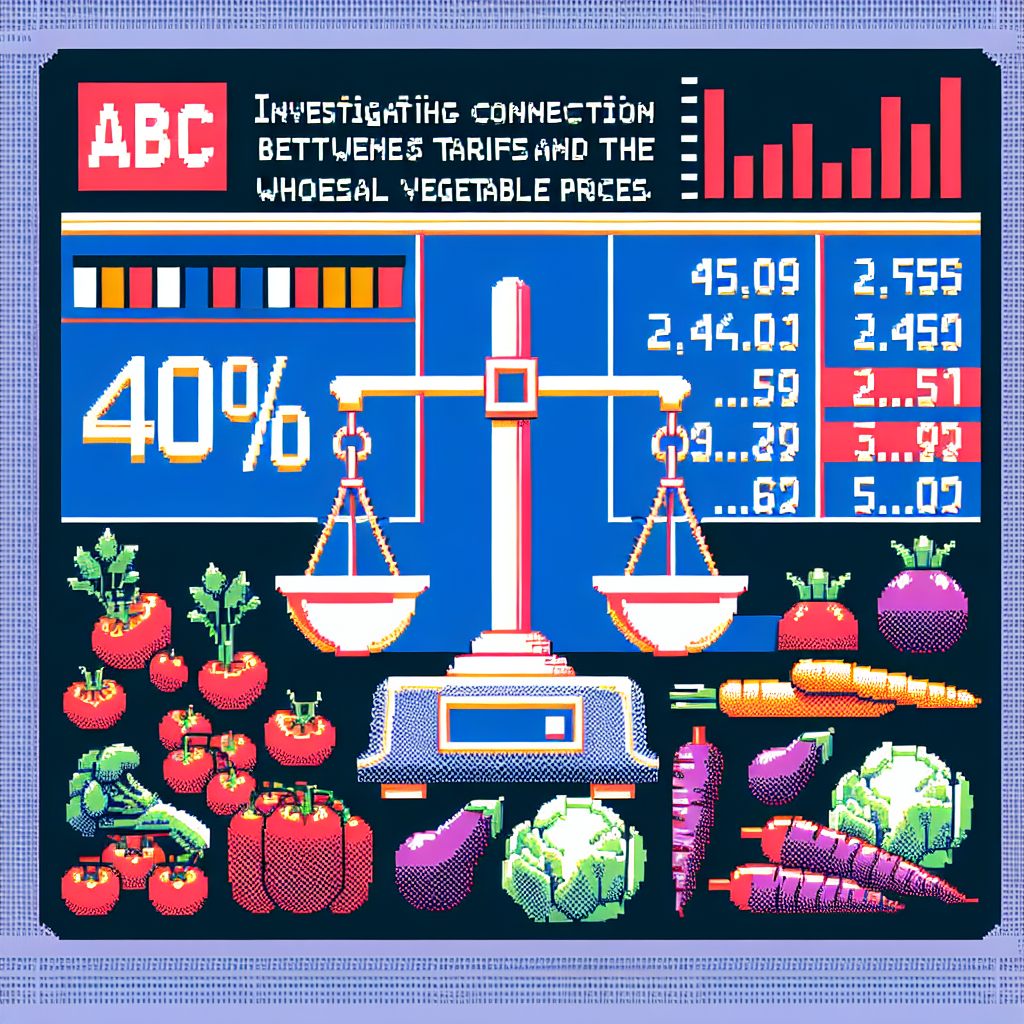
Are tariffs to blame for nearly 40% spike in wholesale vegetable prices? Experts weigh in – ABC News | Analysis by Brian Moineau

Are tariffs to blame for nearly 40% spike in wholesale vegetable prices? Experts weigh in – ABC News | Analysis by Brian Moineau

Title: Veggie Tales: Are Tariffs Turning Our Salads Into Pricey Delicacies?

Hello, dear readers! Today, we’re diving into a topic that’s spicing up dinner conversations and sprouting concerns among both consumers and economists alike. If the latest headline from ABC News is any indication, “Are tariffs to blame for nearly 40% spike in wholesale vegetable prices? Experts weigh in,” there’s quite a lot to chew on.

Now, let’s be honest. We all have a love-hate relationship with vegetables. They’re the unsung heroes of our plates, and while we may not always appreciate a broccoli floret or a spinach leaf, they’re vital for our health. But what happens when these leafy greens and vibrant veggies start costing as much as a prime rib? That’s the question at the heart of this article, and a 40% spike in wholesale prices is enough to raise eyebrows—and grocery bills!

The Tariff Tango

So, what’s driving this price surge? According to some experts, tariffs might be the culprits. Tariffs, for those of us who skipped that day in economics class, are taxes imposed on imported goods. They’re intended to protect domestic industries, but sometimes, they can create a ripple effect that leads to higher consumer costs.

In recent years, tariffs have been a hot topic globally. Remember the U.S.-China trade war? That wasn’t just a headline; it was a major economic event that had repercussions on everything from electronics to agriculture. And while the U.S. has been trying to untangle itself from this tariff web, the effects linger, like the aroma of garlic on your fingers after a good meal prep session.

A Global Green Crunch

But it’s not just tariffs causing our veggie woes. Climate change, labor shortages, and supply chain disruptions are all playing supporting roles in this drama. From droughts in California—America’s salad bowl—to unpredictable weather patterns across Europe, Mother Nature has been less than cooperative. A report from the United Nations’ Food and Agriculture Organization notes that extreme weather has significantly impacted global food production, making it a challenging time for farmers and consumers alike.

Moreover, the COVID-19 pandemic has thrown a wrench in the works, affecting labor markets and transportation networks. Remember when certain items seemed to vanish from store shelves faster than you could say “toilet paper”? Similar disruptions have hit the agricultural sector, complicating the journey from farm to table.

The Global Context

This isn’t just a U.S. problem. Across the pond, the United Kingdom has been grappling with its own set of challenges. Brexit has introduced new tariff barriers and regulatory hurdles, leading to increased costs and shortages. It’s a classic case of “you don’t know what you’ve got until it’s gone”—or in this case, until it’s more expensive.

Final Thoughts: From Farm to Table, and Beyond

So, what’s the takeaway here? As consumers, we might need to brace ourselves for a continued rollercoaster ride in grocery store prices. While tariffs are certainly a piece of the puzzle, they’re just one part of a complex global picture. It’s a reminder of how interconnected our world is and how local policies can have far-reaching effects.

In the meantime, perhaps it’s time to embrace creative cooking—exploring seasonal produce, starting a small home garden, or participating in community-supported agriculture programs. Not only could this help ease the sting of rising prices, but it also brings us closer to the food we eat and the people who grow it.

Here’s hoping for smoother trails and greener pastures ahead. Until next time, may your produce be plentiful and your meals delightful!

Read more about AI in Business

Read more about Latest Sports Trends

Read more about Technology Innovations


Related update: We recently published an article that expands on this topic: read the latest post.

China’s Economy Slows Sharply as Trade War Bites – Bloomberg | Analysis by Brian Moineau

China’s Economy Slows Sharply as Trade War Bites - Bloomberg | Analysis by Brian Moineau

Title: Navigating the Economic Crossroads: China’s Slowdown in a Tumultuous Trade Landscape

In recent months, China’s economic gears have been grinding more slowly than usual, as highlighted in Bloomberg's article, “China’s Economy Slows Sharply as Trade War Bites.” The world’s second-largest economy is experiencing a deceleration across key sectors, including factory activity, investment, and retail sales. This phenomenon is attributed to a combination of internal policy shifts and external pressures, most notably the ripple effects of the ongoing trade war with the United States.

A Complex Economic Tango

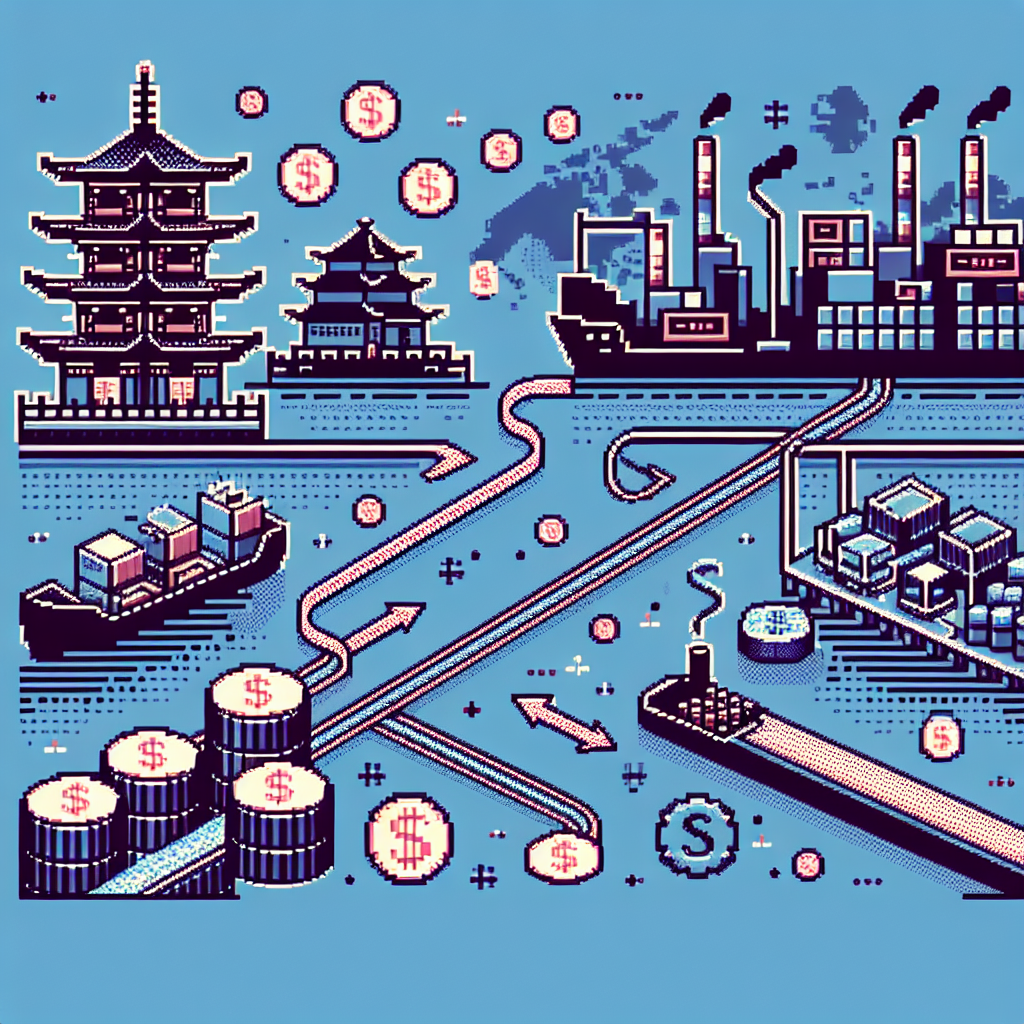
At the heart of this slowdown is a multifaceted dance between domestic policy and international tensions. The Chinese government has been cracking down on destructive price wars, which, while potentially stabilizing in the long run, have led to short-term disruptions. On the other side of the Pacific, former President Donald Trump’s tariffs have left a lingering impact, creating what some might call a “tariff hangover.” These tariffs have not only strained China’s exports but have also led to shifts in global supply chains, with many companies reconsidering their strategies and dependencies on Chinese manufacturing.

Global Ripples

The ripple effects of China’s economic slowdown are felt globally, given its integral role in the worldwide economic orchestra. For instance, Germany, with its export-reliant economy, has witnessed a dip in demand for its goods from China, leading to concerns about its own economic stability. Similarly, emerging markets, which have long relied on Chinese investment and trade, are feeling the tremors of this slowdown.

Interestingly, this situation parallels historical instances where economic superpowers have had to readjust their strategies in response to both internal and external pressures. One can draw comparisons to Japan in the 1990s, when it faced its own economic stagnation, partly due to its rigid economic structure and external pressures. Such historical parallels provide a lens through which we can view China’s current challenges, offering both cautionary tales and lessons in resilience.

A Silver Lining?

While the headlines may seem daunting, every cloud has its silver lining. For China, this slowdown could be an opportunity to pivot towards a more sustainable economic model. The government’s focus on cracking down on price wars and reducing reliance on exports could lead to a more balanced economy, less vulnerable to the whims of global trade tensions.

Moreover, this period of adjustment might spur innovation and diversification within China’s economy. With less emphasis on traditional manufacturing, there’s potential for growth in sectors like technology, renewable energy, and domestic consumption. Indeed, as the world increasingly moves towards a greener and more digital future, China’s strategic shifts could position it as a leader in these burgeoning fields.

Final Thoughts

In the grand tapestry of global economics, China’s current slowdown is but a single thread. While challenges abound, so too do opportunities for reinvention and growth. As China navigates these tumultuous waters, the world watches with bated breath, aware that the outcome will reverberate far beyond its borders.

Ultimately, this moment serves as a reminder of the interconnected nature of our global economy and the delicate balance required to maintain stability. As history has shown, periods of economic turbulence, while daunting, often pave the way for innovation and progress. In the case of China, the world waits to see what new path will emerge from this economic crossroads.

Read more about AI in Business

Read more about Latest Sports Trends

Read more about Technology Innovations

Stock Markets Rally Out of Trump Tariff Slump. This Is the Next Catalyst. – Barron’s | Analysis by Brian Moineau

Stock Markets Rally Out of Trump Tariff Slump. This Is the Next Catalyst. - Barron's | Analysis by Brian Moineau

Riding the Waves: The Stock Market's Rebound from Tariff Troubles

The stock market is a curious beast, isn't it? It ebbs and flows with the news of the day, reacting to global events in a manner that seems almost sentient. Recently, the markets found themselves in a bit of a slump due to the Trump administration's tariffs, a move that sent ripples through the financial world. But just as quickly as the market dipped, it rallied, ever resilient and ready for the next catalyst.

The Tariff Tango

For those of you who might have missed the brouhaha, let's rewind a bit. The tariffs imposed by the Trump administration were part of a larger trade war primarily with China, aimed at boosting domestic manufacturing and reducing the trade deficit. The markets, predictably, didn't take kindly to the uncertainty that these tariffs introduced. Investors, like cats in a room full of rocking chairs, were on edge.

But that's the thing about the markets—they have an uncanny ability to bounce back. Analysts from Barron's suggest that the recent rally is a testament to the market's resilience and its ability to adapt to new economic conditions, no matter how tumultuous.

The Next Catalyst

So, what might be the next big thing to watch for? While Barron's hints at various possibilities, one can't help but consider the role of technology and innovation as potential drivers. We've seen how companies like Tesla have shifted paradigms with their advances in electric vehicles, and how tech giants like Apple and Google continue to push the envelope in AI and consumer tech. These sectors, ripe with innovation, could very well be the next catalysts for market movement.

Moreover, the global shift towards sustainable energy and green tech might also play a pivotal role. Companies are increasingly investing in sustainable practices, which not only appeal to the environmentally conscious investor but also promise long-term growth potential.

Connecting the Dots

Outside the stock market world, there's a lot happening that could tie into these potential catalysts. For instance, the ongoing advancements in AI and machine learning are not just limited to tech companies. Industries ranging from healthcare to agriculture are exploring AI's potential to revolutionize processes, improve efficiency, and ultimately drive economic growth.

Additionally, the political landscape continues to shape economic conditions. With new administrations worldwide, such as the Biden administration in the U.S., there's a renewed focus on infrastructure and clean energy. These initiatives could provide the economic stimulus needed to propel the markets further.

Final Thought

In this ever-connected world, it's clear that the stock market doesn't operate in isolation. It's influenced by a myriad of factors, from political decisions to technological breakthroughs. While the Trump tariffs were a hurdle, the markets have shown their ability to overcome and adapt. The next big catalyst could come from anywhere, but one thing's for sure—the market will be ready, waiting to ride the next wave.

As we watch these developments unfold, one can't help but feel a sense of anticipation. After all, in the world of finance, the only constant is change. So here's to navigating the twists and turns, and maybe even enjoying the ride along the way.

Read more about AI in Business

Read more about Latest Sports Trends

Read more about Technology Innovations

Why China curbing rare earth exports is a huge blow to the US – BBC | Analysis by Brian Moineau

Why China curbing rare earth exports is a huge blow to the US - BBC | Analysis by Brian Moineau

A Rare Move: China's Strategic Play in the Global Trade Chess Game

In the grand chessboard of global trade, few moves have been as calculated and impactful as China's recent decision to curb exports of rare earth minerals to the United States. This strategic maneuver, a counter-punch in the ongoing trade war, has sent ripples through international markets and raised eyebrows across boardrooms from Silicon Valley to Wall Street.

The Glittering Importance of Rare Earths

Rare earth elements might not sparkle like gold or silver, but they are invaluable in the modern world. These 17 elements are critical in the manufacturing of everything from smartphones and electric vehicles to wind turbines and military equipment. In essence, they are the unsung heroes of the technological age.

China, holding a commanding position with about 80% of the world's rare earth supply, has leveraged this dominance as a strategic asset. The suspension of exports to the U.S. is akin to a masterful chess move, putting pressure on the U.S. to reconsider its trade strategies. It's a reminder that, in the high-stakes game of global trade, control over critical resources can be a powerful bargaining chip.

The Broader Implications

This move doesn't just affect the U.S.; it's a wake-up call to the world about the vulnerabilities in global supply chains. The European Union, for example, has already been taking steps to reduce its dependency on Chinese rare earths by exploring alternative suppliers and investing in local production capabilities. Australia's Lynas Rare Earths, one of the few significant producers outside China, has seen a surge in interest and investment.

Meanwhile, the U.S. is not sitting idly by. Efforts are underway to boost domestic production and develop recycling technologies to reclaim rare earths from electronic waste. However, these initiatives will take time to bear fruit, and in the short term, industries reliant on these materials may face disruptions.

Drawing Parallels

This rare earth conundrum is reminiscent of the oil crises of the 1970s when geopolitical tensions led to energy shortages and skyrocketing prices. Both situations underscore the importance of resource independence and the need for diversified supply sources in an interconnected world.

Moreover, the rare earth saga parallels the current push for semiconductor self-sufficiency. With the global chip shortage still fresh in memory, countries are keenly aware of the risks posed by over-reliance on a single supplier or region.

Final Thoughts

China's suspension of rare earth exports is more than just a reaction to trade tensions; it’s a strategic reminder of the interconnectedness and fragility of global supply chains. As nations navigate this complex landscape, the lesson is clear: diversification and innovation are key to resilience.

In the end, the rare earths issue is not just about minerals—it's about understanding and adapting to the dynamics of global power. As the world watches this high-stakes game unfold, one thing is certain: the era of business as usual has come to an end. It's time for new strategies, fresh thinking, and above all, a commitment to collaboration and sustainability in the face of shared challenges.

For more insights on how global trade dynamics are shaping the future, check out [this link](https://www.bbc.com/news/business) to explore additional articles.

Read more about AI in Business

Read more about Latest Sports Trends

Read more about Technology Innovations

Unemployment fears hit worst levels since Covid as tariffs fuel inflation outlook, Fed survey shows – CNBC | Analysis by Brian Moineau

Unemployment fears hit worst levels since Covid as tariffs fuel inflation outlook, Fed survey shows - CNBC | Analysis by Brian Moineau

Navigating the Economic Storm: Unemployment Fears and Inflation Woes


As the world continues to grapple with the aftershocks of the Covid-19 pandemic, it seems we've found ourselves in the economic equivalent of a perfect storm. A recent survey by the Federal Reserve, highlighted in a CNBC article, paints a picture of growing consumer concerns over inflation, unemployment, and the stock market. Let's dive into the heart of these issues and explore their broader implications.

The Tariff Tangle


One of the primary drivers of these economic jitters is the ongoing global trade war. Tariffs, initially introduced as leverage in international negotiations, have started to take a toll on both consumer prices and business operations. It's a bit like playing a high-stakes poker game; every time a country raises its tariffs, it risks driving up inflation, which in turn impacts everything from grocery bills to mortgage rates.

This isn't the first time tariffs have stirred the economic pot. History is peppered with examples, such as the Smoot-Hawley Tariff Act of 1930, which many economists believe exacerbated the Great Depression. While today's global economy is vastly different, the fundamental principles remain the same: trade barriers often come with unintended consequences.

Rising Unemployment Fears


Adding another layer of anxiety is the specter of unemployment. The pandemic-induced job market recovery, while robust in some sectors, remains uneven. Industries like hospitality and travel have bounced back with vigor, but others, especially those reliant on international supply chains, continue to struggle.

According to the Fed's survey, consumer confidence in job security is at its lowest since the height of the pandemic. This unease is not unfounded; the ripple effects of supply chain disruptions and increased production costs can lead to job cuts as companies seek to preserve their bottom lines.

Inflation: The Silent Wallet Drainer


Inflation is the silent economic force that erodes purchasing power. As tariffs drive up production costs, these increases are often passed down to consumers. The result? Higher prices on everyday goods and services. The Fed's survey reveals that these inflationary pressures are a major concern for consumers, who fear that their hard-earned dollars will stretch less and less.

The situation isn't entirely bleak, though. Some economists argue that moderate inflation can be a sign of a growing economy. However, when inflation outpaces wage growth, it can lead to decreased consumer spending, which in turn slows economic growth—a delicate balance that policymakers must manage.

A Broader Perspective


While these economic challenges may seem daunting, it's crucial to remember that the world has faced similar trials before and emerged stronger. For instance, during the 2008 financial crisis, coordinated global efforts led to significant economic reforms that bolstered financial systems worldwide.

Moreover, innovation continues to thrive despite these challenges. Just look at the rise of remote work technologies and the rapid development of vaccines during the pandemic. These advancements not only address immediate needs but also lay the groundwork for future growth.

In the broader context, geopolitical tensions, like those between the US and China, also play a significant role in shaping economic landscapes. As countries navigate these complex relationships, the emphasis on diplomacy and cooperation becomes ever more critical.

Final Thoughts


While the current economic landscape may feel uncertain, it's essential to approach these challenges with both caution and optimism. Consumers and businesses alike must remain adaptable, as flexibility is often the key to weathering economic storms.

As we look ahead, the lessons learned from past crises can guide us. By fostering innovation, strengthening global cooperation, and prioritizing economic stability, we can overcome these hurdles and pave the way for a more resilient future.

In the words of Winston Churchill, "A pessimist sees the difficulty in every opportunity; an optimist sees the opportunity in every difficulty." As we navigate these turbulent times, let's choose optimism and work towards a brighter economic future.

Read more about AI in Business

Read more about Latest Sports Trends

Read more about Technology Innovations