Megazilla vs Godzilla: Ford V8 Showdown | Analysis by Brian Moineau

When Ford turned Godzilla into Megazilla: a friendly explainer

You know that feeling when a factory truck engine moonlights as a hot-rod hero? Ford did exactly that. The Godzilla V8 started life as a burly, no-nonsense 7.3‑liter powerplant for Super Duty trucks — built for durability and torque — and Ford Performance then took that same basic architecture and forged it into Megazilla: a high-performance crate engine aimed at builders who want big displacement with even bigger attitude.

Below I break down what’s actually different between the two, why those differences matter, and whether the price jump is justifiable for different kinds of projects.

Quick highlights

  • Godzilla = the stock 7.3L truck engine: reliable, simple, tuned for longevity and towing.
  • Megazilla = a factory-built high-performance version of the same 7.3L platform with upgraded internals, heads, and a larger throttle body — roughly +180–185 hp and a huge torque bump.
  • Megazilla is sold as a crate engine and carries a much higher price and competition-use positioning compared with the more utilitarian Godzilla.

Why people care: the setup and the story

When Ford introduced the Godzilla 7.3L (around 2020), it wasn’t trying to win a horsepower war. It was offering a big-displacement pushrod V8 for heavy-duty trucks that favors durability, serviceability, and broad torque. That engine’s cast‑iron block, simple cam‑in‑block pushrod layout, and conservative internals made it ideal for work trucks.

Enter Megazilla: Ford Performance saw a platform with tons of potential and built a crate engine that keeps the block and displacement but swaps in stronger internals and performance cylinder heads to make a thoroughly different animal — one aimed at hot rods, track cars, desert rigs, and high‑power builds.

Key technical differences

  • Displacement and block
    • Both are 7.3 liters with the same cast‑iron block — the shared foundation is part of what makes this transition possible.
  • Internals
    • Godzilla: production truck internals (hypereutectic pistons or similar factory pieces, powdered‑metal connecting rods in the standard form).
    • Megazilla: forged Mahle pistons, forged Callies H‑beam connecting rods, and other beefed‑up hardware to handle much higher rpm and power.
  • Cylinder heads and breathing
    • Megazilla gets CNC‑ported, higher‑flow heads and a larger throttle body (reported ~92 mm vs the Godzilla’s ~80 mm) plus a low‑profile intake to improve airflow.
  • Cam and valve train
    • The Megazilla’s cam and valve gear are tuned for more aggressive timing and higher powerband compared with the truck tune.
  • Power and torque (real-world, factory figures)
    • Godzilla (stock truck tune): ~430 hp and about 475 lb‑ft (varies slightly by model year/tune).
    • Megazilla (naturally aspirated crate engine): ~615 hp and roughly 638 lb‑ft of torque (peak and usable torque is much broader).
  • Forced‑induction option
    • Ford and aftermarket builders have pushed the platform even further — Ford Performance later offered a supercharged “Megazilla 2.0” that can exceed 1,000 hp for competition use.
  • Legality and intended use
    • Godzilla is a production, emissions‑compliant engine used in Super Duty trucks.
    • Megazilla crate engines are positioned for builds; higher‑output or supercharged variants are often flagged for competition or off‑road use (non‑street legal in some configurations).

The numbers that catch attention

  • Horsepower delta: Megazilla ≈ 615 hp vs Godzilla ≈ 430 hp — roughly +180–185 hp.
  • Torque delta: Megazilla peaks around the mid‑600s lb‑ft vs Godzilla’s mid‑400s — a dramatic increase and much more usable across the rev range.
  • Price delta: Godzilla crate engines or production installations are available for much less (Godzilla crate pricing has been listed in the low‑$9k range historically), whereas Ford listed the Megazilla crate engine at around $22,995 when it went on sale — a sizable premium for the performance hardware and turn‑key nature.

So, is the Megazilla “worth it”?

  • For hot‑rod builders, race teams, desert racers, or anyone who wants a straight, factory‑supported path to big, reliable NA V8 power — yes, Megazilla is compelling. It removes much of the guesswork and fabrication required to push a truck engine to these numbers.
  • For truck owners who prioritize towing, longevity, and emissions compliance, the stock Godzilla is the practical choice. It’s lighter on wallet, proven in work use, and fully road‑legal in production trucks.
  • For budget-minded tuners, some may prefer buying a Godzilla crate engine and upgrading specific components themselves; that can be cheaper but takes time, expertise, and risk.

My take

There’s something deliciously irreverent about Ford turning a cast‑iron truck V8 into a crate engine with supercar‑level horsepower. Megazilla isn’t just “more Godzilla”; it’s a factory‑built answer to a specific demand: builders wanting a big‑bore, durable V8 that’s already optimized for high power. The price is steep, but for many it’s the convenience, reliability, and Ford Performance backing that seal the deal.

If you’re building a trophy truck, a track monster, or a high‑power restomod and your budget isn’t shy, Megazilla is a turnkey shortcut to headline numbers. If you’re after a straightforward, workaday V8 that won’t get you arrested or exceed emissions limits, Godzilla remains an elegant and sensible choice.

Sources


Related update: We recently published an article that expands on this topic: read the latest post.
Related update: We recently published an article that expands on this topic: read the latest post.


Related update: We recently published an article that expands on this topic: read the latest post.

Hyrule Warriors Plans Two Free Updates | Analysis by Brian Moineau

Hyrule Warriors: Age of Imprisonment already thinking ahead — two free updates are coming

The moment you boot up a new Zelda game you start imagining what else could be added: fresh characters, cheeky costumes, new challenges to sink time into. Hyrule Warriors: Age of Imprisonment barely landed on Nintendo Switch 2 (released November 6, 2025) and the developer has already teased two free updates. That’s the kind of post-launch roadmap that keeps a community buzzing — and it says a lot about how Nintendo and Koei Tecmo want this Zelda Musou to live and grow.

Why this matters (and why it feels smart)

  • Hyrule Warriors is built on momentum. The series thrives on roster expansions, extra modes and community longevity — free updates are an obvious way to encourage more players to jump back in.
  • The switch (no pun intended) to Switch 2 hardware and the game’s canonical ties to Tears of the Kingdom mean this title isn’t just another spin-off: it’s a narrative and technical statement. Supporting it post-launch keeps the narrative hooks fresh and gives developers room to refine multiplayer and mission balance.
  • A day-one patch already fixed a few progress-blocking bugs and added a quality-of-life shortcut (version 1.0.1, released November 5, 2025). Announcing future free updates this early signals confidence and a desire to maintain goodwill with fans.

What we know so far

  • The game launched on Nintendo Switch 2 on November 6, 2025. Nintendo’s official page confirms the release and core features such as split-screen co-op and GameShare. (See Sources.)
  • Nintendo Life and other outlets picked up a message from the official Zelda Musou social account indicating Koei Tecmo’s AAA Games Studio is planning two free updates to “allow fans to enjoy the experience for even longer.” Details about what those updates will include have not yet been revealed. (See Sources.)
  • A day-one patch (version 1.0.1) addressed a few critical issues — split-screen Korok progression bug, a freeze when quitting certain time-rewind battles, GameShare progression problems — and added a convenienced Y-button shortcut to Aside Quests on the map. That patch shipped November 5, 2025. (See Sources.)
  • Community chatter (Reddit, Twitter, fan sites) is already full of hopes: new playable characters (Sonia, Twinrova), costumes, additional missions, challenge modes, and QoL changes. Those are reasonable expectations given the series’ history, but nothing official beyond “two free updates” has been announced.

What the free updates might realistically include

  • New playable characters or costumes
    • Historically, Hyrule Warriors entries often add characters post-launch (both free and paid). Given the game’s large cast and Musou DNA, additional characters are the easiest way to extend longevity.
  • Extra missions/modes
    • Additional challenge maps, rogue-lite arenas, or rotating events keep players returning without massive narrative work.
  • Quality-of-life fixes and balancing
    • Expect more performance tweaks, coop fixes (split-screen is 30fps currently), accessibility options, and mission balancing.
  • Free cosmetic content or weapons
    • Linking save data (Age of Calamity, Tears of the Kingdom) already unlocked bonus weapons — more free unlockables would follow that precedent.

These are not promises — they’re educated guesses based on the studio’s pattern, what’s already been patched, and what fans typically ask for.

Why two free updates — a developer perspective

  • Community retention: Two formal updates are a clear signal to current and potential players that the live service isn’t dead on arrival. It turns a launch weekend into a launch season.
  • Staged development: Releasing content in waves lets the team react to player feedback and telemetry, addressing balance issues and tailoring forthcoming content to what players actually enjoy.
  • Marketing runway: Teasing upcoming free content also gives Nintendo and the developer a reason to re-engage media and influencers a few weeks or months after launch — useful during a crowded holiday season.

What I’m watching next

  • Exact contents, release windows, and whether any additional paid DLC/seasons are announced after the free updates.
  • How split-screen co-op evolves: the 30fps note in co-op was a common critique in early coverage — a performance patch could be a major goodwill move.
  • Which characters the devs prioritize: canonical cast members from Tears of the Kingdom or surprising returns from Age of Calamity-era lore would each send different messages about the game’s long-term direction.

Early impressions, shaped by the roadmap

Hyrule Warriors: Age of Imprisonment launches with the confidence of a team that expects to iterate. A solid day-one patch and the promise of two free updates suggest this is meant to be more than a quick cash-in. For fans of Musou combat and Zelda lore, that’s exciting: it implies developer commitment to polish, add value, and keep the game relevant beyond launch week.

My take

Two free updates is a smart, community-oriented move. It buys trust and gives the developers room to respond to player feedback — from performance to roster wishes. Whether those updates bring playable fan-favorites, new modes, or just polish, the pledge alone makes the game feel like the start of a living project rather than a finished product shipped and forgotten. If you’re on the fence, the roadmap is reason enough to consider picking it up now or keeping an eye on what’s announced next.

Further reading

  • For official launch details and features, see Nintendo’s announcement.
  • For coverage of the free-updates tease and the day-one patch, see the reporting linked below.

Sources


Related update: We recently published an article that expands on this topic: read the latest post.


Related update: We recently published an article that expands on this topic: read the latest post.


Related update: We recently published an article that expands on this topic: read the latest post.

Tommy Tofu, PETA to Protest at Nathan’s Hot Dog Eat Contest in Joey Chestnut’s Return – Bleacher Report | Analysis by Brian Moineau

Tommy Tofu, PETA to Protest at Nathan's Hot Dog Eat Contest in Joey Chestnut's Return - Bleacher Report | Analysis by Brian Moineau

Hot Dogs, Protests, and the Unstoppable Joey Chestnut: A July Fourth Showdown

As fireworks illuminate the sky and the smell of barbecue wafts through the air, the Fourth of July offers a quintessential celebration of American culture. But nestled among the apple pie and patriotic parades is another tradition that captures the nation's attention: the Nathan's Famous Hot Dog Eating Contest. This year, the event promises to be even more intriguing as it marks the return of competitive eating legend Joey Chestnut, while simultaneously serving as a stage for a protest organized by PETA and their character, Tommy Tofu.

The King of Competitive Eating Returns

Joey Chestnut, the undisputed titan of the hot dog realm, is set to make his much-anticipated return to the competition. With 15 titles under his belt, Chestnut has become synonymous with the contest, setting world records and pushing the limits of human consumption. His last appearance saw him devour 76 hot dogs in ten minutes, a feat that left spectators in awe and competitors in the dust. But Chestnut is more than just a competitive eater; he's a symbol of perseverance, discipline, and the quirky yet beloved tradition that is competitive eating.

PETA's Culinary Crusade

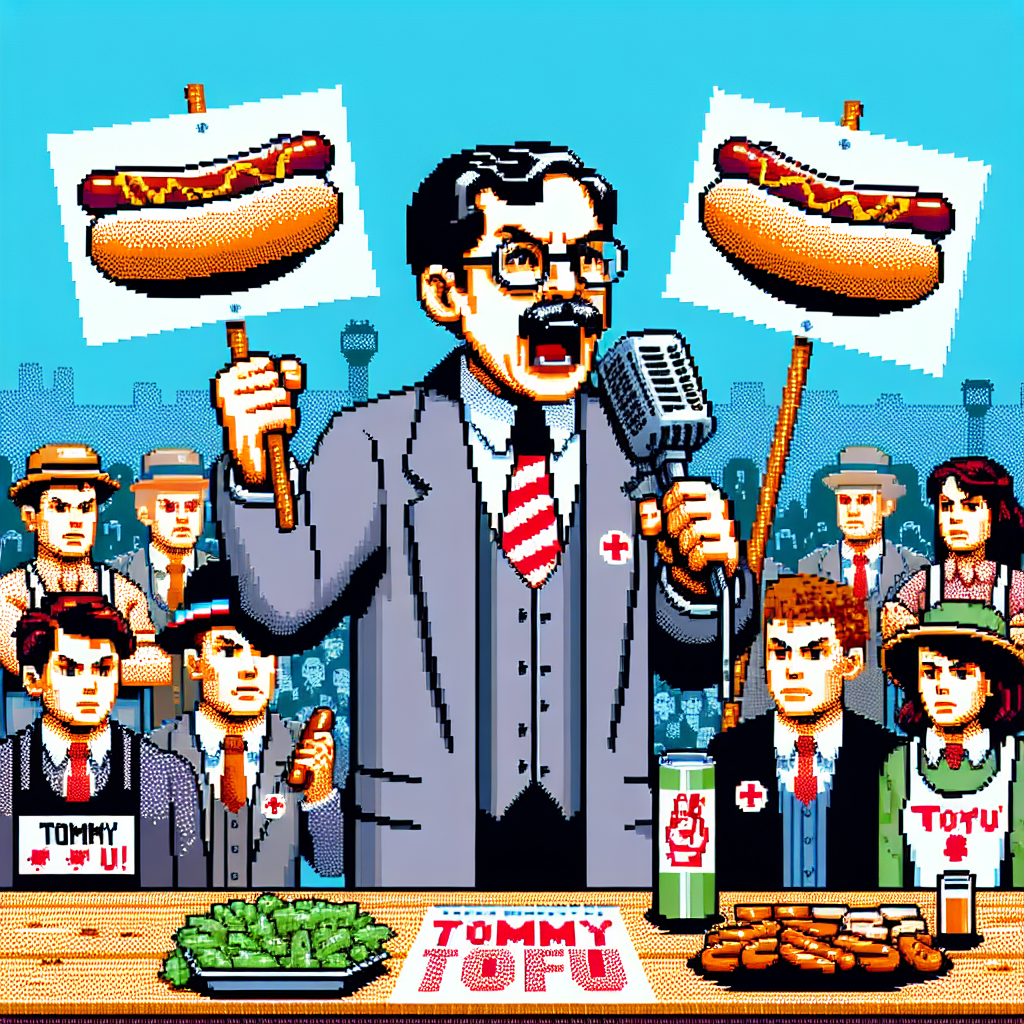
While Chestnut prepares to reclaim his throne, PETA is gearing up for a different kind of spectacle. Armed with their mascot, Tommy Tofu, they aim to shine a light on the ethical implications of meat consumption. This protest is part of PETA's broader mission to advocate for animal rights and promote a plant-based lifestyle. The juxtaposition of Chestnut's hot dog heroics with PETA's passionate plea for compassion highlights a cultural crossroads that extends beyond the boardwalks of Coney Island.

A Broader Cultural Dialogue

This clash of hot dogs and ethics is not occurring in a vacuum. Across the globe, discussions about sustainability, animal welfare, and health are gaining momentum. From the rise of plant-based meat alternatives to the increasing popularity of initiatives like "Meatless Mondays," people are re-evaluating their dietary choices. The protest at Nathan's contest is a microcosm of these larger shifts, reflecting a society that's grappling with the implications of its culinary traditions.

Connecting the Dots

In a world where climate change and resource conservation are at the forefront of global conversations, the implications of meat consumption are more critical than ever. The United Nations has repeatedly highlighted the environmental impact of livestock farming, noting its significant contribution to greenhouse gas emissions. Similarly, documentaries like "Cowspiracy" and "The Game Changers" are influencing public perception, encouraging audiences to think critically about their food choices.

Final Thoughts

As the Nathan's Hot Dog Eating Contest unfolds this year, it's more than just a battle between competitors; it's a dialogue between tradition and transformation. Joey Chestnut's return is a testament to the enduring allure of competitive eating, while PETA's protest underscores the evolving conversations around what we consume. Both sides of the bun, so to speak, offer food for thought—pun intended. Whether you're cheering for Chestnut or championing change with PETA, this year's contest promises to be a memorable one.

In the end, perhaps the real victory lies not in the number of hot dogs eaten or the fervor of the protest but in the ability to celebrate our differences and engage in meaningful conversations about our shared future. So grab your favorite snack, whatever it may be, and enjoy the show!

Read more about AI in Business

Read more about Latest Sports Trends

Read more about Technology Innovations