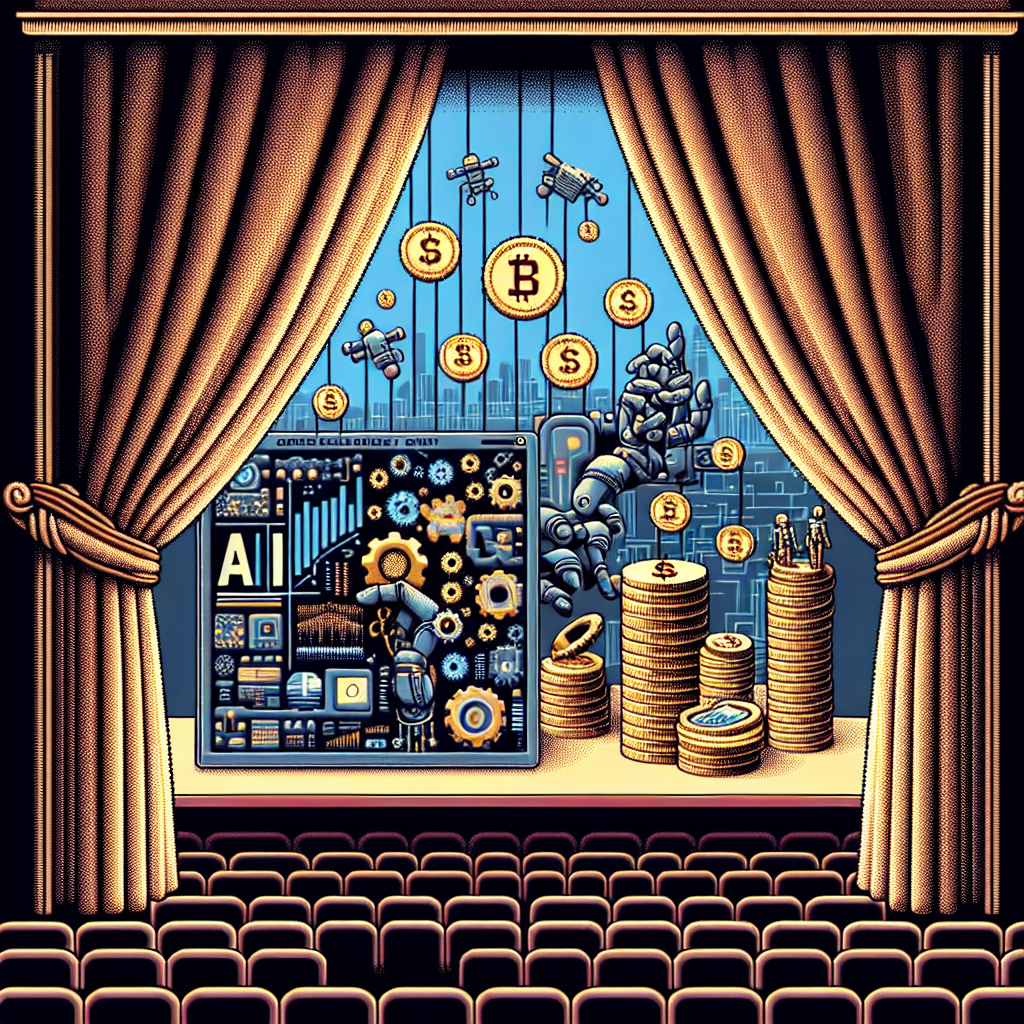
AI Aristocracy: How Wealth Locks Power | Analysis by Brian Moineau

The new aristocracy: how AI is minting a class of "Have-Lots" — and why Washington helps keep them that way

AI isn't just rearranging industries. It's rearranging who gets the upside. Over the past two years, the winners of the AI boom have stopped being a diffuse set of tech founders and turned into a concentrated, politically powerful cohort — the "Have-Lots." They're not just richer; they're increasingly invested in preserving the political and regulatory status quo that lets their gains compound. That matters for jobs, markets, and the future of U.S. policymaking.

At a glance

  • The AI era has created a distinct elite — the Have-Lots — whose wealth rose far faster than the rest of the country in 2025.
  • Their advantage comes from outsized equity positions, privileged access to private deals, and close ties to government.
  • That concentration of money and influence makes policy outcomes (taxes, regulation, export controls, procurement) more likely to favor continuity over disruption.
  • The political consequence: an intensifying split between those who feel left behind and those who are financially insulated, which fuels polarization and public distrust.

Why "Have-Lots" are different this time

We’ve seen wealth concentration before, but AI is amplifying two key dynamics:

  • Ownership leverage. AI value accrues heavily to the owners of critical IP, compute infrastructure, and data. A few companies and their insiders hold disproportionate slices of these assets — and their equity rewards are exponential when AI markets run hot.
  • Private-market exclusivity. Much of the biggest early AI upside lives in private financings, venture rounds, and exclusive partnerships. Regular retail investors and most households simply can't access the same terms or allocations.
  • Policy proximity. The largest AI players are now deeply embedded in Washington — through advisory roles, executive meetings, and lobbying — giving them influence over trade rules, export controls, procurement decisions, and the pace of regulation.

Axios framed the story as three economies — Have-Nots, Haves, and Have-Lots — and showed how 2025 became a banner year for a narrow group of ultra-wealthy Americans tied to AI and tech. The result: a class that benefits from market booms and tends to favor stability in the institutions that enabled their gains. (axios.com)

How money becomes political staying power

Money buys more than yachts. It buys lobbying, think tanks, campaign influence, and the ability to hire teams that translate business goals into policy narratives. A few mechanisms to watch:

  • Lobbying and regulatory capture. Tech companies and large investors spend heavily on lobbying and hire former officials who understand how to shape rulemaking. That raises the cost (and political friction) for hard-curtailing policies.
  • Strategic philanthropy and media influence. Big donations to policy institutes and universities can alter the research and messaging ecosystems, steering public debate toward industry-friendly framings.
  • Access to procurement and export levers. Large AI firms can influence government purchasing decisions and negotiate carve-outs or implementation details that advantage incumbents. When export controls are on the table, these firms lobby for interpretations that preserve critical markets.
  • Defensive investment strategies. The Have-Lots aren't just earning more — they're investing to fortify advantages (exclusive funds, acquisitions, cross-border deals) that make it harder for challengers to scale.

Real-world markers of this dynamic were visible in 2025: outsized gains for several tech founders and investors tied to AI, and public reports of deepening ties between major AI companies and government officials. Those links make changes to the rules — from tougher wealth taxes to stringent antitrust enforcement — both politically and technically harder to push through. (axios.com)

What it means for average Americans and markets

  • Wealth inequality meets political inertia. When the richest segment accumulates both capital and influence, reform that would rebalance outcomes becomes more difficult. That leaves many households feeling the economy is working against them even when headline GDP and markets climb.
  • Labor displacement and retraining get politicized. Workers worried about AI-driven job loss will look for policy fixes. If those fixes threaten concentrated interests, pushback and gridlock are likely.
  • Market distortions. Concentration of AI capital can inflate a narrow set of winners (chipmakers, cloud infra, platform owners) while starving broader innovation in complementary areas. That can deepen sectoral risk even as headline indices rise.
  • Policy unpredictability. The tug-of-war between populist pressures and elite influence can produce swings — intermittent regulation, targeted carve-outs, or transactional interventions — rather than coherent long-term strategy.

Where policymakers might push back (and the headwinds)

  • Wealth and corporate taxation. Targeted tax changes could blunt accumulation, but they face political, legal, and lobbying resistance — especially if the Have-Lots effectively argue that higher taxes will slow innovation or capital investment.
  • Antitrust and competition policy. Strengthening antitrust tools could lower concentration, yet enforcement takes time and expertise, and the enforcement agencies often duel with well-resourced legal teams.
  • Procurement reform and open access. Government can favor open standards and wider procurement rules, but incumbents lobby to maintain advantageous arrangements.
  • Democratizing access to AI gains. Proposals to expand employee equity, broaden retail access to private markets, or invest in public AI infrastructure could help, but they require political coalitions that cut across partisan lines — a tall order in the current climate.

Axios and reporting elsewhere highlight that many of the Have-Lots actively prefer the current mix of regulation and government interaction because it preserves their returns and strategic position. That creates a structural incentive to resist reforms that would meaningfully redistribute AI-driven gains. (axios.com)

My take

We’re at a crossroads where technological change is colliding with political economy. The Have-Lots are not just a distributional outcome — they're a political force. If the U.S. wants AI broadly to raise living standards rather than concentrate windfalls, the policy conversation needs both humility (tech evolves fast) and muscle (policy and public institutions must adapt faster).

That will mean designing pragmatic, durable interventions: smarter tax code adjustments, stronger competition enforcement, transparent procurement that favors open systems, and public investments in training and AI infrastructure that broaden participation. None are magic bullets, but together they can slow the drift toward a permanently bifurcated economy.

Final thoughts

We can admire the innovation that produced AI — and still question who gets the upside. Right now, the Have-Lots have structural advantages that let them lock in gains and political protections. If that trend continues unchecked, it will shape not only markets, but the public’s faith in institutions. The policy challenge is to make the rewards of AI less gated and the rules of the game more inclusive — a task that will require both political courage and technical nuance.

Sources


Related update: We recently published an article that expands on this topic: read the latest post.


Related update: We recently published an article that expands on this topic: read the latest post.

K‑Shaped Recovery: Winners and Losers | Analysis by Brian Moineau

Why everyone’s talking about the “K‑shaped” economy — and why it should make you think twice

You’ve probably heard the phrase “K‑shaped recovery” a few times lately — and not just from economists. It’s showing up in corporate earnings calls, news headlines, and even at kitchen‑table conversations. The image is simple: a K, with one arm shooting up and the other slumping down. But the real story behind that picture is messy, emotional, and getting more relevant to daily life than many of us expected.

What the K really means

  • The upper arm of the K represents higher‑income households: incomes, asset values and spending are rising for people who own lots of stocks, real estate or high‑paying jobs tied to tech and finance.
  • The lower arm represents lower‑ and middle‑income households: wage growth is weak, price pressure (rent, groceries, energy) bites harder, and many people have less ability to spend or save.
  • The result: headline GDP and stock indices can look healthy while large swaths of Americans feel stuck or squeezed.

This isn’t a new concept — economists used “K‑shaped” during the pandemic to describe divergent recoveries. What’s changed is how sharply the split has re‑emerged in 2025 as asset prices and AI‑sector gains lift wealth at the top while pay and hiring cool off for lower‑wage workers.

How we got here: context that matters

  • Pandemic-era policies, huge fiscal responses, shifting labor markets and record‑high tech valuations created a period where asset owners got a disproportionate share of the gains.
  • In 2023–24 some lower‑wage workers saw real wage improvements, narrowing the gap briefly — but that momentum faded in 2025 as inflation‑adjusted wage growth slowed more for the bottom quartile than for the top.
  • The AI boom and heavy corporate investment in data centers and infrastructure have powered big gains for a few companies (and their shareholders) without producing broad wage gains or mass hiring in many sectors.
  • Consumer spending overall continues, but a growing share comes from higher‑income households; lower‑income spending lags, which reshuffles which businesses win and which struggle.

Who’s winning and who’s losing

  • Winners:
    • Households that own stocks and other financial assets. The stock market and gains tied to the AI winners have boosted wealth for the top slice of Americans.
    • Companies that sell premium goods and services to affluent buyers. Luxury retail and high‑end travel show resilience even when mass‑market demand softens.
  • Losers:
    • Lower‑wage workers in retail, hospitality and entry‑level services where hiring and pay growth have cooled.
    • Businesses that rely on broad, volume‑based spending by younger and lower‑income consumers (certain fast‑casual restaurants, budget retailers, travel tailored to younger demographics).

Why this pattern matters beyond headlines

  • Fragile consumer demand: If lower‑ and middle‑income households pull back sharply, overall spending — and corporate revenue — could fall, potentially causing a feedback loop that hits hiring and investment.
  • Policy risks: If policymakers respond by cutting rates or changing tax rules to stoke growth, the effects may again flow unevenly and could widen the gap unless targeted measures accompany them.
  • Social and political consequences: Persistent divergence heightens concerns about affordability, social mobility and the role of public policy in redistributing opportunity.

Signals to watch next

  • Wage growth by income quartile (are lower‑income wages improving or stagnating?)
  • Consumer spending breakdowns by income (is spending concentration at the top growing?)
  • Hiring trends in low‑wage industries (is employment cooling or recovering?)
  • Corporate capex in AI and how much of that translates into broader hiring
  • Stock market concentration vs. household participation (who holds the gains?)

A few practical takeaways

  • For workers: Skills and mobility matter. Sectors tied to AI, cloud infrastructure, health care and trade‑sensitive manufacturing may offer different pathways than retail or entry‑level hospitality.
  • For savers and investors: Recognize concentration risk. Heavy reliance on a handful of tech winners can be rewarding — and risky — if broader demand softens.
  • For businesses: Reassess customer segmentation. Firms that depended on volume from younger or lower‑income consumers may need to tweak pricing, value propositions, or product mix.
  • For policymakers: Monitoring and targeted supports (training, childcare, housing affordability) will be essential to prevent a K‑shaped boom from calcifying into longer‑term inequality.

A few numbers that make it real

  • Bank of America card data (October 2025) showed higher‑income households’ spending grew noticeably faster than lower‑income households (roughly 2.7% vs. 0.7% year‑over‑year in October).
  • Federal Reserve data has long shown stock ownership is heavily concentrated; recent analyses report that the top 10% of households own the vast majority of equities, which amplifies asset‑price gains for the wealthy.
    (These figures help explain why stock rallies lift the top arm of the K much more than they lift the bottom.)

My take

We’re living in an economy that can look simultaneously strong and fragile — strong for people whose wealth is tied to rising assets and fragile for those whose day‑to‑day living depends on wages and price stability. The “K” is a useful shorthand, but it’s not destiny. Policy choices, corporate strategies, and investment in people’s skills and safety nets will decide whether that divergence narrows or becomes structural. If you care about sustainable growth that doesn’t leave large groups behind, pay attention to the signals above — and to how policies shift in the next year.

Sources


Related update: We recently published an article that expands on this topic: read the latest post.


Related update: We recently published an article that expands on this topic: read the latest post.

Donald Trump’s economy falters as US jobs growth grinds to a halt – Financial Times | Analysis by Brian Moineau

Donald Trump’s economy falters as US jobs growth grinds to a halt - Financial Times | Analysis by Brian Moineau

Title: The Economic Rollercoaster: When Promises Meet Reality

In the latest twist of the economic saga under the Trump administration, the Financial Times reports a significant slowdown in US job growth. The promises of prosperity that fueled the rhetoric during the campaign trail are facing a reality check. As the economy experiences this slowdown, it prompts a reflection on the broader implications and what this means for Americans going forward.

A Bumpy Road Ahead

Donald Trump's presidency has been a whirlwind of bold promises and ambitious goals, particularly in the realm of economic growth. From tax cuts to deregulation, his administration aimed to create an environment ripe for job creation and economic prosperity. Yet, as the latest data suggests, the momentum is faltering. This development isn't just a blip on the radar; it raises critical questions about the sustainability of the policies touted as economic saviors.

Global Connections

The US economy doesn't operate in a vacuum. Global events, such as trade tensions and geopolitical uncertainties, have undoubtedly played a role in shaping the current economic landscape. For instance, the trade war with China created ripples across the global economy, impacting everything from agricultural exports to tech industry supply chains. As these tensions simmer, they add layers of complexity to the economic challenges at home.

Moreover, the COVID-19 pandemic has reshaped how economies function worldwide. Its aftermath continues to affect supply chains and consumer behavior, further complicating efforts to revitalize job growth. Meanwhile, other countries are grappling with similar challenges, as they too navigate the intricate dance of economic recovery in a post-pandemic world.

Donald Trump: A Polarizing Figure

Donald Trump's approach to leadership and policy-making has always been characterized by his distinctive style and often controversial decisions. Love him or loathe him, his tenure has undeniably impacted the economic and political landscape. While some hail his efforts to cut red tape and lower taxes, others criticize the long-term sustainability of these measures and their impact on income inequality and public debt.

Looking Beyond the Numbers

While the current economic data may seem disheartening, it's essential to remember that economies are inherently cyclical. Slowdowns can be opportunities to recalibrate and address underlying issues that might have been overlooked during periods of rapid growth. This moment offers policymakers a chance to reassess strategies and invest in sustainable, inclusive growth that benefits all Americans.

Final Thoughts

As we observe the unfolding economic narrative, it's crucial to approach the situation with a balanced perspective. The numbers tell one part of the story, but the human element and the broader context complete it. The current economic challenges are not insurmountable, but they do require thoughtful, collaborative solutions that transcend political divides.

In the end, the ultimate question remains: Can the promises of prosperity be fulfilled in a way that withstands the test of time and turbulence? Only time will tell, but one thing is certain—economic resilience will depend on adaptability, innovation, and a willingness to learn from both successes and setbacks.

Read more about AI in Business

Read more about Latest Sports Trends

Read more about Technology Innovations