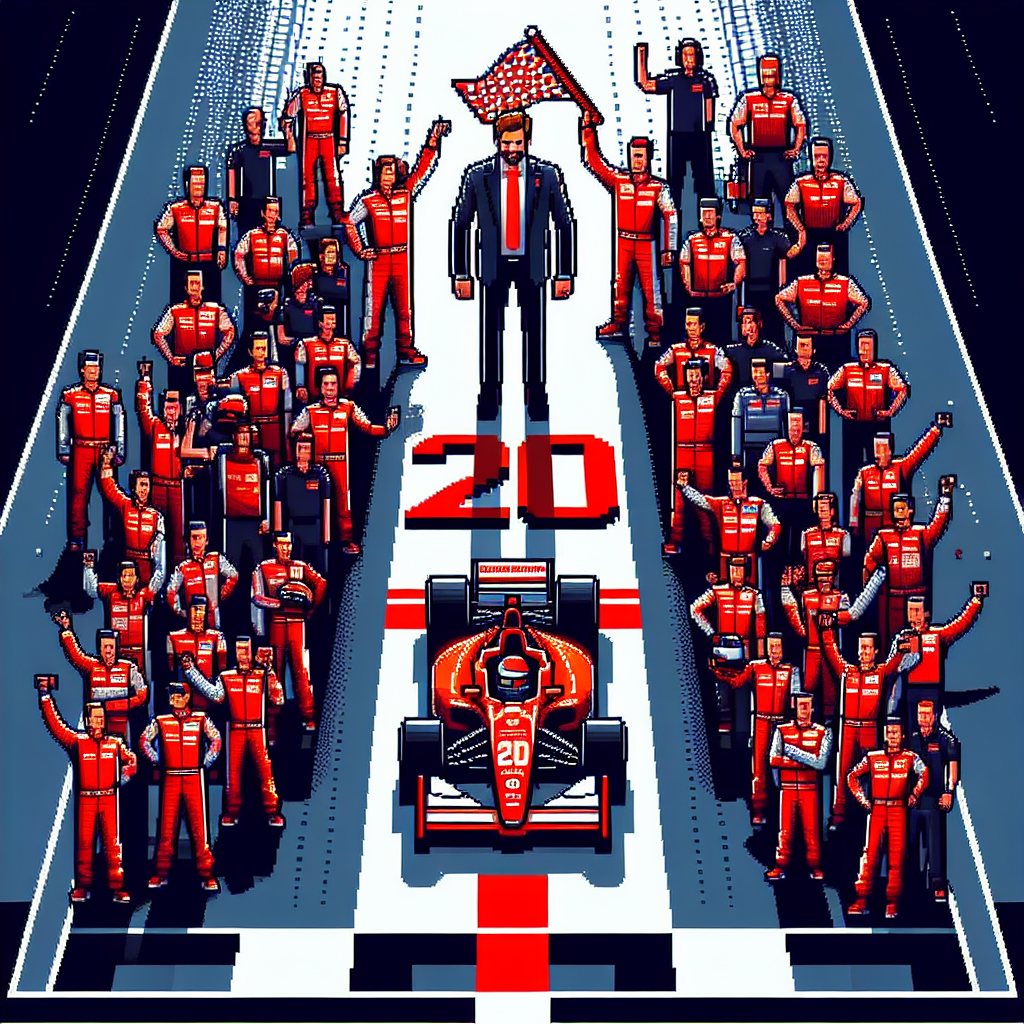
Red Bull team principal Christian Horner fired after 20 years with team – CNN | Analysis by Brian Moineau

Red Bull team principal Christian Horner fired after 20 years with team - CNN | Analysis by Brian Moineau

Title: Shifting Gears: The End of an Era for Red Bull Racing and Christian Horner

In a surprising turn of events that has left the motorsport world abuzz, Christian Horner, a stalwart of Red Bull Racing, has been dismissed from his role as team principal after a remarkable two-decade tenure. This news, confirmed by a team spokesperson to CNN Sports, marks the end of an era for the team and the man who has been a pivotal figure in its rise to prominence in Formula 1.

Horner's journey with Red Bull Racing reads like a script from a high-octane sports drama. Joining the team in 2005, he was the youngest team principal in the paddock at the time, just 31 years old. Under his leadership, Red Bull transformed from a plucky underdog into a dominant force, clinching four consecutive Constructors' Championships between 2010 and 2013. Drivers like Sebastian Vettel and Max Verstappen flourished under his guidance, with Vettel securing four Drivers' Championships during those golden years.

In many ways, Horner's story parallels other high-profile leadership changes in the sporting world. Consider the recent shift at FC Barcelona, where club icon Lionel Messi's departure not only signaled the end of an era but also forced the club into a new chapter of rebuilding. Similarly, Horner's exit might signify a period of recalibration for Red Bull Racing—a chance to innovate and adapt in the fast-evolving landscape of Formula 1.

Horner's influence extended beyond the racetrack. Known for his charismatic yet sometimes controversial presence, he was often a prominent voice in paddock politics, sparring with rivals like Mercedes' Toto Wolff. Yet, his passion for the sport and his team was never in doubt. As Red Bull now looks to the future, it will be interesting to see who steps into the void left by Horner's departure.

In the broader context, Horner's firing is a reminder of the relentless pace of change in sports and beyond. Just as tech companies pivot and evolve with market demands, sports teams must also adapt to remain competitive. Red Bull's decision might be driven by the need to inject fresh energy and ideas into the team as Formula 1 heads into a new era with evolving regulations and a growing emphasis on sustainability.

As we witness this seismic shift, one can draw parallels with other industries where leadership changes often herald new directions and strategies. The automotive industry, for instance, is undergoing its own transformation with the rise of electric vehicles and autonomous driving technologies. Similarly, Red Bull Racing might seek to innovate and redefine itself in the post-Horner era, balancing its rich legacy with the need to embrace the future.

In conclusion, while Christian Horner's departure marks the end of a significant chapter in Red Bull Racing's history, it also opens the door to new possibilities. As fans and analysts alike speculate on what comes next, one thing is certain: the world of Formula 1, much like life itself, is ever-evolving, full of unexpected turns and thrilling challenges. Here's to the next chapter in the high-speed saga of Red Bull Racing—may it be as exhilarating as the last.

Read more about AI in Business

Read more about Latest Sports Trends

Read more about Technology Innovations

Unilever Ousts Chief and Elevates CFO in Surprise Move – Bloomberg | Analysis by Brian Moineau

Unilever Ousts Chief and Elevates CFO in Surprise Move - Bloomberg | Analysis by Brian Moineau

Title: Unilever's Leadership Shake-Up: A Lesson in Corporate Patience and Progress

In a surprising twist that even the most seasoned corporate analysts might not have seen coming, Unilever Plc has decided to part ways with its Chief Executive Officer, Hein Schumacher, after a tenure that lasted less than two years. This abrupt leadership change has sent ripples through the business world, sparking discussions about the ever-evolving demands of corporate leadership and the pace of restructuring in giant conglomerates.

Unilever, a household name known for its diverse portfolio—which includes beloved brands like Hellmann’s mayonnaise and Ben & Jerry’s ice cream—has been on a journey of transformation. However, it seems that Hein Schumacher’s vision and pace did not align with the board's expectations. In a move signaling urgency for change, the company has elevated its CFO, suggesting a shift towards a more financially driven strategy.

### The Hein Schumacher Chapter

Schumacher’s short-lived leadership at Unilever is a testament to the high stakes and swift decision-making that characterize the upper echelons of the corporate hierarchy. Coming from a robust background in the consumer goods sector, Schumacher was expected to usher in a new era of innovation and efficiency. However, his tenure highlights a critical lesson: even seasoned leaders with impressive track records can face challenges when aligning with the strategic tempo set by a board.

While we may not know the intricate details of the boardroom dynamics, Schumacher’s exit underscores the importance of adaptability in leadership roles. It's a reminder that success in such positions often hinges not only on implementing change but doing so at a pace that satisfies diverse stakeholders.

### Lessons from Other Industries

Unilever's situation isn't unique in the corporate world. The tech industry, for instance, offers parallel narratives. Consider the case of John Sculley, former CEO of Apple, whose leadership was marked by both innovation and controversy, leading to his eventual departure. Much like Schumacher, Sculley faced the challenge of balancing visionary change with the expectations of a deeply invested board.

Similarly, in the world of sports, coaches and managers often face swift exits when their vision doesn’t translate into victories. The recent sacking of Chelsea FC's manager after a string of disappointing performances is a case in point. These scenarios across industries reveal a common theme: the delicate balance between long-term strategy and short-term results.

### The Road Ahead for Unilever

With the CFO stepping into a more prominent role, Unilever seems poised to focus on financial stability and possibly a more conservative restructuring approach. This change could mean a sharpening of focus on core brands, streamlining operations, and enhancing shareholder value. The board's decision reflects a growing trend in corporate governance where financial acumen is increasingly valued in top leadership positions.

### Final Thoughts

As Unilever navigates this transition, it serves as a reminder of the age-old adage that change is the only constant. For stakeholders, it's crucial to recognize that leadership changes, while often unsettling, can pave the way for fresh perspectives and renewed vigor in business strategy.

In the broader business landscape, this episode at Unilever is a cue for leaders across sectors to continually assess their approach, ensuring alignment with both market demands and internal expectations. Ultimately, whether in consumer goods, technology, or sports, the ability to adapt and thrive amidst change remains a timeless requisite for success.

So, as we watch Unilever's next chapter unfold, let's keep an eye on how this strategic pivot plays out—because in the business world, the only thing more certain than change is the intrigue it brings along.

Read more about AI in Business

Read more about Latest Sports Trends

Read more about Technology Innovations