Nvidia’s China Chip Move: Big Profit | Analysis by Brian Moineau

A late present under the tree: Why Nvidia’s potential China chip push matters more than holiday cheer

Imagine waking up after the holidays to learn a company you already loved just found a way to add billions to next year’s revenue outlook — and the market’s mood changes overnight. That’s the vibe around Nvidia right now, after multiple reports in late December 2025 that it has sounded out Taiwan Semiconductor Manufacturing Co. (TSMC) to ramp up production of its H200 AI chips to meet surging Chinese demand.

This isn’t just another supply-chain footnote. It’s a story that ties together geopolitics, export policy, product lifecycle management, and the very real question investors keep asking: can Nvidia keep turning AI momentum into sustainable profits?

Why this news grabbed headlines

  • Reuters reported on December 31, 2025 that Nvidia has asked TSMC about boosting H200 output because Chinese technology firms have reportedly placed more than 2 million H200 orders for 2026, while Nvidia’s on-hand inventory sits near 700,000 units. (reuters.com)
  • The H200 is a high-performance Hopper-architecture GPU built on TSMC’s 4nm process and is positioned well above the H20 variants previously permitted for China. The potential sales could recapture some of the revenue Nvidia lost during export restrictions and inventory writedowns earlier in the year. (reuters.com)
  • The reports are sourced to anonymous insiders and Reuters’ coverage makes clear regulatory and approval steps — particularly in China and via U.S. licensing — remain unresolved. That means upside exists, but risks and execution hurdles are material. (reuters.com)

Quick snapshot of the backdrop

  • 2025 saw Nvidia enjoy strong AI-driven gains early in the year (the stock rose substantially year-to-date), but the second half cooled as investors worried about growth sustainability, supply constraints, and geopolitically driven trade frictions. (aol.com)
  • U.S. export policy earlier in 2025 had constrained Nvidia’s ability to ship its most powerful chips into China; the company developed China-specific variants (like H20) to address that market. Later policy shifts introduced limited pathways for H200 shipments under license and with fees, reopening a big demand pool. (investing.com)
  • Chinese hyperscalers and internet firms — reportedly including ByteDance-sized buyers — are aggressively expanding AI infrastructure spending, making China an addressable and lucrative market if regulatory approvals and supply can be aligned. (reuters.com)

What this could mean for Nvidia (and investors)

  • Near-term revenue relief: Filling a 2-million-unit order book (even partially) at H200 price points would be a multi-billion-dollar revenue boost that could help reverse the inventory write-downs Nvidia took earlier and improve near-term cash flow. (reuters.com)
  • Supply balancing act: Ramping H200 production while launching/expanding Blackwell and Rubin series chips globally requires careful capacity planning. Prioritizing one market could tighten supply elsewhere and affect pricing and customer relationships. (investing.com)
  • Regulatory and political risk: Even with U.S. approvals loosening in specific ways, shipments to China still require licenses and potentially conditions (tariffs, bundling with domestic chips, or limits). Beijing’s own approval pathways could further complicate delivery. Execution risk is high. (reuters.com)
  • Valuation sensitivity: Markets have already priced a lot of AI optimism into Nvidia. Concrete evidence that China demand translates into recognized sales and margin recovery would justify further re-rating; conversely, delays or regulatory blocks could trigger renewed volatility. (finance.yahoo.com)

A few practical scenarios to watch in early 2026

  • Official confirmations: Nvidia or TSMC comments confirming new H200 production orders or schedules would materially reduce uncertainty.
  • Regulatory signals: U.S. Commerce Department license approvals and any Chinese import approvals (or conditions) will be immediate market catalysts.
  • Delivery timing: Reports that initial shipments will arrive before the Lunar New Year (mid-February 2026) would accelerate revenue recognition expectations — but failure to meet such timing would raise execution questions. (investing.com)

Points investors should keep top of mind

  • This story is a high-upside, high-uncertainty event: the potential gains are real, but so are regulatory and supply risks.
  • Nvidia’s strategic play is logical: retain developer mindshare in China and prevent customers from migrating to domestic alternatives while also protecting global product roadmaps.
  • Market reaction will depend on the clarity of confirmations — rumors lift sentiment, but confirmed orders and deliveries move the needle on fundamentals.

Final thoughts

Nvidia sounding out TSMC to boost H200 output is the kind of development that can flip a narrative: from “AI hype run” to “execution that converts enormous demand into actual revenue.” Still, investors should treat late-December reports as the start of a story, not the ending. The coming weeks — regulatory approvals, official company statements, and any first shipment confirmations — will be the proof points that determine whether this “late Christmas gift” truly arrives or remains an exciting, but unrealized, possibility.

If you’re following Nvidia for its AI leadership and revenue upside, watch the supply-and-regulatory milestones closely. They’ll tell you whether this is a material new chapter in the company’s growth or another tantalizing but tentative headline.

Sources

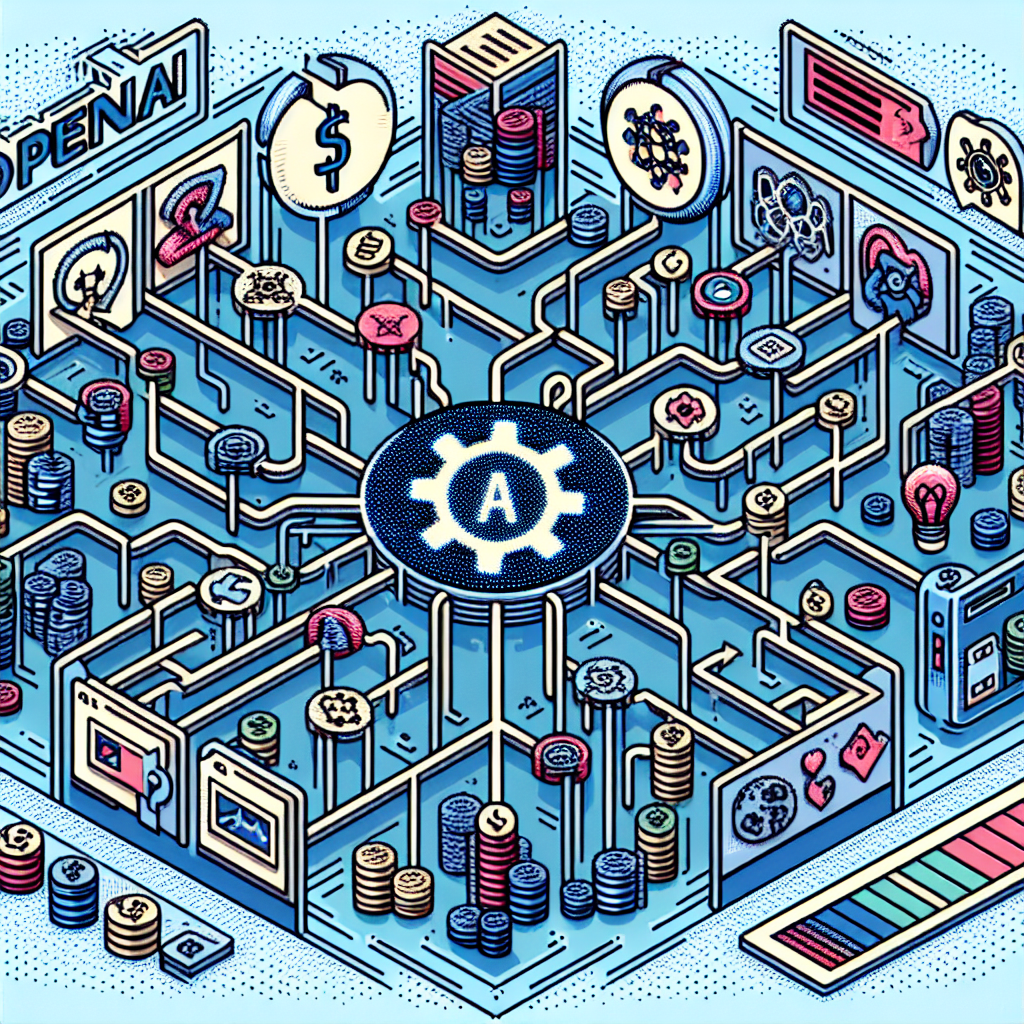
OpenAI: The $1 Trillion AI Dealmaker | Analysis by Brian Moineau

OpenAI: The Epicenter of a $1 Trillion AI Network

In the ever-evolving landscape of artificial intelligence, few stories are as captivating as that of OpenAI. With the launch of ChatGPT, this innovative company has not only changed the way we interact with technology but has also positioned itself as a linchpin in a burgeoning $1 trillion network of deals. But how did OpenAI become the go-to partner for tech giants, and what does this mean for the future of AI? Let’s dive in.

The Rise of OpenAI: A Brief Background

Founded in December 2015, OpenAI set out with a mission to ensure that artificial general intelligence (AGI) benefits all of humanity. Its commitment to safety and ethical considerations in AI has resonated with stakeholders across various industries. However, it was the introduction of ChatGPT in late 2022 that propelled OpenAI into the spotlight. The demand for conversational AI surged, and suddenly, companies recognized the value of integrating OpenAI’s technology into their operations.

Fast forward to today, and OpenAI has entered into strategic partnerships with major players like Microsoft, Google, and others, creating a complex web of financial dependencies. According to a recent Financial Times article, these collaborations have placed OpenAI at the center of a $1 trillion network, significantly shaping the AI ecosystem.

Key Events Shaping OpenAI’s Dominance

1. Strategic Investments: Microsoft’s multibillion-dollar investment in OpenAI has not just provided financial backing; it’s allowed Microsoft to integrate OpenAI’s models into its products, enhancing offerings like Azure and Office 365. This partnership has effectively positioned both companies as leaders in AI solutions.

2. Collaborations and Licensing: OpenAI has entered into licensing agreements with various companies, allowing them to build their own applications on top of OpenAI’s technology. This has created a ripple effect, driving innovation while also generating revenue.

3. Growing Ecosystem: As more companies leverage OpenAI’s capabilities, there’s a growing reliance on its technology, which fosters a network effect. The more companies that use and depend on OpenAI, the stronger its position in the market becomes.

4. Focus on Ethics and Safety: OpenAI’s commitment to ethical AI development has attracted partnerships with organizations that prioritize responsible technology use, further solidifying its reputation in the industry.

5. Market Influence: OpenAI’s leadership in AI technology has led to increased competition, prompting other companies to invest heavily in AI to keep pace. This has created an environment ripe for innovation and growth across the sector.

Key Takeaways

OpenAI has positioned itself as a central player in the AI landscape, signing lucrative partnerships with major tech companies. – Financial dependencies are shaping the future of AI development, creating a network that enhances collaboration and innovation. – Ethics and safety are paramount for OpenAI, attracting partners focused on responsible AI use. – The competitive landscape is evolving, with OpenAI’s influence driving other firms to invest more in AI capabilities.

Reflecting on OpenAI’s Future

As OpenAI continues to extend its reach within the tech industry, its impact on the future of artificial intelligence cannot be overstated. The company’s ability to foster collaboration while emphasizing ethical standards sets a precedent for how AI can be developed and utilized responsibly. The next few years will undoubtedly be pivotal in determining not only OpenAI’s trajectory but also the broader implications of AI technology on society.

With the stakes this high, it’s clear that OpenAI isn’t just a player in the game; it’s becoming the game itself.

Sources

– Financial Times. “How OpenAI put itself at the centre of a $1tn network of deals.” [Financial Times](https://www.ft.com/content/openai-network-deals) – OpenAI Official Website. [OpenAI](https://openai.com) – Microsoft Official Blog. [Microsoft AI](https://blogs.microsoft.com/ai)

By keeping an eye on OpenAI and its network of alliances, we can better understand the transformative power of AI in our everyday lives. Whether you’re a tech enthusiast or a business leader, the unfolding narrative around OpenAI is one to watch closely.


Related update: We recently published an article that expands on this topic: read the latest post.

NBC and YouTube TV Strike Deal for Fans | Analysis by Brian Moineau

NBC and YouTube TV: A Win for Sports Fans

In a world where streaming services are constantly evolving, the recent news that NBC and YouTube TV have reached a short-term agreement is a breath of fresh air for sports enthusiasts. If you’re anything like me, the thought of missing out on live sports due to a streaming dispute is enough to make you cringe. Thankfully, fans can breathe a sigh of relief as NBC remains on YouTube TV, at least for now.

Context: The Streaming Landscape

The relationship between traditional networks and streaming platforms has been a rollercoaster ride, often marked by negotiations over licensing agreements, content availability, and pricing. Recently, NBC Universal and YouTube TV were in a precarious position, as their contract was set to expire, leaving viewers uncertain about the future of NBC’s vast array of sports programming. NBC holds rights to popular sports events, including the NFL, Premier League soccer, and the Olympics, making it a crucial player in the sports broadcasting landscape.

In the lead-up to this agreement, both parties engaged in negotiations that were closely watched by fans and industry experts alike. The tension was palpable, with potential implications for millions of subscribers who rely on YouTube TV for access to NBC’s rich sports content.

Fortunately, both sides struck a deal just in time, ensuring that fans will continue to have access to their favorite games and events.

Key Takeaways

Agreement Reached: NBC and YouTube TV have secured a short-term agreement, keeping NBC content available for subscribers. – Importance of Sports Programming: NBC provides crucial live events, including NFL games and Premier League matches, making it essential for sports fans. – Negotiation Dynamics: The deal highlights the ongoing challenges and negotiations in the streaming industry as networks and platforms seek to balance content availability with subscriber demands. – Future Implications: While this agreement is a relief for now, it raises questions about the long-term relationship between NBC and YouTube TV, and what it could mean for viewers down the line.

Reflection: What This Means for Viewers

As we celebrate this momentary victory for fans of NBC sports programming, it’s essential to remember that the streaming landscape is ever-changing. This agreement serves as a reminder of how critical it is for networks and platforms to prioritize the viewer experience. As competition intensifies, the stakes will only get higher. For now, though, we can all take a moment to enjoy the games and events we love without worrying about losing access—at least until the next round of negotiations.

Sources

– “NBC, YouTube TV reach short-term agreement – NBC Sports” [NBC Sports](https://www.nbcsports.com)

Stay tuned for further updates as the streaming wars continue to unfold!


Related update: We recently published an article that expands on this topic: read the latest post.


Related update: We recently published an article that expands on this topic: read the latest post.


Related update: We recently published an article that expands on this topic: read the latest post.


Related update: We recently published an article that expands on this topic: read the latest post.