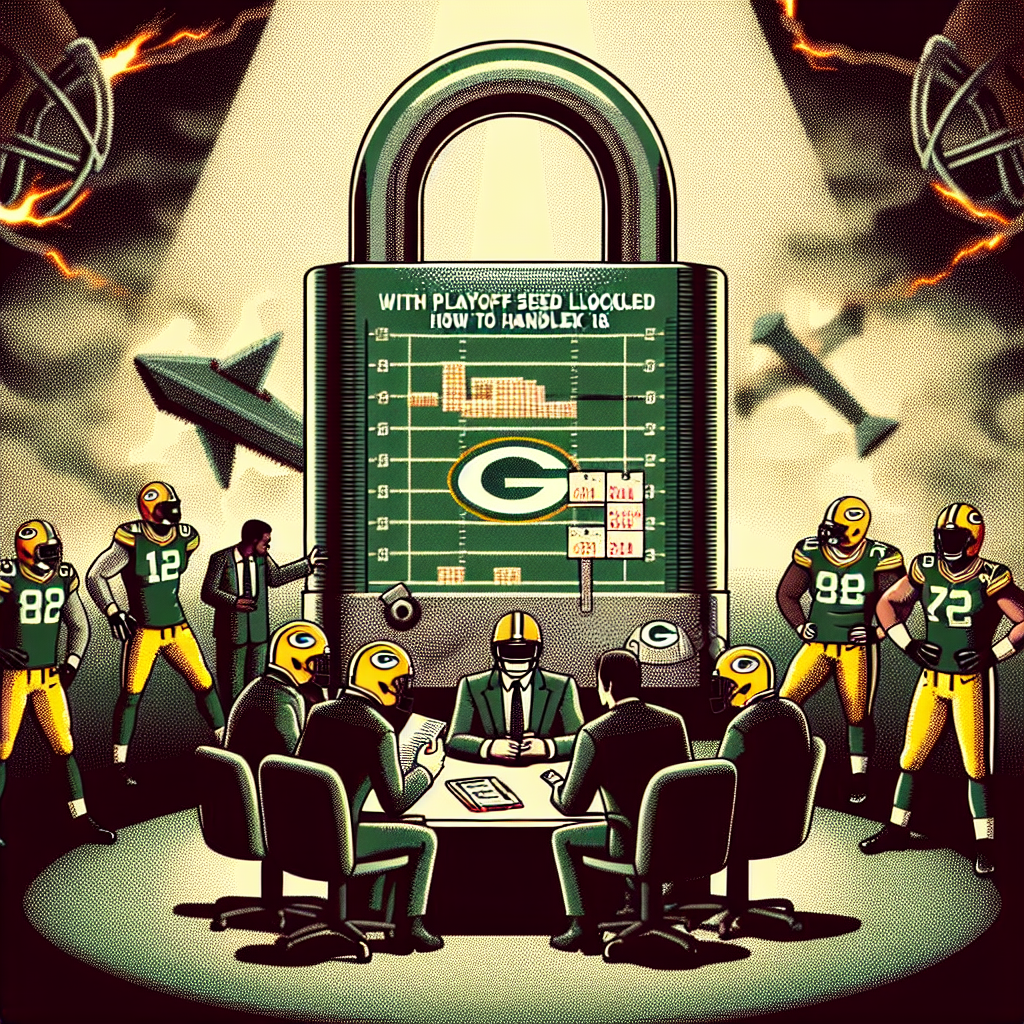
Banged up and bracing for the playoffs: what the Packers should do in Week 18
Introduction
The last game of the regular season usually carries either celebration or heartbreak. For the 2025 Green Bay Packers, Week 18 is instead a logistical puzzle: their playoff fate is set (No. 7 seed), but the roster looks like it’s been through a war. Do you rest stars and prioritize health, or play enough to fix glaring problems before a hostile playoff road trip? That tension — between protection and preparation — will shape the next seven days in Green Bay.
Where we are and why it matters
- The Packers clinched a playoff berth but will enter as the NFC’s No. 7 seed, which means an immediate road game in the wild-card round.
- A string of recent injuries and a three-game slide have left the roster thin: season-ending injuries (including Achilles and ankle losses), concussions, and multiple players exiting the most recent game. That makes the Week 18 decision more complicated than a simple “rest everyone” approach.
- Coach Matt LaFleur and staff have signaled discussions are ongoing; nothing is decided. The memory of last season’s finale — when starters suffered injuries that affected postseason availability — is very much on the staff’s mind.
What the practical choices look like
-
Rest the primary starters who are healthy enough to sit.
- Pros: Reduces risk of new injuries to top contributors (QB, key defenders, lead RB), gives time to recover nagging issues.
- Cons: With a 53-man roster and many hurt players already, resting too many starters could force inexperienced backups into key roles and upset team rhythm heading into a hostile playoff matchup.
-
Play to correct schematic and assignment issues.
- Pros: Fixes mental mistakes and alignment problems that showed up recently — especially on run defense — and helps build game-time sharpness before a road playoff game.
- Cons: Increased injury risk; may not be worth it for players with obvious long-term value.
-
A hybrid approach: rest the most injury-prone or fragile starters, play others to keep timing intact.
- Pros: Balances health management with necessary prep; allows coaches to evaluate depth and tweak assignments.
- Cons: Hard to pull off cleanly on a shorthanded roster; some “rested” players may still need limited reps to stay in rhythm.
Key factors the Packers must weigh
- Medical clearance and concussion protocol timelines for Jordan Love and other injured starters.
- The severity and timing of season-ending injuries already sustained — those change what the team can realistically rest.
- Depth chart reality: the Packers are not a 90-man roster in Week 18; they have limited active bodies. If backups would be thrown into critical snaps, the risk shifts.
- The opponent and matchup context: Minnesota’s tendencies and whether Week 18 looks like a realistic dress rehearsal for the likely playoff matchup.
- Psychological and momentum considerations: a team that plays crisp, confident football can carry that energy. Conversely, resting everyone can leave players cold or disrupt continuity.
What I’d expect the Packers to do
- Protect the most critical long-term assets (e.g., starters with lingering injuries or concussion concerns) — let them rest if medical staff advises.
- Keep enough veterans on the field to work out schematic breakdowns and get the defense’s fundamentals — especially to shore up run defense and assignment discipline.
- Use targeted reps for players who need timing (quarterback-room backups practicing with starters in situ, special-teams drills for core units).
- Lean on the depth chart to give younger players meaningful snaps, but avoid risking premium players for vanity reps.
A few smart management moves
- Turn Week 18 into a prioritized rehearsal: run the basic, high-frequency plays the team will rely on in the playoffs rather than trying to invent or fix everything at once.
- Emphasize communication and assignment fundamentals in walkthroughs and practice — many of the recent problems were mental errors, not lack of effort.
- Schedule minute-by-minute medical evaluations and clear communication with players so decisions are transparent going into gameday.
- Prepare contingency plans for short yardage, red zone and special teams scenarios so backups aren’t surprised if thrust into the game.
Things to watch during Week 18
- Official injury reports and any updates to Jordan Love’s concussion status.
- Who actually gets a game-day rest designation and who plays limited snaps.
- Whether the coaching staff simplifies play-calls to protect players from overthinking and reduce the chance of mistakes.
- How the run defense responds if starters play — that was an acute problem recently and could decide whether the unit feels playoff-ready.
What this means for playoff outlook
- Resting judiciously could preserve the roster’s top talents for the wild-card game, but doing too much may leave the team ill-prepared for an aggressive, physical playoff opponent.
- Conversely, playing too many starters in a bid to “fix” problems risks new injuries that would be much costlier in a single-elimination setting.
- The ideal result is a middle path: maintain health while fixing the most glaring, fixable issues and giving key backups a chance to prove they can handle emergency roles.
A few quick takeaways
- The Packers are stuck between risk and reward: protecting star players versus maintaining competitive sharpness.
- Medical clearance — especially for the quarterback — will drive much of the Week 18 plan.
- Given a thin roster, expect a blended strategy: rest where necessary, but play enough veterans to clean up assignment mistakes and stabilize the team’s identity heading into the playoffs.
Final thoughts
This is one of those coaching dilemmas that reveals organizational priorities. Do you prioritize long-term availability over short-term readiness? The smart move is rarely binary. With memories of last season’s finale still fresh and key players banged up, Green Bay’s staff should optimize for availability of their top contributors while using Week 18 as a focused rehearsal: address the defensive misalignments, shore up the run defense principles, and give select backups meaningful reps. If they can find that balance, the Packers will have increased their odds of surviving the first road hurdle — and that’s what matters when you’re the No. 7 seed.
Sources
-
With playoff seed locked, Packers discussing how to handle Week 18 — Packers.com.
https://www.packers.com/news/with-playoff-seed-locked-packers-discussing-how-to-handle-week-18-2025 -
Packers dispel QB1 doubt, plan to stay with Jordan Love — Reuters.
https://www.reuters.com/sports/packers-dispel-qb1-doubt-plan-stay-with-jordan-love–flm-2025-12-29/
Related update: We recently published an article that expands on this topic: read the latest post.
Related update: We recently published an article that expands on this topic: read the latest post.