Main Street Under Siege by Affordability | Analysis by Brian Moineau

The squeeze on Main Street: why mom-and-pop shops are hunkering down

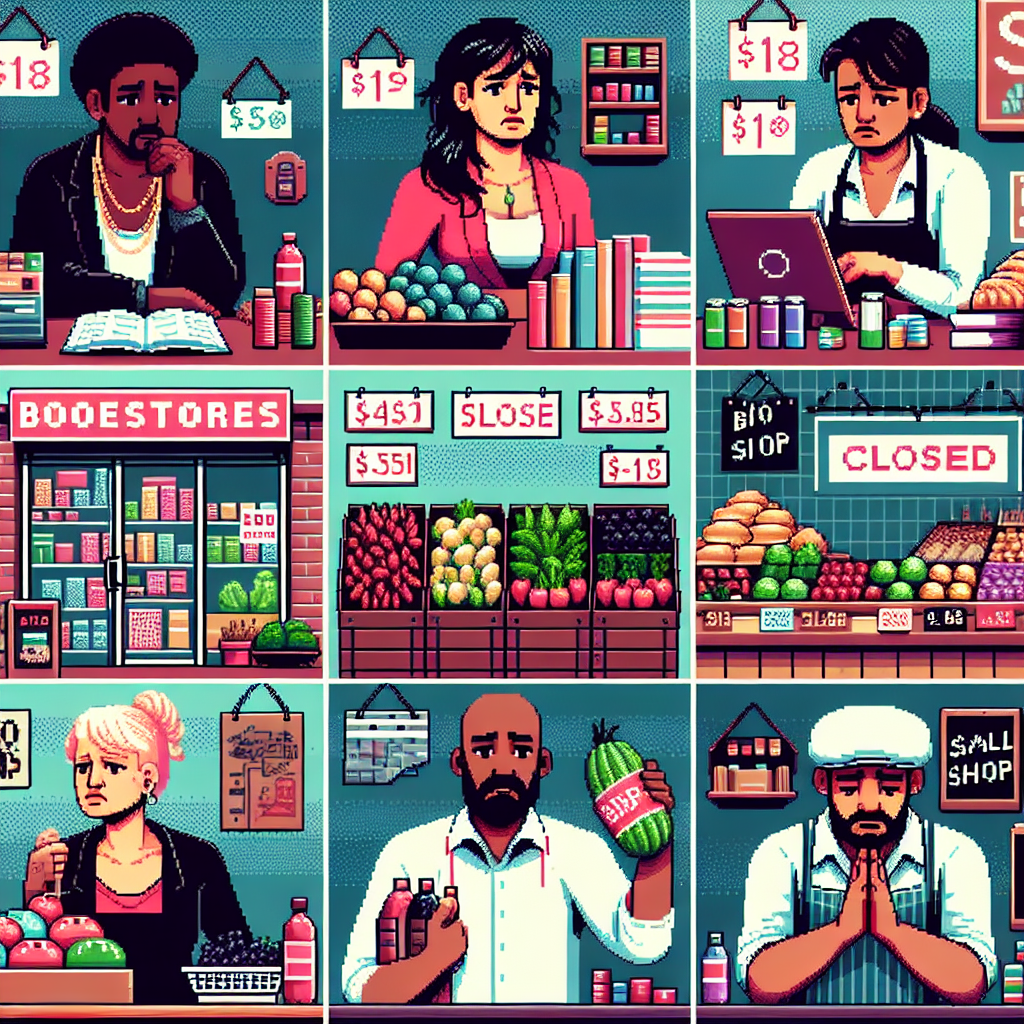
There’s a quiet panic in small-business towns across the country. Shop owners are trimming hours, delaying hires, and staring at spreadsheet scenarios that all end the same way — build cash, avoid risk, survive the next shock. The affordability crisis isn’t just about rising grocery bills; it’s a compound threat hitting mom-and-pop shops from every direction: higher import costs, rising payroll and health‑care bills, scarce affordable credit, and employees who are one rent check away from distraction. This is what happens when the cost-of-living crisis collides with a fragile small-business ecosystem.

Why this feels different right now

  • Import and input costs have jumped for many small manufacturers and retailers, driven by tariffs and higher shipping costs that squeeze margins. Owners who used to pass only a fraction of price increases onto customers are now forced to choose between less profit and fewer sales. (finance.yahoo.com)
  • Lending is available in some forms, but often expensive. Small-term business loans show average rates that are higher than they have been in recent memory, pricing out growth and forcing owners to hoard cash rather than invest. (finance.yahoo.com)
  • Payroll and healthcare remain stickier costs. With wages and benefits rising, labor-intensive small businesses—cafés, shops, local manufacturers—face a double bind: pay more to retain staff or risk turnover and service disruption. (finance.yahoo.com)
  • The workforce itself is stressed. When employees are worried about housing, groceries, or medical bills they bring that anxiety to work; productivity and customer service suffer. Business owners report distracted staff and a loss of morale that is hard to quantify but easy to feel at the register. (finance.yahoo.com)

Signals from the data and policy landscape

  • Banks reported a modest uptick in demand for business loans in late 2024, but lending standards have tightened, and smaller borrowers often see higher effective rates or find themselves steered away from underwriting entirely. That mismatch leaves many Main Street businesses underserved. (reuters.com)
  • The Small Business Administration (SBA) has increased small-dollar backing in recent years, which has helped some entrepreneurs access capital. But access remains uneven, and policy shifts or agency reorganizations can change the terrain quickly for small lenders and borrowers. (apnews.com)

What owners are doing (and why it matters)

  • Hunkering down: owners are building cash reserves, delaying capital expenditures, and cutting discretionary spending. That preserves survival but stalls growth and job creation. (finance.yahoo.com)
  • Shrinking payrolls: some have reduced staff or hours to manage labor costs. That reduces overhead but can also reduce revenue and community vibrancy. (finance.yahoo.com)
  • Seeking alternate revenue: pop-up events, online channels, and partnerships can help, but not every business can pivot easily—especially manufacturers and service providers tied to local demand. (finance.yahoo.com)
  • Shopping for credit carefully: owners are comparing SBA-backed options, community lenders, and commercial banks, but smaller, mission-driven loans are still scarce in some regions. (sba.gov)

A few human stories that put numbers in perspective

Across different reports, small-business owners say the same thing: uncertainty makes planning impossible. A Massachusetts manufacturer that recently laid off staff described an environment where tariffs and shifting trade policy dent demand overnight, forcing quick cuts and a focus on cash preservation rather than investment. Those individual decisions ripple through local economies—less payroll, fewer local purchases, and a community that slowly tightens its belt. (finance.yahoo.com)

What would help Main Street (practical levers)

  • Expand small-dollar lending and streamline access. More predictable, affordable credit for loans under six figures helps owners bridge seasonal gaps and invest in productivity. SBA programs and community lenders can play a role but need scale and stability. (apnews.com)
  • Targeted relief for input-cost shocks. Temporary tax credits, tariff adjustments, or subsidized logistics support could blunt abrupt cost spikes for small manufacturers who lack hedging tools used by larger firms. (finance.yahoo.com)
  • Workforce support that stabilizes employees’ lives. Expanding access to childcare, emergency savings, and affordable health-care options reduces the non‑work distractions that hit productivity and retention. (finance.yahoo.com)
  • Predictable policy environment. Businesses need fewer policy surprises—clearer trade and regulatory signals allow owners to plan hiring and capital expenditures with confidence. (finance.yahoo.com)

A short set of takeaways for readers

  • Main Street is resilient but not invincible: small businesses are conserving cash and deferring growth while facing multiple cost pressures. (finance.yahoo.com)
  • Credit exists but is uneven: SBA efforts have expanded small-dollar lending, yet many owners still pay high effective rates or face tighter underwriting. (apnews.com)
  • The workforce crisis is an affordability crisis: stressed employees reduce productivity, and that compounds business stress. (finance.yahoo.com)

My take

This moment feels like a stress test for the local economy. Policies and markets have nudged mom-and-pop shops into a defensive crouch—and defense is a valid short-term strategy. But if we leave Main Street in that posture too long, we risk losing the entrepreneurial engine that drives jobs and community identity. The right mix of predictable policy, targeted support for credit and inputs, and investments that stabilize workers’ lives could flip a lot of these businesses back from “survive” to “grow.”

Sources


Related update: We recently published an article that expands on this topic: read the latest post.

Related update: We recently published an article that expands on this topic: read the latest post.

Shutdown Shock: Airspace Cuts Hit Economy | Analysis by Brian Moineau

The day airspace shrank and sentiment soured: what the shutdown means now

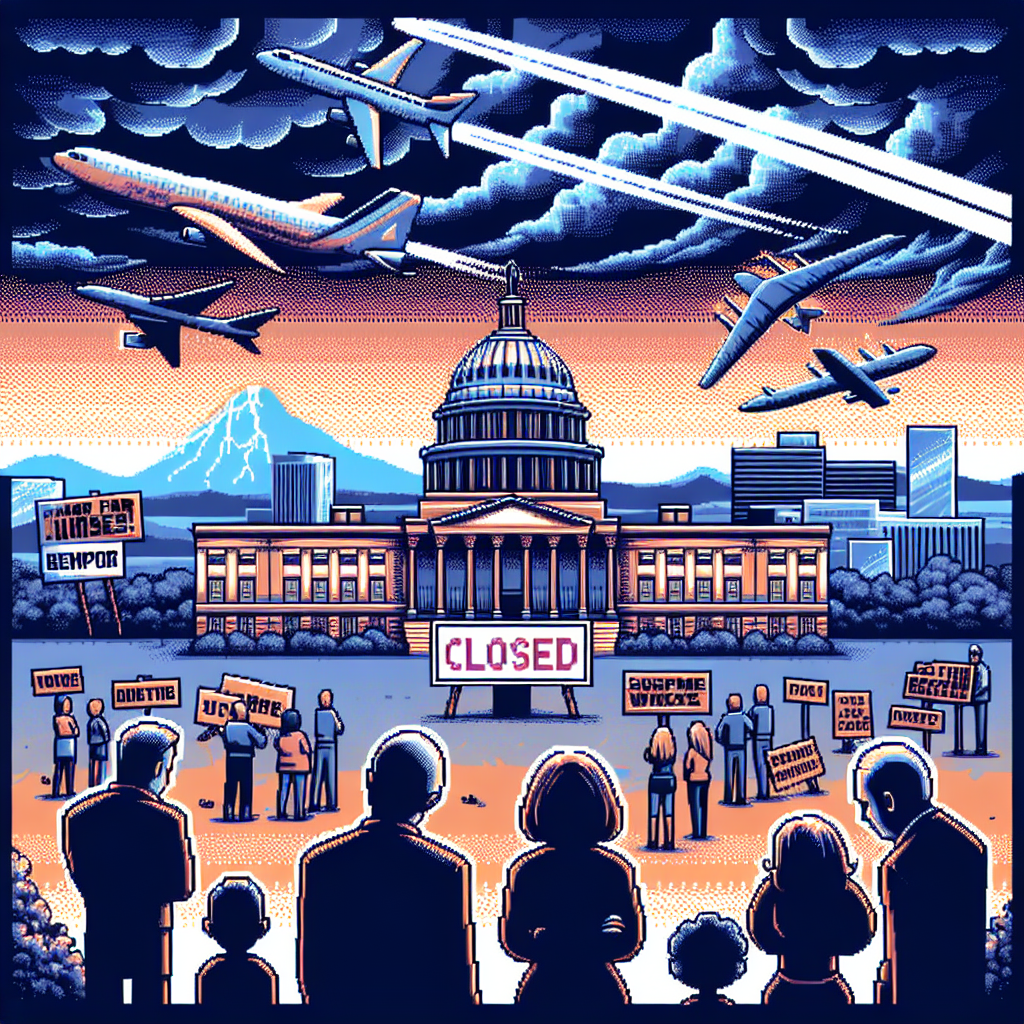
The headlines this week felt like they were written for a thriller: parts of U.S. airspace being intentionally reduced, major carriers trimming flights, and consumer mood slipping to multi-year lows. But this isn’t fiction — it’s the real-world fallout of a prolonged federal government shutdown that began on October 1, 2025 and stretched into November. The question for travelers, investors and everyday Americans is simple: how bad could this get before it gets fixed?

What just happened

  • On November 7, 2025 the Federal Aviation Administration began cutting scheduled flights at about 40 major U.S. airports to reduce controller workload and preserve safety as staffing gaps worsened. Initial cuts were modest (around 4% on the first day) with plans to scale to roughly 10% across the busiest markets and the possibility of larger reductions if conditions deteriorate. (apnews.com)
  • The shutdown — which started October 1, 2025 — has left hundreds of thousands of federal workers furloughed or working without pay and pushed the federal workforce and certain benefits into operational limbo. That disruption is rippling through travel, construction and other sectors. (en.wikipedia.org)
  • Consumer sentiment slid sharply in November, hitting its weakest point in about three years in University of Michigan polling, with many households growing more pessimistic about jobs and prices. Economists warn that the longer the stalemate lasts, the more likely temporary strains become persistent damage. (home.saxo)

Why reducing flights is more than an inconvenience

Cutting flights isn’t just about fewer seats for travelers. It’s a safety-management lever.

  • Air traffic controllers have been stretched thin: many are working unpaid, others have taken leave, and fatigue and absences increase operational risk. Reducing traffic in high-volume centers buys time and reduces stress on the system. (apnews.com)
  • Airlines respond quickly by cutting schedules — that produces cancellations, rebookings and lost revenue for carriers, airports, hotels and the broader travel ecosystem (rental cars, restaurants, even local retail). A string of canceled legs can ripple into lost bookings weeks out. (entrepreneur.com)
  • If cuts escalate to the scale government officials have warned about (up to 20% in the worst-case messaging), we could see cascading disruptions that push the travel sector into a short-term downturn. White House advisers have said the economic impact is “far worse than expected” already. (reuters.com)

The economic picture in plain terms

  • Consumer mood is a leading short-term indicator. When households are pessimistic about jobs or expect higher unemployment, they cut discretionary spending (dining out, travel, home projects) — which cools growth. University of Michigan sentiment data moved notably lower in early November. (home.saxo)
  • The Congressional Budget Office and other forecasters have warned that output lost during a shutdown is often unrecoverable in the short term; construction delays, paused federal contracts, and disrupted benefits aren’t simply “made up” later. Several analysts estimate meaningful hits to Q4 growth if the standoff persists. (entrepreneur.com)
  • Financial markets can look past short-term shocks, but prolonged uncertainty raises volatility. Stocks may temporarily rally on hopes of a legislative solution, while the real economy — payrolls, small business receipts, travel spending — reflects the lived pain.

Who’s feeling it most

  • Travel and leisure: airlines, airports, hotels and ancillary services face immediate demand shocks. Cancellations and rebookings create operational costs and lost revenue. (apnews.com)
  • Lower- and middle-income households: delayed benefits and furloughs hit these groups first and hardest, worsening the consumer split between higher-income households who still benefit from asset gains and everyone else. (entrepreneur.com)
  • State and local governments and contractors: delayed federal payments and paused permits slow construction and local projects, which can feed into job losses in affected sectors. (reuters.com)

The political and practical constraints

  • Fixing a shutdown requires Congress and the White House to agree on funding. Political incentives make compromises difficult, and each day of delay increases the economic bill and the human costs (missed paychecks, delayed benefits).
  • Operationally, some agencies can’t simply “turn back on” overnight. Even if appropriations pass tomorrow, it may take time to restore normal staffing, release backlogged payments, and normalize schedules in complex systems like aviation. (apnews.com)

Signals markets and travelers should watch

  • FAA notices and airline schedule reductions (daily): increasing planned cut percentages and cancellations signal growing systemic stress. (apnews.com)
  • Consumer confidence and survey data (University of Michigan, Conference Board): sharp declines presage weaker consumer spending. (home.saxo)
  • Official economic releases that are delayed or resumed: gaps in data flow complicate policymaking and investor assessments. (en.wikipedia.org)

What this means for you (practical tips)

  • If you have upcoming travel, expect more last-minute changes and factor buffer time; consider refundable or flexible tickets and double-check carrier communications.
  • If you’re a small business or contractor that depends on federal contracts or permits, document impacts carefully — that helps with recovery and any appeals for relief.
  • For investors: consider the difference between short-term headline-driven volatility and long-term fundamentals. Prolonged shutdowns raise real risks to growth, but markets often look forward to resolution.

Main takeaways

  • Flight reductions that started November 7, 2025 are a direct safety response to staffing shortages caused by the shutdown and risk becoming more severe if the stalemate continues. (apnews.com)
  • Consumer sentiment has tumbled to a multi-year low, signaling weaker spending ahead and amplifying the economic cost beyond the immediate federal payroll disruptions. (home.saxo)
  • The shutdown’s economic effects are already being described by administration advisers as “far worse than expected”; prolonged disruption could push travel and local economies into near-term downturns. (reuters.com)

My take

This shutdown feels different because a real-time safety system — the national airspace — is being throttled to prevent an accident born of understaffing and fatigue. That’s a stark, visceral sign that budget fights aren’t abstract political theater; they can change whether you get home for Thanksgiving or whether a paycheck arrives on time. The economic math is straightforward: the longer the pause, the harder recovery becomes. Fixing this means not just passing funding but stabilizing operations that have been frayed day by day.

Sources

(Note: URLs above point to non-paywalled reporting used to synthesize this post.)


Related update: We recently published an article that expands on this topic: read the latest post.


Related update: We recently published an article that expands on this topic: read the latest post.


Related update: We recently published an article that expands on this topic: read the latest post.


Related update: We recently published an article that expands on this topic: read the latest post.


Related update: We recently published an article that expands on this topic: read the latest post.