Brunson Burns 76ers in Knicks Blowout | Analysis by Brian Moineau

Jalen Brunson torches 76ers as Knicks extend playoff dominance in Game 1 blowout

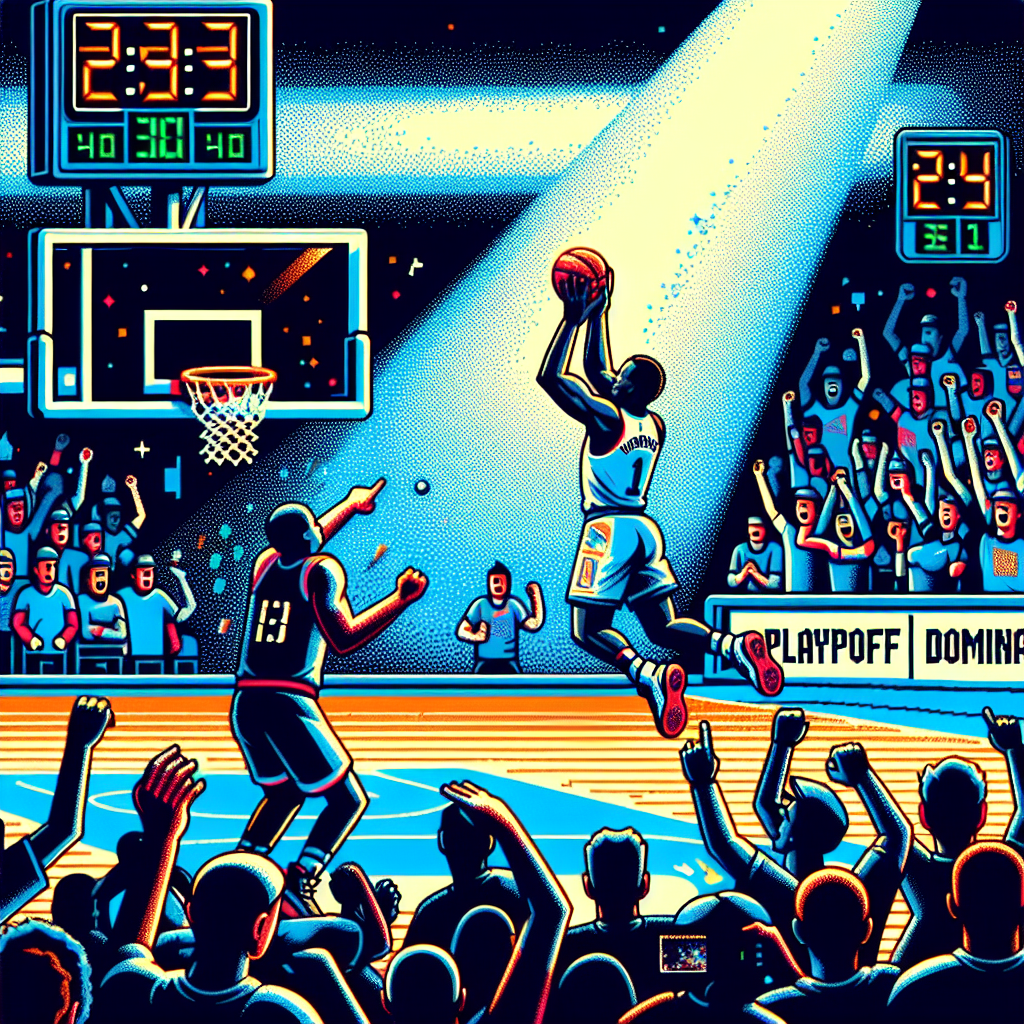
The headline — "Jalen Brunson torches 76ers as Knicks extend playoff dominance in Game 1 blowout" — felt like a punctuation mark on a sentence the Knicks have been writing all postseason. Brunson poured in 35 points (27 in the first half) as New York demolished Philadelphia 137–98 in Game 1 of the Eastern Conference semifinals at Madison Square Garden, a statement that screamed: the Knicks are peaking and they mean business. (au.sports.yahoo.com)

The rhythm of this win was familiar. After closing out Atlanta with a dominant defensive performance, New York arrived in the series with fresh legs and a blueprint: clamp early, move the ball, and let Brunson get downhill. The result was an efficient offensive night paired with suffocating team defense, forcing the 76ers into flashes of panic rather than flow. (ca.sports.yahoo.com)

Why this Game 1 mattered

  • It set the tone for a series that many expected to be tightly contested.
  • It highlighted the Knicks’ postseason identity: defense first, Brunson-initiated chaos second.
  • It underscored a matchup problem the 76ers still haven’t solved — Brunson’s ability to score in waves and make the right reads. (nba.com)

What looked like one lopsided night on the scoreboard also matters psychologically. In the playoffs, blowouts can become momentum avalanches: bench minutes for role players, breathing room for coaches to experiment, and a reminder to the opponent that adjustments have to be significant, not incremental.

Jalen Brunson torches 76ers — how he did it

Brunson didn’t just pour in points; he dictated tempo. He attacked early, punished Philly’s coverages in the pick-and-roll, and didn’t wait for the game to find him. Twenty-seven first-half points aren’t an anomaly — they’re a pattern Brunson has established against this franchise before — and Monday’s outing felt like déjà vu for Sixers defenders. (thescore.com)

Two things stood out about Brunson’s night:

  • Precision in pick-and-roll: Brunson and the Knicks used screens to create separation and mismatches, forcing the 76ers to choose between conceding 2-point looks or scrambling the rotation and surrendering threes.
  • Aggressive reads: When defenses over-helped, Brunson hit cutters and shooters. When space remained, he attacked the rim with authority, earning points and easy looks for teammates.

The broader consequence: when Brunson is flowing, New York’s offense operates at another gear — opponents can’t simply live with one-on-one defense and hope for the best.

The supporting cast and the defence

Brunson’s night was the headline, but the supporting chapters were equally important. New York’s defense turned possessions into transition opportunities and frustrated Philadelphia into poor shot selection. The Knicks forced turnovers and rebounds at critical stretches, and their bench preserved the margin once the starters headed to the showers. (gmanetwork.com)

Kevin Durant-style comparisons aren’t necessary here; the Knicks’ balanced approach — a defense-first identity that funnels play into Brunson and a set of role players who understand when to be selfless — is what created the blowout. The team’s recent run, including the series-clinching performance against Atlanta, suggested they’d carry momentum forward. Monday confirmed it. (sports.yahoo.com)

What Philly needs to fix, fast

  • Better containment in the pick-and-roll: the 76ers repeatedly found themselves a step late.
  • More physicality without fouling: disrupting Brunson’s rhythm is easier if help-side rotations are confident and clean.
  • Offensive ball movement: when Philadelphia got stagnant, the Knicks’ defense tightened and punished poor shot choices. (nba.com)

The Sixers also showed fatigue from a longer, tougher first-round series. Rest advantages in playoff matchups aren’t trivial. New York had more days off; Philly had to battle through seven games. That difference had tangible consequences on energy and execution down the stretch.

The bigger picture for the Knicks

This blowout is more than a single-game highlight reel. It’s a season-long story bending toward postseason legitimacy. The Knicks have been building defensive habits all year and now see those habits pay dividends when the stakes rise. From coaching adjustments to role clarity, this team looks like it’s learning how to close the door on opponents. (skysports.com)

If New York continues to play like this — disciplined defensively, opportunistic in transition, and letting Brunson orchestrate when necessary — they’re not just contenders in the East; they’re a matchup problem for anyone who doesn’t have a plan to slow Brunson and beat the Knicks’ length.

What to watch next

  • Will Philly change coverage schemes to double or trap Brunson earlier?
  • Can the Sixers find consistent secondary scoring to relieve pressure?
  • How deep can New York’s bench minutes be leveraged without losing edge?

Adjustments will come fast in a best-of-seven. Game 1 gave the Knicks the built-in advantage of breathing room and the luxury to test new looks. It also put the onus on the 76ers to respond with something meaningful, not incremental.

Final thoughts

Monday’s blowout was a confluence of preparation, rest, and elite execution. Jalen Brunson torched the 76ers, but the larger narrative is about a Knicks team entering its prime in playoff conviction. This wasn’t a fluke — it was a notice. For the 76ers, the path forward is straightforward in words and much harder in practice: tighten defense, increase ball movement, and find ways to blunt Brunson’s heat. For Knicks fans, savor the moment — the Garden felt electric because the team earned it.

Sources


Related update: We recently published an article that expands on this topic: read the latest post.
Related update: We recently published an article that expands on this topic: read the latest post.
Tatum vs. Embiid: Game 7 Deciders | Analysis by Brian Moineau

Game 7 felt like fate: Boston's offense and Jayson Tatum vs. Joel Embiid could decide everything

There’s a special kind of electricity that surrounds a Game 7, and when the Celtics and 76ers met with the series on the line, Boston's offense and Jayson Tatum vs. Joel Embiid were the storylines everyone circled. The Celtics had the regular-season pedigree and the home-court history; the Sixers had the narrative of a comeback and a resurging MVP. Whoever won the small battles — halfcourt offense, paint defense, late-clock execution — would win the war.

Let’s unpack seven numbers and the story behind them, then connect the dots: why Boston’s offense mattered so much, how the Tatum–Embiid axis shaped matchups, and what the game ultimately told us about both teams.

What those seven numbers said (and why they mattered)

  • 9 — This Game 7 was the ninth time the Celtics and 76ers have gone the distance, the most common Game 7 matchup in NBA history. History adds pressure and a dash of superstition; Boston’s pedigree in Game 7s (historically strong) was a contextual advantage. (NBA.com)

  • 34.7 — Combined transition points per game (Synergy). Neither team leaned on quick, easy baskets; this series featured more halfcourt warfare than open-court sprints. That reality magnified the value of organized sets and star isolation play. (NBA.com)

  • 28.0 — Joel Embiid’s points per game over the final four contests coming into the decider. When Embiid was on, Philadelphia’s offense found a center of gravity, especially after his return post-appendectomy. His presence meant Boston had to make a choice: leave a big to deter him or risk perimeter scorers. (NBA.com / AP)

  • 53.7% — Embiid’s true shooting percentage in the stretch. Efficient scoring from the rim and midrange forced the Celtics to respect him and adjust rotations. (NBA.com)

  • 18 — The largest deficit the Celtics faced during Game 7 before mounting a comeback bid. Boston’s offense showed resilience, but the margin highlighted how much ground they had to make up late. (Boston Globe / NBA recap)

  • DND — Jayson Tatum’s status: ruled out of Game 7 with left knee stiffness about two hours before tip-off. Tatum’s absence shifted Boston’s offensive identity and put pressure on role players and Jaylen Brown to shoulder the load. (Boston Globe / NBA)

  • 109-100 — Final score: 76ers over Celtics in Game 7. The number at the end of the box score is the ultimate tie-breaker, but the path to those points was paved by how each team attacked and defended in the halfcourt. (Box score)

Taken together, these numbers frame two competing narratives: Philadelphia’s series pivoted around Embiid’s return and finishing ability; Boston’s project relied on an offense that, even without its primary star, needed to execute complex schemes to create clean looks.

Boston's offense and Jayson Tatum vs. Joel Embiid: matchup implications

When you say "Boston's offense and Jayson Tatum vs. Joel Embiid," you’re naming two fundamentally different engines. Boston typically hums through ball movement, spacing, and off-ball cutting; Tatum is both a scorer and a primary creator. Embiid is a gravitational force — he demands attention in the paint and punishes defensive miscues.

Here’s how that chess match played out:

  • Personnel decisions mattered. With Tatum ruled out, Boston lost a Swiss Army knife: isolation scoring, creation off the bounce, and late-clock playmaking. That elevated Jaylen Brown and role players for scoring, but it also removed the matchup flexibility that helps counter Embiid in the post.

  • Interior offense vs. perimeter juggling. Embiid pulled defenders into the paint; Boston needed to convert perimeter shots or attack off kick-outs. The Celtics’ ability to generate high-quality threes under pressure was a key barometer.

  • Defensive rotations and help principles. Playing drop coverage or committing two bodies to Embiid opens up threes; sticking one-on-one risks him finishing. Boston’s defensive choices against Embiid shaped how often he got straight line entries versus contested finishes.

  • Late-game execution. Transition points were low in this series, so late-clock sets and clutch decisions decided the night. That’s where a healthy Tatum’s gravity and shot-creation would have been invaluable. Without him, the Celtics frequently ran complex sets that required clean reads and crisp passing.

How the series arc favored one team’s strengths

Momentum swung both ways across seven games. Early on, Boston’s depth and regular-season offensive identity looked like the blueprint for control. Philadelphia’s season, however, was a narrative of survival — play-in survival, Embiid’s surgery, and then a heroic return.

  • The Sixers leaned into Embiid. When he was effective and efficient, Philly’s offense became simpler and deadlier. The Celtics had to account for that and still generate offense, a tall order against a defense keyed to collapse.

  • Boston’s offense showed flashes but lacked a consistent fulcrum in the finale. Missing Tatum in Game 7 exposed how much of Boston’s late-clock possessions go through him. Role players can step up, but replacing a primary creation source in a winner-take-all is an enormous hill.

  • Tyrese Maxey’s late-game playmaking and clutch shot-making pushed Philadelphia over the top when the margin tightened.

Transitioning from numbers to narrative, the stat sheet confirms what watching the game felt like: a series decided by the individual matchups and the ability to sustain offensive identity under playoff pressure.

The turning points you didn’t always see in the box score

  • Pre-tip injury report swings. Tatum being ruled out two hours before tip changed Boston’s game plan less on paper than in feeling — rotations were shorter, substitution patterns tightened, and tireless energy that a full roster provides was reduced.

  • Second-chance calculations. Embiid’s rim presence altered defensive rebounding priorities; Boston’s offensive rebounds often translated into hurried possessions rather than sustained offensive sets.

  • Clutch chemistry. When the Celtics clawed back from 18 down, they forced the Sixers into uncomfortable possessions. But in close moments, Philadelphia’s pick-and-roll execution around Embiid and Maxey’s composure sealed decisive baskets.

Final thoughts

Game 7 provided a blunt reminder: when star health and interior dominance collide with an opponent’s identity, matchups and small margins decide outcomes. Boston’s offense — elegant, ball-movement driven, and usually resilient — struggled to find its fulcrum without Jayson Tatum. Conversely, Joel Embiid’s return gave Philadelphia a steady gravitational pull that simplified their attack and stressed Boston’s defense.

In playoff basketball, you want your engine running at full power. The 76ers found theirs in the clutch; the Celtics were left searching for the spark that comes from a healthy Tatum. That, more than any single number, explains how the series ended.

Sources


Related update: We recently published an article that expands on this topic: read the latest post.


Related update: We recently published an article that expands on this topic: read the latest post.

Sixers Win Overshadowed by George | Analysis by Brian Moineau

A wild Saturday in Philly: a win that feels secondary to Paul George’s suspension

The Wells Fargo Center celebrated a 25th-anniversary reunion, fans soaked up the nostalgia, and the scoreboard showed a narrow Sixers victory. But by the time the confetti dried, the story that will linger was not the comeback or the reunion — it was the shock of Paul George’s 25-game suspension. For a team trying to build consistency, Saturday’s win suddenly reads like a footnote.

What happened — quick recap

  • The Sixers eked out a late victory against the Pelicans, a game that had its share of tense possessions and clutch moments.
  • Minutes after the final buzzer, news broke that Paul George was suspended 25 games for violating the NBA’s anti-drug policy. George released a statement saying he “made the mistake of taking an improper medication” while seeking treatment for a mental health issue and accepted responsibility. (phillyvoice.com)

Why this matters more than the box score

  • Paul George’s suspension isn’t just the temporary loss of a scorer. He’s a two-way piece who affects matchups, spacing, perimeter defense and late-game lineups.
  • The timing is brutal: it starts now, when the Sixers are jockeying for playoff positioning and when Coach Nick Nurse was just beginning to settle rotation minutes. With trade deadline noise and the regular season’s final stretch approaching, losing 25 games of a veteran wing alters the team’s short-term math. (apnews.com)
  • There’s also a human side: George framed the mistake in the context of mental-health treatment, which complicates the public conversation and the team’s internal support responsibilities. That context matters for public perception, locker-room chemistry, and how the organization responds.

Coach’s read: calm, practical, honest

Nick Nurse’s immediate response was measured: disappointment, sure, but also an emphasis on structure and next-person-up. He confirmed George can still be at the facility and practice, and highlighted names who will get more run — Jordan Barlow, Monte Morris, Miles McBride, Kelly Oubre, and others — while admitting matchups will drive decisions. Nurse’s posture: protect the team’s process and adapt. (phillyvoice.com)

Who steps up (and how big the gap is)

  • Offensive production: George has been averaging double-digit scoring and reliable spacing. Expect more shots and playmaking responsibility to cascade toward Tyrese Maxey and Joel Embiid, with role players asked to make the extra perimeter shots.
  • Defense and wing versatility: George’s ability to guard multiple positions had a direct impact on rotations. That responsibility will be shared among a mix of wings (Oubre, Grimes, Watford) and guards sliding up defensively on tougher matchups.
  • Ball movement and minutes: This is an opportunity to test bench depth — both short-term (cover these 25 games) and long-term (who can be a dependable rotational piece going forward).

The broader franchise calculus

  • Financial wrinkle: The suspension costs George roughly $11–12 million in salary; it also creates a small luxury-tax breathing room for the Sixers. That financial detail may influence front-office thinking ahead of the Feb. 5 trade deadline. (local10.com)
  • Trade deadline implications: With a sizeable chunk of the season without George, Philly might be incentivized to add short-term reinforcements (wing/3-and-D depth) or double-down on internal solutions. Conversely, the front office could choose to stand pat to preserve flexibility later in the season.
  • Team identity question: The Sixers were carving out a newer rhythm under Nurse. Losing a high-IQ veteran like George forces an identity check: do they lean more into Embiid-centric offense, Maxey’s isolation scoring, or a more collective approach?

The media and public conversation

  • Reactions will vary: some will call for leniency given the mental-health context; others will stress the letter of the policy. Public figures and analysts are already picking sides about whether the punishment fits the circumstances. The NBA’s decision to withhold the exact substance leaves room for debate. (nypost.com)

What to watch next (short-term checklist)

  • Who gets consistent minutes at the 2/3 spots over the next 10–15 games.
  • How Tyrese Maxey and Joel Embiid handle increased usage nights (look at assist rate, efficiency, foul trouble).
  • Whether the Sixers make a deadline move to replace wing defense or three-point shooting.
  • The team’s home/road splits during George’s absence — can they maintain seed positioning through chemistry and matchup management?

Perspective and context

This isn’t the first time an NBA season has been reshaped off the court, but it’s a reminder that a roster is both a competitive machine and a human ecosystem. Paul George’s admission that this came during mental-health treatment adds a layer of complexity — accountability is required, yes, but so is support. The Sixers now need to be precise about both: how they win games and how they care for a teammate.

Small set of takeaways

  • Saturday’s win will be remembered more for what happened after the buzzer than the result itself. (phillyvoice.com)
  • Losing George for 25 games creates immediate tactical and rotation gaps on both ends of the floor. (apnews.com)
  • The team’s front office and coaching staff face a compressed timeline to decide whether to plug the hole internally or in the market ahead of the trade deadline. (local10.com)

Final thoughts

Basketball is inherently fragile — a single injury or suspension can flip momentum and narratives overnight. The Sixers have talent and a coach who emphasizes adaptability; they also face a critical run of games that will test their depth and decision-making. If Saturday taught us anything, it’s that wins are still important, but how an organization responds to unexpected personal and structural challenges often defines the season more than any one buzzer-beater.

Sources


Related update: We recently published an article that expands on this topic: read the latest post.


Related update: We recently published an article that expands on this topic: read the latest post.

Game ball, three stars, and snap count analysis: Preseason Week 1, Eagles vs. Bengals – PhillyVoice | Analysis by Brian Moineau

Game ball, three stars, and snap count analysis: Preseason Week 1, Eagles vs. Bengals - PhillyVoice | Analysis by Brian Moineau

Blog Post: Eagles vs. Bengals - Preseason Insights and More

Ah, the preseason. It's like the prologue to a novel, setting the stage for the epic journey that is the NFL season. For Philadelphia Eagles fans, the preseason opener against the Cincinnati Bengals offered a first glimpse at the potential and promise of the team. As always, the analysis of game balls, three stars, and snap counts is a ritualistic deep dive that fans eagerly anticipate. Let's take a closer look at the highlights and connect some broader dots in the sports universe.

Game Ball and Rising Stars

The preseason might be seen by some as unimportant, but for players and coaches, it's a critical time for evaluation and growth. In the Eagles' matchup against the Bengals, several players stood out, earning them the coveted "game ball" and "three stars" honors.

The game ball went to a standout player whose performance was nothing short of electrifying. This accolade is not just a nod to skill but an indication of leadership qualities and the potential to influence the season positively. It's reminiscent of the time when a young Tom Brady emerged during a preseason game, leading to a legendary career.

Among the three stars, we see emerging talents and seasoned players who are proving their mettle. These athletes are not just fighting for a place on the roster but are also building their personal brands and legacies, much like Patrick Mahomes did in his early days with the Kansas City Chiefs.

Snap Counts: The Unsung Heroes

Snap counts often seem mundane, but they tell a story of strategy and endurance. They reveal which players are trusted by the coaching staff and who might be on the bubble. This analysis can be likened to examining brush strokes in a painting—each one contributing to the larger masterpiece.

For the Eagles, the snap counts showed a mix of veteran presence and fresh talent. It's a balancing act that Coach Nick Sirianni, known for his innovative approach, seems to be managing well. His ability to adapt and integrate new players will be crucial, especially in a league that evolves as quickly as the tech world.

Connecting the Dots: Eagles and Beyond

This preseason game is a microcosm of the larger sports landscape, where themes of perseverance and potential abound. Consider the Women's World Cup, where teams from across the globe showcased their skills—much like the Eagles, players in the World Cup had their moment to shine and prove their worth on an international stage.

Moreover, the camaraderie and competition seen in the Eagles' preseason are reflective of the spirit seen in the recent Tokyo Olympics. Athletes train for years for a few moments of glory, just as NFL players push through grueling training camps for the chance to succeed in the regular season.

Final Thoughts

As we dissect the Eagles' preseason opener, it's essential to remember that these games are more than just warm-ups. They're a chance for players to carve out their path and for fans to connect with the team on a deeper level. Whether you're an avid Eagles fan or just a casual observer, there's something universally compelling about watching potential unfold on the field.

So, here's to another season of surprises, triumphs, and the unwavering dedication of athletes and coaches alike. The preseason is just the beginning, and if this game is any indication, it's going to be a thrilling ride. Fly, Eagles, Fly!

Read more about AI in Business

Read more about Latest Sports Trends

Read more about Technology Innovations

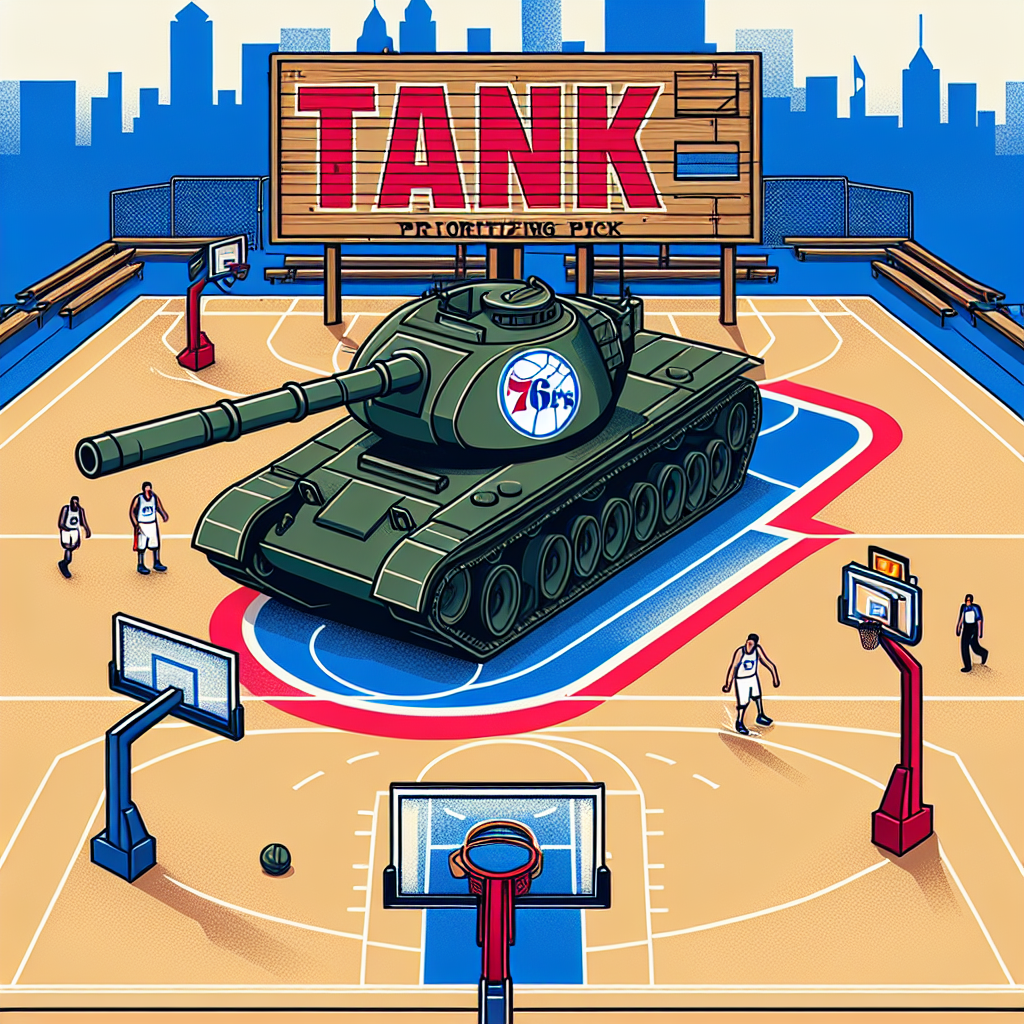
It’s time for 76ers to tank: Shutting down Joel Embiid, prioritizing pick is Philly’s only option left – CBS Sports | Analysis by Brian Moineau

It's time for 76ers to tank: Shutting down Joel Embiid, prioritizing pick is Philly's only option left - CBS Sports | Analysis by Brian Moineau

**Title: The Philadelphia 76ers: When the Process Meets the Pause Button**

As we navigate through the rollercoaster of the NBA season, it's hard to miss the predicament of the Philadelphia 76ers. With a record standing at 20-36, it's been a season riddled with more lows than highs, and the prospect of a playoff berth seems to be as distant as a Stephen Curry three-pointer from the opposite end of the court. The suggestion by CBS Sports that the Sixers should consider tanking and shutting down their superstar Joel Embiid due to his knee issues might seem drastic, but in the grand tapestry of the NBA, it could be a strategic masterpiece.

**A Season of Uncertainty and Unfulfilled Potential**

The 76ers' 2023-2024 season can be likened to a Shakespearean tragedy—filled with potential, yet plagued by misfortune and injury. Joel Embiid, the team's crown jewel, has been grappling with a nagging knee injury that just won't seem to heal. Fans and analysts alike are left wondering if perhaps it's time to wave the white flag, not as a sign of defeat but as a tactical retreat.

The idea of tanking is not new to Philly; after all, "The Process," a strategy of deliberate losing for future gain, is practically synonymous with the franchise. Yet, watching Embiid, who has become the face of the franchise and an embodiment of resilience and skill, sit out the rest of the season is akin to watching a symphony without its conductor.

**The Bigger Picture: When Sports Mimics Life**

The situation in Philadelphia mirrors a broader theme we've seen across various domains this year: sometimes, the only way forward is to take a step back. Consider the tech industry, where several giants have paused expansions to reevaluate their strategies amid fluctuating markets. Or the entertainment world, where actors and writers have taken breaks to renegotiate terms that reflect their worth in an ever-evolving industry landscape.

In sports, as in life, the long game often trumps short-term gains. By resting Embiid, the Sixers can prioritize his long-term health, ensuring that when he does return, he's able to perform at the peak of his abilities. Moreover, focusing on acquiring a top draft pick could infuse fresh talent into the roster, setting the stage for a more competitive future.

**Joel Embiid: More Than Just a Player**

Joel Embiid isn't just a basketball player; he's a narrative, an emotional investment for the city of Philadelphia. Known for his charismatic personality and playful social media presence, Embiid has won over fans not just with his skill on the court but with his heart off it. His journey from Cameroon to the NBA is a testament to perseverance and the power of dreams.

Yet, Embiid is also a reminder of the human aspect of sports. Behind the statistics and game highlights is a person whose health and well-being are paramount. The decision to rest him isn't just a basketball strategy but a reflection of valuing the athlete beyond the game.

**Final Thoughts: Embracing the Process, Again**

As the Sixers stand at the crossroads, the decision to tank might be the smartest move in the playbook. By embracing the process once more, Philadelphia acknowledges that greatness often requires patience and foresight. While the present may seem bleak, the future holds promise, much like the first rays of dawn after a long night.

In the end, sports are a microcosm of life—filled with challenges, triumphs, and the constant balancing act between risk and reward. For the Sixers and their fans, this season might be about weathering the storm, but with the right choices, the sun is sure to shine again.

Read more about AI in Business

Read more about Latest Sports Trends

Read more about Technology Innovations