TL;DR
- Dan Gilbert’s motivational text message to Jarrett Allen preceded a 23-point, tone‑setting Game 7 from the center as Cleveland routed Detroit 125–94; the Cavs also got an owner‑engineered road‑crowd boost. [1][2][3]
- The real edge wasn’t mystical “alter ego” stuff; it was organizational design: owner→coach→player alignment (dinner, first play for Allen, clear role) plus 25 buses of fans that muted home‑court. [2][3][8]
- If Cleveland keeps rewarding Allen early and often, that inside gravity can swing the Knicks series more than any single pep text ever will. [2]
What the source said
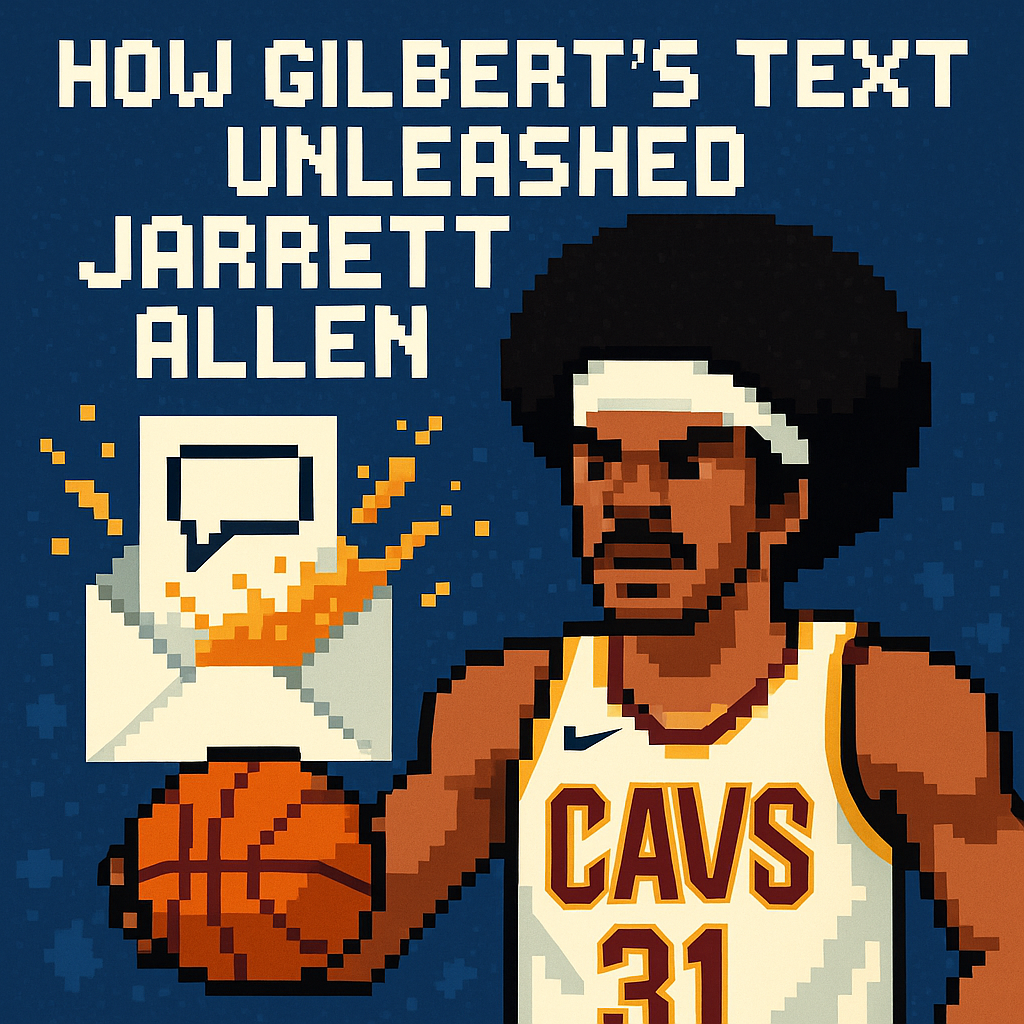
Cleveland.com reports that, two hours before Game 7 in Detroit on May 17, 2026, Cavaliers owner Dan Gilbert sent Jarrett Allen a short text—encouraging him to “be you”—that Allen said was the first such message he’d ever received from the boss. Gilbert also surprised the team with an impromptu visit at the Shinola Hotel, near his downtown Detroit headquarters. Allen responded with physical, emotional play in a 125–94 win, and teammates jokingly dubbed his persona “Game 7 J.A.” The piece frames Gilbert’s note as a nudge that brought out Allen’s alter ego and helped Cleveland advance. [1]
Why it matters
Stakeholders here aren’t just Jarrett Allen and Dan Gilbert. Kenny Atkinson (who ran the first play for Allen), Koby Altman (roster architect), and the Eastern‑finals opponent New York Knicks all feel the ripple effects when ownership steps directly into the motivational chain—especially on the road. [2][3]
Cleveland has been starving for post‑LeBron proof of concept. The Cavs just reached the East finals for the first time since 2018, not with a heliocentric scorer but via connectivity—delegated confidence to Allen, interior dominance, and a traveling fan bloc that shaved Detroit’s home‑court advantage. The upside: culture compounds. The downside: if results slip, owner‑coach‑player boundary lines get second‑guessed. [2][3]
Original analysis
Dan Gilbert’s motivational text message to Jarrett Allen was the tip of a larger system
Consensus read: Gilbert’s text “sparked” Allen’s alter ego and flipped Game 7. Contrarian read: The text was symbolic; the win flowed from structural moves—Atkinson’s first‑play call for Allen, a paint‑first script, and a road‑crowd countermeasure that made Little Caesars Arena feel half‑neutral. Atkinson said Gilbert’s Jarrett‑as‑spark comment pushed him to open with Allen; that is process, not magic. [2][3]
Back‑of‑envelope calculation (fan impact)
- Known inputs:
- 25 buses of Cavs supporters for Game 7; nearly 1,400 people reported. [3][8]
- Little Caesars Arena basketball capacity ≈ 20,332. [4]
- Math:
- Share of building = 1,400 ÷ 20,332 ≈ 6.9%.
- Why it matters: Flipping roughly 7% of the bowl to the road team doesn’t erase home‑court, but it narrows the gap in late‑clock noise and momentum. Cleveland ultimately won by 31 (125–94), but the early quiet set the platform for that avalanche. [2][5]
Named‑stakeholder breakdown
- Dan Gilbert (Cavaliers owner): Proved that targeted, tangible ownership actions (message clarity, fan logistics) can change the temperature of a road Game 7—and buy a mountain of locker‑room trust. [2][3]
- Kenny Atkinson (head coach): Gained a template—feed Allen early when stakes spike—which he tied directly to Gilbert’s “Jarrett is the spark” prompt; expect him to rinse‑repeat versus New York at Madison Square Garden. [2]
- Jarrett Allen (center): Delivered 23 points in 25 minutes and became the tactical fulcrum; if he sustains early touches, his rim runs and seals bend coverage for Donovan Mitchell and Sam Merrill. [2][6]
- New York Knicks (next opponent): Must decide whether to tag Allen harder on the roll (risking spray‑outs to Merrill) or live with contested 2s; either response drags them away from their preferred shell under Tom Thibodeau. [2]
- League peers (owners/executives): Now have a case study showing “soft‑power” levers—hotel touchpoints, curated fan travel, player‑specific messages—can be both culture and performance tools when used sparingly. [3][8]
One more number ties it together. The Cavs pounded Detroit inside—Allen scored 23, Mobley 21 (44 combined), while Cleveland turned the third quarter into a runway. If you’re New York, you don’t scheme for a text; you scheme for a team that just scored 58 in the paint and dictated first actions to its 5. That’s scouting‑report material. [2][5][7]
2x2 framework: Owner involvement vs. outcome quality
- Low involvement × Poor outcomes: Drifting model—players hunt their own motivation; no edge in the margins.
- Low involvement × Good outcomes: Talent carries; culture feels transactional; brittle under stress.
- High involvement × Poor outcomes: Meddling—unclear roles, mixed messages for coaches, locker‑room cynicism.
- High involvement × Good outcomes (Cleveland’s Game 7): Targeted involvement aligned with coaching decisions; specific ask to a specific player; tangible fan strategy; no crossing of tactical lines. [2][3]
The most durable lesson is repeatability. Atkinson doesn’t need fresh texts to recreate the effect. He needs first‑five possessions that make Allen the axis. That was the hidden value inside the “alter ego” headline: the Cavs found a playoff identity on May 17, 2026, and it’s translatable to Madison Square Garden. [2]
What others are missing
Coverage gushes about the “Game 7 J.A.” persona, but the overlooked angle is geography as an asset. Gilbert lives and operates businesses in Detroit; the Cavs staged at the Shinola Hotel, footsteps from his HQ. That proximity let ownership collapse the gap between symbolic support and operational execution—showing up at dinner, aligning with Atkinson, and mobilizing buses before tickets disappeared. In a cap‑and‑tax league where roster tweaks are expensive, exploiting off‑court infrastructure (relationships, venue knowledge, ticket channels) is a market inefficiency. Cleveland executed it at scale in a 48‑hour window and walked out with a 31‑point road Game 7. [1][3][8]
What to watch next
By May 25, 2026 (after two games of the East finals), Cleveland will script the first play for Allen in at least one game—watch the opening set for a deep seal or lob to test New York’s rim help. [2]
By the end of the Knicks series (no later than June 5, 2026), Allen will average 10.0+ field‑goal attempts per game—evidence that the Cavs are institutionalizing the Game 7 formula, not chasing an “alter ego” buzz. [2][6]
By the 2026–27 All‑Star break (February 2027), at least two other NBA teams will publicly subsidize 500+ fans for a playoff road game, copying Gilbert’s 25‑bus move as a competitive soft‑edge tactic. [3][8]
My take
I’m not romantic about pep texts. I am bullish on organizations that turn intent into design. Gilbert didn’t draw up horns‑sets; he made Allen matter before the ball went up and made the arena less hostile once it did. Atkinson then cashed it in with that first call and a paint‑first script, and Allen paid it off. If the Cavs keep treating the center as a primary on ramps one through five and keep sweating the margins, they’ll take a bite out of New York’s perimeter. The message that wins isn’t in Gilbert’s phone—it’s in Cleveland’s opening actions.
Sources
- [1] Inside Dan Gilbert’s motivational text message to Jarrett Allen that brought out his alter ego — Cleveland.com (https://www.cleveland.com/cavs/2026/05/inside-dan-gilberts-motivational-text-message-to-jarrett-allen-that-brought-out-his-alter-ego.html) — Original report on Gilbert’s text, the Shinola Hotel visit, and the “Game 7 J.A.” framing.
- [2] 4 takeaways: Donovan Mitchell, Jarrett Allen power Cavaliers past Pistons in Game 7 — NBA.com (https://cdn-uat.nba.com/news/4-takeaways-cavaliers-pistons-game-7) — Confirms the 125–94 score, Atkinson’s “ran the first play for him” quote, and Allen/Merrill outputs.
- [3] How Cavaliers Owner Dan Gilbert Helped Tip the Scales in Game 7 Road Win Over Pistons — Sports Illustrated (https://www.si.com/nba/cavaliers/how-owner-dan-gilbert-helped-tip-scales-game-7-road-win-pistons) — Details the 25 buses, Allen’s message of belief from Gilbert, and postgame reactions from Atkinson and players.
- [4] Little Caesars Arena — Wikipedia (https://en.wikipedia.org/wiki/Little_Caesars_Arena) — Cites basketball capacity (~20,332) used in the crowd‑share calculation.
- [5] Cavs crush Pistons in season‑ending Game 7 — Axios Detroit (https://www.axios.com/local/detroit/2026/05/18/pistons-game-7-loss-cavs-season-ends) — Local recap confirming 125–94, interior scoring emphasis, and Allen/Mobley combining for 44.
- [6] Cavaliers’ Jarrett Allen: Dominates in Game 7 win — CBS Sports (https://www.cbssports.com/fantasy/basketball/news/cavaliers-jarrett-allen-dominates-in-game-7-win/) — Box‑score detail on Allen (23 points, seven rebounds) and playoff averages context.
- [7] Cavaliers vs. Pistons — StatMuse (https://www.statmuse.com/nba/game/5-17-2026-cle-at-det-78540) — Adds the “58–34 points in the paint” note referenced in the analysis.
- [8] The Athletic: Dan Gilbert did more than bus Cavs fans to Detroit — NBA.com syndication (https://cdn-uat.nba.com/news/dan-gilbert-offered-help-jarrett-allen-cavs-game-7) — Aggregates Joe Vardon’s reporting: 25 buses, “nearly 1,400 people,” and Gilbert’s pre‑game emphasis on Allen.