
Tell Google Discover What You Want | Analysis by Brian Moineau

Tell Google What You Want: “Tailor your feed” Brings Prompt-Powered Control to Discover

Imagine opening Google Discover and being able to say, in plain English, “Show me cozy home-cooking videos, but only dairy-free recipes,” or “Keep politics out for a while — show me science and college basketball instead.” That’s the idea behind Google’s new experimental Labs feature called “Tailor your feed,” spotted in testing this week.

Why this feels different

For years, Discover has quietly learned from what you search, click, and ignore. It nudges you toward topics it thinks you’ll like, but the control panel has always been a bit clunky: tap three dots, mark something “not interested,” or favorite a source. “Tailor your feed” moves that control into natural language prompts — you talk to Discover like you would a helpful friend, and its AI updates your recommendations instantly.

This is not a full public rollout. It’s a Search Labs experiment in the Google app, currently limited to early testers (US English was reported), but the approach signals a bigger shift in how Google wants us to manage passive, algorithmic content.

What to know right now

  • The feature appears in the Google app’s Search Labs (tap the beaker icon in the top-left).
  • You open a prompt box labeled “Ask for the kind of content you want,” type a request, and Discover updates your feed instantly.
  • Prompts can include topics, formats, tones or “vibes,” publishers to prioritize, or content to avoid (e.g., “Stop showing me negative news”).
  • Google says Discover will remember these preferences and you can adjust them anytime; activity links back to My Activity.
  • The experiment is early and rolling out slowly — not everyone will see it yet. (Reported Dec 15–16, 2025.)

The practical examples that caught attention

  • Add a project-based topic: “I signed up for my first half marathon; give me training advice.”
  • Remove a stale topic: “I’m back from a NY trip — stop showing me travel tips.”
  • Narrow formats or dietary constraints: “Show me meal-prep videos that are dairy-free.”
  • Adjust tone: “Make my feed feel calm and cozy.”
  • Favor publishers: “Show more from The Washington Post.”

These examples illustrate how specific you can be — goals, formats, sources, and even mood are fair game.

Why Google is doing this

  • Personalization, made faster: Natural-language prompts shortcut the months-long feedback loop of behavior-based learning.
  • Engagement and retention: If people get what they want, they’ll spend more time in Discover (and the Google app).
  • Better signals for relevance (and ad targeting): More explicit preferences are valuable for content ranking — and for ad relevance.
  • Experimentation culture: Google Labs lets the company try riskier UI and AI ideas without committing to a wide release.

The potential upside

  • Faster, clearer control: Users can correct misfires quickly without hunting through menus.
  • Useful for life changes: Short-term goals (training for a race, planning a move) become easier to surface.
  • Better format discovery: If you want videos, explain it — Discover can prioritize that format.
  • Reduces noise: If you need a break from heavy topics like politics, you can simply say so.

The trade-offs and concerns

  • Filter bubbles deepen: Explicitly asking to favor certain topics or tones may reduce exposure to diverse viewpoints.
  • Publisher discoverability: Smaller outlets might lose traction if users ask for a narrow set of sources or vibes.
  • Privacy and activity linking: The prompt history links to My Activity; anything you tell Discover becomes another personalization signal.
  • Misunderstanding and misuse: Natural-language interfaces can misinterpret vague prompts, requiring additional back-and-forth.

How this changes the Discover experience

Think of Discover sliding along a spectrum from passive surfacing to semi-curated reading list. “Tailor your feed” pushes it closer to a hybrid: still recommendation-driven, but with on-demand curation. That could make Discover feel more intentional for users who want it — and more “sticky” for Google.

My take

Giving users a conversational way to tweak their feed is a smart move. It matches how people already describe preferences — in goals, vibes, and formats — and it reduces friction. But expect the usual tension: personalization makes life easier and more pleasant, yet it also tightens your content bubble. Ideally, Google will offer nudges that encourage variety and let users reset or explore outside their requested tastes.

If you’re curious and see the Labs beaker in your Google app, it’s worth trying — it’s an experiment, after all. Use it deliberately: try a goal-based prompt for a few weeks, then toggle it off to see how much Discover relied on that instruction.

Sources


Related update: We recently published an article that expands on this topic: read the latest post.
Main Street Under Siege by Affordability | Analysis by Brian Moineau

The squeeze on Main Street: why mom-and-pop shops are hunkering down

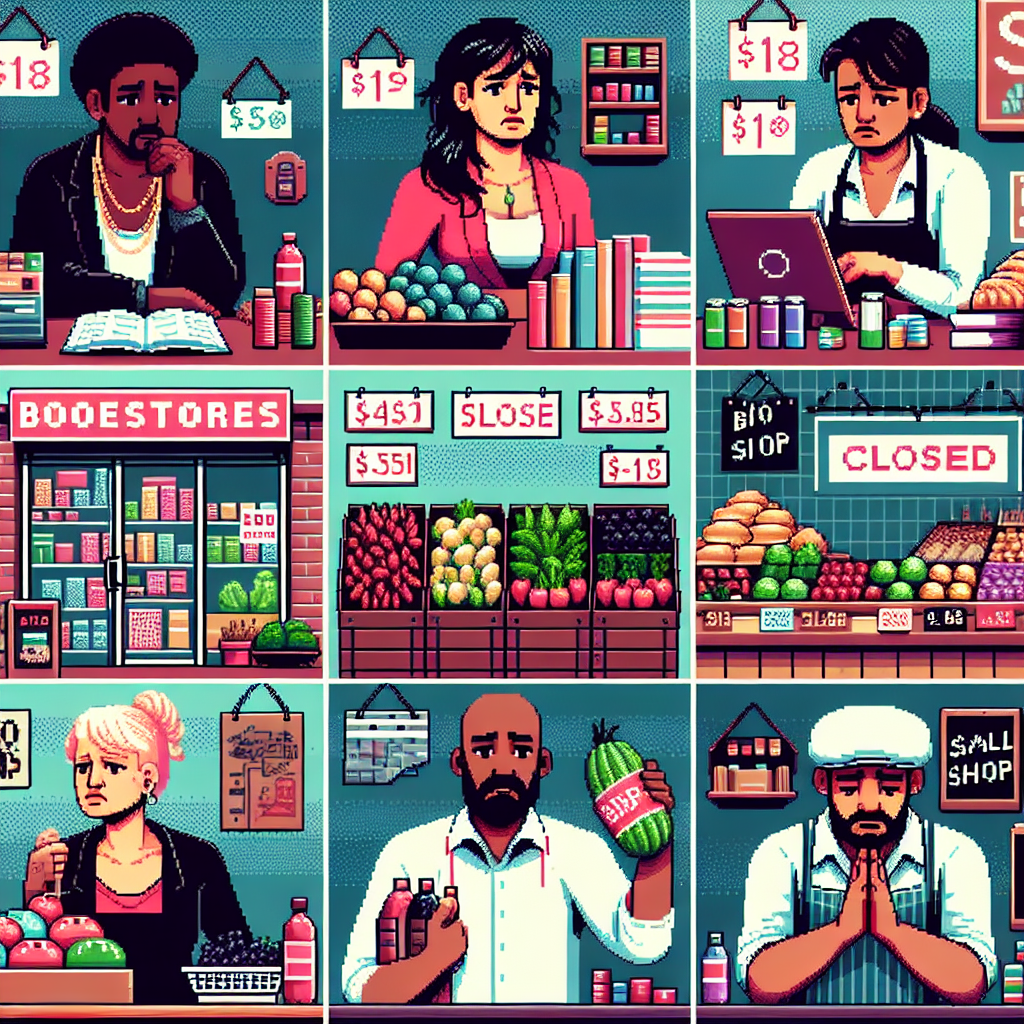
There’s a quiet panic in small-business towns across the country. Shop owners are trimming hours, delaying hires, and staring at spreadsheet scenarios that all end the same way — build cash, avoid risk, survive the next shock. The affordability crisis isn’t just about rising grocery bills; it’s a compound threat hitting mom-and-pop shops from every direction: higher import costs, rising payroll and health‑care bills, scarce affordable credit, and employees who are one rent check away from distraction. This is what happens when the cost-of-living crisis collides with a fragile small-business ecosystem.

Why this feels different right now

  • Import and input costs have jumped for many small manufacturers and retailers, driven by tariffs and higher shipping costs that squeeze margins. Owners who used to pass only a fraction of price increases onto customers are now forced to choose between less profit and fewer sales. (finance.yahoo.com)
  • Lending is available in some forms, but often expensive. Small-term business loans show average rates that are higher than they have been in recent memory, pricing out growth and forcing owners to hoard cash rather than invest. (finance.yahoo.com)
  • Payroll and healthcare remain stickier costs. With wages and benefits rising, labor-intensive small businesses—cafés, shops, local manufacturers—face a double bind: pay more to retain staff or risk turnover and service disruption. (finance.yahoo.com)
  • The workforce itself is stressed. When employees are worried about housing, groceries, or medical bills they bring that anxiety to work; productivity and customer service suffer. Business owners report distracted staff and a loss of morale that is hard to quantify but easy to feel at the register. (finance.yahoo.com)

Signals from the data and policy landscape

  • Banks reported a modest uptick in demand for business loans in late 2024, but lending standards have tightened, and smaller borrowers often see higher effective rates or find themselves steered away from underwriting entirely. That mismatch leaves many Main Street businesses underserved. (reuters.com)
  • The Small Business Administration (SBA) has increased small-dollar backing in recent years, which has helped some entrepreneurs access capital. But access remains uneven, and policy shifts or agency reorganizations can change the terrain quickly for small lenders and borrowers. (apnews.com)

What owners are doing (and why it matters)

  • Hunkering down: owners are building cash reserves, delaying capital expenditures, and cutting discretionary spending. That preserves survival but stalls growth and job creation. (finance.yahoo.com)
  • Shrinking payrolls: some have reduced staff or hours to manage labor costs. That reduces overhead but can also reduce revenue and community vibrancy. (finance.yahoo.com)
  • Seeking alternate revenue: pop-up events, online channels, and partnerships can help, but not every business can pivot easily—especially manufacturers and service providers tied to local demand. (finance.yahoo.com)
  • Shopping for credit carefully: owners are comparing SBA-backed options, community lenders, and commercial banks, but smaller, mission-driven loans are still scarce in some regions. (sba.gov)

A few human stories that put numbers in perspective

Across different reports, small-business owners say the same thing: uncertainty makes planning impossible. A Massachusetts manufacturer that recently laid off staff described an environment where tariffs and shifting trade policy dent demand overnight, forcing quick cuts and a focus on cash preservation rather than investment. Those individual decisions ripple through local economies—less payroll, fewer local purchases, and a community that slowly tightens its belt. (finance.yahoo.com)

What would help Main Street (practical levers)

  • Expand small-dollar lending and streamline access. More predictable, affordable credit for loans under six figures helps owners bridge seasonal gaps and invest in productivity. SBA programs and community lenders can play a role but need scale and stability. (apnews.com)
  • Targeted relief for input-cost shocks. Temporary tax credits, tariff adjustments, or subsidized logistics support could blunt abrupt cost spikes for small manufacturers who lack hedging tools used by larger firms. (finance.yahoo.com)
  • Workforce support that stabilizes employees’ lives. Expanding access to childcare, emergency savings, and affordable health-care options reduces the non‑work distractions that hit productivity and retention. (finance.yahoo.com)
  • Predictable policy environment. Businesses need fewer policy surprises—clearer trade and regulatory signals allow owners to plan hiring and capital expenditures with confidence. (finance.yahoo.com)

A short set of takeaways for readers

  • Main Street is resilient but not invincible: small businesses are conserving cash and deferring growth while facing multiple cost pressures. (finance.yahoo.com)
  • Credit exists but is uneven: SBA efforts have expanded small-dollar lending, yet many owners still pay high effective rates or face tighter underwriting. (apnews.com)
  • The workforce crisis is an affordability crisis: stressed employees reduce productivity, and that compounds business stress. (finance.yahoo.com)

My take

This moment feels like a stress test for the local economy. Policies and markets have nudged mom-and-pop shops into a defensive crouch—and defense is a valid short-term strategy. But if we leave Main Street in that posture too long, we risk losing the entrepreneurial engine that drives jobs and community identity. The right mix of predictable policy, targeted support for credit and inputs, and investments that stabilize workers’ lives could flip a lot of these businesses back from “survive” to “grow.”

Sources


Related update: We recently published an article that expands on this topic: read the latest post.


Related update: We recently published an article that expands on this topic: read the latest post.