Lane Kiffin, Ole Miss and the late‑season coach carousel: a southern soap opera with a playoff on the line
Hook: Picture this — your team finally breaks through, the College Football Playoff looms, and the man who pulled it together might walk out the door before the confetti can be earned. That’s the story unfolding in Oxford, Mississippi, where Lane Kiffin has Ole Miss playing at its highest level — even as LSU and Florida reportedly circle with enormous offers.
Why this feels different
- Lane Kiffin isn’t just another hot name. He’s a polarizing, proven offensive architect who has rebuilt Ole Miss into a contender in a short span.
- The timing — late November, with an Egg Bowl looming and the CFP picture crystallizing — makes this more than a routine coaching shuffle. If Kiffin leaves now, Ole Miss could be without its leader before the Rebels play for the biggest prize in program history.
- The financial figures being reported (offers in the neighborhood of seven‑figure annual pay and NIL/roster investment pledges) underline how much power boosters and athletic departments will wield in this new era.
The immediate facts (what’s been reported)
- Ole Miss finished the regular season with a top‑10 CFP ranking and has been playing the best football in program history under Kiffin. Several outlets reported the school as a genuine playoff contender this year. (aol.com)
- Reports say LSU and Florida have aggressively pursued Kiffin, with LSU allegedly discussing deals worth upward of $90 million over multiple years plus roster/NIL commitments. Ole Miss officials set a public timeline for an announcement after the Egg Bowl (Nov. 29, 2025). (foxnews.com)
- Kiffin has publicly emphasized his focus on finishing the season, but travel by family members to potential suitors’ locales and the public nature of talks have kept speculation intense. Athletic director statements suggested a decision would be communicated after the rivalry game so the team can concentrate. (wruf.com)
What’s at stake for each party
- For Ole Miss:
- A potential national-title window — with Kiffin at the helm — could be irreversibly altered if he departs before the postseason.
- Program momentum, recruiting, and locker‑room morale could all take a hit midstream.
- For Kiffin:
- Career tradeoffs: staying could mean cementing a legacy as the coach who elevated a non‑traditional power to the playoff; leaving could mean accepting greater resources, higher pay, and the prestige of a legacy program (and the pressure that comes with it).
- For LSU and Florida:
- Landing Kiffin would be a statement hire — a quick way to restart stalled projects and leverage NIL funds to accelerate roster building.
- But doing it now risks perceptions of poaching and could invite backlashes from fans and the broader college‑football community.
The bigger picture: why the carousel is symptomatic of the times
- Money and NIL have blurred old lines. Schools now bid not only on coaches’ salaries but on roster‑building war chests, making shifts more lucrative and more immediate. (sports.yahoo.com)
- The expanded College Football Playoff and portal/NIL dynamics have created more programs that can credibly dream big — and more reasons for coaches to jump if the resources align.
- The calendar problem remains: coaching searches happening during postseason weeks create ethical and competitive dilemmas. Voices across the sport have argued for clearer rules to protect players from late‑season disruptions. (aol.com)
Talking points for fans and observers
- Loyalty vs. careerism: Is it unreasonable to expect a coach to stay through a playoff run when a substantially bigger job appears? Fans will split on whether Kiffin “owes” Ole Miss one more month.
- Institutional responsibility: Universities that pursue coaches midseason invite scrutiny. Are there changes (timelines, tamper rules, buyout norms) that could reduce drama?
- Player welfare: The uncertainty affects athletes’ focus, preparation and recruiting. That human element often gets lost in contract numbers and headlines.
What could happen next
- Kiffin stays through the Egg Bowl and beyond, using the moment to try to capture a program‑defining title.
- Kiffin accepts an offer and departs after the announced timeline, leaving Ole Miss to appoint an interim and scramble before the playoff.
- A protracted negotiation or legal complications (buyouts, timing clauses) could create a muddled aftermath that impacts postseason logistics and public perception.
My take
College football has always been a sport of ambitions and second chances, but the current mix of cash, NIL, roster mobility and playoff stakes makes late‑season coaching drama especially corrosive. If the reports are true and a traditional power like LSU or Florida can outbid Ole Miss, the calculus is understandable for a coach’s career. Still, there’s something viscerally off about the idea of a championship bid being upended by a coaching transaction that could have been settled months earlier. Institutions and the NCAA era's new power players should take note: the system currently rewards haste and escalation, not restraint for the sake of competitive integrity.
A few lesser‑seen angles
- If Kiffin leaves and Ole Miss still makes the playoff, the program’s depth and culture (and the quality of assistants and players he helped attract) could keep them competitive — an underrated aspect of his legacy.
- For recruits, the uncertainty might swing commitments either away from Ole Miss or toward it (if the program leans on continuity and sells immediate opportunity).
- A high‑profile hire during this window could force other programs to act quickly, causing a cascade of moves that reshapes several seasons in one week.
Sources
Final note: this is a live story with details changing quickly; the announced timeline (an update expected after the Egg Bowl on Nov. 29, 2025) will likely resolve much of the immediate drama and set the tone for the offseason.
Related update: We recently published an article that expands on this topic: read the latest post.
Related update: We recently published an article that expands on this topic: read the latest post.

Harvard vs Yale: When “The Game” gained a playoff heartbeat
There’s something deliciously ironic about calling Harvard and Yale “nerds” only to watch them sprint for a postseason berth. The oldest rivalry in American college football — simply called “The Game” — has always been about history, pageantry and bragging rights. This year, it finally has an extra line on the résumé: the winner will earn the Ivy League’s first-ever automatic bid to the FCS playoffs. That changes everything and makes Saturday’s showdown feel less like a ceremonial finish and more like a genuine playoff play-in.
Why this year matters
- The Ivy League voted this offseason to allow its champion to accept an automatic bid to the NCAA FCS playoffs, ending an era that dated back to World War II. That means the 141st Harvard–Yale meeting isn’t just for pride — it’s for a national tournament spot. (The decision itself was driven by student-athlete advocacy and a shifting view inside the league about postseason participation.)
- Harvard arrived unbeaten (9–0, 6–0 Ivy) and nationally ranked inside the FCS top 10; Yale (7–2, 5–1 Ivy) was sitting behind them with a legitimate shot to take the title via a head-to-head tiebreaker. The tease: a perfect season for Harvard, or a classic upset that hands Yale a historic berth.
- Beyond wins and losses, this is a milestone in the sport’s arc: programs that once shaped early college football — and then stepped away from postseason play for principle — are re-entering the national conversation, even if it’s at the FCS level.
A rivalry steeped in history — and now new stakes
The Game dates to 1875, back when college football looked nothing like the TV spectacle it is today. Harvard and Yale, along with Princeton, played outsized roles in the sport’s early evolution. For decades the Ivies deliberately kept postseason football off the calendar, wary of the commercialization and time demands that accompany extended seasons. That stance created an old-world mystique: for many Ivy players the regular season — culminating in The Game — literally was the end of the line.
This year, students helped change that. Grassroots pressure and evolving attitudes about competitiveness and exposure pushed league leadership to reverse course. The result is a rare collision of tradition and modernity: mud-streaked traditions, fight songs and generational pageantry meeting the bracketed logic of a national playoff.
What to watch on the field
- Matchup balance: Harvard’s offensive consistency this season put them among the FCS elite in scoring; Yale’s defense has been a top-tier unit. When offense meets defense in a rivalry like this, expect tight games and late drama — recent editions of The Game have regularly been decided by a touchdown or less.
- Motivation layers: For seniors on both teams this is more than a rivalry win; it could extend careers into December and create first-ever playoff memories for programs that haven’t played postseason football in a century.
- Stakes ripple effects: If Yale wins, it clinches the automatic bid. If Harvard wins and stays undefeated, they’ll likely earn the automatic berth and could be in position for a seeded spot in the FCS bracket — which affects possible matchups and travel.
Perspective: what this means for college football
- Tradition vs. expansion: The Ivies were one of the last holdouts on postseason play. Their entrance into the FCS playoffs won’t upend the national championship picture, but it signals how even the most tradition-minded conferences are re-evaluating participation in postseason competition.
- Recruiting and profile: Postseason eligibility changes perceptions. For some recruits, the chance to play in the FCS playoffs — to play beyond November — matters. For the programs, it’s a chance to showcase their teams nationally and to test program-building philosophies against different styles of FCS opponents.
- Cultural payoff: The Game has always been more than a scoreboard: it’s a cultural touchstone (parodied and celebrated in pop culture for decades). Adding playoff implications layers drama onto those traditions rather than replacing them.
A few things I’m curious about
- How will Ivy programs fare against traditional FCS powers when styles and rosters differ (Ivy players often balance academics and athletics in ways distinct from many FCS programs)?
- Will playoff exposure nudge other small, tradition-rich conferences to reconsider postseason strategies — or will the Ivies remain a unique experiment in balancing heritage and modern competition?
- Will the crowds and national interest this season change the way broadcasters and networks value Ivy matchups in future scheduling?
A quick takeaway roundup
- The Game now carries a tournament ticket on the line for the first time since the Ivy postseason ban was lifted.
- Harvard’s undefeated run and Yale’s resilience mean this edition is both a classic rivalry contest and a high-stakes playoff decider.
- The Ivy League’s shift represents a broader negotiation between college-football tradition and the modern appetite for postseason play.
My take
There’s a satisfying symmetry to watching two of the sport’s oldest programs re-enter the postseason conversation. The Game was always about more than 60 minutes on a November afternoon; it was a cultural ritual. But rituals can evolve. Letting the winner walk into the FCS playoffs doesn’t cheapen the history — it amplifies it. If anything, this season proves tradition and ambition aren’t mutually exclusive: sometimes they make each other better.
Sources
Related update: We recently published an article that expands on this topic: read the latest post.
Related update: We recently published an article that expands on this topic: read the latest post.

The legend of Trey Yesavage grows with each unhittable splitter
There are moments in sports that arrive fully formed — small, electric flashes that demand you stop and watch. Trey Yesavage’s latest outing against the Dodgers was one of those moments: a young pitcher whose splitter seems to have its own gravitational pull, leaving hitters flailing and teammates whispering “It’s like damn, wow.” The Blue Jays’ rookie didn’t just pitch; he announced himself on baseball’s biggest stage.
Key takeaways
- Yesavage’s splitter has become a true wipeout pitch, generating huge swing-and-miss rates and shaping his early postseason dominance.
- He delivered a historically dominant World Series performance, combining strikeouts, control and poise beyond his few major-league starts.
- Opposing teams game-plan around that “from the sky” splitter, but Yesavage pairs it with a rising four-seam and a slider to keep hitters unbalanced.
- His rapid ascent — first-round pick, September debut, postseason stardom — is a reminder of how quickly a young pitcher can shift a franchise’s trajectory.
A hook: when a pitch feels like destiny
Picture this: the stadium hushes, the hitter steps in, and the baseball seems to come from a different altitude entirely. That’s what watching Yesavage’s splitter feels like — a pitch released high, then dropping so late the batters' eyes betray them at the last second. Teammates and announcers use phrases that sound like hyperbole, but the outcomes — looking strikes, missed swings, and strikeouts — do the talking.
Why the splitter is more than a single pitch
Yesavage’s mechanics and pitch design make the splitter more than a nasty secondary offering. Analysts and Statcast breakdowns highlight a few features that make his arsenal sing together:
- High release and extreme downhill plane make both his fastball and splitter travel on similar trajectories before diverging dramatically, confusing hitter timing.
- His four-seamer shows above-average “rise,” which sets up the illusion: hitters expect a continuing path up in the zone and then the splitter plummets beneath the bat.
- The splitter’s late, violent drop yields high chase and whiff rates, so when Yesavage lands it below the zone he gets swings-and-misses rather than fouls or weak contact.
These aren’t abstract numbers — they show up in the box score and in the body language of opponents. Dave Roberts and Dodgers hitters said they tried to lay off the splitter; when a lineup is forced to do that, you know it’s working. (Sources: MLB Statcast, ESPN, AP.)
The moment against the Dodgers: more than a stat line
Yesavage’s outing versus Los Angeles wasn’t just effective, it was historic. Facing one of baseball’s most fearsome lineups in the World Series, he mixed the splitter, slider and rising fastball to rack up strikeouts, limit hard contact, and tilt the game early in Toronto’s favor. For a pitcher with only a handful of regular-season starts, to deliver that kind of performance in Game 5 is remarkable — and the kind of moment that lingers in franchise lore.
- He struck out a large number of batters and walked few or none, showing both swing-and-miss stuff and command.
- Even when he didn’t lean on the splitter as much as usual, its mere presence altered hitters’ approaches.
- Teammates responded with the kind of stunned admiration reserved for rare displays: silence, then “wow.”
(See detailed game coverage and postgame quotes from ESPN and AP for context.)
What this means for Toronto and the broader game
A pitcher like Yesavage changes matchups. Opposing managers must decide whether to attack his splitter zone aggressively — risking strikeouts — or to sit back and try to punish other pitches. For the Blue Jays, having a young starter who can control games in October deepens rotation flexibility and shortens the path to a title.
On a larger scale, Yesavage’s emergence is a reminder that baseball’s evolution — new grips, analytics-driven pitch usage, and refined mechanics — still produces old-fashioned spectacle: devastating breaking pitches, late swings, and the thrill of postseason theater.
A short reflection
There’s something magnetic about watching a rookie not just survive, but own the moment. Yesavage’s rise is the kind of story fans love because it’s uncontrived: talent meeting preparation, with a pitch that looks unfair. Whether he becomes a long-term ace or another memorable October hero, his splitter has already earned a place in the game’s highlight reels — and his teammates’ stunned, delighted silence says more than any headline could.
Sources
Related update: We recently published an article that expands on this topic: read the latest post.
Related update: We recently published an article that expands on this topic: read the latest post.
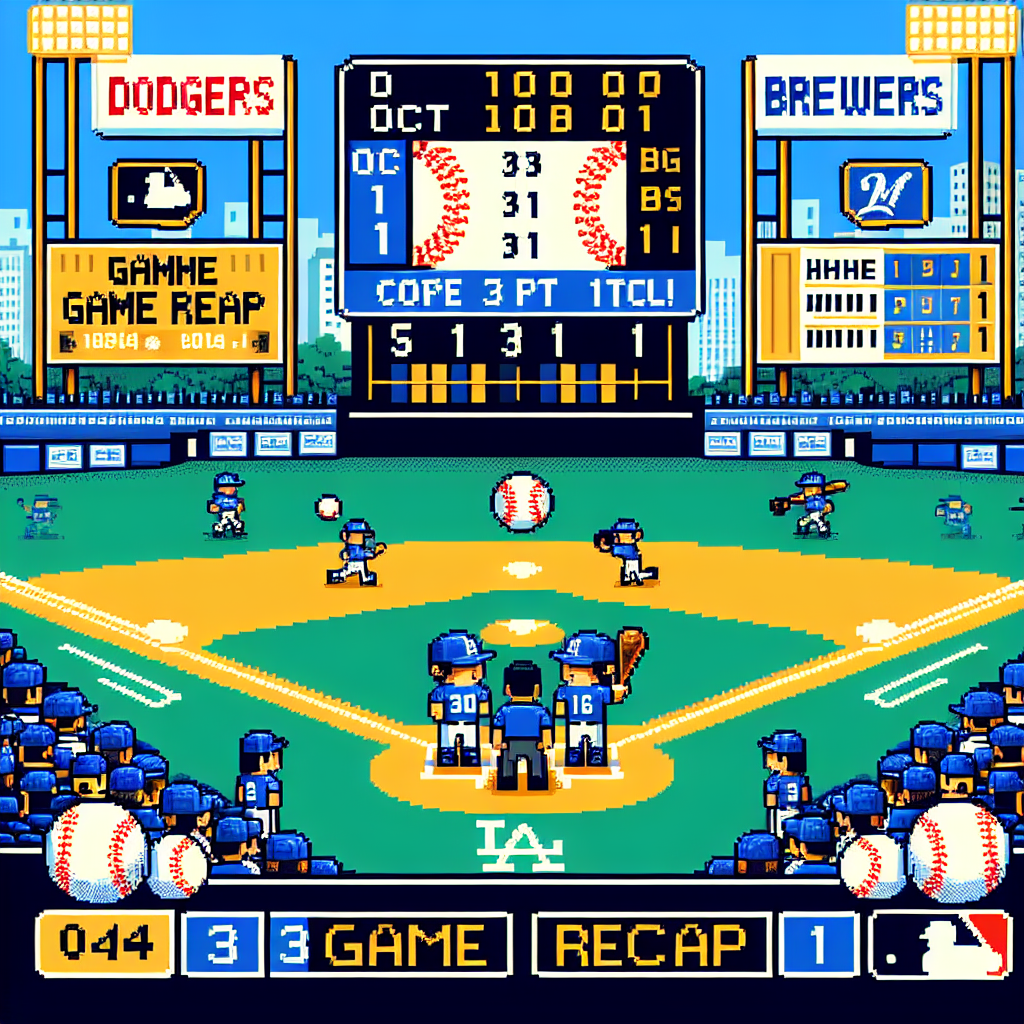
Dodgers Dominate Brewers in Game 2 of the NLDS: A 3-1 Victory
As the crisp autumn air settles in, baseball fans across the nation are glued to their screens, eagerly watching the postseason unfold. In a thrilling matchup on October 16, 2025, the Los Angeles Dodgers showcased their dominance against the Milwaukee Brewers, clinching a 3-1 victory in Game 2 of the National League Division Series (NLDS). Let’s dive into what made this game a pivotal moment in the Dodgers’ playoff journey.
A Brief Context: The Road to the NLDS
The Los Angeles Dodgers, perennial powerhouses in Major League Baseball, entered the postseason with high expectations. After winning the NL West title, their eyes were set on another World Series appearance. Facing off against the Milwaukee Brewers, a team known for their grit and determination, the Dodgers knew they had to bring their A-game.
Game 1 had already set the tone for the series, with the Dodgers narrowly edging out the Brewers in a tight contest. Fans were buzzing with anticipation for Game 2, eager to see if the Dodgers could maintain their momentum and take a commanding 2-0 series lead.
Highlights from the Game: Pitching and Power
The game unfolded with a mix of stellar pitching and key offensive plays. Dodgers’ ace pitcher, Clayton Kershaw, took the mound and delivered a performance reminiscent of his Cy Young days. With pinpoint accuracy and a devastating curveball, Kershaw held the Brewers to just one run, striking out eight batters over seven innings.
On the offensive side, the Dodgers capitalized on their scoring opportunities. A crucial two-run homer from Mookie Betts in the fifth inning turned the tide, giving the Dodgers the cushion they needed. Additionally, Freddie Freeman’s consistent hitting kept the pressure on the Brewers throughout the game.
Key Takeaways
– Kershaw’s Masterclass: Clayton Kershaw proved once again why he’s a postseason legend, delivering a dominant performance that kept the Brewers at bay. – Mookie Betts Shines: Betts’ power swing not only lifted the team’s morale but also solidified his status as a postseason clutch player. – Dodgers’ Depth: The Dodgers showcased their depth with contributions from multiple players, emphasizing their strength as a team rather than relying on a single star. – Brewers’ Resilience: Despite the loss, the Brewers fought hard, demonstrating their ability to challenge the Dodgers and setting the stage for an exciting Game 3. – Momentum Shift: The victory puts the Dodgers in a favorable position to sweep the series, adding pressure on the Brewers to respond in the upcoming games.
Concluding Reflection
As the Dodgers celebrate their victory, the focus now shifts to Game 3, where the Brewers will look to make adjustments and fight back. The postseason is always unpredictable, and while the Dodgers have taken the lead, the Brewers are not to be underestimated. With the stakes higher than ever, fans can expect an intense battle ahead as both teams vie for a coveted spot in the NL Championship Series.
Baseball is more than just a game; it’s a saga of resilience, strategy, and moments that define legacies. Here’s to the thrill of October baseball!
Sources
– ESPN – Dodgers 3-1 Brewers (Oct 16, 2025) Game Recap: [ESPN Game Recap](https://www.espn.com/mlb/recap?gameId=401445937)
Related update: We recently published an article that expands on this topic: read the latest post.
Related update: We recently published an article that expands on this topic: read the latest post.

Swing, Swing: Mariners Pitchers vs. Blue Jays Hitters in Game 3 of the ALCS
Baseball is a game of numbers and narratives, where every pitch tells a story and each swing can change the course of a season. As the Seattle Mariners and Toronto Blue Jays clashed in Game 3 of the American League Championship Series (ALCS), fans were treated to an electrifying showdown between two teams known for their aggressive play styles.
Context: A Battle of Aggression
The ALCS has been a rollercoaster ride for both the Mariners and the Blue Jays. Each team entered the series with their unique strengths. The Mariners boasted a pitching staff that thrives on precision and power, while the Blue Jays showcased a dynamic lineup capable of making big plays at the plate. As both teams continued their postseason journeys, the stakes couldn’t have been higher.
In the first two games of the series, we witnessed the Mariners’ pitchers dominate the Blue Jays’ hitters, leveraging their ability to control the zone and capitalize on mistakes. Conversely, Toronto’s offense—known for its aggressive swings—was eager to break out and assert their dominance. Game 3 promised to be a crucial moment, as both teams sought to gain momentum and inch closer to the World Series.
Key Takeaways from Game 3
– Pitching Precision vs. Hitting Aggression: Mariners’ pitchers continued to showcase their ability to locate pitches effectively, making it difficult for Blue Jays hitters to settle into a rhythm. The Mariners’ strategy of working the edges of the strike zone paid dividends, minimizing hard contact.
– Home Runs and Missed Opportunities: While the Blue Jays had their chances, their aggressive approach led to several strikeouts, particularly against Mariners’ ace pitchers. A few missed opportunities left fans wondering if they could have capitalized better on their scoring chances.
– Defensive Highlights: In addition to the pitching duel, both teams displayed exceptional defensive skills. Key plays in the field prevented runs from scoring and added to the drama of the game, reminding us that baseball is as much about defense as it is about offense.
– Momentum Swings: The game showcased the ever-changing momentum typical of playoff baseball. Just when it seemed the Mariners had an advantage, the Blue Jays would rally, only to be thwarted by clutch pitching. This ebb and flow kept fans on the edge of their seats.
– The Importance of Game 3: Winning Game 3 in a best-of-seven series is often seen as a pivotal moment. With both teams looking to establish dominance, the outcome set the tone for the remainder of the series, making every pitch and swing all the more significant.
Conclusion: The Thrill of the Game
As the dust settled on Game 3 of the ALCS, one thing was clear: the battle between the Mariners’ pitchers and Blue Jays’ hitters was a testament to the beauty of baseball. With both teams displaying their strengths and weaknesses, the series is shaping up to be an unforgettable chapter in postseason history.
As fans, we can only sit back, savor the drama, and hope for more thrilling moments in the games to come.
—
Sources
– [Lookout Landing: Swing, swing: Mariners pitchers vs. Blue Jays hitters](https://www.lookoutlanding.com) (Please replace with the actual URL from the source)
*Note: The URL provided is a placeholder. Be sure to verify and use the actual link from the Lookout Landing article.*
Related update: We recently published an article that expands on this topic: read the latest post.
Related update: We recently published an article that expands on this topic: read the latest post.
The ACC schedule release has sparked plenty of excitement and controversy among fans as they analyze the paths their favorite teams will have to navigate in order to secure a spot in the 2025 postseason. With each team facing a unique set of challenges and opportunities, the road to the playoffs promises to be an exciting journey filled with ups and downs.
One team that is sure to attract attention this season is the defending champions, Clemson Tigers. With a challenging schedule that includes matchups against tough opponents such as Florida State and Miami, the Tigers will have to bring their A-game if they hope to repeat as champions. Head coach Dabo Swinney will undoubtedly have his work cut out for him as he prepares his team for the grueling season ahead.
On the other hand, teams like Syracuse and Wake Forest may have a slightly easier path to the postseason, with less daunting matchups on their schedules. However, as we all know, anything can happen in college football, and no team can afford to take their opponents lightly.
Outside of the ACC, the sports world is buzzing with news of other major events such as the upcoming Olympic Games in Paris and the NBA Finals. These high-stakes competitions serve as a reminder of the passion and dedication that athletes and fans alike pour into their respective sports.
As we eagerly anticipate the start of the ACC season, let's remember to enjoy the journey and appreciate the hard work and determination that goes into every game. Whether your team has a tough road ahead or a smoother path to the playoffs, one thing is for certain - it's going to be an exciting season filled with unforgettable moments and unforgettable victories. So buckle up, sports fans, and get ready for a wild ride as we chart the course to the 2025 postseason.