TL;DR
- Microsoft’s Project Helix backwards compatibility could span five Xbox generations and PC—but only if publishers opt in, making rights and revenue splits the real gatekeepers, not emulation engineering. [1]
- Disc-to-digital is the Trojan horse: convert Xbox One/Series discs into perpetual licenses across “any Xbox device,” yet the rumored disc-less Helix and fragile licensing mean ownership still hinges on deals and uptime. [1][7][8]
- The business math works if Microsoft sweetens the pot; the history of GeForce Now’s opt-in exodus shows what happens if it doesn’t—libraries shrink overnight. [1][4][5]
What the source said
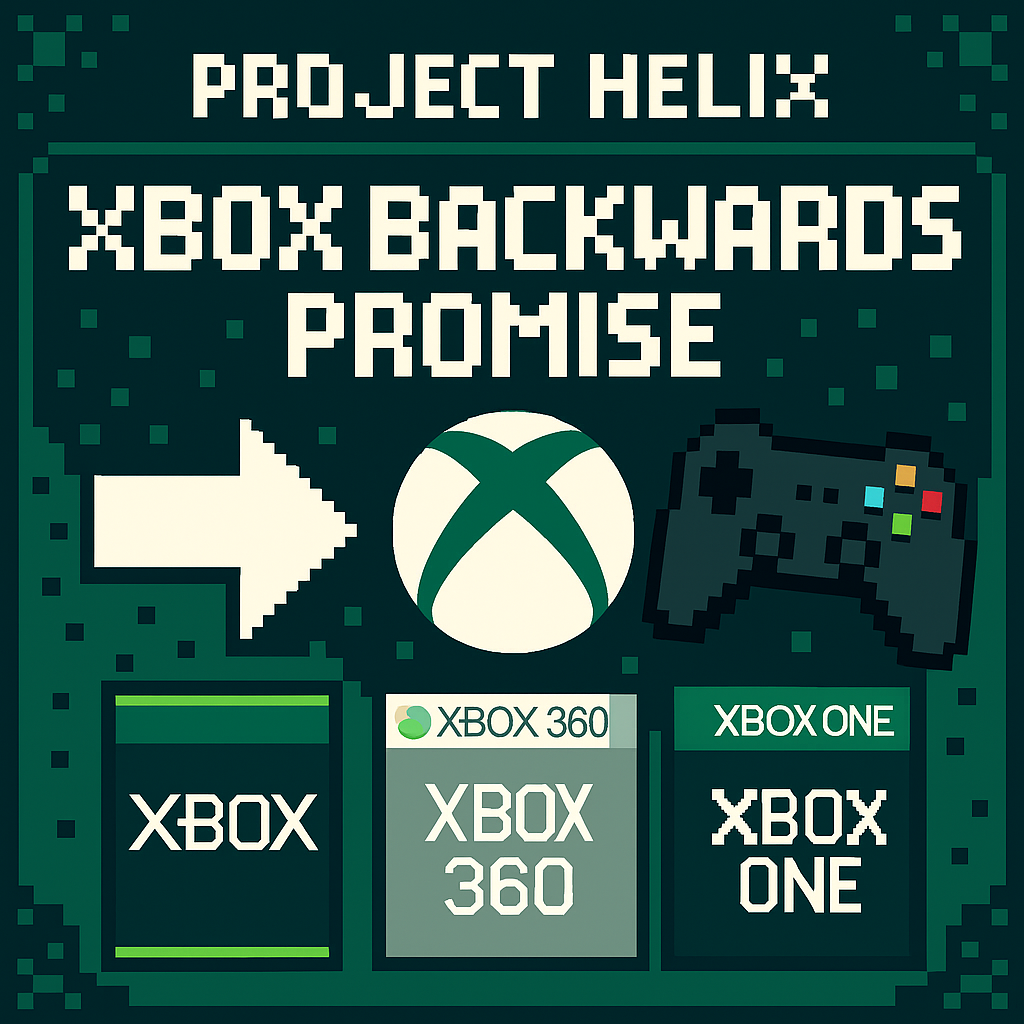
The Verge reports a leaked Microsoft memo that pitches publishers on Project Helix, the next Xbox, promising it will run games from every Xbox generation (Original, 360, One, Series) plus PC—if publishers consent title-by-title. The memo also outlines a disc-to-digital program for Xbox One/Series discs that grants a digital license usable on “any Xbox device.” It adds that Xbox 360 games are coming to PC and will run on Helix, with some features targeted “as soon as 2027.” But Helix may launch without a disc drive, and both preservation initiatives are opt-in, leaving availability to publishers’ discretion. [1]
Why it matters
Microsoft needs a win after 1,900 Xbox/Activision-Blizzard layoffs in January 2024 and a public promise to reset strategy before FY27; leadership keeps tying growth to a broader ecosystem rather than console unit sales. The pitch—“your old games, everywhere we run”—is a concrete way to raise platform value by FY27 without betting solely on new AAA output. [2][3][12]
Publishers hold the kill switch. They decide which legacy SKUs (and which components inside them) get relicensed. The Forza delistings are the canary: music and car licenses expire, and even Microsoft-published games vanish from stores and subscriptions on a schedule. If opt-ins are stingy or temporary, Helix’s grand library becomes a rotating carousel, not an archive. [6]
Original analysis
Project Helix backwards compatibility: the tech is done; the spreadsheet isn’t
Microsoft is treating “backwards compatibility” as a business model, not a firmware checkbox. The leaked memo frames Helix and “Xbox PCs” as a single commercial surface for old games, dangling revenue carrots to get publishers to re-list back catalog on console and PC. That aligns with GDC-era framing that Helix is designed to play both Xbox console and PC games—a unified platform pitch that collapses previous generational walls. [1][2][3]
Contrarian read: the bottleneck is not emulation; it’s risk-adjusted ROI on rights cleanup. If you’re EA or Take-Two, every re-list forces a legal sweep—soundtrack, likenesses, middleware, regional trademarks—that can span 5–15 vendors per SKU. The upside is real—high-margin sales on decade-old software—but only if the split and pricing offset the legal lift and exposure. The memo’s tone (“Why publishers win”) telegraphs that Microsoft knows the lift is commercial, not technical. [1]
— Back-of-envelope: pricing the carrot
Assume Microsoft proposes a $9.99 “relicense fee” per disc-to-digital conversion (one-time) and a $14.99 price point for à la carte legacy downloads, with a 70/30 publisher split (assumption mirroring standard store economics).
- If 5,000,000 users convert an average of 3 discs each at $9.99, gross conversion revenue is ≈ $149.85M (5,000,000 × 3 × $9.99).
- If another 2,000,000 users buy 2 legacy titles annually at $14.99, incremental catalog sales are ≈ $59.96M (2,000,000 × 2 × $14.99).
- Combined GMV ≈ $209.81M; at 70/30, publishers pocket ≈ $146.87M and Microsoft ≈ $62.94M, before any Game Pass halo. These modest adoption rates could rise if cross-device entitlements are frictionless. [1]
— Historical analogue: GeForce Now’s opt-in whiplash
In 2020, Nvidia tried “you already own it, so stream it.” Activision Blizzard, Bethesda, and 2K yanked catalogs, pushing Nvidia to an explicit opt-in model to prevent surprise removals. Even after the policy change, removals like 2K’s March 2020 exit showed how brittle access remains without renewable contracts. Helix bakes in opt-in from day one—a scar-learned move—but inherits the same fragility if a top publisher revisits terms in 12–24 months. [4][5][9][10]
— Named-stakeholder breakdown
- Electronic Arts: Sports back catalogs are licensing landmines (music, athletes, leagues). Expect selective opt-ins for titles with clean rights, while annualized franchises stay sparse to avoid re-clearing global rights. [6]
- Take-Two (Rockstar/2K): Priced for premium; will demand top billing and strong anti-piracy. Past caution on streaming/archival access suggests conservative opt-ins unless the deal is rich. [5][9]
- Ubisoft: Deep library with fewer hard-licensed dependencies; more likely to bulk opt in and use Helix’s PC reach to cross-promote Ubisoft Connect entitlements.
- Sega/Atlus: Cult classics benefit from PC reach and preservation narrative—low-cost, high-fan-goodwill; likely to test bundles and seasonal promos.
- Microsoft Publishing: Must lead by example but is constrained by third-party licenses embedded in first-party games (Forza’s car/music deals). Expect “complete edition” replacements where feasible to avoid future delists. [6]
Two more levers matter. First, disc-to-digital. The rumor mill points to “Positron,” a conversion flow that turns Xbox One/Series discs into evergreen digital entitlements on your account—useful if Helix ships without an optical drive. That sidesteps plastic and supports a disc-less 2027 box. [7]
Outages and expirations still bite. If a license lapses or an entitlement server hiccups, a “digital” copy can fail to launch—exactly what players saw during the July 27, 2026 Xbox outage, when some disc titles failed checks. A conversion program doesn’t fix handshake dependencies; Microsoft needs offline-first fallbacks per title. [8]
Second, timing. The memo cites Xbox 360 on PC “as soon as 2027,” which lets Microsoft merchandise a new-platform moment with an old-platform hook. Done right, Helix launches into a reissue wave: curated 360 “seasons,” PC storefront tie-ins, and a Game Pass tier with legacy perks (cloud saves, display upgrades). Done wrong, we get a handful of safe picks and a lot of “coming soon.” [1][2]
What others are missing
The real platform risk isn’t “Will Helix emulate 360?” It’s “Will your license resolve when Xbox Live is down and a soundtrack expires?” The July 27, 2026 outage showed even disc-based games can fail entitlement checks; some discs now act as tokens for a download, not as a playable image. That means disc-to-digital won’t shield Helix from the next outage or a rights lapse: the same online handshake gates play. Any “largest library” promise needs two safety nets—offline-first executables for legacy titles and standardized fallbacks when a single licensed track expires. Absent those, the library is big on paper, brittle in practice. [8][11][6]
What to watch next
- By Q1 2027, Microsoft ships the first wave of Xbox 360 titles on PC with account-level cloud saves; distribution mixes à la carte sales and Game Pass catalog slots. [1][2]
- By Holiday 2027, Helix launches with a disc-less base model; any disc support arrives via a separate accessory or an older Xbox used as a “verification bridge.” [7]
- By mid-2028, at least one top-10 third-party publisher by global console revenue withdraws or narrows its Helix opt-ins, triggering removals of previously available legacy titles—echoing the 2020 GeForce Now pivot era. [4][5]
My take
Helix can be the first console that treats preservation as a business, not a memorial. I’m bullish—if Microsoft overpays, upfront, for publisher certainty and builds “offline-first” SKUs that don’t die when a server sneezes. I’d launch a “Game Pass Preservation” add-on that funds rights clean-up, guarantees multi-year availability windows, and publishes a public delist calendar. Without that, Helix risks being a gorgeous front end to a melting library; pay the tax, lock the licenses, and ship discs-in-spirit. [1][6][8]
Sources
-
The next Xbox could play every Xbox game ever made — The Verge (https://www.theverge.com/games/974773/xbox-helix-disc-digital-backwards-compatibility-leaked-memo-opt-in) — Original report on the leaked Helix memo outlining five-generation support, disc-to-digital across “any Xbox device,” publisher opt-in, and a 2027 target for 360 features.
-
Microsoft is planning to bring Xbox 360 games to PC, according to leaked documents — PC Gamer (https://www.pcgamer.com/gaming-industry/microsoft-is-reportedly-planning-to-bring-xbox-360-games-to-pc-according-to-leaked-documents/) — Confirms the memo’s 360-to-PC plan and expands on disc-to-digital tests tied to Project Helix.
-
From GDC: Building the Next Generation of Xbox — Xbox Wire (https://news.xbox.com/en-us/2026/03/11/project-helix-building-next-generation-of-xbox/amp/) — Official framing that Helix is designed to play Xbox console and PC games, supporting the unified-platform thesis.
-
Nvidia introduces ‘opt-in’ policy for GeForce Now to prevent game removals — TechSpot (https://www.techspot.com/news/85400-nvidia-introduces-opt-policy-geforce-now-prevent-game.html) — Documents the 2020 shift to opt-in after major publishers pulled out, a cautionary analogue for Helix’s opt-in model.
-
Activision Blizzard abruptly removes its games from GeForce Now — Ars Technica (https://arstechnica.com/gaming/2020/02/activision-blizzard-abruptly-removes-its-games-from-geforce-now-streaming/) — Case study of rapid catalog contraction that illustrates the fragility of publisher permissions.
-
Forza Horizon 4 Delisting FAQ — Forza Support (https://support.forzamotorsport.net/hc/en-us/articles/30662484986387-Forza-Horizon-4-Delisting-FAQ) — Primary-source example of licensed content expirations leading to delisting, even for Microsoft-published titles.
-
Xbox might be testing ‘Positron’ disc-to-digital; Project Helix may be disc-less — TechRadar (https://www.techradar.com/gaming/xbox-might-be-following-playstations-lead-as-new-reports-claim-microsoft-is-testing-a-new-disc-to-digital-game-feature-called-positron-and-the-next-gen-project-helix-console-wont-have-a-disc-drive) — Reporting on the rumored conversion flow and the possibility that Helix ships without an optical drive.
-
Xbox’s biggest outage in years showed even physical discs can fail — Windows Central (https://www.windowscentral.com/gaming/xbox/xboxs-biggest-outage-in-years-proved-something-uncomfortable-even-physical-discs-dont-mean-you-truly-own-your-games) — Details the July 27, 2026 outage where disc games failed entitlement checks, underscoring uptime risk.
-
GeForce Now switches to opt-in after several removals — GameSpot (https://www.gamespot.com/articles/geforce-now-switches-to-optin-system-after-several/1100-6477964/) — Reinforces the move to opt-in and the publisher removal timeline in 2020.
-
2K Games pulls its titles from GeForce Now — Engadget (https://www.engadget.com/2020-03-06-nvidia-geforce-loses-2k-games.html) — Another documented pullout that illustrates how quickly libraries can change.
-
Microsoft clarifies disc failures during Xbox outage — Tom’s Hardware (https://www.tomshardware.com/video-games/xbox/microsoft-says-physical-discs-should-not-have-stopped-working-during-the-xbox-outage-clarifies-issue-with-entitlement-checks-that-failed-to-read-licenses-correctly-update-on-the-way) — Confirms the outage affected even offline disc play due to entitlement checks and that Microsoft is issuing fixes.
-
Microsoft lays off 1,900 workers across Xbox and Activision Blizzard — The Verge (https://www.theverge.com/2024/1/25/24050905/microsoft-activision-blizzard-layoffs-1900-xbox) — Context on the January 25, 2024 headcount cut that increases pressure on Xbox’s next strategic cycle.
Related update: We recently published an article that expands on this topic: read the latest post.
Related update: We recently published an article that expands on this topic: read the latest post.