Louisville’s Nasty Bounce-Back Win | Analysis by Brian Moineau

Nasty and Necessary: Louisville Closes the Yum! with a Statement Win over Syracuse

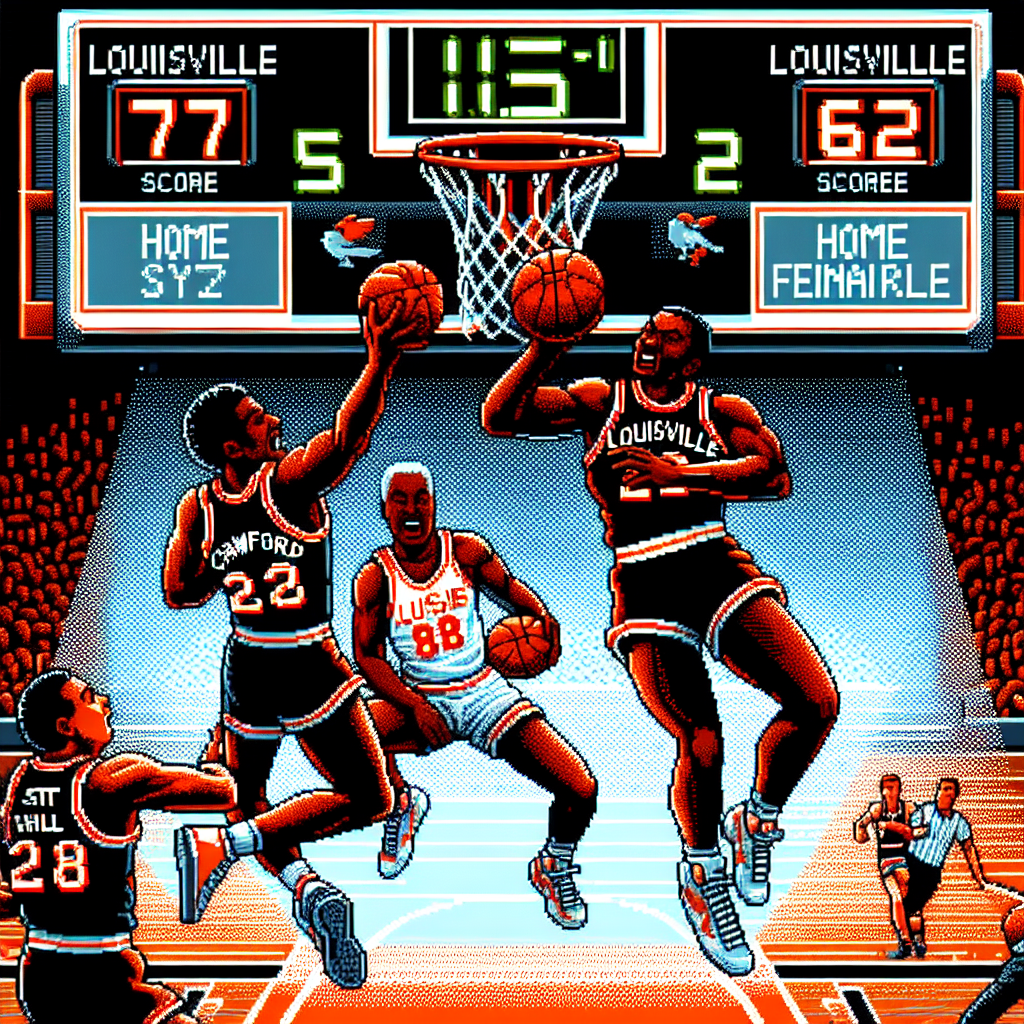
Pat Kelsey used the word “nasty” like he’d found it in a drawer labeled “Things Louisville Has Been Missing” and decided to bring it back into fashion. The result: a 77-62 win over Syracuse in the Cardinals’ regular-season home finale that felt less like punctuation and more like a paragraph break — a clear reset before the chaos of conference tournament time.

The hook: why “nasty” matters

“Nasty” in basketball isn’t just physicality. It’s the scratch-and-claw mentality on defense, the willingness to finish through contact, the gritty plays that don’t show up in highlight reels but swing momentum. Kelsey’s one-word prescription felt like a conscious correction: Louisville hasn’t always been that team this season, but on Tuesday night they were. They defended, they rebounded, they shared the ball, and they protected the home floor when it mattered.

Quick context

  • Final score: Louisville 77, Syracuse 62.
  • Game: Final regular-season home game of the 2025–26 season at the KFC Yum! Center.
  • Why it mattered: After a stretch of uneven results, the Cards needed a confident finish at home heading into the postseason. The win also kept Louisville’s conference résumé intact and gave fans something to cheer about before tournament play.

(Reporting from WDRB and player/coach quotes published after the game provide the basis for this recap and perspective.) (wdrb.com)

What happened — a readable recap

  • Louisville set the tone early with aggressive defense and better execution on offense. Instead of letting Syracuse’s zone create confusion, the Cards attacked the seams, moved the ball, and got looks inside and out.
  • The first half featured strong rebounding and physicality from Louisville, allowing them to build a lead and dictate pace. Syracuse made runs, but Louisville’s toughness repeatedly answered.
  • Down the stretch the Cardinals mixed smart shot selection with assertive drives that forced Syracuse to clamp up, leading to easier baskets and free throws. The 15-point final margin reflected a game where Louisville owned the second half.

Standouts and storyline players

  • Guards who hit timely shots and attacked closeouts helped break Syracuse’s rhythm. Multiple box-score contributors stepped up when the team needed finishing and ball movement. (Postgame quotes and game notes highlighted McKneely’s contributions and other role players who provided lift.) (wlky.com)
  • Pat Kelsey’s coaching: beyond the “nasty” soundbite, the adjustments and motivational tone mattered. The team looked like one that bought into a single-game identity: play tougher than the opponent and the rest follows. (wdrb.com)

What this win tells us about Louisville

  • The Cards can still be a dangerous, physical team. When they commit to that identity they limit the kinds of runs that have cost them in recent weeks.
  • Depth and buy-in are real assets. This wasn’t just star scoring; it was a group performance in which role players help create winning margins.
  • Momentum is fragile — but this game gives Louisville something concrete to carry into the ACC tournament: a confidence-building home finish and a reminder of the style that wins low-possession, grind-it-out conference games.

Three takeaways for fans and bettors

  • Defense first matters: Louisville’s win underscores that when the Cards defend the paint and rebound, they’re difficult to beat.
  • “Nasty” is repeatable when coached: Kelsey’s message — and the team’s response — shows attitude can be a game plan, not just a phrase.
  • Depth wins late: look for bench contributors to be a decisive factor in tournament matchups where every extra possession counts.

My take

This felt like the kind of win that repairs confidence. The scoreline is tidy, but the more important metric is tone: Louisville reclaimed an edge. If the Cards can reproduce the defensive intensity and the willingness to finish through contact, they’ll be tough to handle in the weeks ahead. Keep an eye on how they sustain the “nasty” mentality under tournament pressure — that will tell us whether this was a momentary surge or the start of something steadier.

Sources

Cavs Assert Control, Halt Knicks Sweep | Analysis by Brian Moineau

Cavs snap the sweep: how Cleveland stifled the Knicks in a 109-94 statement win

There was a midweek hum at Rocket Mortgage FieldHouse — not the usual buzzy, frantic kind, but the calm confidence of a team that feels itself coming together. The Cleveland Cavaliers weren’t just trying to avoid an ugly statline; they were putting a stake in the ground. On Tuesday night, they did that and more, handing the New York Knicks a 109-94 loss and keeping their season series from ending in a sweep.

Why this mattered

  • The Cavs and Knicks sit shoulder to shoulder in the East standings, and these matchups carry tiebreaker implications and playoff-pacing significance.
  • Cleveland entered with momentum (winning form recently) and used this game to show they can control a heavyweight opponent when it counts.
  • For New York, the loss exposed offensive dryness and a nightmare third quarter that flipped the game.

Game snapshot

  • Final score: Cavaliers 109, Knicks 94 (Feb 24, 2026).
  • Cleveland led 60-54 at halftime, then turned the heat up in the third quarter, outscoring New York 23-11.
  • Donovan Mitchell led Cleveland with 23 points; James Harden added 20. Jarrett Allen finished with 19 points and 10 rebounds.
  • Jalen Brunson had 20 and Mikal Bridges 18 for the Knicks. Mitchell Robinson grabbed 15 rebounds.
  • The Knicks shot 35-of-86 overall (around 40.7%) and struggled from deep (10-of-37, 27%). Their third quarter was brutal: 3-of-24 from the field.

The turning points

  • Third-quarter suffocation: Cleveland held the Knicks to just three field goals in the period. That defensive spasm wasn’t accidental — it was a mix of active help, contesting perimeter shots, and closing driving lanes when Brunson tried to create.
  • Harden + Mitchell in late game flow: Both stars paced the offense through the stretch run. Harden’s ability to control tempo and Mitchell’s scoring on drives and pull-ups kept New York from mounting a comeback.
  • Jarrett Allen’s inside presence: Between scoring and rim protection/rebounding, Allen anchored the paint and limited second-chance opportunities that the Knicks often rely on.

What the numbers tell us

  • Knicks 3-point woes: 10/37 is a killer against a team that has been vulnerable defending the arc. Cleveland’s ability to contest and force tougher looks tilted the efficiency scale.
  • Run timing: Cleveland’s 13-2 burst late in the third into the fourth created a gap New York couldn’t close. When a team converts pressure into a decisive run at that moment, the psychological edge often follows the scoreboard.
  • Standings context: Both teams were 37-22 after the game, but New York would hold the head-to-head tiebreaker if they finished tied after taking two of three meetings. That detail adds late-season significance to the matchup outcomes.

Matchup takeaways

  • Cleveland’s defense showed up when it mattered. They took away New York’s rhythm in the third and prevented the Knicks from finding consistent clean looks.
  • The Cavs’ depth and two-headed scoring (Mitchell + Harden) allow offensive variety; when one draws attention, the other benefits.
  • New York’s late-game issues and cold shooting from three are worrisome signs for a team trying to secure a top-tier playoff seed. They need consistency from their creators and better contingency offense when threes aren’t falling.

What this means next

  • Both teams head to Milwaukee (Knicks Friday, Cavs Wednesday) for important matchups against a conference contender. How each responds on the road will hint at their resilience and playoff readiness.
  • For Cleveland, the win continues a hot stretch (they’d won eight of nine), reinforcing their belief they can be one of the East’s toughest outs down the stretch.
  • For New York, it’s a reminder that margin for error is small — especially in head-to-head series against direct rivals.

My take

This was a classic-leveling moment. The Cavs didn’t merely “escape” with a win; they asserted defensive control at a point in the game when the Knicks have often leaned on offense to stay afloat. Cleveland’s balance — interior toughness from Allen, shot creation from Harden and Mitchell, and timely stops — was the difference. The Knicks will live to play another day, but they can’t afford more quarters like that third if they truly want to run with the East’s elite.

Sources


Related update: We recently published an article that expands on this topic: read the latest post.


Related update: We recently published an article that expands on this topic: read the latest post.

Spartans’ Second-Half Surge Tops | Analysis by Brian Moineau

Late-Game Grit: Michigan State’s Second-Half Surge Over Northwestern

There’s something about the Breslin Center that stretches late leads into victories and tests freshmen nerves — and on January 8, 2026, Michigan State reminded everyone why. Trailing by seven at halftime, the No. 12 Spartans flipped the script, outscoring Northwestern 48-31 in the second half to walk away with a 76-66 win. It was a night of momentum swings, timely threes, and the kind of physical rebounding that turned opportunity into points.

Game flow and what mattered

  • Michigan State trailed 35-28 at the break but dominated after halftime, finishing with a 76-66 final.
  • The Spartans outhustled the Wildcats on the glass, winning the rebound battle 42-25 and producing 16 second-chance points.
  • Jaxon Kohler’s two big threes in the second half (one to take the lead) and Jeremy Fears Jr.’s 15 second-half points were the turning points.
  • Northwestern’s Nick Martinelli poured in 28 points, but he got little support — the Wildcats had just one other player in double figures.

Why the second half swung to MSU

  • Rebounding edge: Michigan State’s 42 rebounds (11 offensive) created extra possessions and pressure. When a team converts offensive boards into second-chance points, late deficits become manageable.
  • Clutch shooting from unexpected spots: Kohler — normally a paint presence — stepped out and drilled two threes that erased Northwestern’s halftime cushion and swung momentum.
  • Free-throw calm: After a sloppy first half at the line, MSU steadied itself in the second half (making 17 of 22) when the game tightened late.
  • Bench and role-player contributions: Carson Cooper’s efficient scoring (6-of-6 from the field) and Coen Carr’s highlight plays helped keep the Spartans’ attack balanced.

Northwestern’s deja vu problems

  • Overreliance on Martinelli: He was sensational with 28 points, but the Wildcats lacked complementary scoring. Depth and scoring balance continue to be weak links in early Big Ten play.
  • Defensive lapses on the perimeter: Leaving Kohler open for multiple threes was costly. In the modern game, forwards who can mark the arc punish teams that don’t adjust.
  • Second-half execution: Northwestern’s defense faded when it mattered most and the rebounding gap allowed Michigan State to control tempo.

Moments that mattered most

  • Kohler’s first go-ahead 3 midway through the second half — a possession that flipped the lead and the crowd’s vibe.
  • A late stretch where Fears converted a layup and Cooper hit clutch free throws to push MSU back ahead after Northwestern cut it to two with about two minutes left.
  • MSU’s ability to limit turnovers in the second half relative to the first, and to convert on free throws when pressure rose.

Game stat snapshot (highlights)

  • Final: Michigan State 76, Northwestern 66.
  • Rebounds: MSU 42 — NU 25.
  • Leading scorers: Nick Martinelli (NU) 28; Carson Cooper (MSU) 18; Jeremy Fears Jr. (MSU) 15 (all in 2nd half); Jaxon Kohler (MSU) 15.
  • Record impact: MSU improved to 14-2 (4-1 Big Ten); Northwestern fell to 8-7 (0-4 Big Ten).

Three quick takeaways

  • Momentum is a fragile thing in the Big Ten; MSU showed again that depth + rebounding can erase an early deficit.
  • Northwestern needs another reliable scoring option — relying on a single high-volume guard is a tough blueprint across league play.
  • Versatile bigs who can hit threes (like Kohler) change matchups and force defensive adjustments that many teams struggle to execute on the fly.

My take

This felt like a classic Tom Izzo game — physical, opportunistic, and with players stepping into roles when the moment demanded it. Michigan State didn’t overcomplicate things: they grabbed rebounds, attacked the paint when it opened, and trusted veteran instincts in the closing minutes. Northwestern showed fight and a future building block in Nick Martinelli, but the Wildcats’ early Big Ten record makes it clear they need better offensive balance and mental toughness late in games.

Looking ahead

  • Michigan State: The Spartans will want to build off this second-half blueprint — keep crashing the glass and keep role players ready to make plays beyond the arc.
  • Northwestern: The Wildcats must find consistent secondary scoring and tighten perimeter defense to survive the Big Ten gauntlet.

Sources


Related update: We recently published an article that expands on this topic: read the latest post.


Related update: We recently published an article that expands on this topic: read the latest post.