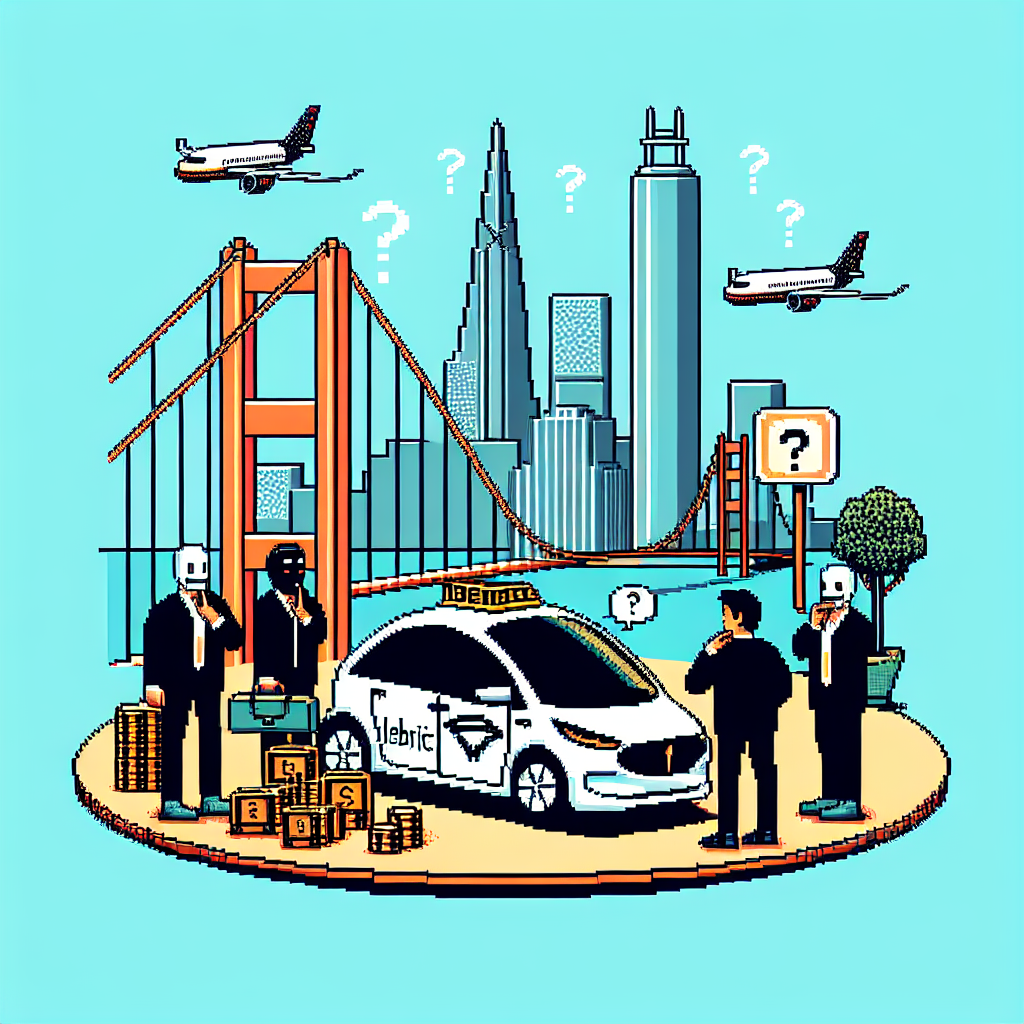
Teslas Robotaxi Claims: Reality Check Time | Analysis by Brian Moineau

Tesla’s Robotaxi Claims: A Closer Look at Reality vs. Hype

Tesla has always been a company that thrives on innovation and bold claims. From electric vehicles that redefine what it means to drive, to promises of autonomous driving that seem to leap straight out of a sci-fi movie, the company has consistently pushed the envelope. But recent reports suggest that Tesla’s latest claim—launching a ride-hailing service in San Francisco using Robotaxi technology—might be more smoke and mirrors than actual reality. Let’s dive into what’s really going on.

Context: The Rise and Hype of Autonomous Driving

The concept of autonomous vehicles has captured the imagination of consumers and investors alike for years now. Companies like Tesla, Waymo, and Uber have been racing to develop self-driving technology, each claiming to be on the verge of a breakthrough. Tesla, led by the charismatic Elon Musk, has often touted its Full Self-Driving (FSD) capabilities, claiming that its cars are just a software update away from full autonomy.

However, the reality is far less clear-cut. While Tesla has made strides in developing its FSD technology, it is still classified as a Level 2 driver-assistance system. This means that, despite its impressive capabilities, human intervention is still necessary. The recent claim about launching a Robotaxi service in San Francisco has raised eyebrows, as many experts point out that Tesla has yet to roll out fully autonomous taxis anywhere in California.

What’s the Real Story Behind Tesla’s Robotaxi Claims?

In a recent article by Electrek, it was reported that Tesla is attempting to create an illusion for investors, suggesting that it has already launched a ride-hailing service powered by its Robotaxi technology. The truth is, there are significant regulatory and technological hurdles that stand in the way of such a service becoming a reality. California has stringent regulations for autonomous vehicles, and Tesla’s current offerings do not meet the requirements for fully autonomous operation.

Furthermore, the competition in the autonomous vehicle space is fierce. Companies like Waymo and Cruise are already testing their self-driving services in limited areas, but they face the same hurdles as Tesla. This makes it imperative for Tesla to clarify its position and capabilities—especially as it seeks further investment and market share.

Key Takeaways

Misleading Claims: Tesla’s announcement about a Robotaxi service may not reflect the current state of its technology and regulatory approval. – Current Technology Level: As of now, Tesla’s Full Self-Driving is classified as Level 2, requiring human oversight. – Regulatory Hurdles: California’s strict regulations on autonomous vehicles make it challenging for companies to launch fully autonomous ride-hailing services. – Investor Caution: Potential investors should approach Tesla’s claims with a discerning eye, as the realities of autonomous technology are still evolving. – Competition is Fierce: Other companies in the autonomous vehicle space, like Waymo and Cruise, are also navigating the complexities of regulations and technology.

Conclusion: A Call for Transparency

As exciting as the prospect of Robotaxis is, it’s essential for companies like Tesla to maintain honesty and transparency in their communications. Misleading claims can erode trust among consumers and investors alike. While the dream of fully autonomous vehicles is still alive, we must ground our expectations in the current realities of technology and regulation. As we navigate this rapidly changing landscape, let’s keep our eyes on the road ahead—both literally and figuratively.

Sources

– “Tesla is trying to deceive investors into thinking it has San Francisco Robotaxis – Electrek.” Electrek. [link](https://electrek.co/2023/10/19/tesla-trying-deceive-investors-sf-robotaxis/) – “The Truth About Tesla’s Full Self-Driving.” MotorTrend. [link](https://www.motortrend.com/news/tesla-full-self-driving-truth/)

By understanding the nuances of Tesla’s claims and the broader context of autonomous vehicle technology, we can appreciate the potential while remaining cautious of the hype.


Related update: We recently published an article that expands on this topic: read the latest post.


Related update: We recently published an article that expands on this topic: read the latest post.


Related update: We recently published an article that expands on this topic: read the latest post.

Waymos Robotaxi Incident Raises Safety | Analysis by Brian Moineau

Waymo’s Robotaxi Incident: A Wake-Up Call for Autonomous Driving Safety

Imagine stepping out of your home, hailing a ride, and watching as a sleek robotaxi pulls up to whisk you away—all without a human driver at the wheel. This is the future that companies like Waymo are working hard to create. However, recent events have cast a shadow on this vision. Earlier this month, in Atlanta, Georgia, a Waymo robotaxi was observed driving around a stopped school bus, igniting concerns about the safety and reliability of autonomous vehicles.

Background on Waymo’s Journey

Waymo, a subsidiary of Alphabet Inc., has been a pioneer in the autonomous vehicle space for years. With extensive testing and a fleet of robotaxis operating in select cities, the company has touted the safety and efficiency of its self-driving technology. However, as with any innovative technology, there are growing pains. The incident involving the robotaxi and the school bus raises critical questions about the current state of autonomous driving technology and the regulatory frameworks that govern it.

In the aftermath of the incident, Waymo quickly responded by updating the software in its vehicles. This swift action demonstrates the company’s commitment to addressing potential issues, but it also highlights the challenges that come with integrating cutting-edge technology into everyday life.

Regulators Take Notice

Following the incident, regulators have stepped in to investigate. The scrutiny from governing bodies is a necessary part of ensuring that autonomous vehicles operate safely in public spaces. As these vehicles become more prevalent, it’s vital that they adhere to strict safety standards, especially when it comes to scenarios like navigating around school buses, which are often filled with children.

Waymo’s incident is not an isolated case but part of a broader conversation about the maturity of autonomous driving technology. With more companies entering the space, the need for clear regulations and safety protocols has never been more pressing.

Key Takeaways

Regulatory Scrutiny: The incident has prompted regulators to investigate Waymo’s practices, emphasizing the need for oversight in the autonomous vehicle sector. – Software Updates: Waymo has already rolled out a software update to address the issue, showcasing the importance of continuous improvements in technology. – Public Safety Concerns: The event raises valid concerns about the safety of autonomous vehicles, particularly in scenarios involving vulnerable road users like schoolchildren. – Industry Implications: As more autonomous vehicles hit the roads, incidents like this will shape public perception and regulatory measures that govern their operations. – Future of Autonomous Driving: This incident serves as a reminder that while the future of transportation is promising, it comes with responsibilities that need unwavering attention.

Concluding Reflection

The Waymo robotaxi incident is more than just a blip on the radar; it’s a critical moment in the evolution of autonomous driving technology. As we push toward a future where self-driving vehicles become the norm, we must prioritize safety and accountability. The consequences of overlooking these elements can be dire, not just for the companies involved but for society as a whole. Moving forward, we need to foster a collaborative environment where innovation and safety go hand in hand, ensuring that our roads are safe for everyone.

Sources

– TechCrunch: [Regulators probe Waymo after its robotaxi drove around a stopped school bus](https://techcrunch.com/2023/10/15/waymo-robotaxi-school-bus/)

By staying informed and engaged in discussions around autonomous vehicle safety, we can help shape a future that not only embraces innovation but also safeguards our communities.


Related update: We recently published an article that expands on this topic: read the latest post.


Related update: We recently published an article that expands on this topic: read the latest post.


Related update: We recently published an article that expands on this topic: read the latest post.


Related update: We recently published an article that expands on this topic: read the latest post.

Elon Musk says Tesla will start adding vehicles it doesn’t directly own into its robotaxi network next year – Fortune | Analysis by Brian Moineau

Elon Musk says Tesla will start adding vehicles it doesn’t directly own into its robotaxi network next year - Fortune | Analysis by Brian Moineau

Cruisin’ into the Future: Tesla’s Bold Leap into the Robotaxi World


In a move that is sure to make waves in the automotive and tech industries, Tesla is gearing up to expand its robotaxi network by adding vehicles it doesn’t directly own starting next year. This ambitious announcement, made by none other than the enigmatic Elon Musk, highlights Tesla’s ongoing efforts to remove safety drivers from the passenger seats and extend its reach into new cities. The Austin-based electric vehicle (EV) giant is driving forward at full throttle, but what does this mean for the future of transportation and our daily commute?

Tesla’s venture into the robotaxi realm isn’t just about innovation; it’s about revolutionizing how we perceive urban mobility. Imagine a city where the streets are lined with autonomous vehicles, zipping passengers from point A to point B with precision, efficiency, and minimal human intervention. This vision is tantalizingly close, thanks to the tireless pursuit of technological advancement by companies like Tesla.

Elon Musk: The Man Behind the Wheel


Elon Musk, Tesla’s CEO, is no stranger to bold proclamations and ambitious timelines. Known for his trailblazing leadership in the realms of space exploration with SpaceX, renewable energy with SolarCity, and now autonomous driving with Tesla, Musk’s influence is undeniable. However, his journey has not been without controversy. From his outspoken presence on social media to the fluctuating stock prices of Tesla, Musk is a figure who attracts both admiration and criticism in equal measure.

Despite the challenges, Musk’s vision for a sustainable, technologically advanced future remains steadfast. His commitment to Tesla’s mission—accelerating the world’s transition to sustainable energy—continues to drive the company’s innovations. The introduction of privately owned vehicles into the robotaxi network is yet another testament to Musk’s relentless pursuit of progress.

The Bigger Picture: Autonomous Driving Across the Globe


Tesla’s robotaxi initiative is part of a larger global movement towards autonomous vehicles. Companies like Waymo, Uber, and Cruise are also vying for a slice of the autonomous pie, each bringing their unique approach to the table. The race to perfect self-driving technology is fierce, with regulatory hurdles and safety concerns acting as significant roadblocks.

Globally, cities are grappling with the challenge of integrating these technologies into existing transportation frameworks. In places like San Francisco and Phoenix, autonomous vehicles are already being tested on public roads, offering a glimpse into the future of urban transportation. The potential benefits are enormous: reduced traffic congestion, lower emissions, and increased accessibility for those unable to drive.

Connecting the Dots: Tesla and the World


Tesla’s announcement comes at a time when the world is increasingly focused on sustainability and innovation. The recent surge in electric vehicle sales, spurred by rising fuel prices and environmental concerns, underscores a broader shift towards cleaner energy solutions. As countries strive to meet climate goals and reduce carbon footprints, Tesla’s initiatives align closely with these global priorities.

Moreover, the expansion of the robotaxi network could have significant economic implications. By potentially reducing the cost of transportation and creating new business opportunities, Tesla is poised to reshape urban economies and labor markets.

Final Thoughts: On the Road to Tomorrow


As we stand on the brink of a transportation revolution, it’s clear that the road ahead is filled with both opportunities and challenges. Tesla’s move to incorporate privately owned vehicles into its robotaxi network marks a significant step forward in the march towards autonomy.

While the journey may be fraught with obstacles—from regulatory hurdles to technological limitations—the destination promises a future where transportation is smarter, greener, and more accessible. So, buckle up and enjoy the ride, because the future of commuting is just around the corner.

Read more about AI in Business

Read more about Latest Sports Trends

Read more about Technology Innovations