Havana Nights on the Ice: Jon Cooper’s Stadium Series Look Wrapped in Tampa Flavor
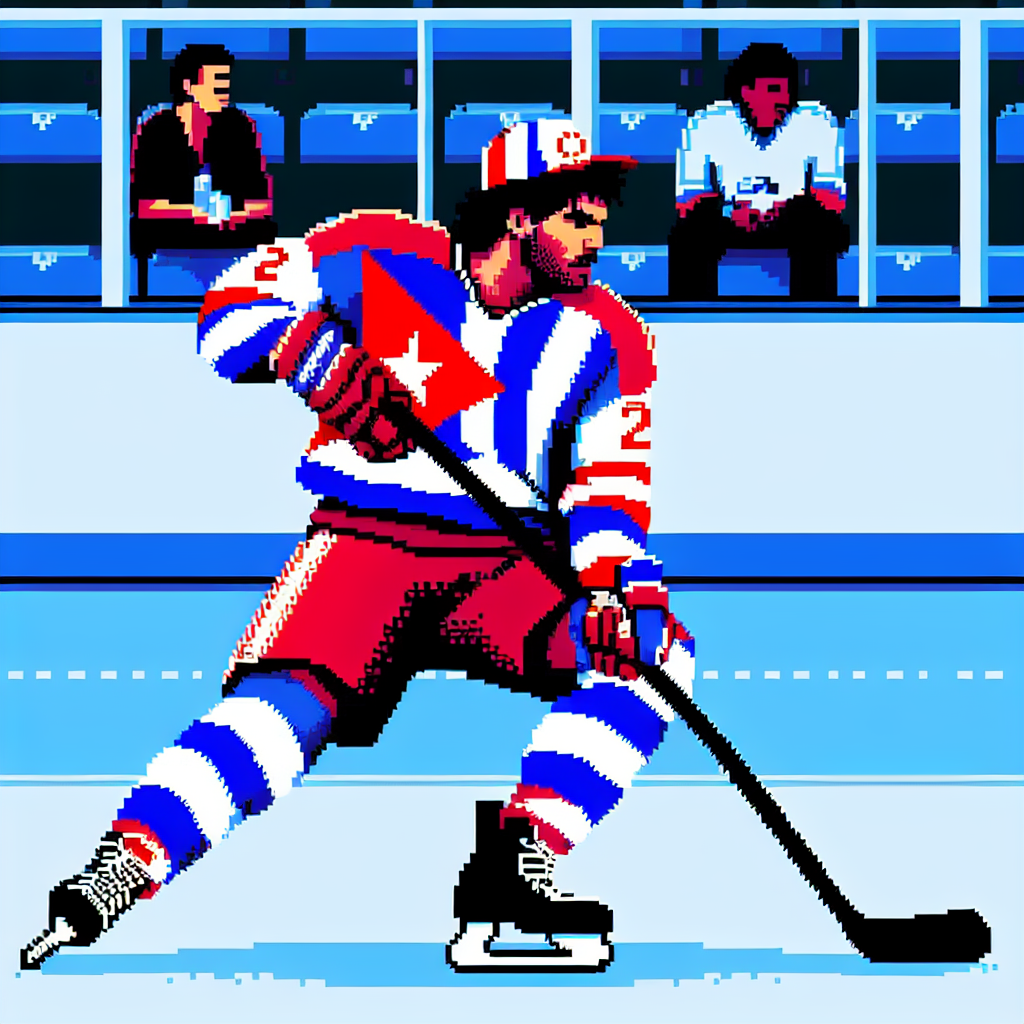
There’s outdoor hockey, and then there’s a theatrical performance that just happens to end with a 6-5 shootout. At the 2026 Navy Federal Credit Union NHL Stadium Series in Tampa, Lightning head coach Jon Cooper turned a pregame stroll into a moment that felt equal parts hometown salute and movie-set cameo — a white suit, matching hat, red undershirt and gold chain that leaned into Tampa’s Cuban heritage and the festive spirit of Raymond James Stadium.
Why the outfit mattered
This wasn’t just a costume. It was a small cultural wink from a coach who has long embraced Tampa as home. Ybor City — the historic Cuban enclave that helped shape Tampa’s identity — was the clear inspiration, and Cooper didn’t hide it. He later described the look as a “tip of a cap” to that heritage, even joking about staff outings to Ybor for cigars. The visual landed perfectly amid pyrotechnics, pirate-themed pageantry and the Bucs’ presence on the field earlier that day. (nhl.com)
- The Lightning arrived earlier in Bucco-centric full Buccaneers gear, and local NFL ties were highlighted when quarterback Baker Mayfield and tackle Tristan Wirfs escorted the team into the stadium. (nhl.com)
- The opposing Bruins leaned into a Revolutionary War-era theme, matching their NFL city counterparts (the Patriots) for pregame theatrics. (nhl.com)
The setting: outdoor spectacle meets local culture
The Stadium Series is designed to be more than a hockey game — it’s a spectacle that leans into place and personality. In Tampa, that meant merging the pageantry of Raymond James Stadium (pirates, pyrotechnics, creamsicle jerseys) with the city’s cultural threads. Cooper’s outfit was an accessible, playful bridge between team identity and community flavor: an on-ice nod to place that felt authentic rather than gimmicky. (nhl.com)
The game — a dramatic backdrop
If the pregame visuals set the tone, the game itself delivered on drama. The Lightning rallied from a four-goal deficit for a historic comeback and ultimately prevailed in a shootout — the kind of finish that makes these outdoor events linger in memory. Against that electric canvas, Cooper’s look reads as more than a fashion flourish; it was part of a larger chapter that fans will replay and recount. (nhl.com)
Notes on tone and intent
- Cooper framed the choice as celebratory and light. He acknowledged the cultural reference while keeping the mood playful — “dressing like this probably doesn’t come around very often either,” he said. The reception from teammates and local observers was largely positive, treating it as a respectful, festive homage rather than appropriation. (nhl.com)
- In the era of social media clips and highlight reels, a coach’s pregame look can become as viral as a highlight goal. Cooper leaned into that moment and let it amplify the event’s atmosphere.
Quick takeaways from the night
- The outfit doubled as hometown tribute and headline-grabbing theater, showing how personality plays in modern pro sports.
- Stadium Series events thrive on local flavor; Tampa’s Cuban heritage and Buccaneers connections gave this one a distinct identity.
- The on-ice product matched the spectacle: a historic comeback and shootout win ensured the visuals would stick.
My take
Sports moments are rarely only about what happens on the scoreboard. They’re about memory-making — the smell of the arena, the pageantry, the tiny details that anchor a night in time. Jon Cooper’s look at Raymond James Stadium did more than get a few laughs and photos: it tied a franchise moment to the community that hosts it. It felt intentional, rooted and — most importantly — fun. In an age when authenticity matters, a coach wearing a white suit and tipping his hat to the city felt like a small but meaningful way to say, “This one’s for Tampa.”
Sources
Related update: We recently published an article that expands on this topic: read the latest post.
Related update: We recently published an article that expands on this topic: read the latest post.
One second, one collapse: How the Penguins handed away a win and another headache
The puck sits in the neutral zone. The clock flashes 0:01. The arena breathes a collective sigh of relief — this one is effectively over. Then chaos. A shorthanded dagger. A scramble in front. A puck that should never have crossed the line, and suddenly the scoreboard reads a tie. For the Pittsburgh Penguins, that slice of time — fractions of a second, really — has become maddeningly familiar.
On December 9, 2025, the Penguins watched a 4-3 lead evaporate with 0.1 seconds left as the Anaheim Ducks forced overtime and eventually won in the shootout. It wasn’t just a bad bounce or an unlucky tip. It was a failure of situational defense, personnel choices, and the recurring theme of “so close, yet not.” Players and coaches left the ice visibly disgusted — and with reason. This wasn’t an isolated heartbreak; it fits into a pattern that’s dogged the team since last season.
What happened in the final second
- The Penguins led late and were on a power play. Conventional thinking: a team with possession and the man advantage should be able to protect a one-goal lead for the final seconds.
- Instead, a shorthanded rush off a Penguins turnover culminated in Beckett Sennecke scoring with 0.1 seconds remaining to force overtime. The goal exposed defensive breakdowns — notably from Kris Letang and Erik Karlsson — who ended up out of position and was involved in the defensive collapse that preceded the finish. (pittsburghhockeynow.com)
- The game proceeded to overtime and then a shootout, where the Ducks needed only one conversion to take the extra point.
Why this stings beyond a single loss
- Frequency. This was the 11th time since last season the Penguins surrendered a late lead or loss in a shootout/OT situation — a pattern, not a fluke. Repetition reveals process problems. (pittsburghhockeynow.com)
- Defensive configuration. Head coach Dan Muse trusted his top offensive defensemen in a late, delicate sequence. Letang and Karlsson are elite puck movers and play critical minutes in all situations — but when the scoreboard and clock demand conservative clearing and body-on-body coverage, their offensive instincts can leave seams exposed. Muse later acknowledged the tradeoff: on paper it’s defensible, in practice it proved costly. (pittsburghhockeynow.com)
- Execution under pressure. The Penguins dominated play — a season-high 48 shots and lopsided expected-goal numbers — yet failed to bury enough of their chances and, crucially, failed to protect a lead in the final laps. High-quality play for long stretches doesn’t absolve mistakes at game-defining moments. (pittsburghhockeynow.com)
The bigger context: trending headaches for Pittsburgh
- This outcome isn’t unique to one game. Media coverage and advanced stats have repeatedly flagged Pittsburgh’s difficulty closing games and their tendency to lose leads — a narrative that stretches back through the 2024–25 season and beyond. The trend appears both tactical and personnel-driven: defensive structure late in games, certain defensive pairings on the ice, and inconsistent finishing by the forward corps. (thehockeynews.com)
- The coaching transition and lineup evolution complicate matters. Dan Muse is new-ish, bringing different habits and line preferences. Early evidence shows him empowering players and leaning on his top defenders — a modern approach — but one that requires precise execution and risk management in the waning seconds. When a coach is still building trust and identity, these late-game decisions carry an outsized effect. (pittsburghhockeynow.com)
Where the Penguins should look for fixes
- Re-think who’s on the ice in the final 15–20 seconds. Possession plus a one-goal lead should prioritize stick-on-stick, body-on-body defending, and clearing lanes over offensive creativity. That probably means at least one more defensive-minded presence alongside whichever puck-handler is tasked with time-killing. (pittsburghhockeynow.com)
- Drill the two-minute/closing sequences until they’re muscle memory. Cleaning up turnovers, location discipline, and small-stick plays near the net are teachable. They’re also repeatable under pressure if rehearsed. Players like Kris Letang and Erik Karlsson can still be used — but with explicit, simplified roles in those moments. (pittsburghhockeynow.com)
- Clarify personnel matchups on special teams and late situations. If a defense pairing has shown “creative risk” tendencies, give them fewer matchups where a blown play immediately costs a game. Trust is earned; situational restraint can be temporary and tactical. (pittsburghhockeynow.com)
- Convert more high-quality chances into goals. The Penguins out-chanced Anaheim 43–19 and created far more dangerous opportunities — but didn’t produce the necessary finishing. That’s a complementary problem: create the pressure and then finish it off so late-game slips are less impactful. (pittsburghhockeynow.com)
A few player grades (snap impressions from the game)
- Arturs Silovs: Solid but unremarkable. Stopped what he needed to, but the team’s end-of-game collapse overshadowed his work. (pittsburghhockeynow.com)
- Tommy Novak: One of his best games in a Penguins uniform — active, driving to the net, good shot totals. (pittsburghhockeynow.com)
- Kris Letang / Erik Karlsson: Both gifted, both culpable in the final sequence. The moment exposed the risk of pairing two offensively minded defenders in the most dangerous seconds of a game. (pittsburghhockeynow.com)
My take
You can build teams a dozen ways, and modern NHL coaching often prizes versatility: offensive defensemen logging key minutes, forwards who can carry both zone starts, and hypothesized lineup continuity. But the scoreboard is the final arbiter. When a club repeatedly coughs up leads in the closing moments, it reveals where philosophical ideals bump into the reality of execution.
Dan Muse has earned latitude — he’s changing culture and getting results in many stretches — but trusting the same high-event defenders in every late-game scenario has shown a tangible downside. This is fixable. It’s not a roster meltdown or existential crisis; it’s attention to detail, coaching clarity, and a few shifts in end-game personnel and habits. The next time the clock hits :15 and the puck is in the Penguins’ hands, the margin between a win and a deflating “what-if” will be determined by choices that can be coached and practiced.
Final thoughts
Losing one like this is infuriating, especially when the team dominated most of the game. The good news: the underlying process — puck control, zone entries, shot volumes — often looked very good. The bad news: bad habits at the end of games have a way of eroding momentum and morale faster than an opponent’s comeback. If Pittsburgh addresses its late-game structure with urgency and practical adjustments, they’ll keep reaping the benefits of their strong play without handing away the final moments.
Sources
Related update: We recently published an article that expands on this topic: read the latest post.
Related update: We recently published an article that expands on this topic: read the latest post.
Penguins-Flyers ended bonkers: Two overturned OT goals, a post-horn scrum, and a shootout
If you thought the Battle of Pennsylvania might have mellowed with time, Tuesday night in Philadelphia was your reminder that this rivalry still cooks. The Penguins extended their point streak with a 3-2 shootout loss to the Flyers, but the path there? Pure chaos, right down to an overtime that saw goals wiped off for both teams and a scrum that left Sidney Crosby ineligible for the shootout.
Context and what set the stage
- Form and stakes: Pittsburgh came in rolling, 5-0-2 in their previous seven and 7-2-2 overall after this one—banking points during a dense stretch of three games in four nights. Philadelphia, meanwhile, has been sturdy at home and looking to cement an early-season identity under Rick Tocchet.
- The script: Justin Brazeau opened for the Pens with his sixth of the season, continuing a productive start for Pittsburgh’s “Big Boy Line” with Anthony Mantha and Evgeni Malkin. Special teams tilted the middle frames: the Flyers answered on a power play and then again shortly after a kill to go up 2-1.
- Crosby’s equalizer: Because of course—No. 87 banked one in during the third to make it 2-2, the latest chapter in a career-long habit of tormenting Philly.
- The wild overtime: Pittsburgh appeared to win it, but the goal was erased because Malkin hopped on early during a delayed penalty situation. Later, the Flyers’ would-be winner was overturned for offside. Then the horn. Then the scrum. Multiple misconducts on both sides meant several stars—including Crosby—couldn’t participate in the shootout.
- The finish: Philadelphia converted twice in the skills contest; only Malkin scored for Pittsburgh. Still, the Penguins pocketed a road point behind a strong night from Arturs Silovs, who steadied them while they found their legs.
Why it mattered
Beyond the rivalry drama, this game offered a reality check and a roadmap. Pittsburgh didn’t have its best in the first 40 but tightened up in the third, leaned on goaltending, and found a way to stretch the game—exactly the kind of bank-a-point mentality that pays off later. It also spotlighted how thin the margins are when special teams and reviews swing outcomes.
Key takeaways
- Penguins extend point streak despite the loss: 5-0-2 in their last seven, now 7-2-2 overall—valuable standings math on a back-to-back.
- Goaltending stole the show for Pittsburgh: Arturs Silovs was the primary reason they escaped with a point after a choppy first two periods.
- Crosby keeps setting the tone: His third-period equalizer reinforced a scorching start after recently hitting 1,700 career points.
- Details decide overtime: One erased Penguins goal for an early change on a delayed penalty; one Flyers goal overturned for offside—discipline and video reviews loomed large.
- Rivalry energy is alive: A multi-player scrum at the horn left key names, including Crosby, unavailable for the shootout—a tangible reminder of the series’ edge.
Final thought
If you’re Mike Sullivan, you don’t love the second period, but you love the response: structure in the third, poise in bedlam, and a point in the bank. If you’re a neutral, you loved every bit of the chaos. And if you’re a Penguins or Flyers fan, circle the rematch—these two just turned up the heat again.
Sources
Related update: We recently published an article that expands on this topic: read the latest post.
Related update: We recently published an article that expands on this topic: read the latest post.