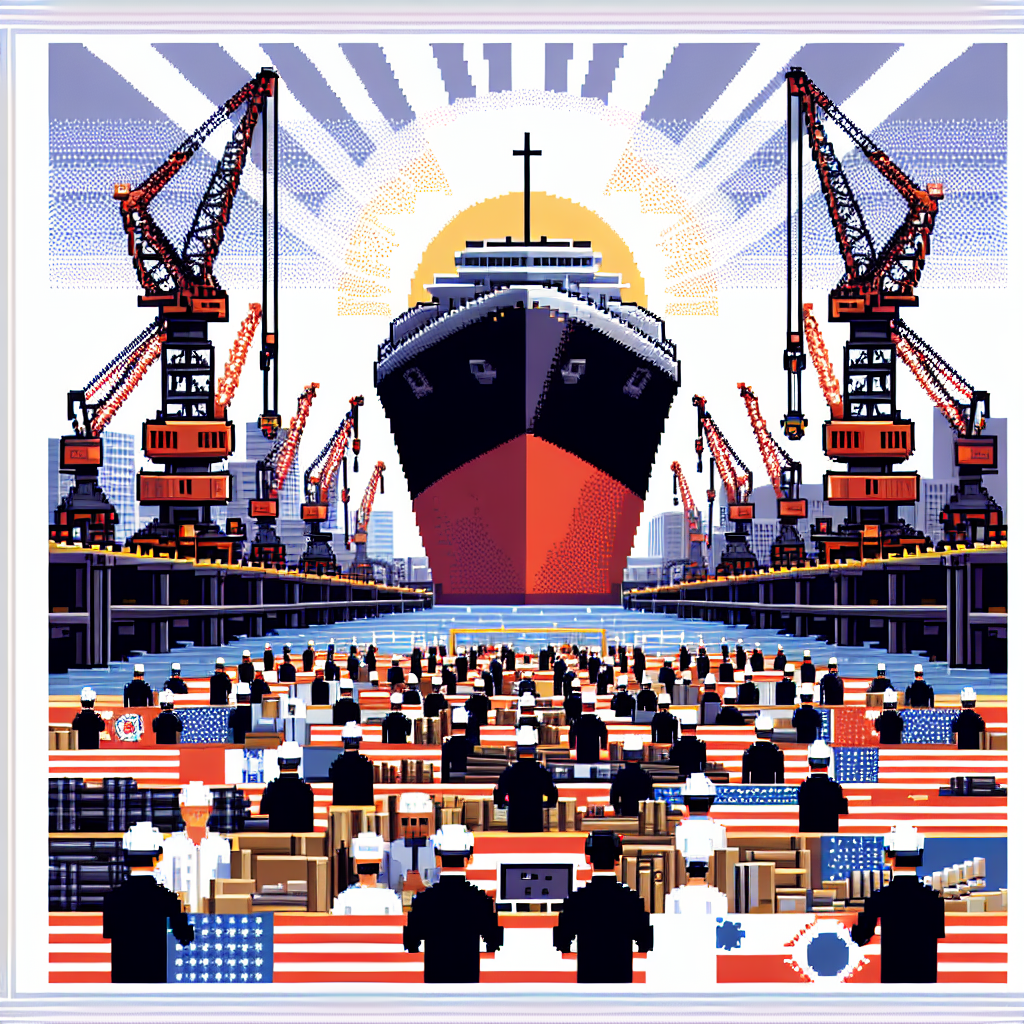
South Koreas Bold Move in Shipbuilding | Analysis by Brian Moineau

South Korea’s Shipbuilding Surge: A Strategic Move in U.S.-Korea Relations

Have you ever thought about the ships that carry goods across oceans, or the vessels that protect our shores? Shipbuilding is more than just a niche industry; it’s an integral part of national security and economic power. As the global stage shifts, South Korea is stepping up its shipbuilding game, creating ripples in the delicate balance of U.S.-Korea relations. In a move that may resonate with the “Make America Great Again” mantra, a South Korean shipbuilding conglomerate is positioning itself as a key player in President Donald Trump’s ambitious plan to revitalize America’s maritime fleet.

The Context: A New Era in Shipbuilding

Historically, the U.S. has maintained a robust shipbuilding industry, crucial for both military and commercial purposes. However, over the decades, this sector has faced significant challenges, including increased competition from abroad, budget constraints, and shifting priorities. Enter South Korea, a nation known for its advanced shipbuilding capabilities, which has seen a resurgence in its maritime industry thanks to innovative technology and strategic investments.

As President Trump sought to enhance American military strength and reduce dependency on foreign vessels, he initiated talks that sought to boost the domestic shipbuilding industry. This is where the South Korean conglomerate steps in, not just as a competitor but as a potential ally in a broader strategy to modernize and expand the U.S. fleet.

The growing partnership has implications beyond mere economics; it touches on themes of national security, trade, and geopolitical alliances. With North Korea’s ongoing provocations and China’s assertive maritime expansion, a strong U.S. fleet is crucial—not just for America, but for its allies in the region.

Key Takeaways

Strategic Collaboration: South Korea’s shipbuilding conglomerate is aligning its goals with U.S. interests, potentially enhancing military and commercial maritime capabilities.

Economic Impact: The partnership could lead to job creation in both countries, revitalizing the U.S. shipbuilding industry while bolstering South Korea’s maritime economy.

Geopolitical Significance: Strengthening ties between the U.S. and South Korea in shipbuilding could serve as a counterbalance to regional threats, particularly from North Korea and China.

Technological Advancements: South Korean firms bring cutting-edge technology and innovative designs, which could be integral to modernizing the aging U.S. fleet.

Trade Dynamics: This partnership highlights the importance of trade negotiations that could redefine the U.S.-Korea alliance, emphasizing mutual benefits over competition.

Reflecting on the Future

As the world watches this unfolding narrative, it’s clear that the dynamics of shipbuilding are not just about steel and water; they are about power, partnerships, and the very future of international relations. The collaboration between South Korea and the U.S. in shipbuilding can serve as a model for how industries can evolve in the face of shifting geopolitical landscapes. It’s a reminder that sometimes, innovation and cooperation can steer nations toward a brighter horizon.

In the end, whether you’re a maritime enthusiast or just a casual observer, it’s fascinating to see how these alliances can reshape not just industries, but the very fabric of global relations.

Sources

– “Make American Shipbuilding Great Again”: Korea leans into shipbuilding as it woos Trump – Politico. [Politico](https://www.politico.com)

By examining these developments, we can better understand the intricate dance of diplomacy and commerce at play—and what it means for the future of global trade and security.


Related update: We recently published an article that expands on this topic: read the latest post.

As Trump eyes more tariffs, South Korea remains safe haven for GM and Hyundai – CNBC | Analysis by Brian Moineau

As Trump eyes more tariffs, South Korea remains safe haven for GM and Hyundai - CNBC | Analysis by Brian Moineau

**South Korea: The Unexpected Safe Haven in the Global Tariff Tango**

In the ever-evolving landscape of international trade, where tariffs are often wielded as political instruments, automakers have had to become nimble dancers, adeptly navigating the intricate steps of global economics. The recent CNBC article highlights how South Korea has emerged as an unlikely safe haven for automakers like Hyundai Motor and General Motors, who have found solace in its tariff-free export market to the U.S. This development is a fascinating twist in the ongoing saga of global trade dynamics, and it offers a refreshing perspective in a world often dominated by trade tensions.

### The Tariff Tango

To understand the significance of South Korea's role, it's essential to take a step back and look at the broader context. The global automotive industry has been on a rollercoaster ride in recent years, with tariffs and trade wars threatening to upend established supply chains. In 2018, President Donald Trump imposed tariffs on steel and aluminum imports, sparking fears of a full-blown trade war. Automakers, heavily reliant on global supply chains, were suddenly faced with the daunting challenge of navigating these turbulent waters.

Enter South Korea. While many countries found themselves at odds with the U.S. over trade policies, South Korea managed to emerge as a stable partner. This is largely due to the U.S.-Korea Free Trade Agreement (KORUS FTA), which has provided a framework for tariff-free trade between the two nations. For automakers like Hyundai and GM, this agreement has been a lifeline, allowing them to continue exporting vehicles to the U.S. without the burden of additional tariffs.

### A Broader Context

South Korea's role as a tariff-free haven is not just an isolated phenomenon; it mirrors a broader trend of nations seeking out strategic partnerships to weather the storm of global trade tensions. Japan, for instance, has been strengthening its trade relationships with the European Union and other Asian countries in response to similar pressures. Meanwhile, the European Union has been working to bolster its own trade agreements, such as the EU-Mercosur trade deal, to secure markets for its industries.

This strategic maneuvering highlights a key lesson in today's interconnected world: the importance of adaptability and foresight. Countries and companies that can anticipate and respond to shifting trade landscapes are better positioned to thrive.

### The Human Element

It's impossible to discuss these developments without acknowledging the human element behind the headlines. Former President Trump, a central figure in the global tariff saga, is known for his unconventional approach to trade negotiations. His policies have sparked both criticism and support, depending on one's perspective. Supporters argue that his tariffs were necessary to protect American industries and jobs, while critics contend that they have led to increased costs for consumers and strained international relationships.

Regardless of one's stance on Trump's trade policies, it's clear that they have forced countries and companies to rethink their strategies and adapt to a new reality. In this context, South Korea's emergence as a tariff-free haven is a testament to the power of diplomacy and strategic alliances.

### Final Thoughts

As we look to the future, the story of South Korea and the global auto industry serves as a reminder that in the complex dance of international trade, adaptability is key. While tariffs and trade wars may continue to make headlines, there will always be opportunities for those who can navigate the intricate steps of the global economy.

In the end, the dance goes on, and it's up to each nation and company to decide how they will move to the music. South Korea, it seems, has found its rhythm in this global tariff tango, and it may just inspire others to do the same.

Read more about AI in Business

Read more about Latest Sports Trends

Read more about Technology Innovations