iPhone Selfies Capture Moon Mission View | Analysis by Brian Moineau

A tiny phone, a giant view: why Apple’s “Shot on iPhone” just went to the Moon

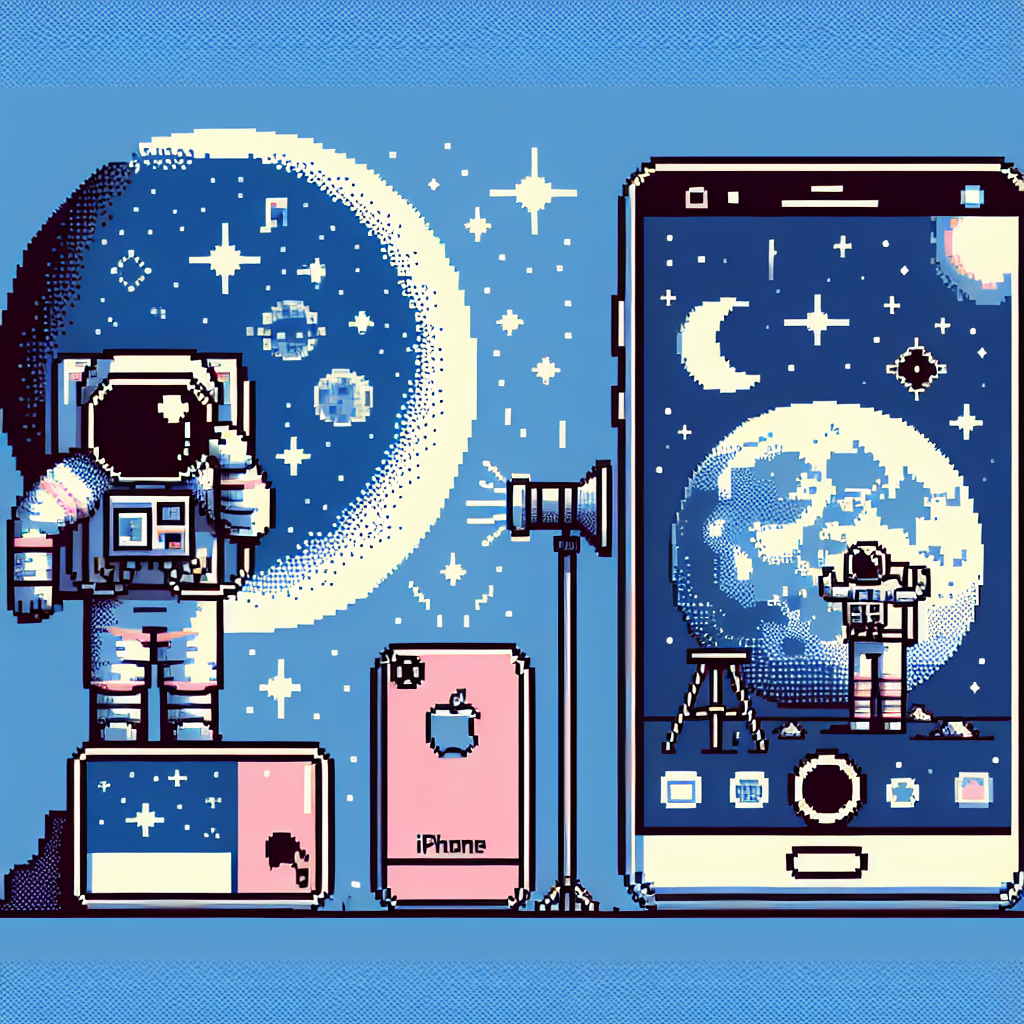
They say a picture is worth a thousand words, but when that picture is a selfie of astronauts floating in the Orion capsule with Earth glowing behind them, it suddenly feels priceless. Apple Highlights Photos Shot on iPhone During NASA's Mission to Moon – MacRumors is the headline that did the rounds this week, and for good reason: crew members aboard NASA’s Artemis II used iPhone 17 Pro Max devices to capture intimate, cinematic moments of humanity’s first crewed lunar flyby in over five decades. (macrumors.com)

The images are striking not just because of the scenery — Earth hanging like a marble beyond a tiny window — but because they collapse distance and technology into a single, very human frame. A commercial smartphone, in the hands of astronauts, helped document a milestone in space exploration. That collision of everyday tech and extraordinary context is what makes these photos remarkable.

Why the photos matter beyond the hashtag

  • They prove that modern consumer cameras can work under rigorous spaceflight constraints, at least for documentary purposes. NASA cleared iPhone 17 Pro Max units for extended use aboard Orion, which is a notable operational decision. (nasa.gov)
  • The images humanize the mission. A telescope or telemetry can tell you where the spacecraft is and how it’s operating. A selfie shows who’s in it, how they feel, and what the Earth looks like from their vantage. (macrumors.com)
  • For Apple, this is organic marketing gold: the “Shot on iPhone” narrative now includes literal shots taken near the Moon. For NASA, it’s a practical win — lightweight, familiar devices that let astronauts document life aboard Orion without complex camera rigs. (macrumors.com)

These points are why the story landed with more heat than a typical product-relations mention. It’s not only about specs or brand prestige; it’s about the cultural meaning of a handheld device recording a human story at an extraordinary frontier.

Apple Highlights Photos Shot on iPhone During NASA's Mission to Moon — what actually happened

On April 1, 2026, Artemis II launched and began its roughly 10-day trip around the Moon. During the mission, NASA shared photos from the crew — including shots credited to iPhone 17 Pro Max front cameras — that show astronauts Reid Wiseman, Christina Koch, Victor Glover, and Jeremy Hansen with Earth in the background. NASA posted multiple images and the agency’s Flickr archive lists EXIF metadata indicating the device used in some photos. (nasa.gov)

One of the images that circulated widely, captioned “Home, Seen from Orion,” shows Commander Reid Wiseman peering out a cabin window with Earth luminous beyond him. Other photos include dramatic lunar surface detail captured during the flyby and the crew viewing a rare total solar eclipse from deep space. The phones did not have internet connectivity while deployed — they were acting purely as cameras and documenters. (nasa.gov)

The technical and symbolic layers

Technically, there’s nothing magical going on beyond excellent optics, high-ISO capability, and good composition — all within a phone small enough to float in microgravity. But there are constraints to consider: radiation, thermal cycling, launch vibrations, and strict safety reviews before any consumer device rides inside a crew capsule. That NASA cleared off-the-shelf iPhone 17 Pro Max units for extended onboard use signals trust in the devices’ robustness for non-critical photography and documentation. (nasa.gov)

Symbolically, images like these do a few things at once:

  • They update our visual vocabulary of space. The Apollo-era photos defined generations; these iPhone frames show space as both epic and intimate.
  • They connect everyday users with exploration. Millions of people know how an iPhone works; seeing one in space makes the mission feel more accessible.
  • They shift expectations about who can document extraordinary moments. You no longer need a dedicated film crew or heavy equipment to capture an iconic space image — sometimes, a pocketable device suffices. (macrumors.com)

What this means for brands and science communication

For Apple, the optics are clear: organic association with a historic mission is the sort of earned exposure marketing teams dream about. For NASA and other agencies, allowing familiar consumer tech into the cabin opens doors for more naturalistic storytelling. It’s important, though, to keep expectations realistic: professional scientific imaging and mission-critical cameras remain indispensable for research-grade data. The iPhones function as narrative tools and personal recorders, not replacements for calibrated scientific instruments. (nasa.gov)

Media reactions varied from admiration to amused envy — many pointed out that Apple’s “Shot on iPhone” campaign just gained the ultimate endorsement. Observers also debated whether Apple would capitalize on the moment commercially (billboards, campaign tie-ins), but regardless of what marketing does next, the images already exist as public artifacts in NASA’s photo stream. (macworld.com)

Visual culture and the future of documentation in space

As missions become more routine and more actors — commercial and governmental — operate beyond low Earth orbit, expect to see a widening range of devices used to tell those stories. Phones, action cameras, and small mirrorless systems each have roles. The crucial idea here is accessibility: when anyone aboard a spacecraft can capture and share a moment (within mission rules), we get more varied, immediate, and human documentation of exploration.

There’s also a subtle but real archival question: who curates these images, and how will they be preserved for history? NASA has long been meticulous about archiving; adding consumer-device imagery to official streams requires diligence in metadata, provenance, and storage. The good news is that NASA’s photo release of these iPhone shots already includes useful details and contextual captions. (nasa.gov)

Final thoughts

My take: the story isn’t just that an iPhone took some pretty pictures — it’s that these pictures reframed how we think about presence in space. They make the immense feel intimate and the technical feel personal. Seeing Earth behind astronauts in a casually framed selfie collapses distance in a way raw telemetry never will. Whether you care about smartphones, space exploration, or just plain beautiful photos, these images matter because they remind us why we look up in the first place.

Sources


Related update: We recently published an article that expands on this topic: read the latest post.


Related update: We recently published an article that expands on this topic: read the latest post.

What’s next for SpaceX’s Starship Mars rocket after Flight 10 success? – Space | Analysis by Brian Moineau

What’s next for SpaceX’s Starship Mars rocket after Flight 10 success? – Space | Analysis by Brian Moineau

Title: SpaceX’s Starship: A Giant Leap for Mars, and Humanity

Ladies and gentlemen, stargazers and earthlings alike, gather ’round as we delve into the latest milestone achieved by SpaceX’s Starship, the megarocket that has successfully completed its 10th flight. With each launch, SpaceX inches closer to its audacious goal of making humanity a multiplanetary species. So, what happens now that Flight 10 has soared into the annals of space history? Let’s explore the cosmic possibilities!

A New Frontier: Bigger and Bolder

SpaceX, under the visionary leadership of Elon Musk, is not just thinking big; it’s thinking colossal. The Starship megarocket, which has been designed to carry both crew and cargo to the Moon, Mars, and beyond, is paving the way for interplanetary travel. Each successful launch brings us closer to the dream of establishing a human presence on Mars, a vision Musk has been vocal about since the inception of SpaceX.

The implications of this success are profound. Imagine a future where humans live on multiple planets, where the challenges of Earth can be mitigated by the resources of space. This isn’t just science fiction anymore; it’s a tangible goal that’s edging closer with each Starship flight.

In the Context of Global Space Endeavors

While SpaceX is leading the charge, it’s essential to acknowledge the global context of space exploration. The European Space Agency (ESA), NASA, and emerging space nations like China and India are all contributing to this new space race. For instance, NASA’s Artemis program aims to return humans to the Moon by the mid-2020s, with the goal of establishing a sustainable human presence there. The synergies between these programs and SpaceX’s ambitions could potentially accelerate humanity’s journey to Mars.

Moreover, the success of private companies like SpaceX is encouraging more investment and interest in the commercial space sector. It’s a thrilling time for space enthusiasts and investors alike, as the possibilities for innovation and discovery are virtually limitless.

The Man Behind the Vision: Elon Musk

No discussion about SpaceX is complete without mentioning Elon Musk. Love him or hate him, there’s no denying his impact on technology and space exploration. Musk’s relentless drive and ability to think outside the proverbial box have been instrumental in SpaceX’s successes. His approach often draws comparisons to historical figures like Thomas Edison or even Howard Hughes, blending genius with a touch of eccentricity.

Musk’s Twitter antics and controversial statements often overshadow his achievements, but it’s crucial to recognize the broader impact of his work. In a world fraught with challenges, his vision for a multiplanetary future offers a narrative of hope and exploration.

Beyond Space: A Broader Impact

Interestingly, the advancements made by SpaceX are not limited to space travel alone. The technologies developed for Starship, such as its reusable rocket system, have implications for sustainability and efficiency on Earth. As we continue to grapple with environmental challenges, these innovations could offer new solutions and inspire other industries to adopt similar approaches.

Final Thoughts

As we stand on the brink of a new era in space exploration, it’s vital to appreciate both the technical achievements and the broader vision that drives them. SpaceX’s Starship isn’t just a megarocket; it’s a symbol of human aspiration and the relentless pursuit of knowledge. Whether you’re a space enthusiast or a casual observer, the journey of Starship is a reminder of what we can achieve when we dare to dream beyond the stars.

So, as we look to the horizon and imagine the possibilities, let’s keep our eyes on the skies and our spirits high. The universe awaits, and with SpaceX leading the charge, the final frontier seems just a little bit closer to home.

Read more about AI in Business

Read more about Latest Sports Trends

Read more about Technology Innovations


Related update: We recently published an article that expands on this topic: read the latest post.

‘Clair Obscur: Expedition 33’ Has Sold Two Million Copies In 12 Days, Deserves More – Forbes | Analysis by Brian Moineau

‘Clair Obscur: Expedition 33’ Has Sold Two Million Copies In 12 Days, Deserves More - Forbes | Analysis by Brian Moineau

Clair Obscur: Expedition 33 – A Journey Through Gaming Excellence

In the vast and ever-evolving landscape of video games, reaching the pinnacle of both critical acclaim and commercial success is a rare feat. Yet, "Clair Obscur: Expedition 33" has managed to do just that, selling two million copies in just 12 days and topping user scores on Metacritic by a significant margin. This remarkable achievement not only highlights the game's quality but also marks a significant moment in gaming history.

A New Benchmark in Gaming

"Clair Obscur: Expedition 33" has set a new standard for what players can expect from a modern video game. Its success is reminiscent of other gaming phenomena such as "The Legend of Zelda: Breath of the Wild" and "The Witcher 3: Wild Hunt," which also redefined player expectations with their immersive worlds and intricate storytelling. However, what sets "Clair Obscur" apart is its unique blend of art and technology, crafting an experience that is both visually stunning and emotionally resonant.

The Art of Clair Obscur

The game's title, "Clair Obscur," refers to the artistic technique of using strong contrasts between light and dark to achieve a sense of volume and three-dimensionality. This concept is brilliantly translated into the game’s design, where players navigate through beautifully rendered environments that play with light and shadow to create an atmosphere that is both enchanting and mysterious. It’s akin to how the works of Caravaggio or Rembrandt capture the viewer’s imagination through their masterful use of chiaroscuro.

Cultural Resonance and Timing

Interestingly, the success of "Clair Obscur: Expedition 33" comes at a time when the gaming industry is experiencing a renaissance of sorts. With the rise of virtual reality and augmented reality technologies, games are becoming more immersive than ever. This aligns with the broader cultural trend of seeking more interactive and engaging forms of entertainment, as seen with the growing popularity of escape rooms and interactive theater experiences like "Sleep No More."

Beyond Entertainment

Moreover, "Clair Obscur" is more than just a game; it’s a reflection of our times. The narrative explores themes of exploration, survival, and the human condition—topics that resonate deeply in our current world, where space exploration is becoming a reality thanks to companies like SpaceX and Blue Origin. The game invites players to ponder the possibilities and challenges of venturing into the unknown, much like how humanity is contemplating its future among the stars.

Final Thoughts

In conclusion, "Clair Obscur: Expedition 33" is not just a triumph in gaming; it’s a cultural milestone that resonates on multiple levels. Its success is a testament to the power of storytelling and artistry in the digital age. As we continue to explore new frontiers in both technology and our understanding of the universe, games like "Clair Obscur" remind us of the beauty and complexity of the human experience. Whether you are a seasoned gamer or a newcomer to the world of interactive entertainment, this is one expedition you won't want to miss.

For those who haven't yet embarked on this journey, now is the perfect time to dive into the shadows and light of "Clair Obscur: Expedition 33" and discover what makes it a masterpiece in the gaming world.

Read more about AI in Business

Read more about Latest Sports Trends

Read more about Technology Innovations

Northern Lights Forecast: These 8 States Could See Aurora Borealis Tonight – Forbes | Analysis by Brian Moineau

Northern Lights Forecast: These 8 States Could See Aurora Borealis Tonight - Forbes | Analysis by Brian Moineau

Chasing the Aurora: A Celestial Dance Across American Skies

As dusk settles across the northern hemisphere, there's a rare celestial ballet set to grace the skies over parts of the United States. According to a recent forecast by the National Oceanic and Atmospheric Administration (NOAA), a minor geomagnetic storm is expected to make the northern lights, or aurora borealis, visible in eight lucky states. This natural light show, typically confined to the polar regions, is poised to paint the skies in hues of green and pink, offering a mesmerizing spectacle for those fortunate enough to be under its path.

The anticipation of the aurora borealis has always sparked a sense of wonder and excitement. This time, states as far south as New York, Wisconsin, and Washington might get a glimpse. While the phenomenon is a treat for skywatchers, it's also a reminder of the intricate and powerful forces at work in our solar system. The auroras are caused by solar wind particles colliding with Earth's magnetic field, creating stunning visuals that have inspired myths and legends for centuries.

In our fast-paced, technology-driven world, the opportunity to engage with such a raw and breathtaking aspect of nature can be a humbling experience. It's a chance to disconnect, to look up from our screens, and to reconnect with the universe in its most primal form. In an era where artificial light often drowns out the stars, the prospect of witnessing the aurora borealis serves as a gentle nudge to appreciate the beauty that's always been above us.

Interestingly, this event occurs at a time when discussions around space exploration and our understanding of cosmic phenomena are gaining momentum. With NASA's Artemis program aiming to return humans to the Moon and eventually reach Mars, our fascination with what lies beyond our atmosphere is at an all-time high. These endeavors remind us of the importance of observing and preserving the natural wonders on our home planet.

In parallel, climate change discussions emphasize the fragility of Earth's magnetic field and the need to preserve our natural environment. The auroras, in their fleeting beauty, underscore the interconnectedness of our planet with the larger cosmos. They serve as a vivid reminder of the delicate balance that sustains life on Earth.

For those in the forecasted areas, this weekend presents a fantastic opportunity to witness the northern lights without traveling to the Arctic Circle. As you prepare to step outside and look up, consider bundling up, grabbing a warm drink, and perhaps inviting friends or family to share in the experience. It's a chance to create memories and to ponder our place in the universe.

In conclusion, whether you're an avid astronomer or just someone who appreciates a good view, the potential appearance of the aurora borealis is a celestial gift. It invites us to pause, to marvel, and to reflect on the grandeur of the natural world. So, should the skies cooperate and the auroras appear, remember to take a moment to appreciate the dance of colors above—it's a performance that's been millions of years in the making. Happy skywatching!

Read more about AI in Business

Read more about Latest Sports Trends

Read more about Technology Innovations