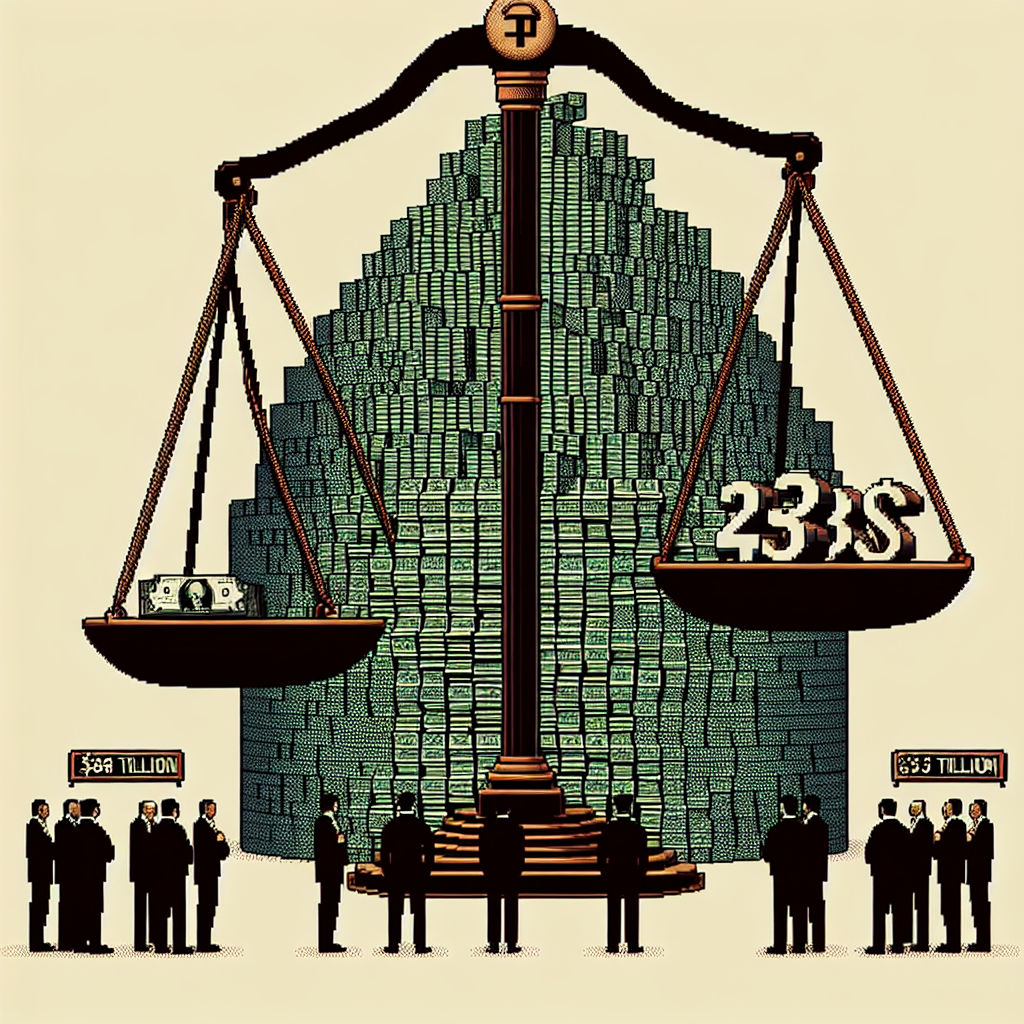
The new aristocracy: how AI is minting a class of "Have-Lots" — and why Washington helps keep them that way
AI isn't just rearranging industries. It's rearranging who gets the upside. Over the past two years, the winners of the AI boom have stopped being a diffuse set of tech founders and turned into a concentrated, politically powerful cohort — the "Have-Lots." They're not just richer; they're increasingly invested in preserving the political and regulatory status quo that lets their gains compound. That matters for jobs, markets, and the future of U.S. policymaking.
At a glance
- The AI era has created a distinct elite — the Have-Lots — whose wealth rose far faster than the rest of the country in 2025.
- Their advantage comes from outsized equity positions, privileged access to private deals, and close ties to government.
- That concentration of money and influence makes policy outcomes (taxes, regulation, export controls, procurement) more likely to favor continuity over disruption.
- The political consequence: an intensifying split between those who feel left behind and those who are financially insulated, which fuels polarization and public distrust.
Why "Have-Lots" are different this time
We’ve seen wealth concentration before, but AI is amplifying two key dynamics:
- Ownership leverage. AI value accrues heavily to the owners of critical IP, compute infrastructure, and data. A few companies and their insiders hold disproportionate slices of these assets — and their equity rewards are exponential when AI markets run hot.
- Private-market exclusivity. Much of the biggest early AI upside lives in private financings, venture rounds, and exclusive partnerships. Regular retail investors and most households simply can't access the same terms or allocations.
- Policy proximity. The largest AI players are now deeply embedded in Washington — through advisory roles, executive meetings, and lobbying — giving them influence over trade rules, export controls, procurement decisions, and the pace of regulation.
Axios framed the story as three economies — Have-Nots, Haves, and Have-Lots — and showed how 2025 became a banner year for a narrow group of ultra-wealthy Americans tied to AI and tech. The result: a class that benefits from market booms and tends to favor stability in the institutions that enabled their gains. (axios.com)
How money becomes political staying power
Money buys more than yachts. It buys lobbying, think tanks, campaign influence, and the ability to hire teams that translate business goals into policy narratives. A few mechanisms to watch:
- Lobbying and regulatory capture. Tech companies and large investors spend heavily on lobbying and hire former officials who understand how to shape rulemaking. That raises the cost (and political friction) for hard-curtailing policies.
- Strategic philanthropy and media influence. Big donations to policy institutes and universities can alter the research and messaging ecosystems, steering public debate toward industry-friendly framings.
- Access to procurement and export levers. Large AI firms can influence government purchasing decisions and negotiate carve-outs or implementation details that advantage incumbents. When export controls are on the table, these firms lobby for interpretations that preserve critical markets.
- Defensive investment strategies. The Have-Lots aren't just earning more — they're investing to fortify advantages (exclusive funds, acquisitions, cross-border deals) that make it harder for challengers to scale.
Real-world markers of this dynamic were visible in 2025: outsized gains for several tech founders and investors tied to AI, and public reports of deepening ties between major AI companies and government officials. Those links make changes to the rules — from tougher wealth taxes to stringent antitrust enforcement — both politically and technically harder to push through. (axios.com)
What it means for average Americans and markets
- Wealth inequality meets political inertia. When the richest segment accumulates both capital and influence, reform that would rebalance outcomes becomes more difficult. That leaves many households feeling the economy is working against them even when headline GDP and markets climb.
- Labor displacement and retraining get politicized. Workers worried about AI-driven job loss will look for policy fixes. If those fixes threaten concentrated interests, pushback and gridlock are likely.
- Market distortions. Concentration of AI capital can inflate a narrow set of winners (chipmakers, cloud infra, platform owners) while starving broader innovation in complementary areas. That can deepen sectoral risk even as headline indices rise.
- Policy unpredictability. The tug-of-war between populist pressures and elite influence can produce swings — intermittent regulation, targeted carve-outs, or transactional interventions — rather than coherent long-term strategy.
Where policymakers might push back (and the headwinds)
- Wealth and corporate taxation. Targeted tax changes could blunt accumulation, but they face political, legal, and lobbying resistance — especially if the Have-Lots effectively argue that higher taxes will slow innovation or capital investment.
- Antitrust and competition policy. Strengthening antitrust tools could lower concentration, yet enforcement takes time and expertise, and the enforcement agencies often duel with well-resourced legal teams.
- Procurement reform and open access. Government can favor open standards and wider procurement rules, but incumbents lobby to maintain advantageous arrangements.
- Democratizing access to AI gains. Proposals to expand employee equity, broaden retail access to private markets, or invest in public AI infrastructure could help, but they require political coalitions that cut across partisan lines — a tall order in the current climate.
Axios and reporting elsewhere highlight that many of the Have-Lots actively prefer the current mix of regulation and government interaction because it preserves their returns and strategic position. That creates a structural incentive to resist reforms that would meaningfully redistribute AI-driven gains. (axios.com)
My take
We’re at a crossroads where technological change is colliding with political economy. The Have-Lots are not just a distributional outcome — they're a political force. If the U.S. wants AI broadly to raise living standards rather than concentrate windfalls, the policy conversation needs both humility (tech evolves fast) and muscle (policy and public institutions must adapt faster).
That will mean designing pragmatic, durable interventions: smarter tax code adjustments, stronger competition enforcement, transparent procurement that favors open systems, and public investments in training and AI infrastructure that broaden participation. None are magic bullets, but together they can slow the drift toward a permanently bifurcated economy.
Final thoughts
We can admire the innovation that produced AI — and still question who gets the upside. Right now, the Have-Lots have structural advantages that let them lock in gains and political protections. If that trend continues unchecked, it will shape not only markets, but the public’s faith in institutions. The policy challenge is to make the rewards of AI less gated and the rules of the game more inclusive — a task that will require both political courage and technical nuance.
Sources
-
Behind the Curtain: The Haves, Have-Nots, Have-Lots economy — Axios.
https://www.axios.com/2026/01/12/ai-winners-wealth-inequality. (axios.com) -
Nvidia CEO's net worth nears $120 billion as shares surge on Saudi chip deal — Reuters.
https://www.reuters.com/technology/nvidia-ceos-net-worth-nears-120-billion-shares-surge-saudi-chip-deal-2025-05-13/. (reuters.com) -
Nvidia CEO Huang sells $15 million in stock for his $873 million plan — CNBC.
https://www.cnbc.com/2025/06/24/nvidia-ceo-jensen-huang-sells-stock-15-million.html. (cnbc.com)
Related update: We recently published an article that expands on this topic: read the latest post.
Related update: We recently published an article that expands on this topic: read the latest post.