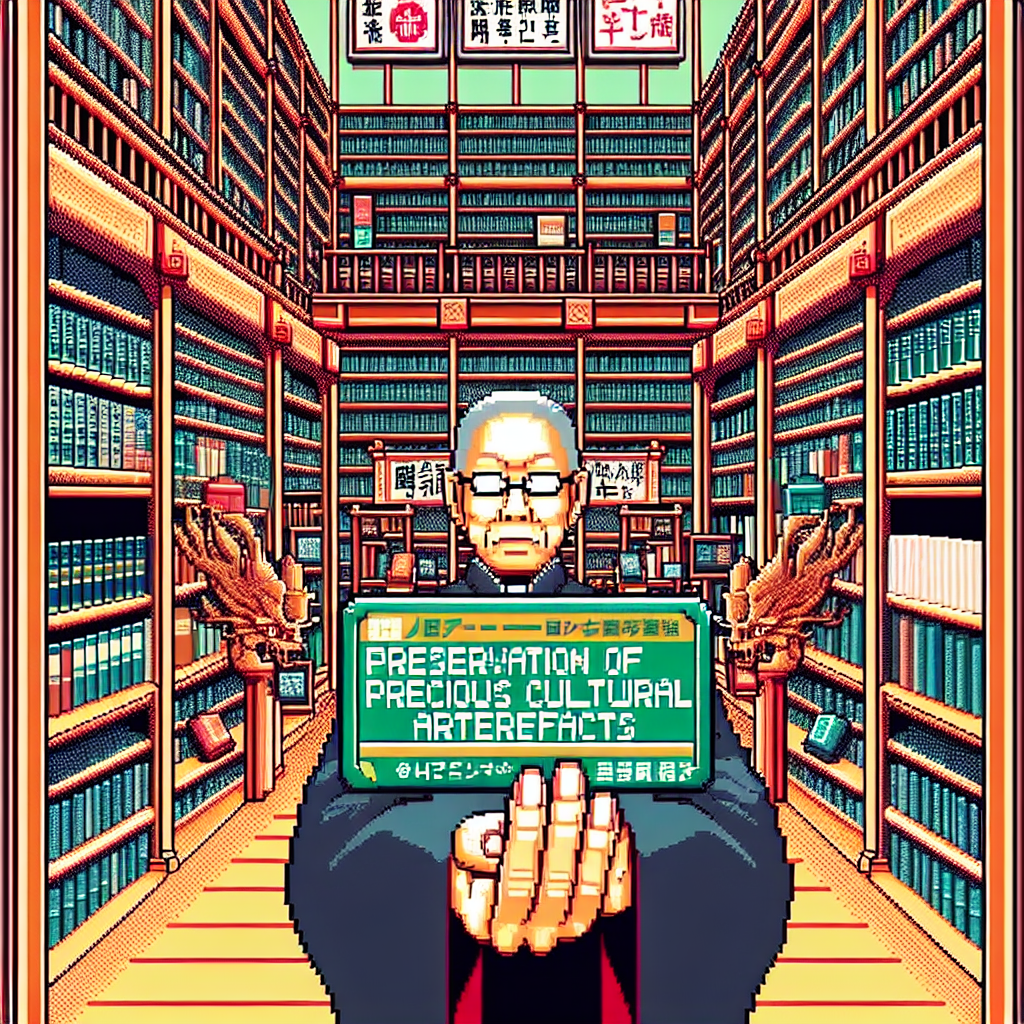
Japan's National Library Says Game-Key Cards Are Not Eligible For Preservation - Nintendo Life | Analysis by Brian Moineau
A Digital Dilemma: Japan’s National Library and the Preservation of Game-Key Cards
In today’s rapidly evolving digital landscape, preserving history has taken on new challenges and forms. Recently, the National Diet Library of Japan announced its decision not to include game-key cards in their preservation efforts. This move, reported by Nintendo Life, has sparked curiosity and debate among gaming aficionados and digital archivists alike.
The Curious Case of Game-Key Cards
Game-key cards serve as physical keys to unlock digital content, often used by platforms like Nintendo to access games on the Switch. While they are tangible objects, their primary function is digital, raising the question: should these ephemeral access keys be preserved as part of cultural history?
Japan's decision might seem surprising at first, but upon reflection, it's logical. Game-key cards are not the games themselves; they are merely a means to access the digital content. Preserving them in a library setting might not capture the essence or experience of the games they unlock.
The Broader Context of Digital Preservation
This decision by Japan’s National Library is not unique. Libraries and archives worldwide are grappling with the challenge of preserving digital content. The Library of Congress, for instance, has been working on digital preservation strategies for years, focusing on maintaining access to digital content over time. However, the pace of technology often outstrips these efforts.
Moreover, as we see in other sectors, such as the film industry, the shift from physical media to streaming services has posed similar challenges. The debate over preserving original copies of films versus their digital counterparts echoes the game-key card conundrum.
A Look at Nintendo’s Legacy
Nintendo, the company most associated with these game-key cards, has a long history of innovation in gaming. From the original Nintendo Entertainment System to the modern Nintendo Switch, the company has continually pushed the boundaries of gaming experiences. However, Nintendo has also been criticized for its approach to digital rights management (DRM) and its reluctance to embrace digital preservation, as evidenced by the closure of the Wii Shop Channel in 2019, which rendered many digital purchases inaccessible.
This reluctance contrasts with companies like Microsoft, which have made strides in backward compatibility and game preservation through efforts like the Xbox Game Pass, which allows access to a library of games from previous console generations.
The World Beyond Gaming
The issues surrounding digital preservation are not confined to gaming. We see similar challenges in the music industry, where platforms like Spotify and Apple Music have replaced physical albums. While convenient, this shift raises concerns about the longevity and preservation of music, especially as platforms evolve and change their libraries.
In academia, digital textbooks and resources have largely replaced physical copies, prompting discussions about access, cost, and preservation. The struggle to maintain digital archives in a world where technology is ever-changing is a universal challenge.
Final Thoughts
Japan’s decision to exclude game-key cards from preservation may seem dismissive at first glance, but it highlights a critical conversation about what and how we choose to preserve in our digital age. As technology continues to advance, it’s crucial for institutions, companies, and individuals to consider the long-term implications of our digital dependencies.
While game-key cards may not hold a place in the hallowed halls of Japan’s National Library, the discussions they inspire about digital preservation are invaluable. In a world where so much of our culture and history is becoming digital, finding ways to preserve these artifacts is more important than ever.
So, next time you download a game or stream an album, take a moment to ponder the digital footprints you’re leaving behind—and the ones that might just disappear.
[Read more about Nintendo and preservation challenges here](https://www.nintendolife.com/news/2023/10/japans-national-library-says-game-key-cards-are-not-eligible-for-preservation).
Read more about AI in Business