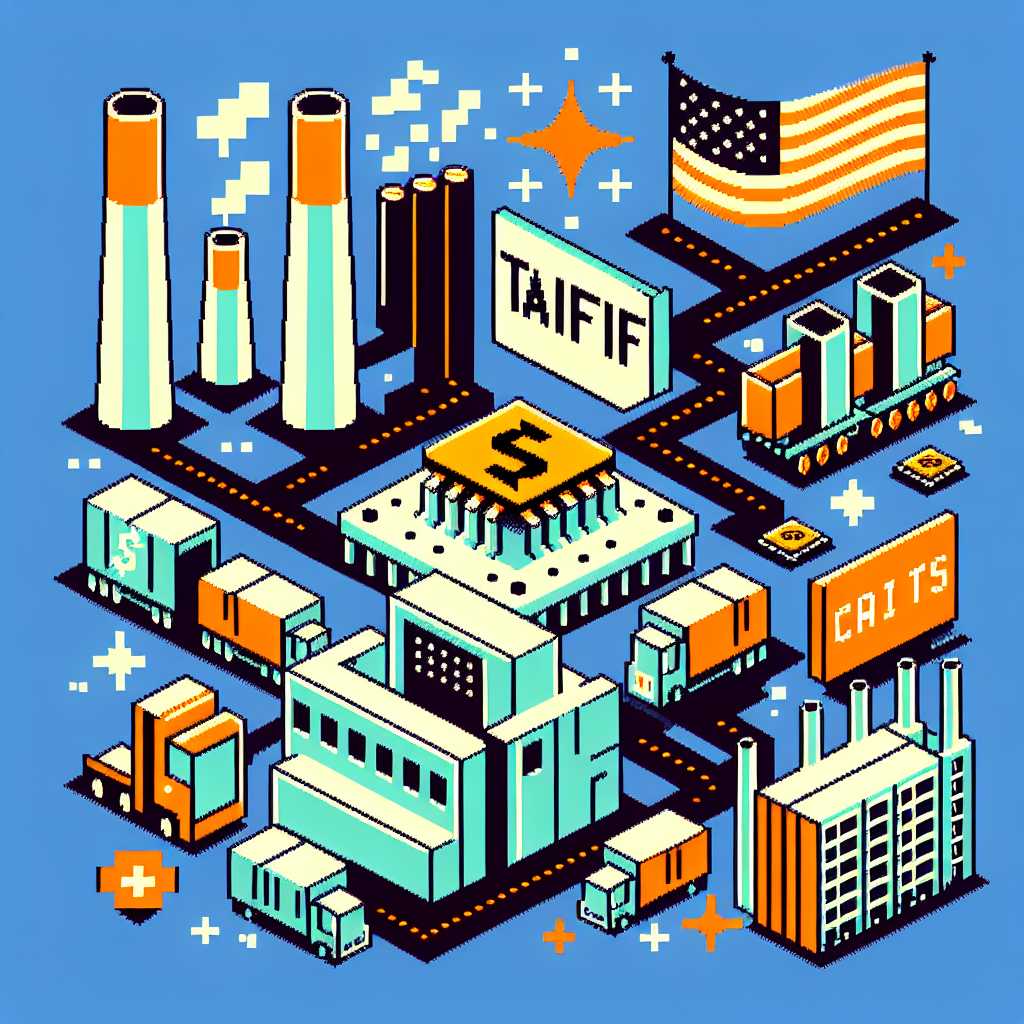
Trump’s Tariff-Tinged Dilemma: The Reality of US Chip Manufacturing
In the ever-evolving landscape of technology and international trade, the ongoing battle over chip manufacturing in the United States raises more questions than answers. Just when we thought the dust had settled, former President Trump has reignited the conversation with a proposed “1:1 chip rule.” But what does this mean for the future of US tech? Spoiler alert: it’s not good.
Understanding the 1:1 Chip Rule
To truly grasp the implications of Trump’s proposed 1:1 chip rule, we need to understand the context. The semiconductor industry is the backbone of modern technology, powering everything from smartphones to electric vehicles. However, the US has been facing significant challenges in domestic chip production, primarily due to globalization and competition from countries like China and Taiwan.
Trump’s administration previously introduced tariffs aimed at reshaping trade dynamics and boosting domestic manufacturing. Despite these efforts, the reality is that many US tech companies rely on overseas production to keep costs manageable and meet demand. The proposed 1:1 chip rule, which suggests that for every chip imported, a chip must be produced domestically, adds another layer of complexity to an already tangled web.
The Painful Reality for US Tech
So, what are the potential pitfalls of the 1:1 chip rule? As the article from The Register highlights, the rule could mean significant pain for US tech until Trump is out of office. Here are some key considerations:
Key Takeaways
– Increased Costs: Mandating domestic production could lead to skyrocketing costs for tech companies, which may ultimately be passed down to consumers.
– Supply Chain Disruption: The semiconductor supply chain is global. A sudden shift to domestic-only production could disrupt established supply chains, causing delays and shortages.
– Innovation Stifling: With the focus on meeting the 1:1 requirement, companies may divert resources away from research and development, stifling innovation in a rapidly advancing industry.
– Global Competitiveness at Risk: The US could fall behind in the global race for semiconductor technology, especially as competitors like China continue to ramp up their investments in chip manufacturing.
– Political Play: This proposal seems to be more about political posturing than practical economic strategy, raising questions about its long-term viability.
Concluding Reflection
As the world watches the unfolding saga of US chip manufacturing, it’s clear that the proposed 1:1 chip rule is fraught with challenges. While the desire to bolster domestic production is commendable, the practical implications of such a rule could lead to unintended consequences that hurt the very industry it aims to protect. As we navigate these turbulent waters, it’s essential for policymakers to consider the realities of global trade and the intricate nature of technology supply chains.
For now, we can only wait and see how this proposal unfolds, but one thing is certain: reality has a way of shaping policies, often in ways that are less than favorable for those caught in the middle.
Sources
– “Trump’s tariff‑shaped stick can’t beat reality on US chip fabbing.” The Register. [The Register](https://www.theregister.com) (search for the article).
Stay tuned for more insights on technology and trade as this story develops!
Related update: We recently published an article that expands on this topic: read the latest post.
Related update: We recently published an article that expands on this topic: read the latest post.
Related update: We recently published an article that expands on this topic: read the latest post.