
Steam Frame Delay and Price Uncertainty | Analysis by Brian Moineau

Valve’s Steam Frame and Steam Machine: A bump in the road (but not the end of the ride)

When Valve first teased the Steam Frame headset and Steam Machine back in November, the announcement landed like a gust of fresh air for PC gamers who want console-style simplicity without giving up upgradeability. Now, just as the hype was building toward an “early 2026” launch, Valve hit pause — not because of engineering drama or feature creep, but because the global memory and storage market went sideways. The company now says it needs to “revisit our exact shipping schedule and pricing.” That phrasing matters.

Why this matters beyond release dates

  • Gamers planning purchases will face uncertainty about both when these devices arrive and how much they’ll cost.
  • Valve positioned the Steam Machine to compete with similarly specced PCs (not to be a loss-leader like many consoles), so upward pressure on component prices directly threatens that value proposition.
  • The shortage is industry-wide and tied to shifting demand patterns (notably big data / AI infrastructure), so Valve's caution reflects a systemic issue, not a temporary hiccup.

What Valve actually said

Valve posted an update explaining that when they announced the hardware in November, they expected to be able to share pricing and launch dates by now. But memory and storage shortages “have rapidly increased,” and limited availability plus rising prices mean Valve must re-evaluate shipping schedules and costs — especially for the Steam Machine and Steam Frame. The company still says its “goal of shipping all three products in the first half of the year has not changed,” but that it needs “work to do to land on concrete pricing and launch dates.” (Source: Valve, picked up by outlets including UploadVR and PC Gamer.)

The supply-side story in one paragraph

Memory (RAM) and NAND/storage markets have been roiled lately because of surging demand from data centers and AI workloads. Manufacturers have limited supply, which drives up spot prices and leaves consumer-device makers with two unappealing choices: raise retail prices or ship devices with lower-spec parts to hit a target price. For a company like Valve that wants the Steam Machine to feel like a true PC, both options undermine the original promise.

What this could mean for pricing and features

  • Higher prices: Component cost increases could force Valve to set MSRP notably above earlier expectations. That undermines any hope the Steam Machine would beat comparable custom builds on price.
  • Trimmed specs: Valve could ship variants with less RAM or smaller SSDs at launch to keep a lower entry price, then lean on upgradability (a Valve selling point) as a trade-off.
  • Staggered rollout: Valve may prioritize one product (controller, headset, or machine) for earlier shipment depending on component access.
  • Retail strategy shifts: Fewer bundled accessories, fewer pre-configured SKUs, or later regional rollouts where component procurement is more favorable.

How this compares to other hardware launches

This isn’t unprecedented. Console and PC launches have been squeezed before (GPU shortages, PS5/Xbox Series X supply issues), but the current pressure differs because it’s driven by a structural redirection of memory capacity to AI servers. That can be longer-lasting and more volatile than transient supply-line disruptions.

Who wins and who loses

  • Winners (possibly): Early adopters who value performance over price and can afford a higher launch cost; aftermarket and boutique system builders if Valve’s pricing pushes consumers toward custom builds.
  • Losers (likely): Price-sensitive gamers and those who planned to trade up to the Steam Machine as an affordable living-room PC replacement.

Where the uncertainty is greatest

  • Exact MSRP for Steam Frame and Steam Machine.
  • Whether Valve will shift the quoted window from “early 2026” to a narrower or later target within the “first half of 2026.”
  • How much Valve will rely on upgradability to preserve initial price tiers.

What to watch next

  • Official pricing and launch-date updates from Valve (their Steam blog is the authoritative source).
  • Memory/SSD spot-price trends and industry forecasts from IDC or market analysts.
  • AMD and partner statements about supply chain readiness (AMD is the Steam Machine’s custom silicon partner and has previously indicated timelines).

Quick summary you can scan

  • Valve paused specific pricing and launch-date announcements due to a rapid rise in memory and storage costs. (Valve / UploadVR / PC Gamer)
  • The core issue: RAM and NAND shortages driven in part by AI/data-center demand are inflating costs and tightening availability.
  • Outcome possibilities include higher MSRPs, lower initial specs, or staggered/product-priority launches — Valve still targets the first half of 2026 but won’t promise specifics yet.

My take

Valve made a sensible, if disappointing, move. Announcing a product you can’t reliably price or ship risks undercutting your brand if you later raise prices or ship weaker specs. By pausing specifics until they have better visibility on component costs, Valve preserves flexibility — and credibility — even if it frustrates eager buyers. For gamers, this moment also serves as a reminder: the hardware economy is increasingly tied to broader tech trends (like AI), and those trends can ripple into the living room fast.

Sources


Related update: We recently published an article that expands on this topic: read the latest post.


Steam Goes Fully 64‑Bit on Windows | Analysis by Brian Moineau

Steam finally goes fully 64‑bit on Windows — and it actually matters

A small, quiet change rolled out in December 2025 that will make a surprising number of problems less annoying over time: Valve has converted the Windows Steam client to a native 64‑bit application. If that sounds like a nerdy footnote, stick with me — this is the kind of technical housekeeping that unlocks better stability, simpler development, and fewer edge-case crashes for millions of PC gamers.

What to know right away

  • The Steam desktop client for Windows 10 (64‑bit) and Windows 11 is now a native 64‑bit application (stable rollout in December 2025).
  • Valve will continue delivering a 32‑bit build only to systems that require it until January 1, 2026; after that date 32‑bit Windows installs will no longer receive updates or support.
  • The update also bundled several quality‑of‑life fixes and controller/input improvements (friends/chat reporting tweaks, recording/export fixes, better controller support, Big Picture/Remote Play bug fixes).

Why this upgrade matters

Upgrading an app from 32‑bit to 64‑bit is more than a checkbox for developers. For Steam, the switch brings practical benefits:

  • Better memory handling. A 64‑bit client can address far more memory, which makes it harder for leaks or memory‑hogging bugs to bring the whole Steam client (and sometimes the running game) to its knees.
  • Cleaner toolchain and testing. Valve no longer has to maintain two separate native builds for modern Windows installs, which reduces platform complexity and frees engineering time.
  • Compatibility with modern platform pieces. Many modern libraries, browser engines, and drivers are optimized for 64‑bit Windows — moving the client to 64‑bit aligns Steam with that ecosystem and avoids fragile edge cases.
  • A path for future features. Removing a legacy constraint lets Valve adopt newer subsystems or optimizations that assume 64‑bit execution.

Put simply: this is an investment in long‑term stability and fewer weird failures for the vast majority of Steam users.

What else shipped with the December update

Valve didn’t stop at the binary switch. The release notes and coverage show a batch of smaller but tangible fixes and additions:

  • Friends & Chat: new reporting options for suspicious or harassing messages inside group chats (right‑click to report and optionally block/unfriend).
  • Game recording: fixes for exporting H.265 videos and clipboard issues on certain NVIDIA 50xx GPUs.
  • Steam Input: expanded controller support — including Nintendo Switch 2 controllers over USB, improved GameCube adapter behavior in Wii U mode (with rumble), and pairing improvements for high‑end controllers like DualSense Edge and Xbox Elite.
  • Big Picture / Remote Play: stability and usability fixes (fewer in‑game purchase failures for some titles, Remote Play mouse movement fixes across multiple monitors when using touch).
  • Miscellaneous stability fixes: for the embedded browser helper and other components that could occasionally spawn stray windows.

These are the small wins that make day‑to‑day Steam use more pleasant.

Who’s affected (and who isn’t)

  • Practically everyone on modern Windows is unaffected in a painful way — if you’re on Windows 10 64‑bit or Windows 11 you get the 64‑bit client automatically.
  • A vanishingly small group of users on 32‑bit Windows 10 (Valve’s telemetry puts this at around 0.01% of the user base) will still be able to run Steam for a short while, but their client will stop receiving updates and security fixes after January 1, 2026. If you’re in that group, upgrading to a 64‑bit OS is the practical recommendation.
  • 32‑bit games remain supported. This change affects the Steam client binary and support lifecycle for 32‑bit Windows OSes — it doesn’t mean Valve is suddenly dropping older games.

The broader context

The move fits a larger trend across the industry: operating systems and large platform apps are shedding 32‑bit legacy support. Microsoft’s push and the natural hardware turnover means most PCs now run 64‑bit Windows, and browser engines and middleware are drifting away from 32‑bit compatibility. For Valve, consolidating around 64‑bit simplifies interactions with anti‑cheat vendors, browser components, and controller vendors — all of which tend to favor 64‑bit builds.

It’s also a subtle signal about priorities: Valve is choosing engineering simplicity and future readiness over maintaining obscure legacy setups. For a platform serving hundreds of millions of users, that pragmatism makes sense.

My take

This isn’t flashy, but it’s the kind of under‑the‑hood improvement that compounds. You won’t see a headline getting you excited about a new feature, but you will notice fewer random crashes, smoother controller behavior, and a slightly cleaner Steam client experience over time. For power users and developers, it removes a constraint that used to complicate troubleshooting and testing. For the tiny fraction still on 32‑bit Windows, the deadline of January 1, 2026 makes upgrading unavoidable if you want continued support.

Sources


Related update: We recently published an article that expands on this topic: read the latest post.


Related update: We recently published an article that expands on this topic: read the latest post.

Steam Machine Priced Like Regular PCs | Analysis by Brian Moineau

Valve’s Steam Machine won’t be subsidised — expect PC-like prices

You remember the moment Valve teased a living-room-sized PC that felt more like a console than a tower? That shiny little box — the Steam Machine — promises to live on your TV bench, boot into SteamOS, and bring much of your Steam library to the sofa. The catch, according to Valve, is that its price tag is going to be less “console launch loss leader” and more “what an equivalent PC costs.” That distinction matters more than you might think.

Why the price line matters

  • Console makers traditionally sell hardware at or below cost at launch and make profit on software and services. That lets companies push a low entry price to build install base quickly.
  • Valve is saying it will not subsidise the Steam Machine in that way. Instead, the device will be priced roughly in the same window as a PC with comparable CPU/GPU/RAM/storage.
  • That framing shifts how consumers, press and competitors think about the product: it’s not a budget console alternative, it’s a curated, compact PC experience with a living-room focus.

What Valve actually said

Valve engineer Pierre-Loup Griffais told the Friends Per Second (Skill Up) podcast that the Steam Machine’s pricing will be “more in line with what you might expect from the current PC market,” and that Valve aims to be competitive at that level of performance. He emphasised Valve won’t subsidise the hardware the way console makers often do, and noted features like small form factor and low noise as added value that justify a PC-equivalent price. Several outlets have reported and analysed this explanation. Sources later reiterated Valve’s reluctance to set a concrete number while market conditions (component prices, supply) are still fluctuating. (See Sources.)

The practical fallout for buyers

  • Expect one or more configurations (likely different storage and maybe a “Pro” later), with base models probably sitting above the cheapest consoles and closer to mid-range gaming PCs.
  • Convenience vs. bang-for-buck: the Steam Machine sells convenience (plug-and-play living-room experience, quiet small form factor, TV integration) that a DIY small-form-factor PC has a hard time matching — but that convenience comes at a premium.
  • For price-conscious buyers, building or buying a desktop might still give more raw performance per dollar. For people who want a tidy, TV-focused Steam experience, the trade-off might be worth it.

Market context and timing

  • Component price volatility (RAM, storage, GPUs) makes precise pricing hard right now; Valve acknowledged that directly.
  • Valve’s position is different from the Steam Deck era: the Deck launched with strong subsidies and aggressive pricing that helped it find a wide audience. Valve has signalled it won’t repeat that playbook for the Steam Machine.
  • Competing consoles (PlayStation, Xbox) often use hardware pricing strategies tied to exclusive games and massive ecosystem investments. Valve is betting on Steam’s ecosystem and optional hardware advantages rather than subsidised entry prices.

A few reasonable price guesses (not official)

Analysts and outlets are speculating widely — numbers in the discussion range from roughly mid-$500s up to $800–$1,000 for higher-spec variants. Much depends on the final internal specs and whether Valve decides to offer a slimmer or “Pro” model later. Whatever the final tags are, remember the anchor: Valve says “PC-equivalent” pricing, not “console-priced.”

What this means for Steam’s strategy

  • Valuing hardware parity with PC suggests Valve intends the Steam Machine to sit alongside desktops rather than undercut them.
  • It positions Valve as offering a premium, integrated hardware option to access Steam — like the Steam Deck did for handhelds, but with less emphasis on low launch pricing.
  • Valve retains flexibility: they can still adjust SKUs, storage options and promotions, but the commitment to non-subsidised pricing signals a different commercial calculus.

Quick takeaways

  • The Steam Machine will be priced like a comparable PC, not like a subsidised console.
  • Valve emphasises added hardware value (small form factor, low noise, TV integration) to justify that price.
  • Final prices are TBD because component costs are still volatile; speculation ranges widely but tends to sit above typical console launch prices.
  • Buyers need to weigh convenience and living-room integration against pure price-per-performance.

Final thoughts

Valve has earned goodwill by making clever hardware bets before (hello, Steam Deck). Saying the Steam Machine will track PC prices is honest and sets expectations early. It also reframes who the Steam Machine is for: not bargain hunters, but people who want a polished, compact, sofa-friendly PC experience without fiddling with mini-ITX builds or cables behind the TV. If you want the cheapest possible way to play PC games on a TV, building or buying a prebuilt PC may still win. If you want a tidy, Valve-curated living-room box that “just works,” you might be willing to pay for that convenience.

Sources

(Note: quotes and reporting above are drawn from Valve’s recent public comments and multiple technology outlets reporting on them.)


Related update: We recently published an article that expands on this topic: read the latest post.


Related update: We recently published an article that expands on this topic: read the latest post.


Related update: We recently published an article that expands on this topic: read the latest post.

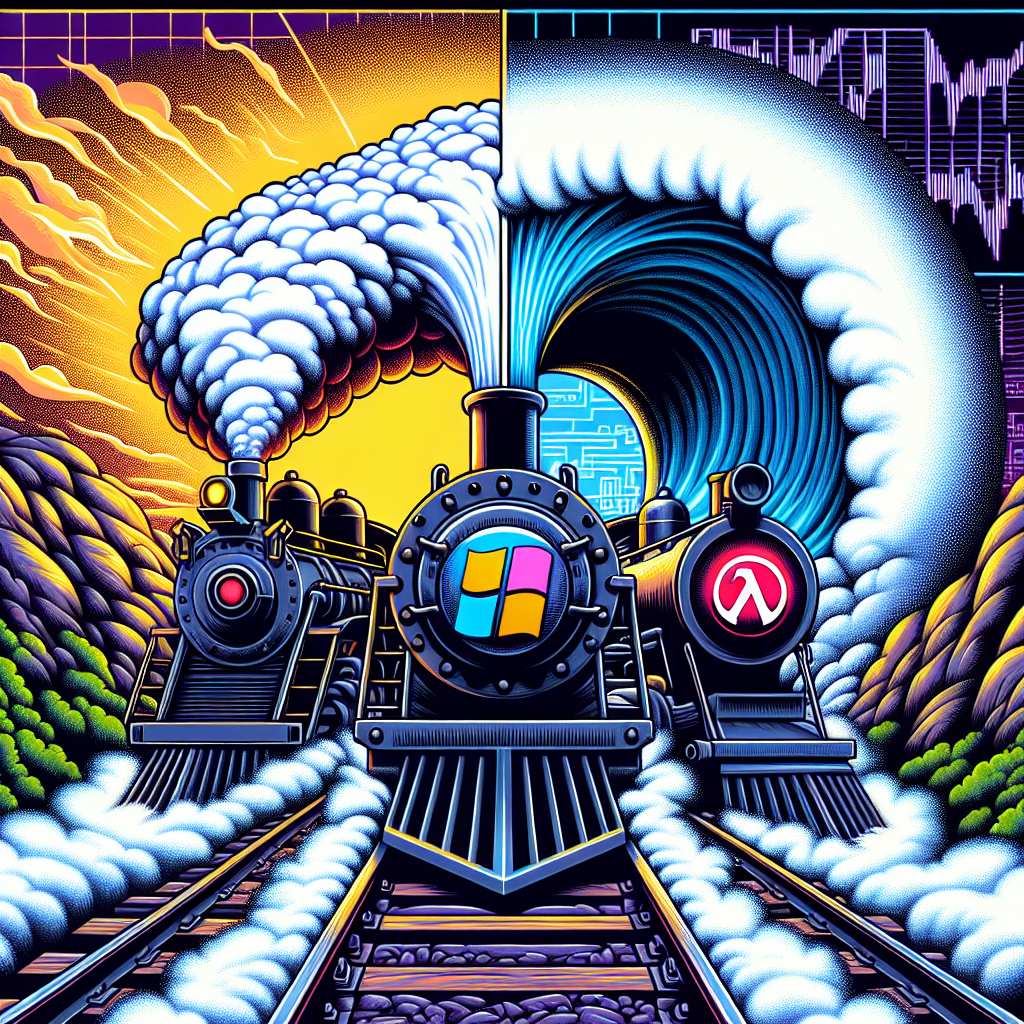
Half-Life 3 is just the hot exclusive Valve needs to propel SteamOS past Windows – Ars Technica | Analysis by Brian Moineau

Half-Life 3 is just the hot exclusive Valve needs to propel SteamOS past Windows - Ars Technica | Analysis by Brian Moineau

**Title: Could Half-Life 3 Be the Game-Changer for SteamOS?**

Ah, the elusive Half-Life 3. For years, it has been the holy grail of gaming—a mythical entity whispered about in hushed tones and wild Reddit theories. The recent buzz, as sparked by an article on Ars Technica, suggests that Half-Life 3 could be the exclusive title Valve needs to push SteamOS past the dominance of Windows in the PC gaming world. Let's delve into why this could be a pivotal moment for both Valve and gamers alike.

**Half-Life: A Legacy of Innovation**

To understand the possible impact of Half-Life 3, we must first appreciate the legacy of its predecessors. Half-Life 2, released in 2004, wasn't just a game; it was a technological marvel that set new standards in storytelling and physics-based gameplay. It was also instrumental in the success of Steam, Valve's digital distribution platform. At the time, Steam was a novel concept, and the allure of Half-Life 2 helped it gain traction among gamers.

Fast forward to today, and Valve is looking at a similar opportunity with SteamOS. As a Linux-based operating system, SteamOS has the potential to untether gamers from the Windows ecosystem. However, it needs a killer app to make the leap—and what better candidate than Half-Life 3?

**The Landscape of PC Gaming**

The world of PC gaming has evolved dramatically. Windows remains the dominant platform, but there's a growing interest in alternatives like Linux, driven by concerns over privacy, customization, and open-source software. SteamOS aims to capitalize on these trends, offering a tailored gaming experience without the baggage of a traditional OS.

Valve isn't the only player thinking outside the Windows box. Recent developments, like the rise of cloud gaming platforms such as Google Stadia and NVIDIA GeForce Now, show that gamers are open to new ways of accessing their favorite titles. The success of these platforms demonstrates a willingness to embrace change, which could bode well for SteamOS if it can deliver a seamless experience with compelling content.

**Valve: The Innovator**

Valve has always been at the forefront of gaming innovation. From the creation of Steam to the introduction of VR with the Index headset, the company isn't afraid to push boundaries. Gabe Newell, Valve's enigmatic co-founder and managing director, has been a driving force behind these initiatives. Known for his forward-thinking approach and penchant for secrecy, Newell has often hinted at exciting projects in the works, keeping the gaming community on its toes.

Valve's pursuit of hardware innovation is evident in the Steam Deck, a handheld gaming device that runs on SteamOS. The Deck aims to bring PC gaming on the go, blurring the lines between console and PC experiences. A title like Half-Life 3 could showcase the potential of the Steam Deck, making it an even more attractive option for gamers.

**A Global Shift in Gaming**

The potential release of Half-Life 3 on SteamOS could also align with broader global trends. With environmental concerns rising, the gaming industry is exploring ways to reduce its carbon footprint. Linux-based systems like SteamOS are known for their energy efficiency, offering a greener alternative to traditional setups.

Moreover, the ongoing chip shortages and supply chain disruptions have highlighted the need for diverse hardware options. SteamOS's compatibility with a wide range of devices could provide gamers with more flexibility in uncertain times.

**Final Thoughts**

While the release of Half-Life 3 remains speculative, its potential impact on SteamOS and the gaming industry could be monumental. By leveraging the legacy of an iconic franchise, Valve has the opportunity to redefine PC gaming and provide a viable alternative to Windows. In a world eager for innovation and change, Half-Life 3 might just be the catalyst we need.

As we await any official confirmation or announcement, one thing is certain: the mere mention of Half-Life 3 continues to ignite excitement and hope among gamers worldwide. Whether it becomes the game-changer for SteamOS remains to be seen, but the journey promises to be an exciting one. Stay tuned, and keep your fingers crossed!

Read more about AI in Business

Read more about Latest Sports Trends

Read more about Technology Innovations